The Desk Job Health Crisis Is a Design Problem
Bob King, founder and CEO of Humanscale, argues that the health risk of office work is not simply sitting but prolonged stillness in workstations that pull people into hunched, static positions. He says many chairs, desks and monitor setups fail because they require users to remember controls, habits and posture rules rather than making movement easy. The broader case is that office health should be treated as a design problem, extending from chairs and screens to daylight, indoor air and material transparency.
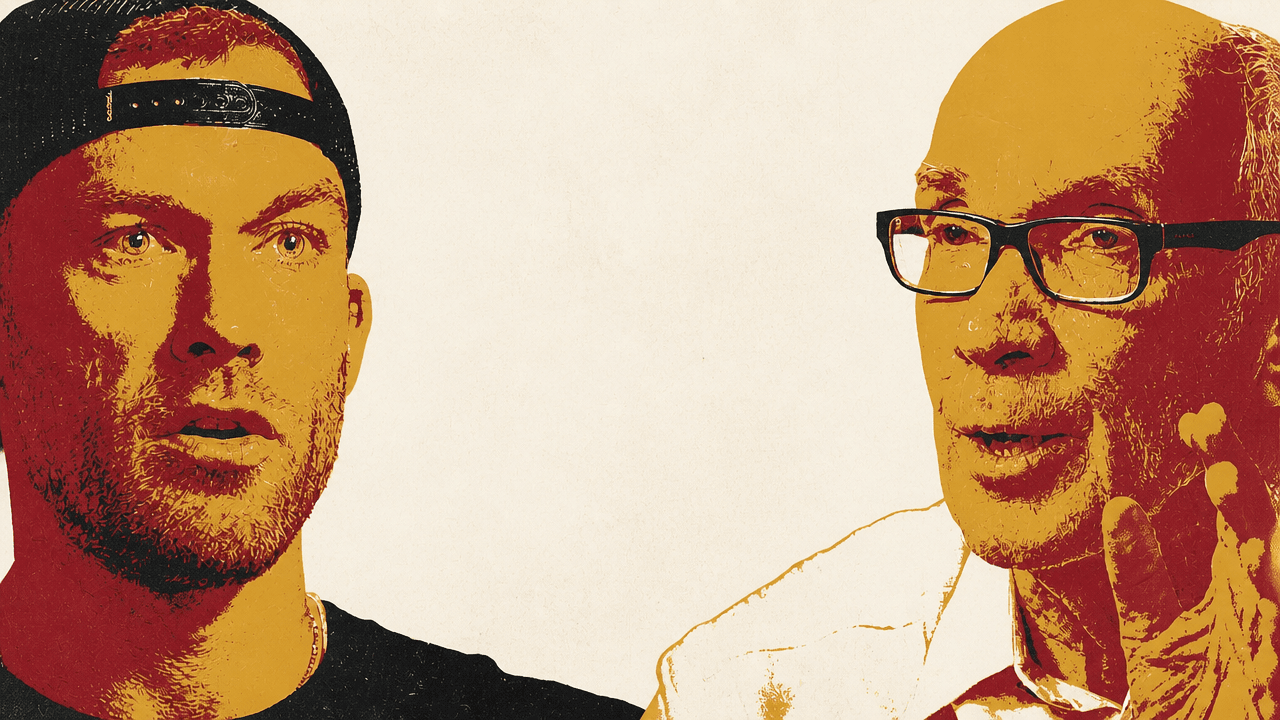
The office-health problem is less about sitting than stillness
Bob King rejects the simplest version of the “sitting is the new smoking” claim. His argument is narrower and more practical: the dangerous pattern is not merely that people sit, but that they sit still, often in a collapsed forward posture, for long periods while working at a computer.
King, founder and CEO of Humanscale, says the common office posture is visible almost anywhere: people hunched over a desk, back not touching the chair, spine curved forward, typing for hours. He described once searching for stock images of people working at computers and finding hundreds of images that looked essentially identical: bodies pitched forward over the keyboard.
That posture, in King’s account, creates two problems at once. First, leaning forward increases stress on the spine. Second, as the vertebrae curve forward, one side of the disc is compressed while the other side opens. Aside from lifting very heavy weights, King said he could hardly imagine anything worse for the back than spending hours in that position.
Chris Williamson brought in office-worker data to frame the scale of the problem: around 80% of office workers sit between four and nine hours a day; musculoskeletal disorders account for roughly one-third of workplace injuries in the United States; employers lose an estimated $50 billion annually in compensation and productivity; people who predominantly sit at work have a 16% higher risk of all-cause mortality and a 34% higher risk of death from cardiovascular disease; and some office workers may reach 15 hours of sedentary time when commuting and leisure are included.
King’s emphasis remained on the mechanics of inactivity. During sleep, he said, people move more than they often do at work. Lying down is not the same as being frozen at a desk: sleepers use large muscles as they turn and shift. Office workers, by contrast, may sit hunched in a chair with their large muscles essentially disengaged.
That distinction matters because King does not treat standing as a complete answer. He said standing all day also creates problems: fluids and blood pool in the lower legs, veins must return blood to the heart against gravity, and movement is what helps that return. The target is neither permanent sitting nor permanent standing. It is regular movement and the removal of friction that prevents people from changing position.
The problem, in King’s view, is that many workplaces have bought equipment that theoretically permits healthier behavior but does not actually cause it. He described standing over a London trading floor with 1,200 seats, all equipped with height-adjustable desks. When he and the head of workplace design counted how many people were standing, they counted five. The workplace had the hardware, but not the behavior.
That example captures the larger claim: if a healthy setup depends on repeated acts of discipline, most people will fail to use it consistently. Design has to make the healthier behavior easier than the unhealthy one.
A locked chair locks the body
Bob King’s most concrete design claim is that office chairs have trained people into immobility by being too complicated. He says the common explanation — that workers choose poor posture because it is comfortable or because they are careless — misses the mechanism. Many people do not lean back because they do not know how to make the chair lean back.
He discovered this by asking a different question. For years, he wondered why people hunched over desks in the same way everywhere he went. When he asked people why they sat that way, they usually said it was comfortable. An ergonomist friend told him he was asking the wrong question. Instead, King began asking people, “How do you lean back in that chair?”
The answer surprised him: almost no one knew. People gestured toward levers, mentioned instructions in a drawer, or admitted uncertainty. King’s conclusion was that the chair was effectively locked, and therefore the sitter was locked as well.
Chris Williamson called that “user error.” King corrected him: “design error.”
The complexity of chairs I think is a considerable contributor to the issue of lack of movement. Because you can’t move, your chair’s locked, you’re locked as well.
King described the sequence required to recline in many traditional office chairs. To lean back, the user first has to lean forward to remove weight from the backrest because the chair has a safety lock. Then, while leaning forward, the user reaches for a knob or lever, releases the mechanism, and reclines. To return upright, the process is reversed. A disciplined person could do this repeatedly during the day. King’s point is that observation shows almost no one does.
This is why he frames a desk chair not as furniture but as an ergonomic device. A piece of furniture can be judged by appearance and basic comfort. An ergonomic device has to change how the body behaves over time. If the device demands expertise before it works, it has failed in the environment where it will actually be used.
King connected this to Humanscale’s broader design philosophy. Before chairs, the company had focused on keyboard supports and monitor arms that could be moved easily and would stay where placed. He contrasted that with older mechanisms requiring hidden knobs and repeated tightening. The recurring objective was simplicity: remove controls where possible, make adjustment intuitive, and let the body change position without a conscious operating procedure.
The same principle shaped the Freedom chair, designed with Niels Diffrient and launched in 1999. King said Barack Obama apparently bought one — King noticed it later in a televised image of Obama’s home office — but the chair was not named after Obama or politics. The name referred to freedom of movement and the absence of complicated controls.
For King, the point is not that every worker needs a particular chair. It is that any chair or workstation should be judged by whether it allows movement without requiring the user to become a technician. A chair that can recline in theory but remains locked in practice is not solving the health problem it claims to address.
Posture advice is not useless, but it is incomplete
Bob King does not dismiss posture advice altogether. He says some postures are clearly worse than others. Hunching forward, bending the spine, loading the shoulders and neck, and compressing spinal structures is something to avoid. Sitting perfectly upright is better than collapsing forward, but it is still not ideal because the body’s weight travels directly down the spine into the sitting bones.
Leaning back changes that load. As the body reclines, more weight is distributed through the chair’s backrest and less through the spine. King cited a line from Niels Diffrient, who designed Humanscale chairs, that “the best chair is a bed.” King called the statement ridiculous in one sense — a bed is not a chair — but said Diffrient’s point was biomechanically clear: the more reclined the body is, the less stress is placed on the spine.
It’s not about posture, it’s about movement.
That sentence is King’s central correction to posture culture. The goal is not to find one “good” posture and hold it. A posture that is healthy for a moment can become a problem if it becomes the only posture. The more useful question is whether the work environment lets the body move naturally among positions: sitting upright to type, leaning back to read, reclining slightly during a call, standing for part of the hour, walking occasionally.
Chris Williamson pushed this into the question of environment versus discipline. King said he believes strongly that environment drives behavior. He did not deny that discipline matters; he simply does not think most people are disciplined enough, day after day, to compensate for a bad environment. A setup that requires repeated willpower will lose to one that makes movement automatic.
This distinction also shaped their discussion of sit-stand desks. King supports height-adjustable desks if people use them. He suggested that standing once an hour for a comfortable period — whether 10 minutes, half an hour, or another interval — can be healthy because it introduces movement. But he also stressed that the desk by itself is not enough. If the user has to remember, decide, press the button, wait, and sustain a habit, many will not.
Williamson joked about an automated sit-stand desk that rises on a schedule, forcing the worker upward even in the middle of a call. King said Humanscale was working on a new handset for sit-stand desks that would track time spent standing and allow users to set goals. The exchange sharpened the principle: the more design can remove the need for willpower, the more likely the behavior becomes.
Williamson compared this to not keeping cookies in the house, putting a phone outside the room to reduce distraction, or designing a digital environment with app blockers. King agreed that the world is becoming more complex, and argued that this makes it more important for physical tools to become simpler. Teaching every employee how to operate chair levers is, in his view, the wrong response. The better design is a chair that works for the person automatically.
A healthier workstation removes friction from movement
A healthier desk setup, as Bob King described it, is not an elaborate ritual. It is a workstation that keeps the monitor in the right range, brings tools to the body instead of pulling the body toward the tools, and allows movement without repeated decision-making.
For monitor position, King gave a simple rule: the user’s eyes should be roughly level with the top third of the monitor, or near the top line of text. Looking slightly downward is natural. Looking down too far can encourage neck flexion; looking up can create neck issues. Monitor arms matter because they allow the screen to move with the user. If a monitor is fixed at the front of the desk, King said, the worker is less likely to lean back because the screen will be too far away to read.
Keyboard position matters for the same reason. King described Humanscale’s early keyboard support as a platform that sits essentially over the user’s lap and stays where placed. The broader idea is to prevent the worker from reaching forward and collapsing toward the desk.
He also endorsed saddle stools, with limits. A good saddle stool places one leg on each side and encourages the thighs to drop downward. That thigh angle helps put the back into a healthier lordotic position, making it difficult to hunch forward. Chris Williamson noted that sitting on a saddle stool with a curved spine feels unnatural, “like being a question mark.” King agreed. Saddle stools can be useful, especially in labs and some work settings, but he does not see them as the best long-term sitting solution because they do not encourage as much movement as a good chair.
When Williamson asked what a biologically aligned workday would look like for a normal office worker, King’s answer was practical rather than exotic: use a sit-stand desk if available, actually stand periodically, sit in a chair that allows movement among positions without thought, keep the monitor on an arm, and walk around the office every couple of hours.
| Element | King’s practical standard | Problem it addresses |
|---|---|---|
| Chair | Allows recline and position changes without operating complicated controls | Locked, static sitting and forward collapse |
| Desk | Height-adjustable if the worker actually uses it | Long uninterrupted sitting |
| Monitor | Top third roughly at eye level and mounted on an arm | Neck strain and being pulled toward the desk |
| Keyboard | Positioned so the user does not have to reach forward | Hunching and shoulder loading |
| Movement | Standing, leaning back, shifting posture, and walking every couple of hours | Large muscles disengaged for long periods |
The pattern is cumulative. A healthy office day is not produced by one perfect product or one posture rule. It is produced by an environment where the worker can change load, change angle, change eye distance, and move large muscles often enough that the body is not trapped in a static shape for eight hours.
Designing for the average person means designing for no one
Bob King’s critique of office design extends beyond posture into the way products are sized and adjusted. He argued that many products are designed by men and effectively for men, both aesthetically and functionally. He also criticized the broader habit of designing for an “average human”: averaging the average female and average male and then building for a person who does not actually exist.
Chris Williamson brought up the fighter-pilot-seat example as he understood it: designers, in that telling, tried to build around average dimensions and ended up with a seat that fit no actual pilot. King accepted the point as an illustration of his broader objection. The further a person is from the imagined average, he said, the worse the experience becomes.
Humanscale’s answer, in King’s account, was self-adjustment. Diffrient removed the conventional spring, knob, and lock system from the chair and used the sitter’s own body weight as the counterbalance. A linkage transfers a percentage of the sitter’s weight to the backrest as recline force. That means, as King described it, a lighter 20th-percentile woman and a heavier 90th-percentile man each generate a recline response scaled to their own body.
He gave a second example in the Liberty chair, developed after the success of the Freedom chair. At the time, mesh chairs had become popular, especially after Herman Miller’s Aeron chair. King said he suggested to Diffrient that Humanscale should make a mesh chair. Diffrient initially rejected the idea, arguing that most mesh chairs simply stretched mesh over a frame. Because stretch mesh gives way and cannot be shaped like molded foam, it often requires a lumbar support, creating one more adjustment that many users will never make.
Diffrient later returned with a solution inspired by clothing design. Instead of one stretched sheet of mesh, he used shaped panels, like the panels in a fitted shirt or jacket. The mesh had minimal stretch but high flexibility. According to King, when a sitter pressed into it, the material filled the “hills and valleys” of the person’s back rather than stretching across them. The chair therefore adapted to the individual sitter rather than the average sitter. King said the company received two global utility patents for that technology.
The design principle is consistent with his critique of discipline. If bodies vary, the product should adapt to bodies rather than ask every body to adapt to the product. If users do not operate lumbar controls, recline knobs, or locks, then a serious ergonomic design should not depend on them.
Screen work adds strain, and the rules quickly become too many
The discussion of screens moved beyond Bob King’s core area of expertise. Chris Williamson asked about eye health and had a ChatGPT summary shown on screen. King explicitly declined to prescribe a solution, saying eye health is not his area.
The on-screen ChatGPT summary stated that myopia rates have been increasing globally, especially among children and young adults; that some projections suggest 40–50% of the world may be myopic by 2050; and that a large meta-analysis of roughly 335,000 people associated each additional hour of daily screen time with about 21% higher odds of myopia. Williamson read those figures aloud as prompts for the discussion.
The same on-screen summary distinguished between myopia and digital eye strain. Eye strain, it said, does not permanently damage vision in the same way but is associated with dry eyes, blurred vision, headaches, and fatigue. It also emphasized uncertainty: screens themselves may not be the only cause. Reduced outdoor time and close-up “near work” of any kind may contribute. Screens may be harmful partly because they displace outdoor exposure.
A later on-screen ChatGPT summary presented a rough pattern: before the 2000s, screen exposure was lower and myopia rose more slowly; during the smartphone era, daily screen time rose sharply alongside myopia prevalence and eye-strain complaints. It listed practical thresholds as less than one hour a day near baseline risk, one to three hours a noticeable increase, and four or more hours a sharply higher risk, especially for myopia. Those figures were presented in the source as ChatGPT’s summarized response, not as research independently verified in the discussion.
Williamson offered the 20-20-20 rule: every 20 minutes, look for 20 seconds at something more than 20 feet away. But he also noted the practical absurdity of stacking ergonomic habits: Pomodoro timers, standing reminders, walking reminders, and eye-distance reminders can create an “endless spirograph” of alerts. In an early office, he said, he had tried to introduce productivity systems and health reminders to a team of young workers who were largely uninterested.
Ergonomics is trying to solve an artificial problem created by the modern office: concentrated cognitive work performed indoors, close to screens, for many hours. The solutions can become complicated enough that compliance becomes another form of work.
King returned to the environmental frame. As software, phones, and digital tools become more complex, he argued, physical tools should become simpler. The office should not require an ever-expanding dashboard of personal discipline merely to keep the body from deteriorating.
Daylight is part of the workstation
Bob King’s strongest claim outside furniture concerned light. He argued that most indoor work is performed under artificial light that is “very far removed” from sunlight, and that this has major health implications, especially for sleep.
In his account, outdoor light suppresses melatonin during the day. Bright, high-spectrum daylight keeps melatonin production low, supporting alertness. As evening arrives and sunlight becomes warmer and dimmer, melatonin suppression lifts and production rises. That nighttime rise helps people sleep.
Indoors, King said, the pattern is flatter. Artificial light may not suppress melatonin strongly during the day, so daytime production remains higher than it would be outdoors. Then, in the evening, there is less of a spike. The result, he said, is that people struggle with sleep because their biology has not received a clear daytime-nighttime signal.
He illustrated the point with an architect who had recently moved from a cubicle into a glass-walled, south-facing office and reported more energy and alertness. King’s interpretation was that the architect felt better because he was getting something closer to an outdoor light environment.
Chris Williamson contrasted that with windowless, distraction-free work rooms. He described a friend’s attempt to work for months in a small room in Dubai before noticing worse mood, sleep, and productivity. The example supported King’s broader point: an environment can make focused work easier while quietly degrading the biological conditions that support the person doing it.
The discussion then turned to nighttime screens. Williamson said he had seen recent research suggesting that evening screen problems may be less about blue light itself and more about the cognitive state produced by social media and other engaging content. A ChatGPT summary shown on screen stated that light at night, especially short-wavelength blue light, can shift circadian rhythm and suppress melatonin, but that real-world effects from screens may be smaller than many people think. The same on-screen summary referred to a large 2025 study of roughly 122,000 people linking screen use before bed to slightly less sleep — about five to eight minutes — and worse perceived quality. In the source, that study claim appeared only through the on-screen ChatGPT summary and Williamson’s readout.
A second on-screen ChatGPT summary emphasized behavior: doomscrolling, delayed bedtime, cognitive and emotional arousal, and notifications may be bigger culprits than light itself. Interactive or emotionally engaging screen use was described as having stronger sleep effects than passive viewing.
King said that made sense. A phone is a relatively small light source compared with a whole room, he noted, while the feed itself is designed to stimulate the user. If content did not produce arousal, it would not keep appearing in the feed.
King did not deny that blue-light filtering tools may help, but he said he had not seen data and accepted the framing that phone blue light may not be the biggest melatonin issue. He also warned, outside his main area of expertise, that bright sunlight can damage eyes when exposure is unprotected. His optometrist, he said, has emphasized sunglasses, and eye exams can reveal sun damage.
The result is not a simple “sun good, screens bad” rule. Daylight matters for circadian rhythm and alertness, in King’s account. Excessive unprotected sun can damage eyes. Nighttime light can affect sleep biology. Late-night digital content may disrupt sleep through arousal, delayed bedtime, and notification-driven interruptions as much as through the screen’s light.
Indoor air belongs in the ergonomics conversation
Bob King’s definition of a healthy office ultimately widened from chairs, desks, and monitors to the air itself. Indoor air, he said, is often unhealthy because office and home products off-gas chemicals and carcinogens. He named carpeting, paint, and desks made from MDF — medium-density fiberboard — as common sources. MDF, he said, is ground-up sawdust glued together, and contains formaldehyde that can off-gas. Carpets can off-gas volatile organic compounds.
His proposed remedy is transparency: ingredients labels for furniture and building products, analogous to food labels. He named Declare and HPD as two standards. With food, consumers can see what they are putting into their bodies. Historically, he said, products put into homes and offices have not carried comparable labels, even though people breathe what those products emit.
King recalled an article from roughly a decade earlier in which an executive at a large furniture company dismissed the idea of ingredients labels because “last time I checked we didn’t eat the furniture.” King called that self-serving.
We don’t eat it, but we breathe it.
He said organizations including Google and Harvard University have required products to carry ingredients labels before they will consider them for offices, dorms, or other spaces. Designers, too, are increasingly refusing to specify products without such labels. King argued that this pressure is pushing manufacturers in the right direction.
Chris Williamson brought in mold from his own experience in Austin, saying a house he lived in exposed him to toxic mold and that he was still detoxing from it. King agreed that mold is serious and dangerous. Williamson also described a friend who had become highly sensitive to off-gassing after exposure to paint-related chemicals and then reacted badly to a brand-new hotel room that, in Williamson’s telling, was still emitting fumes.
King said “brand new is the worst.” The smell of a new room or new car, he argued, is often VOCs, and he described leaving car windows down for the first 15 or 20 minutes when he gets into his own car. The broader point was not a protocol for cars, but a design principle for buildings and products: the “new” smell people often read as clean or premium may also be a sign of chemical emissions in the air.
King said Humanscale had pioneered ingredients labels in office furniture. Around 2018, he claimed, the company had about 80% of all ingredients labels in the industry despite representing only about 4–5% of industry revenue. Even today, he said, Humanscale has about 39% of all such labels at roughly 4% of revenue. He framed the purpose as reducing harmful chemistry and giving customers products with fewer carcinogenic materials.
Prevention is the serious office-health strategy
The practical version of Bob King’s argument is not an elaborate optimization stack. It is a short list of environmental conditions that reduce the need for heroic personal discipline: a chair that moves without confusing controls, a desk that actually changes working posture, a monitor that does not pull the head forward, enough daylight to support a clear day-night signal, and materials that do not quietly pollute the room.
That simplicity matters because Chris Williamson’s examples show how quickly the alternative becomes unmanageable. A knowledge worker can try to remember every intervention separately: stand on a timer, walk on a timer, look into the distance on a timer, block apps, move the phone, avoid doomscrolling, manage daylight, filter air, and maintain posture. At some point, the health routine becomes another cognitive load imposed by the workspace.
King’s recurring answer is to move as much of that burden as possible into design. The chair should not require the user to understand a control system. The monitor should not require the user to hunch forward. The desk should not merely be capable of standing; it should make standing more likely. The product should not be designed for a mythical average user. The materials should not ask occupants to trust what they cannot see or smell accurately.
| Design question | King’s answer |
|---|---|
| What is the main sitting problem? | Stillness, especially in a forward-hunched posture |
| Is standing all day the answer? | No; standing without movement creates its own circulation problems |
| What should a chair do? | Let the user change position without levers, locks, or learned procedures |
| What should a desk do? | Support periodic standing and movement, not just offer the theoretical option |
| What should a monitor setup do? | Keep the screen readable without pulling the head and torso forward |
| What else belongs in office health? | Daylight exposure, indoor air quality, and material transparency |
The prevention theme is important. Williamson told a story about visiting back-pain specialist Stu McGill after years of pain, and witnessing McGill talk a desperate caller away from surgery as the only solution. King agreed that back surgery is difficult, recovery is long, and outcomes are often poor. The better strategy, he said, is prevention rather than intervention.
That is the practical burden of the office-health crisis as King describes it. Once the back is badly injured, the problem becomes medical. Before then, it is environmental. The chair, desk, monitor, light, air, and daily movement patterns are not accessories to work. They are part of the health exposure of work.