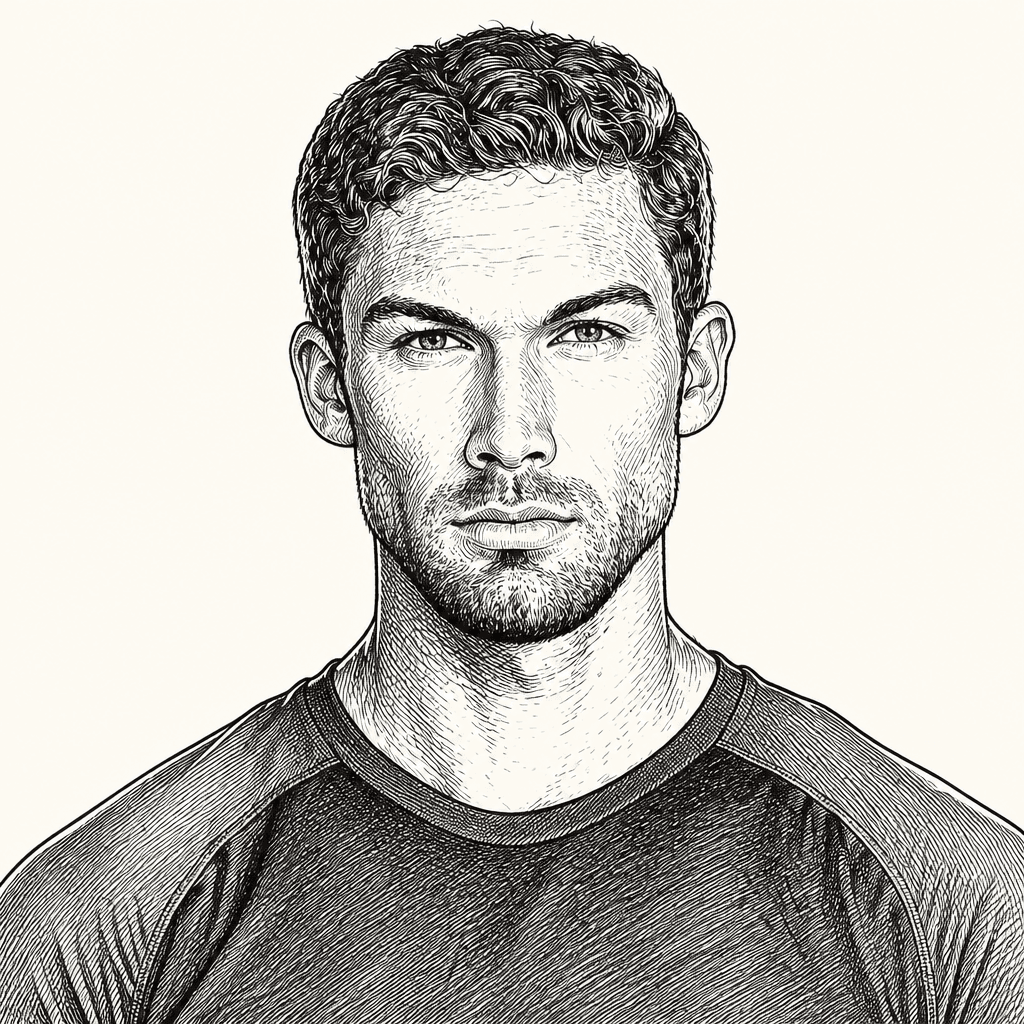
The Fat Electrician presents Logan Weston’s life as a collision of religious vocation and repeated returns to combat. Weston became a preacher after interpreting a failed suicide attempt as a second chance, but he served as an infantryman in World War II and Korea, later qualified as a Green Beret and advised the US government in Laos. The speaker’s account argues that faith shaped how Weston understood survival and helped him serve other soldiers, without protecting him from the dangers of war.
The preacher’s vocation never took him out of combat
Logan Weston’s story turns on a contradiction: he understood himself as called to religious life, yet spent decades returning to military service. The Fat Electrician describes Weston as a preacher who held services for soldiers while fighting in the Pacific, Korea, and later Vietnam. After retiring, he served for ten years as a chaplain at Texas A&M. The same account has him becoming an infantryman before the United States entered World War II, joining Merrill’s Marauders, returning to Korea, qualifying as a Green Beret at 46, and advising the US government in Laos.
That combination is more than a striking career summary. In the speaker’s telling, faith is not separate from Weston’s military life: it shapes how he interpreted survival, gave him a way to serve other soldiers, and appears again in one of the story’s last combat episodes, when a Bible in his breast pocket stopped a bullet.
The Fat Electrician says Weston’s religious commitment began after a period of despair. During the Great Depression, Weston worked in a coal mine and, when a friend with a wife and children could not find work, gave the friend his own job. The mine collapsed a week later, killing people; the friend survived. Weston later got work as a lumberjack and gave that job to the same friend. A major logging accident followed, and the friend survived that too. The Fat Electrician presents the deaths around Weston, alongside the repeated survival of the friend he had tried to help, as part of the strain that brought Weston to a low point.
Weston attempted suicide with a gun. In the account he later gave, he heard someone say “wait” just before the hammer fell, but the gun did not fire. He then tested it by shooting into a tree; that time it worked. He took the failure as God giving him a second chance and decided to become a preacher.
“He kind of interprets this as God giving him a second chance.”
Weston enrolled at a Christian college to prepare for ministry. The Fat Electrician says he was drafted while still studying, because religious college did not qualify him for a student exemption at the time. At induction, recruits could choose among roles, but Weston did not know what the categories meant. He went to infantry. He had entered the Army before Pearl Harbor and, by the time he was sent overseas, had become a platoon sergeant.
The medals shown during the discussion give a visual measure of the career the speaker describes. The photograph shows an older Weston holding a wooden display crowded with medals. The Fat Electrician says Weston had more than 300, and describes them as filling a board from the floor to above his chest. He also says Weston was denied the Medal of Honor for an action in Korea, though the account leaves the precise award process and circumstances to the speaker’s recollection.
Faith offered meaning, not protection from danger
The religious thread does not make Weston’s service sound safe or serene. The Fat Electrician describes Pacific jungle fighting as a prolonged struggle against terrain, illness, hunger, and isolation. On New Georgia, Weston’s company was surrounded and cut off. The speaker recalls the encirclement lasting 29 days; in Weston’s later memoir, as the speaker recounts it, the men ran out of food after three days. Weston was among the last still able to move by the end.
A later encirclement, lasting about two weeks by the speaker’s estimate, was still dangerous but unfolded differently. The men had been through the experience once before, and local guides showed them which plants could be eaten. They combined vegetation with their remaining rations and even held cooking competitions. The contrast is practical: familiarity did not end the danger, but it gave the men ways to manage it.
The speaker’s account of Weston and a local guide makes the tension between faith and risk more personal. Sent out to look for a gap in the enemy line, Weston and the guide came under machine-gun fire, took cover in a ditch and swamp, and escaped. The Fat Electrician recalls rounds striking or passing through Weston’s helmet, coat, pocket, and boot without wounding him. The guide, who had heard Weston speak about Christianity, took his survival as evidence that Weston’s God had protected him. He asked to become a Christian, and the two prayed together.
The guide then began singing and dancing loudly behind enemy lines, apparently believing he now shared the same protection. Weston told him to be quiet and, as the speaker puts it, that “it doesn’t work that way.” The episode is funny in the telling, but it also puts a boundary around the role faith plays in the story: the guide sees invulnerability; Weston does not encourage that reading.
After the unit returned, Weston received two letters that had been delayed for months. His fiancée was leaving him, and his parents were divorcing. When the Army called for volunteers for a dangerous mission, the Fat Electrician says Weston signed up because he felt he had nothing else to live for.
That mission became Merrill’s Marauders, a force the speaker describes as roughly 3,000 experienced jungle fighters. Their assignment took them from India toward China for guerrilla operations against Japanese troops. The Fat Electrician says the march to their area of operations was about 800 miles and that, during roughly nine months in the jungle, the unit depended on airdrops for supplies. Calling in a drop also revealed the unit’s position. The speaker cannot recall the exact casualty figure, but estimates that about 300 of the original members finished the operation. Weston was wounded and evacuated near the end, after taking part in nearly every major battle, according to the speaker.
This account makes the preacher’s vocation neither an alternative to combat nor a promise of rescue from it. Weston’s faith helped him make sense of survival and serve others, but the speaker’s stories keep returning to exposure: starvation, wounds, separation from home, and the consequences of volunteering for another dangerous assignment.
In Korea, experience mattered—and did not guarantee recognition
Weston returned to the United States, married, completed college, and became a minister while continuing to serve in the reserves. As the prospect of conflict in Korea emerged, he volunteered again. The Fat Electrician says Weston wanted to serve as a chaplain, but was told he was too old: 33, a year beyond the limit as the speaker recalls it. He was assigned to infantry instead. He chose occupation duty in Japan, and when the Korean War began, was sent to Korea on what he had been told would be a short deployment.
At the Pusan Perimeter, Weston was put in charge of a platoon he had only just met. He saw about 90 men approaching and reported them. A runner returned from headquarters with the view that they were probably friendly South Koreans. Weston disagreed, saying he recognized their uniforms and the Japanese rifles they carried from his earlier fighting. He sent the runner back; according to the Fat Electrician, headquarters dismissed the warning more than once. The approaching men eventually opened fire.
The speaker says Weston led roughly 30 men in holding the position and was badly wounded. He gives the number of enemy casualties only as an uncertain recollection: the men under Weston’s command were credited with killing “like two to 300 guys.” The Fat Electrician argues that a breakthrough might have exposed nearby headquarters and penetrated the perimeter, with potentially grave consequences for South Korea. He also says Weston was nominated for the Medal of Honor but received the Distinguished Service Cross, and that the officer who had dismissed his warnings deliberately kept the nomination from advancing because an investigation might have exposed the officer’s mistake. These are the speaker’s account and interpretation; he does not provide a precise casualty count or further detail of the award proceedings.
Weston spent weeks in hospital. The Fat Electrician recalls a rule under which a soldier hospitalized for around 90 days would be sent home, and says Weston was released on day 89. The exact day count is uncertain in the speaker’s telling. By then, US forces had advanced north; Weston was at the Yalu River when Chinese forces entered the war and drove Allied troops south, according to the speaker.
The tank encounter that followed is another example of Weston’s front-line leadership, but some of its details remain unsettled in the account. The Fat Electrician says Weston went forward with three men carrying bazookas. The tanks spotted them and killed the anti-tank crew, leaving Weston alone. The speaker describes Weston disabling one tank with a bazooka, using a grenade against another, and firing on a crew emerging from a third. He cannot recall whether Weston received the Distinguished Service Cross or the Silver Star for the action.
Weston’s combat record also placed him in command during a bayonet charge led by Captain Lewis Millett. The Fat Electrician clarifies that it was the last company-sized bayonet charge in US military history, not necessarily the last time any US soldiers used bayonets in a charge. He describes Millett leading roughly 30 to 50 men up a hill with bayonets fixed and says Millett received the Medal of Honor for the action. Weston was in command when it happened. The episode is relevant less as a separate hero story than as a glimpse of the kind of battlefield command Weston had reached: he was no longer only the young infantryman choosing a role he did not understand.
The returns to service outlasted the wars
After Korea, Weston was asked to try out for the newly forming Green Berets. The Fat Electrician says he was 46, qualified, and became parachute-qualified. He was later sent to the Pentagon, where, according to the speaker, he helped write a book on jungle warfare and counterinsurgency tactics based on his Merrill’s Marauders experience.
During the Vietnam War, Weston served as a US government adviser in Laos. The Fat Electrician describes supply routes running through Laos and Cambodia and says US special operators were conducting operations in the region. Weston’s advisory work in Laos placed him in that wider conflict, though the speaker does not give a detailed account of his assignments there.
The speaker also places the Bible story on the day before Weston’s last day in Korea: an enemy sniper hit him in the chest, but the bullet stopped at the Bible in his breast pocket. After Vietnam, Weston retired and became a chaplain at Texas A&M for ten years.
The career’s defining tension is not that Weston managed to reconcile preaching and war once and for all. The Fat Electrician’s account instead shows the two repeatedly occupying the same life: a man who interpreted a failed suicide attempt as a call to ministry, preached to soldiers in the field, and continued to volunteer for combat service. His faith gave meaning to events he survived; it did not spare him from danger, grief, or the return to the front.
The frontier, in your inbox tomorrow at 08:00.
Sign up free. Pick the industry Briefs you want. Tomorrow morning, they land. No credit card.