China’s Influence Strategy Extends From Intelligence Recruitment to Global Investment

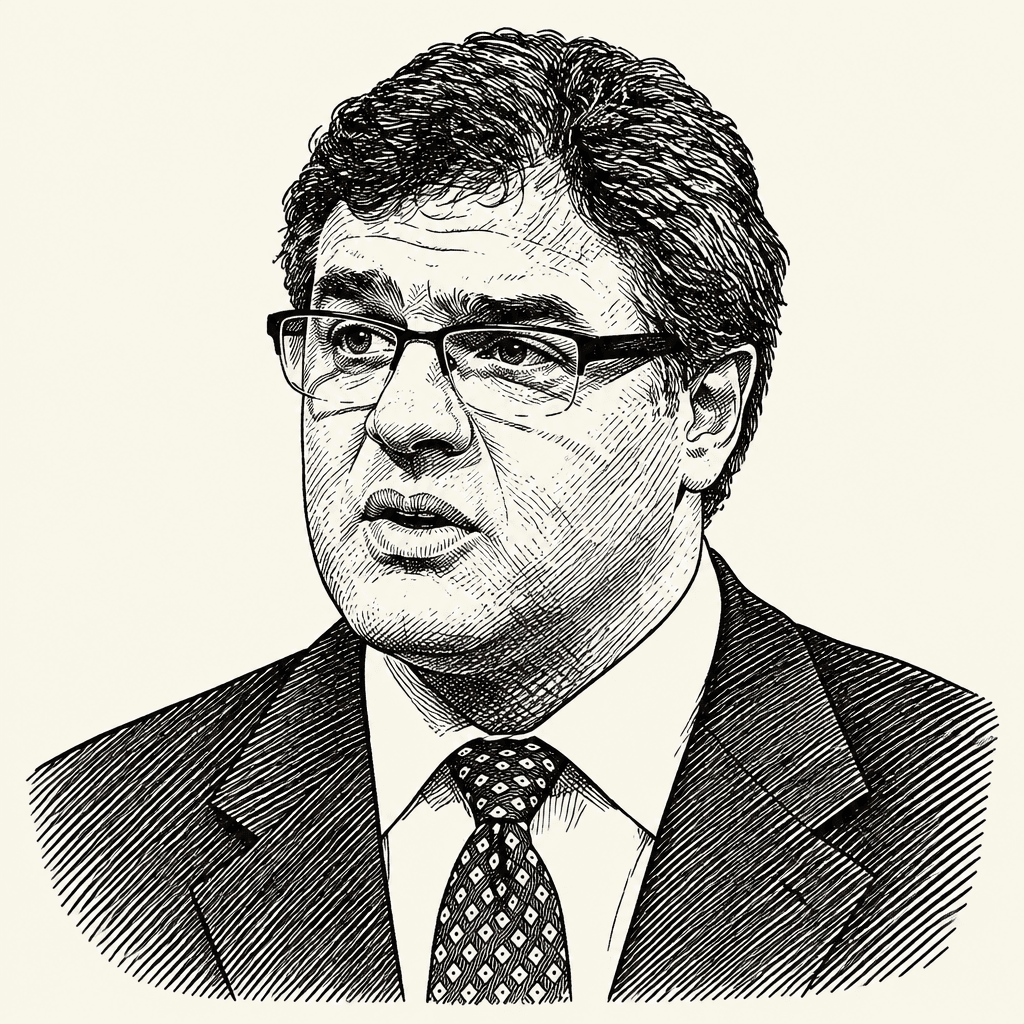
Former CIA officer John Kiriakou says China is his leading strategic concern, alleging that its intelligence service is recruiting people with access to US institutions while Beijing builds influence abroad through investment. He argues that US military spending leaves Washington devoting resources to overseas bases and weapons as China cultivates partners. But when asked specifically about infiltration of government, Kiriakou names Israel as the most immediate threat.

China is Kiriakou’s leading strategic concern, but not his only infiltration concern
John Kiriakou names China as the foreign power he worries about most. His concern is not limited to espionage: he describes a broader contest in which China can build influence and preserve resources while the United States spends heavily on its military. He says Chinese intelligence is active against the United States and its allies, citing a Chinese intelligence cell recently uncovered in New York City. According to Kiriakou, its officers threatened Chinese dissidents in the area and threatened to harm their relatives in China if they did not stop their activism against Beijing.
He also alleges that Chinese intelligence is recruiting Capitol Hill staffers and FBI agents, trying to infiltrate the CIA, and has intelligence officers spread across hard-science PhD programs in the United States. Asked how many foreign spies are in US government agencies, he says it is impossible to know.
But when Chris Williamson asks whether it is easier to count the government departments that have not been infiltrated, Kiriakou shifts his emphasis. He calls Israel the greatest immediate threat of government infiltration “today, right now.” He says the activity is covert and cites what he describes as an all-hands email sent by the Defense Intelligence Agency director three weeks earlier, warning officers that Israeli intelligence operations had ramped up and that Israel was trying to infiltrate DIA. He also refers to an FBI effort 35 years earlier that, he says, identified 187 undercover Israeli intelligence operatives infiltrating or having infiltrated American defense contractors.


The distinction in Kiriakou’s answers is between his greatest overall concern and what he calls the most immediate infiltration threat. China is his answer to which foreign power worries him most; Israel becomes the focus when the question turns specifically to infiltration of government.
Recruitment exploits access and personal vulnerability
Kiriakou describes the “asset acquisition cycle” as four stages: spot, assess, develop and recruit. An intelligence officer identifies a potential target, assesses whether the person has access to information the service wants, then develops the relationship and looks for a vulnerability.
That vulnerability might be financial: Kiriakou offers the example of a person who gambles and has substantial debt. It might instead involve a family need. An officer could learn that the target’s wife has breast cancer, or that the target wants to send their children to a top-tier school but cannot afford it, and offer help. The target is tested to see whether they will provide information in exchange for a benefit, usually money; if they do, Kiriakou says, the officer formally recruits them.
In this account, a foreign service need not place someone in government from the start. Asked whether foreign assets inside the US government might have begun their careers there under a service’s direction, Kiriakou says he feels “pretty comfortable” that the number is “probably zero.” He points instead to Kim Philby, whom he says the Soviets recruited at university before Philby joined British intelligence.
Philby, Kiriakou says, was an open communist at university and later became chief of counterintelligence in MI6. His best man was James Jesus Angleton, who led counterintelligence at the CIA; Kiriakou says Philby was a KGB agent throughout their friendship. After Philby was exposed, Kiriakou says, Angleton concluded that there must be many more moles and began a hunt that damaged the lives and careers of dozens of people. The example illustrates a second risk in counterintelligence: discovering one penetration can prompt a search for others that, in Kiriakou’s telling, harms people beyond the exposed agent.
Military spending, Kiriakou argues, gives China room to build influence
Kiriakou argues that China can build influence without matching American military spending. He puts the US defense budget at between $1 trillion and $1.5 trillion a year, more than the next eight largest countries combined. He says China does not have a history of invading other countries, while acknowledging that Tibet is a separate argument and citing a brief conflict with North Vietnam and two border skirmishes with India. He summarizes China’s approach this way:
They purchase them. They co-opt them.
In Kiriakou’s view, much of US defense spending goes to maintaining 210 bases in 144 countries and developing weapons systems that are inefficient or poorly suited to their purposes. His example is the F-35, which he argues cannot be a one-size-fits-all aircraft. He contrasts it with the A-10, which he says could fly low enough to attack tanks at close range, and says the A-10 was phased out despite being widely liked.
Kiriakou says China can use its resources to buy ports, airports, factories and desalination plants in countries around the world. He argues that such spending buys friends, frees cash for technology development and can isolate the United States. He describes China’s long-term goal as resembling the American approach to the Soviet Union during the Cold War: containment and isolation, with the hope that the rival eventually collapses on its own.
He connects that strategy to US debt, which he says crossed $40 trillion this year. Kiriakou says defense spending is the government’s largest expenditure and interest on the national debt its second largest. His comparison is that American spending sustains a broad overseas military presence, while China, in his account, uses investment to build relationships and leaves resources available for other purposes.