Career-First Planning Can Leave Women Without Real Family Choices
 Chris Williamson
 Whitney Cummings
 Emma GredeSuzanne VenkerChris WilliamsonSaturday, June 20, 202625 min read
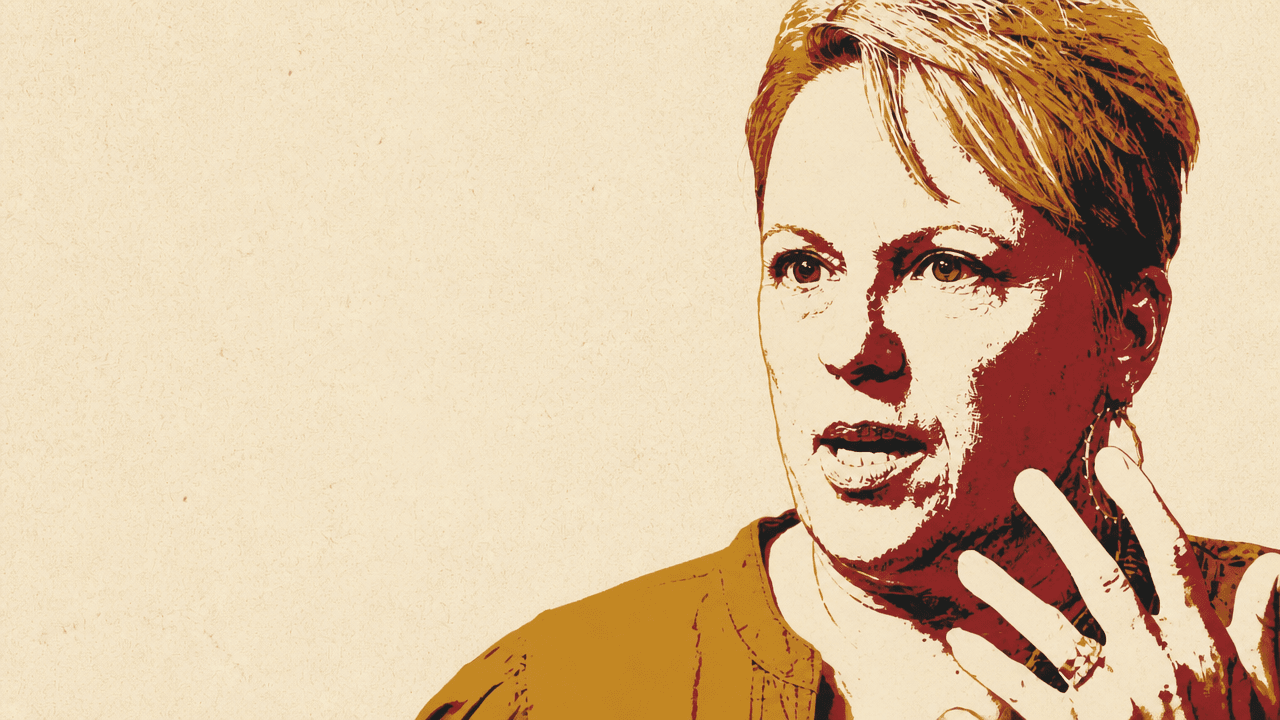
Suzanne Venker argues that many women have been taught to build their lives around uninterrupted paid work while treating marriage, motherhood and domestic life as secondary concerns to be fitted in later. In a conversation with Chris Williamson, the relationship author says that sequencing matters: debt, career choice, cohabitation, mate selection and childcare decisions can make family life far harder to choose by the time women want it. Her case is not that every woman should become a mother, but that women who may want children should preserve that option before it quietly disappears.
Venker’s trap is a sequence, not a single choice
Suzanne Venker describes the career-first life plan as a chain of decisions that can look rational in a woman’s twenties and become constraining in her thirties. The sequence starts with education and work built around continuous labor-force participation. It is reinforced by debt, lifestyle expectations, and dating norms that treat a man’s ability to provide as optional. It then hardens through cohabitation, marriage, children, breadwinning pressure, and childcare arrangements that make stepping back from paid work feel impossible.
Her apology to “a generation of women who’ve been misled” is directed at that omission. Young women, she says, were told they could do anything they wanted, but without caveats about sequencing, biology, trade-offs, or the possibility that marriage and motherhood might become central later. In her account, modern culture prepared women for work, not for relationships and family.
The claim is not that women should be denied opportunity, or that every woman should become a mother. Venker frames her work as advice for young women who want, or may one day want, marriage and children. Her warning is that many women are asked to plan for family only after their lives have already been constructed against it.
The running joke is, well I'm trying to get to you when you're 22 before you come to me at 32, but at 22 you're not interested. But at 32 you're like, help me, help me!
The recurring coaching pattern she describes is a woman somewhere around 30 who suddenly wants a baby, wants marriage, is pregnant and wants to stay home, or discovers that her husband does not want her to leave work. The distress, in Venker’s telling, comes from realizing that earlier decisions were made for a different life: one in which career would remain central and uninterrupted.
Chris Williamson presses the difficulty of the advice. Asking a 22-year-old to structure education, work, money, and dating around future motherhood means asking her to plan for a desire she may not currently feel, that her friends may not share, and that media may not encourage. Venker concedes that it is a “big ask.” But she says the alternative is what she hears in coaching: women who were not told that their priorities might change and who then feel “stuck.”


Her explanation for the cultural message is explicitly political. She argues that the dominant model of equality became a model of sameness — men and women as interchangeable, with women proving themselves “in the way men do.” Williamson calls this the “bigotry of male expectations”: women are valued insofar as they can perform historically male roles, while the historically female work of caregiving and home-making is implicitly demoted.
Venker locates much of the shift in second-wave feminism. Her account is polemical: she says the loudest voices were a minority of women, often with painful or dysfunctional family histories, who generalized from their own stories into claims that marriage was oppressive and domestic life could not satisfy women. Over time, she says, those ideas stopped being argued as “feminism” and became embedded cultural common sense: if a woman is not working for pay, she cannot be powerful, liberated, or happy.
The practical consequence is Venker’s central reversal. Instead of putting career at the center and fitting men, marriage, and motherhood around it, she wants women who value family to put family at the nucleus and make education, work, dating, and money orbit around that.
Flexibility matters more than status if family is the long game
For Venker, the first lock-in begins before a woman has children and often before she seriously wants them. She advises young women to choose majors and professions not only by prestige, interest, or earning potential, but by whether the work can coexist with the family life they may want in their thirties and forties.
That means practical training, real earning power, and flexibility. Venker emphasizes fields that allow part-time work, remote work, movement in and out of the workforce, self-employment, schedule control, or business ownership. Her concern is not that work is bad, but that some career tracks consume the entire life around them. If a woman spends her twenties in a profession that requires 24/7 availability, she may have little space to find love, build a marriage, or later reduce work without major financial and identity costs.
When Williamson asks why women should have to build career around family, Venker rejects “should” as the frame. Her argument is about preserving choices. A woman may not want to scale back at 22. Venker’s claim is that many women will very likely want the option at 32, and if they have not planned for it, the option may not exist.
Student debt is one of the clearest examples. Venker says American parents and institutions encouraged young people to treat college as so important that cost did not matter because repayment would supposedly follow. But by the time a woman finishes school, begins earning enough to repay debt, and starts thinking about a home, marriage, or children, she may be close to 30. Debt then becomes a constraint on staying home, working less, or living on one income.
Her point is not only financial. It is temporal. Decisions that seem unrelated to motherhood at 19 or 22 — major, graduate school, debt, city, job structure — can determine whether motherhood at 32 comes with real room to choose.
Venker says parents should be more willing to tell daughters and sons that male and female life trajectories may differ because women’s bodies do something men’s bodies do not. Pregnancy, birth, breastfeeding, and early infant care are not incidental details in a life plan. They are structural facts that affect time, work, dependency, and marriage.
Williamson’s challenge sharpens the social difficulty. A young woman who plans this way is acting against a strong cultural current. She is future-proofing for a life that may not yet feel emotionally real. Venker’s answer is that the cost of not planning often becomes visible only later, when the desire for marriage or a baby arrives and the infrastructure of life points in the opposite direction.
Mate choice determines whether options remain real
Venker gives unusually direct relational advice: a woman who wants children should not marry a man who has not found his professional footing. She says this used to be ordinary parental counsel — do not bring home a man without a job or direction — but now sounds controversial because women are told they do not need a man to take care of them.
The issue, for Venker, is not permanent dependence. It is the vulnerability created by pregnancy, birth, breastfeeding, and early childcare. A woman may need financial and emotional support from a man for some period of time, even if she later returns to paid work. If the man cannot provide that support, the woman has fewer options.
Venker interprets that gap as evidence that people instinctively understand the asymmetry around childbearing. She asks whether anyone really thinks a woman should be pregnant, give birth, breastfeed, care for an infant, and also be expected to provide financially in the same way at the same time. In lived experience, she says, the answer is obvious: the mother is busy, tired, depleted, and physically attached to a baby who needs her.
Williamson adds a mating-market concern. He cites figures suggesting that the top 20% of female earners and the bottom 40% of male earners are forming relationships in which the woman is the primary breadwinner. He wonders whether women’s independence leads them to pay less attention to a man’s future prospects, which then creates a loop: she works harder to secure enough freedom to have a family, while the relationship itself makes her the provider and reduces her ability to step back.
Venker calls that a trap. But she repeatedly says she does not fault the women involved. They were “tutored” and “schooled” to live that way. When they later ask why nobody warned them, her answer is that the culture refused to speak plainly about male and female differences.
Williamson notes how hard it is to argue for less financial independence. Venker says that framing is wrong. The question is not whether independence is good in the abstract, but what a woman wants her daily life to look like at 35, 40, or 45. Does she want status, income, and public achievement as the organizing goal, or meaning, relationships, and family?
Venker does not deny material constraints. Food, housing, and basic security matter. Her argument is that status and family, pursued in their most extreme forms, compete. The line Williamson supplies — “What you’re praised for in public, you pay for in private” — becomes a shorthand for her claim. Public achievement can be real and rewarding. But the private systems that make it possible, including who cares for children and what happens to marriage, still have to be paid for by someone.
Breadwinning motherhood is where the sameness model breaks
Venker says young men’s and women’s lives can look remarkably similar through school, early work, and pre-child adulthood. The differences become “glaring” when children arrive. Pregnancy, birth, breastfeeding, and the early months of nurturing change the daily reality of a woman’s life in ways equality rhetoric often abstracts away.
In Venker’s account, a new mother’s first inclination is not to financially provide for the baby. It is to nurture the baby. Her desire to work for pay often “ramps down,” at least for a season. A man’s desire to provide, by contrast, often “ramps up” when he becomes a father. Venker’s theory is that the mother is physically needed by the baby in an immediate way, while the father’s role becomes supporting mother and child by providing and getting things done.
That is why she is so critical of the 50/50 model after children. Couples who enter family life in “sameness mode” — tit for tat, constant accounting, interchangeable roles — often become miserable, she says, because the model assumes equality at exactly the moment when maternal and paternal burdens diverge.
Asked about breadwinning mothers, Venker allows that some women are happy living what she calls a more traditionally male life. But in her coaching and writing experience, she says, most women who are wives and mothers eventually find primary breadwinning taxing. The pressure to provide while also being a mother becomes a source of resentment. Her explanation is not moral failure; it is overload.
The claim depends on treating motherhood as substantial work. If raising a baby into a healthy adult is seen as something that can be done “on the side,” then Venker’s critique will not register. But if motherhood is constant developmental labor, then asking a woman to carry primary provision at the same time can become too much. Venker says women can do both, but not “unscathed.”
She links this burden to men’s retreat. Williamson reads back a line from her work: men want their wives happy, and if they believe she wants to provide, they instinctively step back. Venker says men need incentives to work hard — usefulness, reward, a goal. Historically, she argues, providing for a family has been the greatest incentive. If women say they can have the babies, raise them, and provide too, she asks, what happens to men? Her view is that many pull back because they are told they are not needed.
Williamson points out several cultural paradoxes. Deadbeat dads are widely criticized for failing to contribute financially, yet women are also warned not to rely on male partners. American maternity leave is criticized as inadequate, yet women are simultaneously told career is the most important thing they will do. Stay-at-home mothers can be treated as if they no longer have “a lot going on.” Williamson gives the example of a friend who became a stay-at-home mother after previously working; at a playdate, another mother told her she wished she had known her “while you were working, while you had a lot going on.” He says the comment hurt her deeply.
Venker says that assumption captures the pressure. Many women feel they cannot “succumb” to wanting to be “just” a mother because “just” is the cultural framing. In her view, that is exactly backward. Family and relationships are not an optional add-on to the real work of life. They are, as she puts it, “the whole thing.”
Williamson restates the premise bluntly: Venker is saying family life will be more important and more rewarding than professional life. Venker says that is exactly the frame. Without it, her practical advice sounds like needless sacrifice. With it, the advice becomes an attempt to protect what she thinks will matter most.
The “three-hour mum” debate turns on presence, not playtime
Emma Grede becomes the public test case for Venker’s view of motherhood and work. Williamson introduces Grede as a British entrepreneur associated with Good American and Skims, and as a mother of four, then plays a clip from an NBC News interview about Grede calling herself a “three-hour max mum.”


Grede’s defense is that she meant exactly what she said and did not want to backpedal. She objects that a headline about three hours with children would not have been written about a man. Her broader complaint is that working mothers are held to impossible standards: arrange every playdate, monitor every food choice, entertain children constantly, and still maintain a working life. By “three-hour mum,” she says, she means roughly three hours spent doing what the kids want — playing, entertaining, getting on the floor — before she has other obligations. “Isn’t that good enough? I think it is.”
Venker responds by distinguishing direct engagement from availability. A stay-at-home mother, she says, may also spend only a few hours on the floor doing child-led play. Motherhood is not twelve hours a day of treating the child as the center of the universe. The difference is what happens outside the concentrated playtime: the mother is physically present and available.
Venker argues that the modern idea of “quality time” grew out of mothers trying to compress caregiving into leftover hours after full-time work. Because they were absent most of the day, they felt pressure to make one or two hours intensely count. She sees that as a misreading of what small children need. Her claim is that absence cannot be repaired by a few high-quality hours. Young children need “tons and tons and tons” of quantity time.
The issue, then, is not whether the three hours are warm or enjoyable. It is what is happening during the rest of the week. Venker says a person committed to a high-powered work arrangement may need to believe the arrangement works, because fully entertaining contrary evidence about early attachment would require rethinking the structure of life.
Williamson frames the trade-off in time horizon. Leaving work has immediate, visible costs: lost income, lost status, disrupted identity, and professional consequences. The developmental costs Venker is worried about, if her view is right, are delayed and less visible. They may appear later, when the child tries to form relationships in adulthood.
Venker agrees with that framing: there are no solutions, only trade-offs. Her complaint is that one side of the trade-off is culturally discussable and the other is treated as taboo. The immediate cost to an adult career can be named. The possible developmental cost to young children often cannot.
Her most concrete image of the work she thinks is being undervalued is small and ordinary. A two-year-old climbs stairs for the first time. The mother stands behind him so he will not fall. At each step, the child turns around to check that she is there, then climbs again. Venker says that in such moments a child develops trust that carries forward. Her point is that attachment is built through accumulated presence, not occasional performance.
Marriage should be chosen before inertia takes over
Venker says who a person marries, and how that marriage fares, will affect happiness and well-being more than any career decision. She does not think young women hear that clearly. If parents or relatives do not teach it, she asks, where would they learn it — school, media, or popular culture?
Her reasoning is practical rather than romantic. A job can be changed. A career can shift. Interests can evolve. But if a person marries and has children, they are tied to that spouse in some form for life. Divorce exists, but Venker does not treat it as a clean substitute for choosing well. She says second and later marriages are more fragile, and that swapping spouses does not solve the underlying difficulty for most people.
Williamson asks whether the importance of marriage is an argument against rushing into it. Venker says nobody should rush. But for her, the better conclusion is earlier education about marriage, fertility, biological clocks, and the differences between male and female life courses. She says it should not be taboo to state that a 40-year-old man can marry a 30-year-old woman and still have a family in a way that is not equivalent for a 40-year-old woman looking for a husband. Her phrase is: build a life around what is, not what one wishes were true.
Dating with purpose follows from that. Venker’s advice is to learn early whether someone is family-focused or career-focused, temporary or permanent, aligned or misaligned. She does not mean a first-date interrogation. But by the third date, she thinks people should be learning about childhood, parents, whether the parents are married, the person’s impression of marriage, work, and what kind of future they want.
Her own example is straightforward. When she dated the man who became her husband, he learned that she had been a teacher, loved children, had been married before, and wanted children and wanted to be home with them. That told him something real: a life with her might mean a one-income household. Venker sees that as useful information, not an embarrassing disclosure. If a man does not want that life, “no hard feelings. Bye.”
Williamson adds a broader model of romantic drift. Infatuation, he says, can put people into a drug-like attachment state. They start hanging out, stay over, move in, get a dog, get engaged because it seems like the next step, marry, and have children. The whole life is assembled through momentum rather than chosen clearly.
Venker says this is why she has opposed cohabitation. Her objection here is not religious and not primarily sexual. It is decisional. People “slide into marriage” instead of deciding. They need some objectivity and separation before engagement: their own space, enough distance to ask whether this is the person they want to marry.
Williamson also reads from the on-screen notes that earlier research often associated premarital cohabitation with roughly 20% to 50% higher divorce risk depending on controls and demographics. He notes the main criticism: selection effects. People who do not cohabit before marriage may be more religious, less likely to divorce, or different in other ways. Still, he thinks the “sliding versus deciding” explanation is too important to ignore.
Venker emphasizes that moving in together and proposing marriage are different acts. The reasons someone shares rent or “shacks up” are not the same as the reasons someone gets down on one knee. Once a couple shares a lease, a house, routines, and perhaps pets, inertia can obscure the harder question of whether they should marry.
Her bright-line rule is financial: do not buy a house with someone you are not married to. Do not bind yourself financially before the marital commitment. In her view, those bindings create momentum that can substitute for decision.
The skills that win at work can destabilize the home
Venker extends the career-first critique into marital temperament. She wrote The Alpha Female’s Guide to Men and Marriage for Type A, hard-charging women who had mastered public competence but struggled to soften at home. Her summary is that skills rewarded in the marketplace can be “a complete disaster” in marriage.
The workplace rewards assertion, advocacy, argument, and disagreeability. Williamson notes that disagreeability is positively correlated with professional earning because it helps someone demand a raise or defend a position. Venker agrees, but says the same mode can become corrosive in a relationship.
Her key term is receptivity. A woman who is always arguing, countering, or challenging may be using a professional skill in a space that requires a different one. Venker says this from personal experience: she is a natural arguer and often wants to present the other side. She says that irritates her husband, and that sometimes the argument simply is not needed in the marital space.
The point is illustrated by Whitney Cummings in a clip Williamson plays. Cummings describes dating a professional athlete and telling him she was the person to date “if you want, like, a challenge.” He replied: “Why would any man want a challenge in their relationship?” Cummings says she realized she had assumed being feisty or challenging was attractive, and apologized.


Venker says that moment captures her “Alpha” argument. Williamson adds that a high-performing person who fights fires all day may not want to come home to more fires. Venker’s claim is not that women should erase their personalities or intelligence. It is that adversarial energy can be mistaken for strength while making the home exhausting.
This is also where Venker’s broader male-female framework appears most clearly. A heterosexual marriage, in her view, needs “yin and yang,” masculine and feminine. If a woman marries a masculine man, Venker argues, he does not want the same combative mode she may use successfully at work. She links peace in relationship to softness, receptivity, and older forms of femininity, saying it “wouldn’t hurt to bring a little bit of that back” for women who want a calmer marriage.
Housework is a secondary but related example. Venker argues that men and women often do not see the home the same way. A man may step over a sock because he does not notice or care, not because he expects his wife to pick it up. Women, she says, tend to care more about the home because they are “nesters,” even when they work.
Her larger point is about scorekeeping. Tit-for-tat accounting becomes especially destructive when both spouses work full-time and then return home to domestic demands neither has enough room for. In her own arrangement, when she was home and her husband worked, she did more grocery shopping, cooking, and household labor because she was physically home-based. He changed diapers, cleaned, and did what he could on top of work. The division, in her telling, was legible enough that they did not need constant scorekeeping.
Lifestyle inflation makes children look unaffordable
Venker does not deny that children cost money. Her narrower claim is that many people mistake a desired lifestyle for the minimum cost of family. Especially in the early years, she says, a baby needs diapers and formula. Across 18 years, costs accumulate, but private school, fully funded college, vacations, Disney trips, a large house, and a “forever home” are not prerequisites for having children.
Williamson repeatedly keeps genuine material constraints in view: food, housing, and economic instability are real. Venker accepts that. Her argument is that families can live on less during the early years if having a parent at home is a high enough priority. People work with the money they have and make trade-offs.
Social media, in Venker’s view, distorts the baseline. Curated lives teach people that a certain house, city, vacation schedule, children’s activities, and consumer lifestyle are normal. If a young couple cannot match that image, they may conclude they cannot afford children at all. Venker says children do not need all of that.
Williamson adds that people often optimize for pre-child status and convenience: coffee shops, brunch, urban neighborhoods, social life, travel, outfits, public signaling. He acknowledges housing markets can be brutal, but says moving farther from a city can sometimes produce much more house for the same money. Venker agrees that people often refuse to consider options that do not match the exact life they imagined. They want the final lifestyle immediately rather than accepting stepping stones.
The longer people wait, Venker says, the more their lifestyle inflates. Williamson agrees. A decade of adult consumption, travel, independence, and social display raises the opportunity cost of family. The result is not only that children seem expensive, but that the life required to have them feels like a status loss.
Williamson’s thought experiment makes the status distortion concrete. Imagine two mothers starting solo childcare businesses. Each watches the other’s child and pays the other the same amount. In one version, each is a self-starting businessperson. In the other, each stays home and watches her own child. The labor is materially similar, but paid work receives recognition while unpaid motherhood is treated as “just” staying home.
Venker says that reveals the underlying value system. If the highest priority is presence, attachment, and a child’s character formation, then the paycheck is not the central measure. If a person needs a paycheck to feel valuable, the decisions will be different.
She also argues that modern culture teaches the value of money but not the value of time at home. There is an entire domain of life — errands, chores, cooking, raising children, maintaining a household — that is not paid work but is still life. “Somebody’s got to do it,” she says, but also “somebody gets to do it.”
Cooking becomes one example of invisible domestic value. Venker says few people will cook at the end of a 10-hour workday, and she links the decline of home cooking to broader health problems. She claims childhood obesity tripled in the last 50 years while mothers left the home en masse, and argues that while people discuss chemicals and oils, an important lifestyle change was simply that fewer homes had someone in the kitchen cooking. Williamson agrees that calories matter and that knowing what goes into food changes intake.
Her broader point is that domestic work becomes resented when it is treated as an obstacle to the “real” work of earning. If home life is seen as a vocation, the same tasks can be understood differently. The work remains work, but it is no longer invisible.
Daycare is Venker’s strongest example of a normalized trade-off
Venker’s most categorical practical position is that group daycare should be the last resort for very young children. She says daycare began as a Head Start-style provision for low-income or one-income families with no real alternative because the mother had to work. Over time, it became available to anyone and then normalized as a way of life.
Her comparison across time is important to her argument. Twenty-five years ago, during the “mommy wars,” she says mothers using daycare often felt they had to defend the choice because it was still instinctively understood as less than ideal. Now, she hears parents speak about dropping off a two-year-old, one-year-old, or even six-week-old as casually as taking a shower. Her interpretation is not that these parents are bad. It is that many do not know what they do not know.
Venker’s hierarchy is explicit: very young children belong at home with their mother; if not mother, father; if not father, grandmother; if not grandmother, nanny; if not nanny, a small neighborhood arrangement. Institutional group daycare is, in her phrase, “the bottom of the bottom.”
The reasons she gives are scale, turnover, stress, sleep, and attachment. Babies and toddlers need one-on-one responsiveness, quiet, predictable feeding, stable care, and reliable attachment figures, she argues. Venker says a large institutional setting cannot replicate that. Children are one among many. Caregivers come and go. A child may begin attaching to someone who is later moved to another room or leaves the job. Sleep may be disrupted by other children crying. Hunger may not be answered immediately because staff must get to everyone.
She distinguishes short separations from long daily care. A couple of hours in a group environment is not the same as eight or 10 hours for a one-year-old. A baby can handle brief separation, she says, if return to the mother or stable caregiver is predictable. Full-day care for “littles” is the arrangement she calls harmful.
Williamson raises the common parental objection: some children seem to love daycare and run happily inside. Venker says that is likely an older child, not a baby. By three, she says, a few hours of preschool in the morning can be age-appropriate. But 10-hour daycare for a three-year-old is different. The cost may show not as tears but as exhaustion and overstimulation. A child picked up in that state may be impossible to discipline because he is “like drunk,” forcing parents either to abandon meaningful discipline or put him straight to bed, which further reduces time together.
For households that cannot live on one income, Venker’s advice is to delay group care as long as possible and exhaust non-group alternatives. She suggests family, neighbors, friends, tag-teaming shifts with a spouse, or swapping childcare with another mother. The smaller the arrangement, the better.
Williamson describes a version of that swap: two mothers coordinate work days and alternate watching each other’s children, creating one or two work days without institutional daycare. Venker says necessity is the mother of invention. If daycare were not treated as the default system, she believes more families would find local arrangements.
Her core claim is developmental, but it remains Venker’s claim. In the first three years, she says, the most important thing is the formation of love and trust that carries into later relationships. If a child does not attach to the mother or a stable alternative caregiver, Venker says, that can show up later in adult relationships.
Williamson notes the paradox with contemporary therapy culture. Many adults are fluent in attachment language and work hard in therapy to understand how inconsistent care shaped them. They describe needs for consistency, availability, reliability, responsiveness, and predictability. Yet they may resist applying that same framework to their own childcare decisions. His concern is that people may be trying not to pass patterns down while building lives that make similar patterns more likely to recur.
Venker says this is why she wrote How to Build a Better Life: for women who want love, marriage, and family at the core and need to make decisions early enough to avoid the bind. If the life is structured around family from the beginning, she argues, many later childcare dilemmas become less severe.
The point is not compulsion; it is preserving choices before they disappear
Venker and Williamson both draw a line between urging women who do not want children to have them and warning women who likely do want children not to ignore that possibility until too late. Williamson says he has never told women who do not want children to have children and is actively opposed to that. His concern is that most women do eventually have children, and many who do not had not intended to remain childless.
Venker takes those figures as evidence that deliberate lifelong childlessness is a smaller group than public discourse can make it appear. Her broader formulation is that “societal progress does not undo biological leanings.” Social systems can be designed around ideals, but if those ideals fight deep desires, she says, people become miserable. Her advice is to move with the “biological tide,” not against it.
This also explains her view of motherhood’s public status. She hesitates over the word “punished,” but agrees that pro-motherhood content is underrepresented. The non-family-focused minority, she says, gets vastly more media attention — “90/10” in her phrase — while wives and mothers who are content are quietly living their lives. Before alternative media and social media widened the field, she argues, mainstream media disproportionately featured women for whom family was not central, making ordinary women feel abnormal.
Her phrase near the end is “live your life, not theirs.” A life built around what one is told to want, even when it conflicts with deeper desires, produces unhappiness. Social media makes that harder by creating endless comparison with people one does not know, living lives that may look enviable but lack other goods. Venker’s alternative is not the rejection of ambition as such. It is to know what one values early enough to build around it.
Her imagined billboard for young women is the distilled version of the whole argument: nothing, she says, will compare to the euphoria, satisfaction, and meaning of having and raising a baby, building a family, and creating a secure home while the wider world becomes unstable. No amount of money will compare. But young women may not know that yet.
Venker’s final defense of the advice is optionality. If a woman plans around family and later chooses a different path, she still has choices. If she ignores family until debt, career structure, cohabitation, mate choice, lifestyle inflation, and childcare needs have narrowed the path, the choices may be far harder to exercise.