Hollywood Demands Total Commitment but Still Runs on Lottery Odds
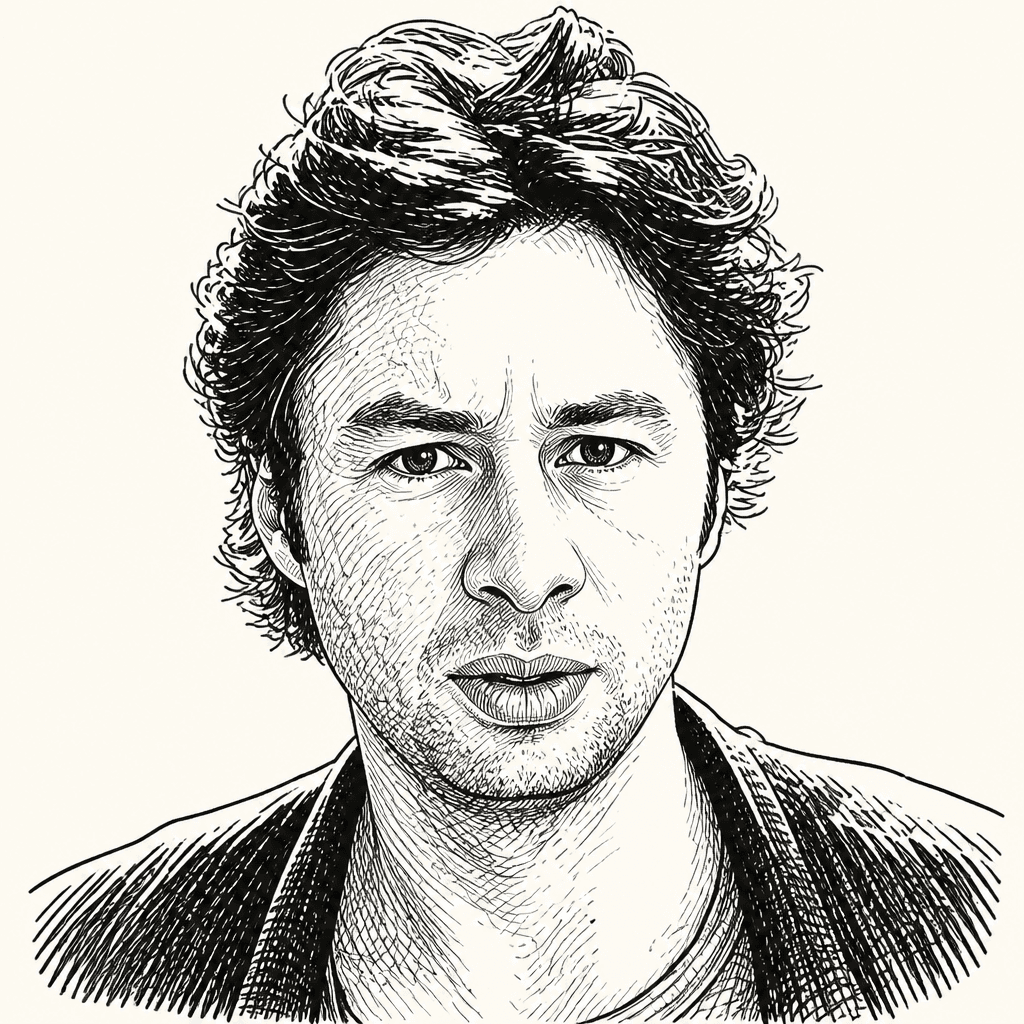
Zach Braff presents Hollywood as a business in which total preparation is the entry fee, not a promise of success. Drawing on his return to Scrubs, years of directing and acting, and his own missed auditions, he argues that careers are shaped by a brutal mix of obsessive work, arbitrary gatekeeping, typecasting, and reinvention. The result is less a theory of how to make it than a warning about what the work demands and what it can consume.
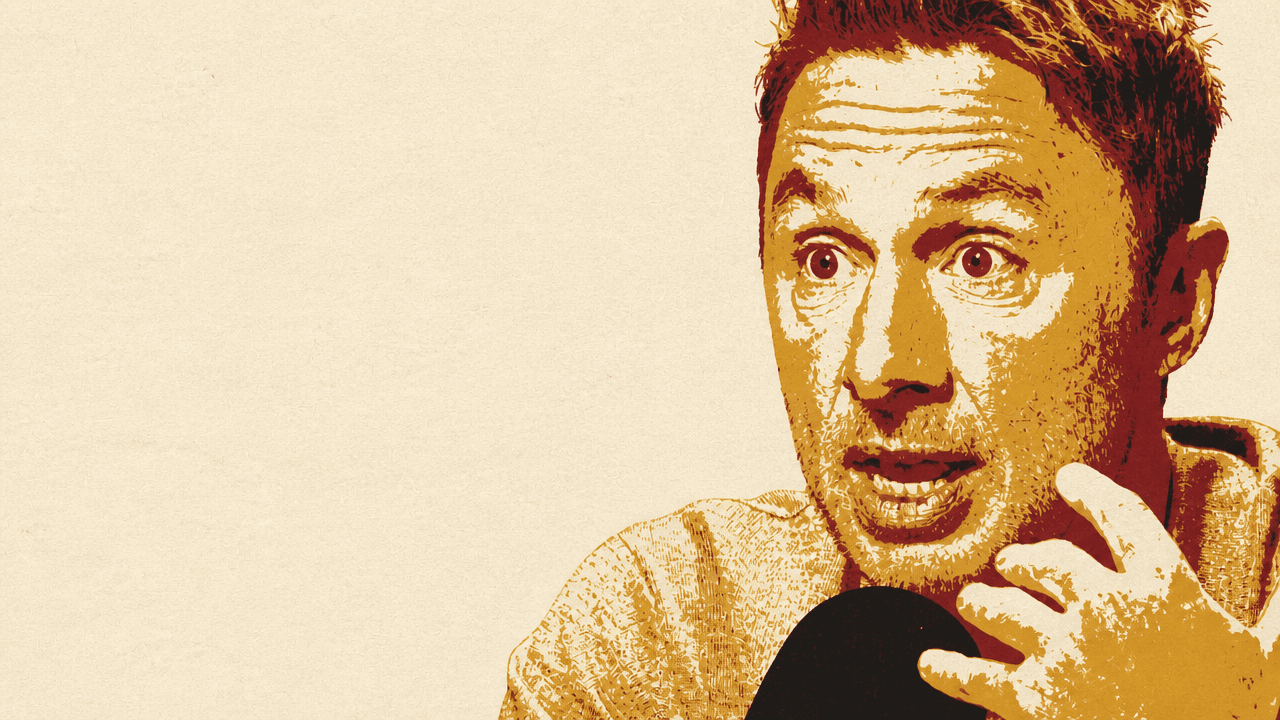
Hollywood demands total preparation and still preserves arbitrary outcomes
Zach Braff describes acting, directing, and show business as a field where effort is mandatory and still insufficient. His advice to younger performers is not inspirational: if they are not prepared to go “100%” at the work, they are wasting their own time. Hollywood, in his telling, is crowded with people working hard enough to make half-effort irrelevant.
That applies even to auditions. Braff says an actor who has not memorized the material, worked it with friends or a coach, and made the self-tape technically presentable is not merely underprepared; they are competing against people who have done all of that and more. “Do you know how many fucking people are going all out for that same part?” he asks. In a profession where only one person gets the role, the person who phones it in is “going to get blown out of the water.”
But Braff does not turn effort into a guarantee. He calls acting a lottery. Beauty gives someone “a lot of lottery tickets.” Talent gives someone “a lot of lottery tickets.” Having both gives someone “a shit ton of lottery tickets.” It is still, he says, “a complete lottery.” He knows actors who are excellent, beautiful, or both, and still not household names, not leads on shows, and not widely known. New York and London theater, he says, are full of some of the best acting a viewer will ever see, performed by people who may never convert that ability into television or film stardom.
It's all a complete lottery. I think if you're really, really preposterously good looking, you have a lot of lottery tickets. And if you're a really fucking talented actor, you have a lot of lottery tickets.
That tension — go all in, but do not expect the world to owe you an outcome — is where Braff locates much of the brutality of the business. He gives a recent example from his own career. He auditioned for a role with a two-page monologue, worked on it for a week, memorized it while walking the dog and doing dishes, recorded the tape, and felt he “crushed it.” He did not get a callback. He did not even get a “good job.” When the show came out, he watched the actor who got the part and thought, in his “egotistical mind,” that he had been better. The result did not change the work he had put in, and the work did not change the result.
I fucking brought it. I brought 100%. That doesn't mean you're going to get everything.
Chris Williamson contrasts that world with the appeal of creator platforms. A YouTuber or influencer may be judged harshly by the market, but not in the same way by a casting director. They can upload the equivalent of an unlimited number of monologues; nobody grants or denies permission to do the work. Braff accepts the distinction: low views are still rejection, but “a sort of soft rejection.” He did not grow up with that option as a career category. For his generation, the gate was more explicit.
Braff does not dismiss the permissionless world. He says there are people making “a great living” from whatever their niche YouTube thing is, and he watches some of those niches himself. He has gone down rabbit holes of RV and van-life tours, even though he says full-time RV living is not a life he would lead. Williamson points to online sketch performers and small production units that no longer need traditional television approval to make work. Braff agrees that the shift is real, while keeping the distinction narrow: online rejection still exists, but it is less like being stopped before the audience ever sees the performance.
Scrubs returned as a leadership test, not a nostalgia exercise
The revival of Scrubs forced Zach Braff into the exact position his character faces in the new pilot. In the story, J.D. comes back because Dr. Cox tells him they should “get the band back together” and make a difference. J.D. returns expecting to work with his mentor, only to be told he misunderstood: Dr. Cox will not be there, and J.D. is in charge. Braff says that is what happened to him in production.
Bill Lawrence, who created the original show, wanted the revival and encouraged the reunion. But Lawrence was also running other shows, and Braff says the practical arrangement was complicated by the fact that Scrubs is a Disney property while Lawrence had a Warner Brothers deal. Lawrence could advise by phone and step in when there was “a fire,” but he could not write and micromanage the revival in the way he had run the original. Aseem Batra, a writer from the original Scrubs, ran the writers’ room in Los Angeles. The show shot in Vancouver. Someone had to oversee the production on the ground.
Braff says he had producing partners, but he also says plainly: “I know the show better than anybody.” He had acted in it, directed it, and learned from Lawrence for years. The revival put him back not as the young star who could show up and be funny, but as an executive producer and leader responsible for the quality of the thing. He calls it “extraordinarily stressful.”
The stress was intensified by the nature of Scrubs itself. Braff describes the original as a singular blend: comedy, drama, surreal fantasies, a hospital setting with infinite comic and dramatic possibilities, and seven main characters audiences followed for “eight and a half years.” The revival had to recover a tone, not merely repeat jokes.
Braff says he studied the common pitfalls of revivals and reboots. The major danger, in his view, is relying on nostalgia. Callback jokes can please die-hard fans, but they become exhausting and do not build a new audience. Nostalgia alone is not enough to sustain a modern broadcast-and-streaming show. Scrubs had been popular around the world, and old fans would be interested, but interest is not the same as durable attention.
The challenge was to “thread that needle”: find the tone again while adding new characters, new scenarios, and a new center of gravity. Braff says the original show was about three interns. The revival is about three attendings — senior doctors who are now teachers. Because it is a teaching hospital, interns, mentorship, and friendship remain structural parts of the show. But the focus has shifted from the students to the teachers.
That shift also changed how Braff saw the original experience. He had gone to film school, worked as a production assistant, waited tables, auditioned, and tried to keep “as many irons in the fire as possible.” When he got Scrubs, he did not just get a starring role; he got what he calls grad school. Every week brought a different director. While other actors went back to their dressing rooms, Braff stayed on set, asking why a director was doing something a particular way. He watched comedy directors work inside the show’s language, each with different techniques.
Looking back, he is not sentimental about all of it. He and Donald Faison did a rewatch podcast, which Braff says became one catalyst for the revival. They were candid when they thought an episode did not work, or when they thought they themselves were overacting. Braff says he can now see moments when he was not as good, when he was overacting, when “the wheels kind of fell off the bus.” Being in charge of the revival made that memory practical: he now felt responsible for keeping everyone at a certain quality.
When the pilot was cut, Braff says, the mood changed. The studio, the network, Lawrence, and others reacted as if the show might genuinely work. For Braff, that was the moment the responsibility became a kind of passing of the torch. Lawrence, he says, is “not huge with the compliments,” which made his approval matter more. Braff jokes that Lawrence wrote him a Christmas card containing “basically the nicest thing he’s ever said” to him, ending with: “I hope this will last for at least a year.”
A breakout role can give an actor a career and narrow the world’s imagination
Zach Braff does not frame being known as J.D. as a grievance. He calls it what “everybody wants”: a beloved role, a big production, and broad recognition. He also says that kind of success comes with “side dishes.” Audiences fall in love with a character and then struggle to see the actor as anything else.
He gives Bryan Cranston as the counterexample: known as the father from Malcolm in the Middle until Breaking Bad allowed him to be “reborn.” Braff says that sort of second life happens, but it is rare. The more common pattern is that a hit role defines the actor in the industry’s imagination. It is difficult to complain, because the actor is extraordinarily lucky to have had the hit at all. But it is also understandable, he says, to wish to be taken seriously as something else.
Braff had one protection against being trapped entirely by J.D.: he wanted to direct. Making his own films and pursuing his own material gave him another channel. Still, he says the last few years have brought parts that felt meaningfully outside the box. Again through Bill Lawrence, he took a small role in Bad Monkey with Vince Vaughn. He was only in a couple of episodes, but the part was different enough, and the feedback strong enough, that it gave him “newfound confidence” in his own range. It challenged the possibility that maybe he really was “just a comic” or “just a sort of J.D. kind of guy.”
He then did an independent film called Clean Hands, which he says was accepted to Tribeca. In it, he plays a narcotics cop who lost his daughter, a role he describes as “180 degrees” from anything he had done before. He wants more of that work.
Chris Williamson generalizes the problem beyond acting. People often get social identities from what they have been rewarded for: the party guy, the party girl, the funny one, the person who plays a certain role in a group. When they change, other people have to update their view of them, and some resist. Braff agrees and draws a direct line between acting and life: if one actor changes how they play a scene, the other actor must respond differently. If a person stops drinking, stops going out late, and starts going to the gym, friends must shift how they are around that person.
For Braff, reinvention has to be held in repeated interactions. Williamson introduces the idea that established interpersonal patterns can persist for only a limited number of interactions if one person consistently refuses to play their old part. Braff’s version is less clinical and more practical: it is like crate-training a dog. If the dog cries and you let it out, “you’re fucked.” You have to hold the line. If you revert, the other person learns that the old pattern still works.
If you're gonna shift your patterns and shift your way of being, you have to hold the line.
The consequence is social as much as internal. Reinvention is not completed by deciding to become different; it is tested when other people keep offering the old cue and the person changing refuses to play the old part.
The same anxiety that sharpens the work can shrink the rest of life
Zach Braff identifies obsessive-compulsive disorder and anxiety as both a cost and a source of professional usefulness. As a child, he had obsessive tapping rituals. He would feel compelled to touch a doorknob or object a certain number of times to prevent something bad from happening to his family. Even as a child, he knew the thought was irrational, but, as he puts it, “just to be safe,” he would do it anyway. Chris Williamson calls this “the obsessive’s wager,” likening it to Pascal’s wager: if the ritual might protect his family, the cost of doing it feels smaller than the imagined cost of not doing it.
Braff says he was diagnosed and had OCD “bad” as a kid, though he notes that other children and adults have it much worse. He also describes growing up with a father who had a temper. His father had a loving side, introduced him to the arts, introduced him to humor, and could be hilarious. But his father’s temper was frightening, and Braff believes it left him with a lasting edge: a readiness for something bad to happen, a “resting anxious state.”
That anxious state can be punishing. Braff describes adrenaline surges out of proportion to the actual problem — the body reacting as if it has almost been in a car accident. When that needle goes into the red and stays there, he says, people can experience panic attacks.
But he also connects the same machinery to comedy, writing, and directing. Being in his head, scanning for problems, attending obsessively to detail — all of it contributes to the work. Williamson names the professional version of the trait as a bias toward seeing problems before they happen. Anxiety is about uncertainty, he says: not imagining all the ways the future might go right, but all the ways it might go wrong. Braff agrees. A filmmaker lying awake before a major scene may be harming mind and body, but they may also have foreseen nearly everything that could go wrong.
Braff gives a concrete example from Scrubs: being on set at 2 a.m. for an insert shot of a phone. There may be no rational reason for him to be there; other people can handle it. But he does not want to arrive in the edit and see a frame that is not the frame he pictured. “That’s definitely obsessive,” he says, “but it’s how I make stuff.”
Williamson keeps pressing on the trade. Many visible strengths, he suggests, are the light side of a darker disposition. He compares Braff’s attention to detail to athletes whose obsessiveness makes them world-class and also corrodes their lives. The same trait that produces excellence cannot be neatly confined to the professional domain. A person cannot ask to be obsessive and ruminative only at work and then relaxed and spacious in relationships.
Braff’s answer is direct. He does not have children, does not currently have a partner, and says he has been “completely career-focused” for 25 years. He would love a family and relationship, but he also acknowledges that his career has received the attention, intention, and focus that could have gone elsewhere. It was not a conscious choice in the sense of a planned sacrifice. It was more that making things became the central source of gratification.
If I had put the level of attention and intention and focus into having a relationship and a family that I put into my career, I'd have a different life.
Williamson calls this the under-discussed counterpart to work ethic: “rest ethic.” Braff says he would read that book if it existed. He becomes anxious when he knows he will have a long time off. Work does not simply occupy him; it is where he feels most himself, most fulfilled, most in his element. Even writing, which is part of making things, can be lonely and depressing because it lacks collaboration. Some days he sits at the computer and thinks, “I suck.” The next day, after sleep, he may read the same work and think it is not bad.
The craft of a production is distributed, even when the director is accountable
Zach Braff repeatedly describes directing as collaborative rather than autocratic. If he were not in entertainment, he says he might be drawn to architecture and design because both involve working with skilled craftspeople to execute a rough idea. Directing, in his account, is similar: the director gathers cinematographers, production designers, costume designers, actors, and others, then guides the work of people who are better than the director at their specialized tasks.
The cinematographer is, for Braff, the director’s most important collaborator — the “right hand” person. The cinematographer determines how the image is photographed: lens choice, lighting, camera setup, and how the image will later be colored. He uses the interview itself as an example: the lights, lenses, and look are not incidental. A layperson may assume the director handles all of that directly, but Braff says the director is closer to a conductor. The crew is the orchestra; the cinematographer is like the first violinist. The director cannot play every instrument. The director’s job is to say more of this, less of that, and shape the whole.
The other role he singles out is the first assistant director, or first AD. Braff says even many people in the business may not fully understand the role. The director oversees creative decisions. The first AD runs the set: crew, background actors, performers, logistics, timing. In theater terms, Braff compares the role to a stage manager. It is a stressful job, he says, and first ADs joke that they “stereotypically die young.”
The stress is partly the schedule. Braff says Scrubs shot one half-hour episode in five days “back in the day,” and uses that as his example of the pressure a first AD helps manage. New streaming comedies he has directed often get six and a half days, and that extra day and a half makes a significant difference. Five days for a Scrubs episode was especially demanding because the show included surreal set pieces, fantasy sequences, a highly active camera, and often 60 to 100 background actors a day. Braff compares the production to a large cruise ship that has to be moved around.
The first AD makes the schedule and tells the director when time has run out. But Braff emphasizes that the director remains the ultimate decision-maker. If a scene is not working, the director may choose to spend more time on it and simplify a later scene. The allotted day must still be completed. Occasionally a scene can be punted, but mostly the scenes on the schedule have to be shot.
Not everyone on set sees the true time pressure. Braff says he receives a special call sheet, shared only with certain producers and the AD, that includes timing details. He does not believe everyone should know whether the production is behind or ahead. That, to him, is not good leadership. The better arrangement is that people do their jobs, and the leadership tells them when to move.
The early pull was live feeling, service, and rescue
Before acting became the career, Zach Braff briefly imagined a different kind of high-pressure work. In high school, he joined a volunteer rescue squad program in New Jersey for students 17 and older. He trained, went on calls, carried gear, moved stretchers, and took blood pressures. The work thrilled him. He liked the adrenaline, the feeling of “coming to the rescue,” and the fact that it was volunteer service.
For a moment, he imagined becoming a doctor, paramedic, or working somewhere in that field. The academic path closed that door. Braff says he did not have the interest or skill for biology, chemistry, and the education required. He liked the rescue, the service, and the adrenaline; he did not love the technical schoolwork.
That early attraction to pressure and response sits beside his account of theatre. His father took him from North Jersey into New York to see plays, and Les Misérables was the first one that landed at the right age. At about 13, he remembers being moved to tears by art for the first time — by the music, stagecraft, story, and the beauty of seeing it live with other people reacting around him. What stayed with him was the liveness: a performance changing every night, surrounded by people laughing or wiping away tears. When theatre is great, he says, it is “really magical.”
He is just as clear about bad theatre: when it is bad, “it’s really bad.” He does not leave at intermission because, as an actor, he feels too bad for the performers. He also does not go in totally blind. He filters what he sees through recommendations from friends.
Detective stories appeal to him because they are performances under pressure
Zach Braff’s current creative curiosity is interrogation and detective work. He has been watching edited videos of detectives getting suspects to confess — the highlight reel version of hours of footage. He describes videos where a narrator frames the turning points, and the viewer watches the progression from denial to admission compressed into roughly 30 minutes.
What interests him is not only the crime but the performance: the strategies detectives use to get someone who has done something horrific to admit it. He notes techniques such as moving physically closer over time, switching from aggressive questioning to warmth, bringing in a different detective, and using good-cop/bad-cop dynamics. He is careful to say some techniques are bad, manipulative, and can produce false confessions. But the strategic layer fascinates him.
One example stayed with him. A suspect would not speak. Two male detectives took an aggressive approach: they knew what he had done, had evidence, and needed him to say it. Then a female detective came in and went “180 degrees different.” She asked whether he was cold, brought him a blanket, asked whether he was hungry, got him food, sat next to him, and slowly got him to open up. Eventually he confessed. Braff sees the moment not as a trick in isolation, but as an example of a team strategizing about which approach might reach a particular person.
Chris Williamson connects this interest back to hypervigilance through a study he says Amir Levine described to him. In Williamson’s account, people with different attachment styles sit in a room where a computer begins to emit smoke. The anxious people notice first; the avoidant people leave first. Williamson uses the example speculatively: traits usually described as problems may also carry situational advantages. Anxious people scan; avoidant people can partition off emotion and act. In a police drama, he suggests, the kinetic door-kickers might be avoidant, while detectives might be anxiously attached — skilled at noticing the untied shoe or small inconsistency, but unable to stop noticing in private life.
Braff is interested in the techniques more than the attachment framework, but he responds to the underlying dramatic possibility. He says he has not seen enough work focused specifically on the strategies of interrogation. Williamson mentions Criminal on Netflix, with Kit Harington, as a show set almost entirely around interrogation rooms. Braff immediately says he will watch it.
The reference point Braff most admires is Adolescence, particularly the third episode, which features a psychologist circling in dialogue with a child. He praises the one-shot craftsmanship, but more than that the acting and the peeling away of layers through conversation. It is exactly the kind of contained psychological pressure he wants to explore: dialogue, performance, strategy, and the gradual movement toward truth or confession.
Television did not die; the audience fragmented
Zach Braff rejects the simple claim that network television is dead. He says the Scrubs revival did “really well,” and Chris Williamson says it pulled in around 11 million people within the first five days. Braff’s explanation is not that broadcast has returned to its old dominance. It is that the industry now measures audiences across slices.
The first metric is live viewing: people who watched as the show aired. Then comes live-plus-three: those who watched within three days, whether by DVR or streaming. Then live-plus-seven: those who watched within seven days. All of these numbers matter to networks and streamers.
Braff is clear that live broadcast viewing is only a fraction of what it was when Scrubs originally aired. Shows like Friends drew numbers that modern shows cannot expect, and he gestures to the MASH* finale as an era when an enormous share of the audience watched the same thing at the same time. Aside from events like the Super Bowl, certain soccer games, Olympics ceremonies, and other sports or finals, that kind of live mass attention is gone.
But meaningful numbers remain on broadcast for certain shows. Braff names Survivor, Ghosts, and Abbott as examples of programs still doing important business. Broadcast audiences skew older; younger viewers stream and often did not grow up with broadcast at all. Williamson says he is not sure he has a device in his house that can access live TV. Braff points out that broadcast is still literally in the air: with an antenna, it is free.
The revival also produced a secondary effect: many people who had never watched Scrubs went back and started the original series. Braff finds that exciting. Those viewers have eight and a half seasons to watch before their interest fully registers in the new show’s current numbers, but the archive becomes an asset. If a viewer likes the revival and wants to know how these characters became who they are, there are eight years of story waiting. Williamson compares it to watching a sequel first and then discovering the prequel. Braff likens the dynamic to House of the Dragon and Game of Thrones.
Braff briefly widens the point through his appreciation of large-scale television. He loved House of the Dragon, but says nothing beat the first season of Game of Thrones. What captivated him was not only fantasy storytelling but production scale and craft. As someone who loves filmmaking, he enjoyed the behind-the-scenes material: the question of how enormous sequences were built. He singles out “Battle of the Bastards” as one of the most incredible television episodes ever made.
Williamson adds a different form of viewer engagement: breakdown channels that decode storytelling details and possible future payoffs. Braff prefers not to know too much in advance. He avoids trailers for movies he already knows he will see, because he does not want the experience pre-shaped by marketing.