The Basement Yard’s Growth Came From Authenticity, Obsession, and Restraint


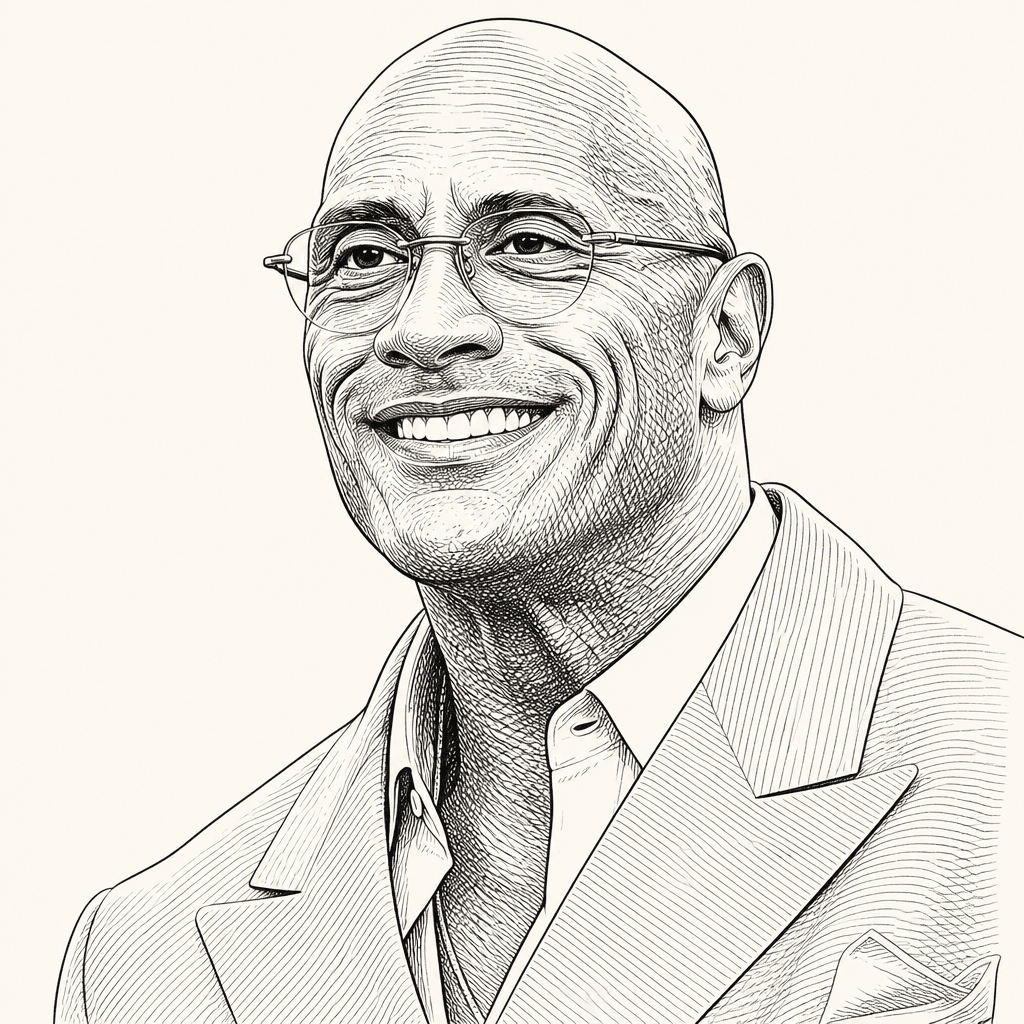
Comedian and podcaster Joe Santagato uses his conversation with Chris Williamson to make a practical case for self-belief as something closer to honest self-assessment than blind confidence. Santagato argues that his rise with The Basement Yard, from online videos to a sold-out Madison Square Garden show, came from knowing where his work was weak, refusing to cap what he might become, and protecting the authenticity that made the audience care. The result is a philosophy of ambition built on obsession, feedback, and action before certainty, rather than on image management or a perfect plan.
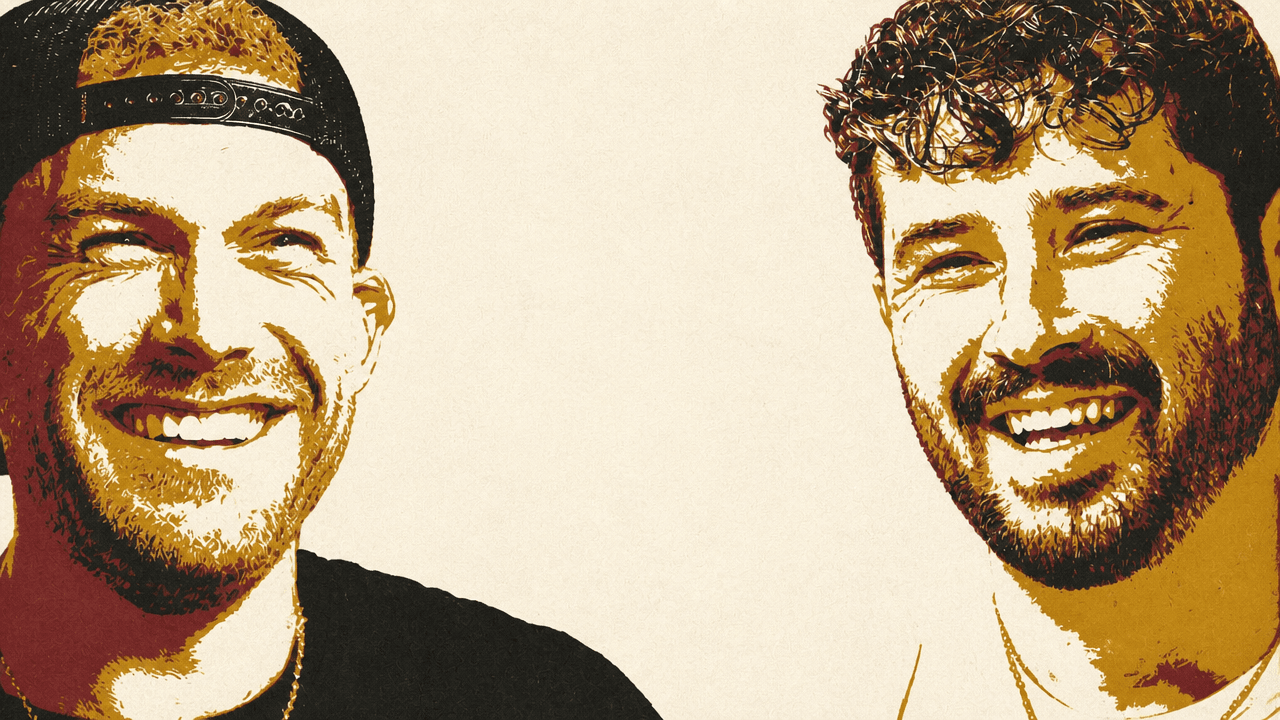
Self-belief works only if it starts with an honest inventory
Joe Santagato’s operating rule is sharper than the usual language of confidence: be realistic about where you stand, but not where you can go. He described the first half as a discipline of self-knowledge. Knowing where he is now keeps him humble, makes criticism usable, and blunts the force of outside judgment. If he already knows what he is good at, what he cannot yet do, and where the work is weak, a stray comment cannot destabilize the mission.


Be realistic about where you stand, but not where you can go.
The second half is where he becomes deliberately unrealistic. Santagato said he can watch Ben Affleck and Matt Damon win the Academy Award for best screenplay, replay the clip 20 times, and feel, “I can do that.” He was not claiming he could do it immediately, or that his first attempt would be capable of winning anything. The point was permission. If he wanted to apply himself fully, he believes the possibility is real enough to move toward.
He rejected a common distortion of manifesting and positive affirmation: using those ideas to tell yourself you are better than you are. His version is almost the reverse. Be exact about present capacity. Admit the work is not there yet. Then refuse to cap future capacity just because the current version cannot do it.
I can't do it right now, I don't think I'm capable, or like my first shot at it I can do it, but I feel like I can.
He tied the feeling to examples of people who make success feel geographically or socially plausible. A musician from a small town becoming successful gives other people in small towns evidence that the path is not reserved only for Los Angeles or established celebrity circles. Santagato’s own version is not a formal five-year plan. It is a willingness to let something light him up, then treat that reaction as worth following.
The emotional texture of that belief is not calm. He described himself as obsessive when something catches him. Before The Basement Yard’s Radio City show had even been booked, he already knew what song he wanted for the walkout: “Baba O’Riley,” the song he called “Teenage Wasteland.” He would run while listening to it and sometimes cry because he wanted the moment so badly. He framed this not as tidy goal-setting but as energy he could feel in his body.
The same pattern showed up around Madison Square Garden. Santagato had gone to a Noah Kahan concert there beforehand and found himself looking around the arena, thinking about how many people worked there, how the bars and shops would be open, and how implausible it seemed that he would soon be the one on stage. “You’re telling me that the shops are gonna be open,” he said, “or like people are gonna be selling Maker’s Mark out there and I’m gonna be on stage?”
When the show arrived, the small cues made the reality harder to avoid: the vinyl on the wall saying The Basement Yard had sold out the venue, the photos of historic moments in the hallway, his mother looking around and asking, “What are we doing?” That line mattered because it was also his own feeling. The venue was not just the next show. It was Madison Square Garden, and someone close to him was making him say the obvious out loud.
The impressive part, as Chris Williamson framed it, is not that Santagato feels no imposter syndrome. Santagato said he does. Standing in front of a sold-out MSG crowd felt ridiculous to him. What he does not do is let that feeling become a ceiling. Imposter syndrome, in his account, can coexist with expansion if it does not convert into avoidance.


There is also a responsibility component. Earlier in his career, Santagato did not have employees with children, mortgages, and obligations. Now he does. That pressure does not eliminate fear, but it makes stopping feel less available. He said he owes it to himself to keep testing what he is capable of, and he owes something to the people now depending on the machine he has built.
The audience is smaller than the devotion suggests
Joe Santagato resisted Chris Williamson’s description of The Basement Yard as one of the biggest podcasts in the world, partly because he has been online long enough that many people simply recognize his face without knowing the current work. He imagined new viewers saying some version of, “This guy’s really funny. Who the fuck is he?” That was not an insult to him. He said he wants that.
But the audience’s intensity is difficult to dismiss. Santagato said The Basement Yard has “like a top five Patreon in the world,” while its viewership does not, in his view, obviously match that metric. To him, the gap is evidence of unusually high conversion: people are not just watching; they are paying every month for an extra episode.
He pointed to live shows and merchandise in the same way. “I think every single show that we’ve done outside of like a casino show here and there” has sold out, he said. Merch sells well on the road. The pattern, in his telling, is not simply a large passive audience. It is a fan base with an unusually high support ratio.
What surprised him most was the tone of audience response during major milestones. When The Basement Yard played Radio City and then Madison Square Garden, comments did not feel merely fanatical. They sounded, to him, like messages from friends: “I just want to let you know I’m proud of you.” That kind of response lands differently from anonymous applause because it implies a relationship. He acknowledged the parasocial dimension, and joked that it becomes too much when people know his uncle’s name, but he still took the broader feeling seriously.
The live audience also skews heavily female. Santagato estimated the overall audience around 70-30 female, with live shows even more lopsided — “realistically like 85 percent,” though he was not presenting it as a precise audited figure. His first show, in New Jersey, drew about 1,700 people, and the thing he remembers most is the volume when he walked out. Williamson said the live crowd had apparently reached 130 decibels.
The gender split became a way for Williamson to bring up imposter syndrome, which he said is among the most common psychological growth areas women ask him about at his own shows. He saw Santagato as having a kind of reverse version: Santagato can feel the strangeness of everyone being there for him, but it does not slow him down. Santagato agreed only partly. He does feel the “why is this happening?” quality of it. He just keeps moving anyway.
That is partly because he thinks mailing it in would be a violation of the audience’s trust. He delayed live shows for years because he did not want to go on stage, sit with his co-host, talk casually, and take people’s money. Some podcast shows can be that, but he did not want his to be. If the audience loved a lazy version, he said, that would make him feel worse, because it would feel like manipulation: they paid, they were happy, but he had not tried.
Santagato’s concern was not just whether the show would be profitable or even whether it would be accepted. He did not want to discover that the audience would reward him for doing less than he knew he could. “They should hold me to a higher standard,” he said. The audience’s devotion increases the obligation rather than lowering the bar.
Obsession is the alternative to discipline
Chris Williamson proposed a distinction between motivation, discipline, and obsession. Motivation makes work feel easier. Discipline forces the work when motivation is absent. Obsession is stronger: the inability not to do the thing. Joe Santagato recognized that immediately.
His college story is the clearest example. He had been a good student in Catholic high school, with grades near the 90s, but when the time came to apply for colleges he simply did not apply. He lied to his parents, saying he had applied and was waiting. Eventually he told them he had not been accepted anywhere and went to Queensborough Community College.
He lasted a semester. He did not think he was above college, and he still believes school has its place. But something in him was physically resisting the path. He would drive to school, sit in the car, stare at the building, and feel that he could not go in. At one point he wrote out an imagined Barbara Walters interview in a notebook, picturing her walking him around the campus after he had become someone notable. It was absurd, and he knows it, but it captured the force of the undirected ambition.
Williamson called it “ambition without direction.” Santagato agreed. He had passion and no place to put it. In 2011, YouTube did not yet present itself to him as an obvious career category. There were no “influencers” in the modern sense, no Instagram economy pointing the way. He was making videos for no money, perhaps thinking an audience might one day lead to an audition, but he was not following a legible career map.
That made the decision costly. Friends were going to college, moving away, getting jobs. Santagato had dropped out and did not even have work. He said he felt “like a fucking loser” and, for the first time, accused himself of being full of shit. Passion did not pay rent. A notebook fantasy did not count as progress. He had told himself a lie, he said, and believed it.
Yet he still framed that period as following excitement. Even now, he said, he does not have a five-year plan. He is waiting for the next thing that excites him. The difference is that success gives him more room to wait. The basic method has not changed: if something lights a fire, he follows it.
Williamson saw in that a rejection of obligation. Santagato did not remain in school because that was expected, because he had been a good student, or because others wanted him to. He did not keep moving merely to satisfy the appearance of progress. Williamson contrasted that with people who “slide” into a path — college, job, safe track — because they are afraid of having drive without a destination.
Santagato did not romanticize the alternative. Some people are genuinely fulfilled by college, a stable job, and a conventional life, and he called them lucky. Not everyone needs to contort themselves into a creative career. But for someone who finds a thing that actually ignites them, he argued the answer is simpler and more demanding: “you need to do it.”
This is the first ladder step in Santagato’s philosophy: honest inventory tells you where you stand; obsession tells you which direction has enough force to justify risk.
Trying hard is only embarrassing if the audience matters more than the work
A recurring tension in the discussion was the modern pressure to seem nonchalant. Chris Williamson described a cultural mood in which trying hard appears lame, especially online. People speak ironically, stand against things rather than for things, and avoid earnestness. In the UK, he said, “tall poppy syndrome” and phrases like “too keen” or “don’t get too big for your boots” punish open ambition.
Joe Santagato’s response was blunt: people who act nonchalant about things they actually care about are usually showing insecurity. He is not embarrassed to try hard because he is not doing it primarily for perception. The work is for him. The win is knowing he put everything into an idea, worked for it, and watched it happen.
I'm not nonchalant about it because I'm not even doing it for the perception, I'm doing it for me.
He also sees willingness to fail publicly as an advantage. If other people are too image-conscious to fall on their face, he has room to move. Failure gives him information. A slammed door narrows the set of remaining doors.
Williamson quoted Mark Manson: “Do hard shit. Not because it’s fun, but because the win actually means something. You bled for it, you broke for it, you earned it. Easy wins are forgettable, hard ones change you.” Santagato agreed and tied it to craft improvement. The reward is not just the outcome; it is being able to look back at old work and see that he is better now.
That matters in his criticism of outsourcing too much creative labor. Williamson raised AI as a tool that can rob people of the experience they came for: the feeling of having done hard things and improved one rep at a time. Santagato’s version of the payoff is “I got good.” The satisfaction comes from the earned difference between an early attempt and the current ability.
This is also why he values criticism. Years ago, he sent a script to Greg, his longtime creative collaborator. Friends and family had told him it was funny. Greg sent back eight pages explaining why it sucked. Santagato loved it because the notes made sense. They gave him a way forward. He is not trying to prove that he was right on the first draft. He is trying to make the thing good.
The posture is high conviction without fragility. He wants to believe strongly enough to act, and remain loose enough to update. He described opinions similarly: if he has spent time with an idea, he believes it and will fight for it; if someone says something that destroys the argument, he is willing to drop it and keep the better one. “I need to believe that I’m right,” he said, “but I actually want to be wrong,” because being wrong is where growth enters.
Authenticity is the advantage, but only if it survives contact with feedback
Joe Santagato’s earliest strategic bet was not novelty, niche selection, or algorithmic optimization. It was authenticity. When he was making YouTube videos, he saw many creators doing similar things. His belief was that the only durable way to stand out was to do things his way, in his voice, because there is only one version of that.
Chris Williamson sharpened the point: no one can beat you at being you, but many people are trying to be someone else. Santagato agreed. In his field, copying an already successful creator may look rational, but it means entering a contest where the original already exists. He used MrBeast as the example. Even if someone can learn useful lessons from MrBeast’s approach to virality, trying to become him is not a path to becoming oneself.
The distinction is between influence and imitation. Williamson noted that Santagato has clearly absorbed things from other people — the Ben Affleck and Matt Damon clip, conversations, styles of working, creative examples — but those become ingredients rather than costumes. Santagato described himself as “me, with learning more.” He can take something from Williamson, his mother, Greg, or even bad advice, and incorporate it without surrendering his own center.
That requires the ability to admit error. Santagato argued that growth depends on constantly accepting responsibility for where one is wrong. He extended the point beyond creative work into relationships. If someone is cheated on, the other person’s betrayal remains real; he was not trying to absolve them. But he argued that there may still be a useful question about one’s own involvement: Were there red flags? Was the relationship boring? Was the partner chosen poorly? What can be learned?
Williamson agreed that anger at others often protects people from admitting where they betrayed themselves. Self-assessment does not mean self-condemnation. It means refusing to waste a painful event by learning nothing from it.
For Santagato, creative rejection works the same way. If a script fails, the useful move is not to defend it forever. It is to find out why it failed. A “no” closes one possible door and reduces the number of doors left to test. A person who keeps insisting that one rejected thing would have worked if only someone had understood it risks becoming the equivalent of the athlete who still blames the coach for not putting him in.
Authenticity, then, is not impulsive self-expression without revision. It is staying close to the internal signal while allowing the output to be corrected. Santagato wants to preserve the person who started, but not preserve every first attempt that person makes.
Refusing misaligned opportunity kept the operation small and self-owned
The Basement Yard’s live operation has remained small by Joe Santagato’s choice. He said the team did not expand dramatically for major moments. Around the tour, it was six people, with roughly four making decisions and dealing with companies. They were doing many things for the first time and figuring them out.
A company had offered to help with the tour. Santagato’s team declined because they wanted to understand the work themselves and see whether they could handle it rather than giving money away. After two years of shows, he said, they now know what is involved.
The lean approach created predictable difficulties. At one old venue in Tampa, the in-house computer could not handle their show assets. The venue brought out an old MacBook that also would not work. Their photographer had to go back to the hotel, retrieve his laptop, set up the show, and effectively run it from there. A larger touring team might have avoided that. Santagato still values being able to say that the visible result came from the small group of people around him.
The same instinct appeared in his reaction to agencies and outside opportunity. When he first signed with William Morris, he found himself at a large table with many agents, including someone introduced as his book agent. His reply was that he did not read. He also told them there was a chance they could present a thousand things and he would say no to all of them. He wanted them to know they could not simply take over his career.
That was partly insecurity and partly boundary-setting. He had an idea of agents as people who might try to steer him toward things he did not want. He was willing to accept help and guidance, but only if it resonated with the intuition that had already carried him.
He has turned down meaningful money when a deal violated that feeling. During his YouTube years, a $75,000 brand deal came in for a zombie phone game. He was open to the product, but the brand wanted placement in the first 30 seconds or minute of the video. Santagato had always placed ads at the end. The money was high because of the placement, but he refused.
He said there have been other six-figure deals he declined because the brand was misaligned or the requested behavior made him uncomfortable. Being incentivized with money after he has said no can offend him, because it suggests he can be bought out of the original objection.
One of the clearest examples involved Dwayne Johnson. Johnson’s team contacted Santagato when Johnson was launching a YouTube channel and developing a series called “Rock the Promo.” They wanted Santagato to host and do color commentary, with a finale involving Johnson. At first, the offer required Santagato to go to Los Angeles for around two weeks. He refused. He was making YouTube videos and his podcast, had a schedule, liked his life, and did not want to leave it for that long.
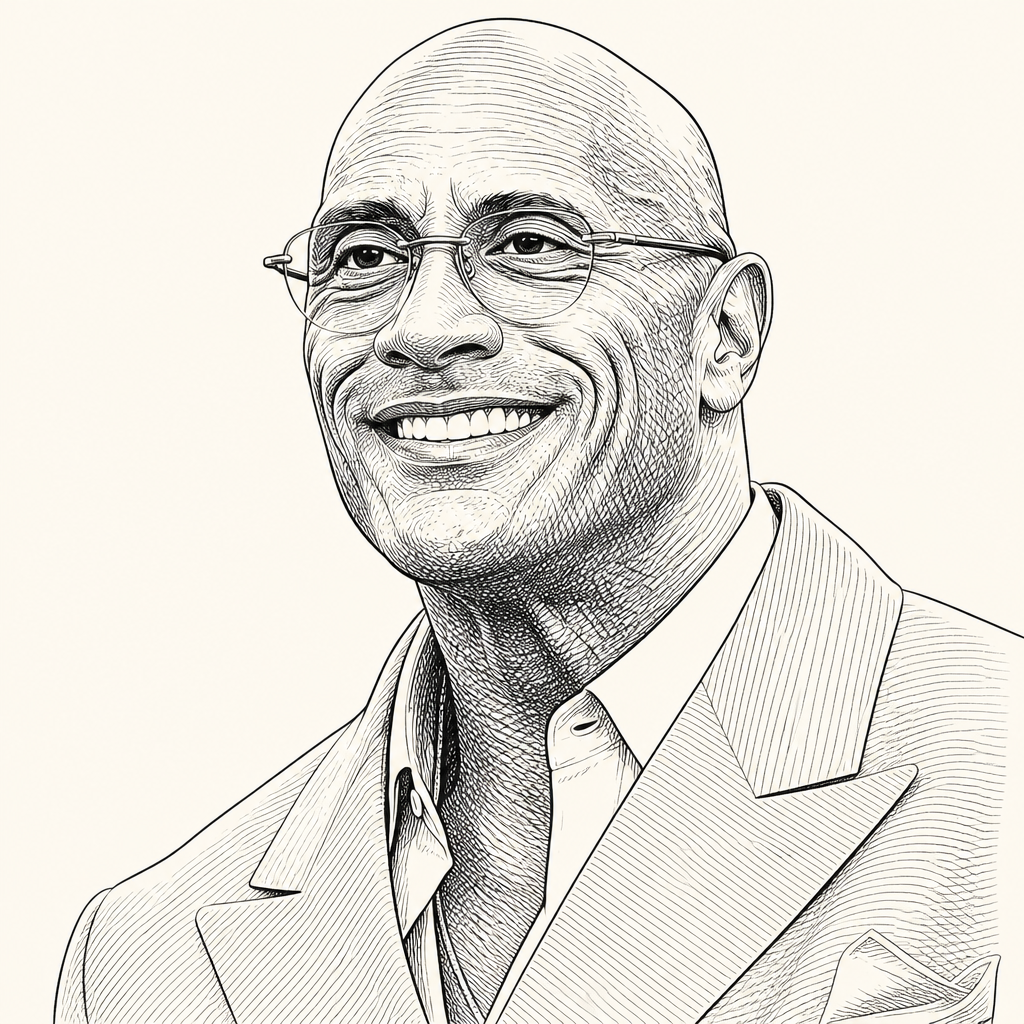
According to Santagato, Johnson really wanted him involved, so the recording moved to New York. The experience turned out well. He described Johnson as “the nicest guy” in his experience. On the flight to the Las Vegas finale, Santagato wrote a sketch and sent it to Johnson’s producer, suggesting that Johnson appear on his YouTube channel. He heard nothing until Johnson brought it up on set. Johnson could not do the script, but suggested they improvise a scene instead. Santagato proposed an argument about not being Johnson’s first choice to host, ending with a Rock Bottom.
A clip shown in the source plays as proof of that chemistry: Santagato tries to celebrate being Johnson’s “first round draft pick,” Johnson keeps lowering his ranking, and the bit escalates into mock hostility before ending in reconciliation. Its editorial value is not the joke-by-joke sequence. It is that the opportunity Santagato initially refused adapted around him, and then produced exactly the kind of unscripted, high-trust moment he says he values.
The story complicates Santagato’s philosophy. Looking back, he regrets some of the rigidity — “who are you to say that you’re not gonna go to LA?” — but he also sees the refusal as a form of protection. At that stage, he was trying to guard the authenticity he believed mattered. He made the decision that felt right, and the opportunity bent toward him anyway.
This does not mean every refusal was optimal. He now gives himself grace for past decisions and admits he has probably said no to things he should have done. But he would rather own a mistaken refusal than resent a decision someone else talked him into. Williamson called that the difference between high-conviction and low-conviction failure. High-conviction failure teaches. Low-conviction failure feels like being swept along.
That is where the ladder moves from authenticity to action: the internal signal matters only if it governs real choices, including expensive ones.
Creativity needs conditions, not force
Joe Santagato does not experience creativity as something he can summon on command. He can be consumed by an idea when it appears, but going from zero to one is difficult. Once someone gives him a prompt, a seed, even a terrible suggestion, he can riff quickly. Without that, he can stall.
He described an idea for an app that came to him while he was driving to the gym. He became so distracted by the need to flesh it out that he turned around, went home, wrote the whole thing, and sent it to Greg. Greg replied that it was stupid. Santagato accepted that and went to the gym. The point was not that the idea was good; it was that an idea can demand immediate discharge.
He also said much of his Madison Square Garden set came to him immediately after waking. Chris Williamson offered an explanation from flow-state research, saying the border between sleep and wakefulness can be unusually fertile because the brainwave state associated with flow is close to sleep. He described, as an example he attributed to engineers and Nobel Prize winners, the practice of holding metal objects over plates while drifting off, so the object would clang when they fell asleep and wake them at the threshold. Williamson also said the Flow Research Collective’s easiest hack for entering flow is to begin working within 30 seconds of waking up.
Santagato found that explanation compelling because it matched his experience. He often wakes with a joke or thought without remembering a dream. Williamson framed it as the subconscious continuing to work on material that matters.
Both agreed that creativity resists white-knuckling. Williamson used the line, “you can’t white knuckle creativity,” and compared forcing an idea to forcing an erection: the harder one tries, the more it runs away. Santagato said scheduled creativity is especially hard for him unless someone is there to prompt or collaborate.
The writer’s room model appealed to both of them. Williamson said he had learned through making skits and announcements that sitting with a group, throwing out ideas, and bouncing off each other is not limited to movies. It can apply to any creative team. The key is having at least one diligent person to provide structure and give the more reactive creative person starting points.
Santagato’s creative process with Greg and Frank works like that. He sometimes absorbs their ideas, walks around with them, forgets the origin, and later presents them as if they were his own. They call him on it. He apologizes and says it was a great idea. Beneath the joke is a real account of incubation: ideas enter, settle, and re-emerge after losing their provenance.
The work is serious; the self is not
Joe Santagato endorsed Chris Williamson’s distinction: do not take yourself too seriously, but do take the work seriously. He sees his job as fun and in some ways absurd. He is trying to be funny and entertaining with a friend he has known the longest. He is not claiming to change the world every time he sits down to record.
But he takes the work seriously because many fans use it as escape. He finds it hard to imagine being that for someone, even though he can imagine other people being that for him. That gap — knowing the effect while not fully feeling worthy of it — makes the responsibility heavier, not lighter.
His company culture reflects the same principle. He wants the job to be fun because the job is to create fun for other people. That means employees should not miss birthdays or let their marriages suffer because of him. The schedule is flexible. People have children and lives. He wants them present for those things.
He also keeps work and personal life separated. He described himself as having a normal life with friends, social plans, travel, and family, while the podcast and live shows occupy another sphere. He does not want to hang out with people and talk only about podcasting or YouTube. He does not watch many podcasts or YouTubers. The work matters, but it cannot become the whole identity.
On tour, he tries to engineer memories rather than just efficiency. Instead of choosing the cheapest hotel, he wants a cool Airbnb, a pool, a view — something the team can look back on fondly. The tour is not normal, he said; very few people get to do it. He wants the memory to include not only the show but also the cities, the photos, the shared moments around it.
Williamson asked how to engineer fun without becoming stern. Santagato’s answer was that trying to manufacture fun — declaring “we’re going to have fun” — usually kills it. The better method is to follow excitement and avoid work that does not resonate, even when money is good. Sternness emerges when the outcome becomes everything and the process is stripped of why anyone wanted it in the first place.
Family gave him space to make mistakes
Joe Santagato described an unusually close family. His relatives and friends have never asked him for anything, even as his career grew. They are supportive without being performative. His mother, in particular, has never tried to extract from him. This matters in his account because success can make family dynamics more transactional; his experience has been the opposite.
He finds estranged siblings difficult to imagine. If he and his sister stopped speaking, he joked that he would fly across the world, kick her door in, and force the conversation. The Queens-family version of conflict resolution is direct: if someone is still mad, someone will ask, “Are you fucking still mad?” Grudges do not get much room to ferment because issues come out.
His relationship with his mother shifted as he became an adult. She remains his mother and insists they cannot simply be friends, but she stopped trying to make decisions for him. He noticed only in the last five or six years how meaningful that had been. She gave him space to make mistakes, including decisions she might not have made herself, without looking at him as if he were an idiot.
Chris Williamson explored how difficult that must be for parents. After years of keeping a child alive, intervening before every sharp edge, the parent eventually has to decide either “I think he is good without me” or “I don’t know if he is good without me, but he needs to make mistakes.” Santagato, who admitted he tries to control many parts of his own life, said he cannot imagine how hard that would be with a child. At some point, though, the parent cannot remain the coping mechanism. If they do, support turns into enabling.
That family background does not explain all of Santagato’s self-belief, but it supplies one of its conditions: he was allowed to make decisions that looked strange without losing the support system behind him.
Enough is not the enemy of ambition
Joe Santagato’s ambition does not come from wanting endless money. He said repeatedly that money is not his primary motivation, while also rejecting the simplistic claim that money cannot make someone happy. Financial security removes a massive weight. But after that, he thinks people often miss the point, chasing a higher number in the bank while neglecting the relationships, experiences, and emotional work that would actually make life good.
Chris Williamson read the parable of the Mexican fisherman: a fisherman already sleeps late, fishes a little, plays with his children, takes siestas with his wife, and spends evenings with friends; an American investment banker advises him to scale into a fleet, cannery, IPO, and millions so that after 15 or 20 years he can retire and do exactly what he is already doing. Santagato saw the parable as exactly the point.
He does not want his identity to become his job. The job is a vehicle for the life he wants: travel, conversation, community, friendship, discomfort, learning, and the ability to give back. He said he wants people to say, when he dies, “that was a good dude.” That is the core target.
This is not anti-ambition. He still wants to create, grow, and make an impact. If he becomes more successful, he wants to give more money to charity and help more people. He enjoys earning things because the exchange feels good: effort goes out, something meaningful returns. But he will not sacrifice the things that matter — birthdays, family, friendships, personal life — for the abstract promise of later freedom.
He also corrected an earlier version of himself. At one time, he thought everyone should want what he wanted: entrepreneurship, passion, the chase. Now he sees that as wrong. Some people are content with one fish a day. If they are, he has no standing to tell them to want more. If he is not content with one fish, that is his burden, not proof of superiority.
The broader point is to run one’s own race without converting it into a sermon for everyone else. For Santagato, the goal is not to make everyone ambitious in his style. It is to make himself happy without acting in spite, and to make sure the people around him are happy too.
This is where the self-belief argument changes shape. Belief is not permission to grind forever. It is permission to build a life that reflects what one actually values.
Start before you can protect yourself from sucking
Joe Santagato’s advice to people stuck in planning is direct: begin. If someone wants to start a podcast, they do not need three months of strategy before recording. They need a loose idea and enough action to start learning. The plan will change anyway. Waiting to perfect something that cannot be perfected is a stall disguised as preparation.
Chris Williamson challenged this by pointing out that Santagato imagined the Radio City entrance song a year in advance. Santagato distinguished between vision and stalling. Imagining the moment, “scoring” the movie of his life, gave him direction and motivation. What he rejects is refusing to book the show until every detail is written. Once the team decided to tour, the next day’s action was to talk with the agent and understand the process. Planning mattered, but not as a substitute for commitment.
He compared the feeling to getting a tattoo. You want it, you are in the shop, the permanence hits, and when the artist asks whether you are ready, some part of you has to say, “Fuck it.” You might hate it. It might not be perfect. But the move requires accepting uncertainty.
His rule is that early work should suck. If you look back years later and think the first version was great, he said, you probably did not improve enough. Embarrassment is evidence of growth. You cannot plan your way out of sucking; you can only start, suck, and become better.
You're never gonna plan your way out of not sucking.
That principle extends to identity. If someone wants to be a rapper, Santagato said, then rap. Do it enough that people associate your name with it. Selling out venues is a later problem. Success is a later problem. First, become the kind of person who does the thing.
The obstacle is usually imagined perception: will people think I am cringe, bad, delusional? Santagato’s answer is to know who you are well enough that other people’s interpretation does not decide your behavior. This can slide toward delusion if not balanced by humility and criticism. He emphasized the checks and balances: listen, take notes, let people teach you, and do not become the person who talks constantly because they assume no one else has anything to offer.
Luck favors people who put themselves where luck can find them
Joe Santagato’s account of appearing on Chris Williamson’s show doubled as a theory of luck. Before meeting Williamson, his brother had sent the family group chat Williamson’s interview with Jon Bellion and suggested Santagato should go on the show. Two weeks later, Spotify invited Santagato to a panel in Los Angeles, and Williamson was also on it. Santagato decided he was going to talk to him.
He did not demand a booking. He simply put himself in position, spoke to Williamson, discovered they had rapport, saw him again the next day, and eventually ended up in the studio. Some people would call that luck. Santagato sees it as opportunity taken advantage of. The chance of Williamson being on that panel may have been low, but the chance mattered only because Santagato acted when it appeared.
This led into his advice for people who struggle with self-belief. Fear is normal, especially when following intuition has not worked before. The answer is not to wait until fear vanishes. It is to keep listening and keep doing, if living by intuition is something one wants to build.
He described fear as often smaller when examined directly. If he reaches out and nothing happens, he is in the same place he was before. He opened a door, found nothing, and closed it. That is neutral. If there is an opportunity behind the door, he wins. The fear can feel enormous, but in many cases the practical downside is minimal.
The more dangerous pattern is getting in one’s own way: deciding in advance that someone will not talk to you, that an opportunity is not for you, that you are too small for the room. Santagato said he did that for years. Now he refuses. Williamson has hosted bigger names, but Santagato’s conclusion was simple: Williamson is “just a fucking guy,” and the only way to find out whether there is a connection is to approach.
His summary was not mystical. Say yes to things. Put yourself in situations where luck can happen. Be good to people. Be someone others want to root for. Avoid surrounding yourself with people who are negative, harmful, or “weird” in the sense of doing bad things. Simplify it: be a good person, take the shot, and stop pre-rejecting yourself.
When fear comes up, his self-talk is crude but functional: “Don’t be a bitch.” He asks what the actual reason is and what he is truly afraid of. In many cases, the answer is only that the door might close. But doors close anyway. Sometimes, he said, if someone is slowly shutting one, you have to put your foot in.