Amish Transport Rules Distinguish Driving From Riding


Peter Santenello argues that the Old Order Amish prohibition on driving is not a rejection of using cars: they can ride with non-Amish “English” drivers, a rule that gave one Amish man, Marcus, leverage to secure a ride by offering Santenello a filming opportunity that never materialized. Santenello’s account, while noting that Amish communities’ rules vary, underpins Chris Williamson’s narrower point that constraints developed within a religious or cultural tradition—such as setting phones aside for shared meals—can offer useful social structure to people outside it.
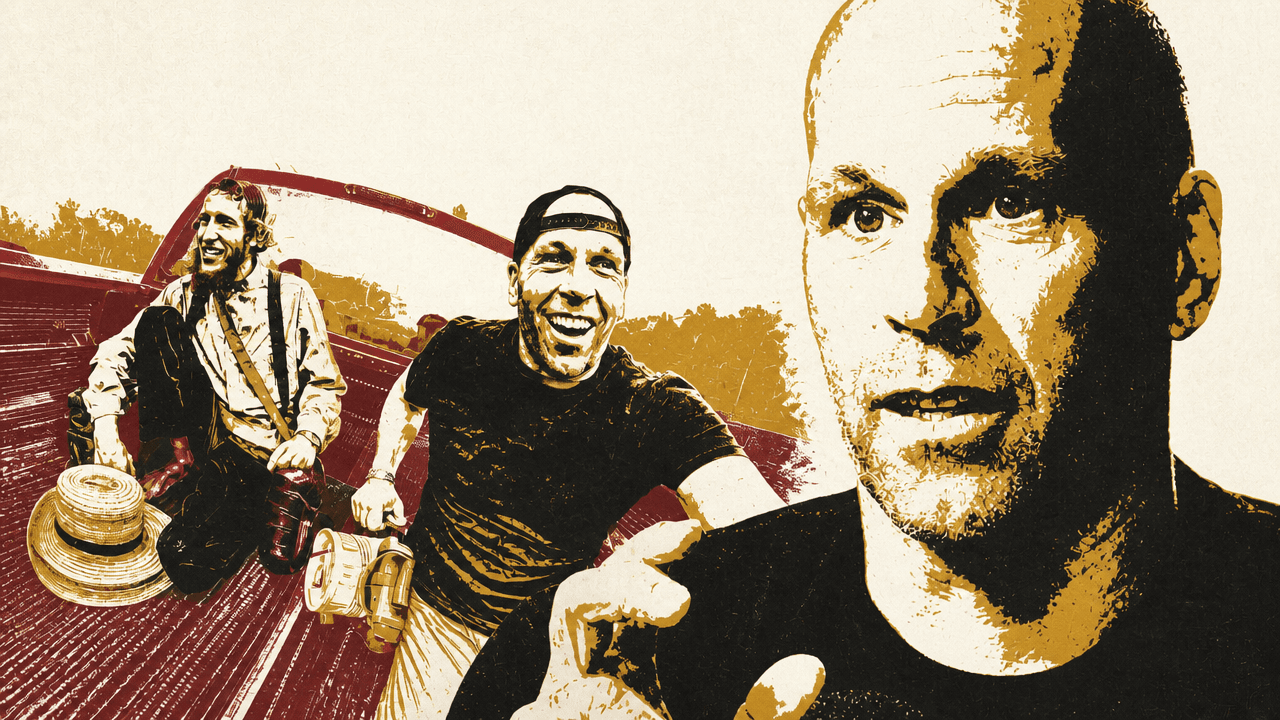
A ban on driving is not a ban on getting a ride
Peter Santenello describes an Amish arrangement that looks contradictory only if the rule is mistaken for a blanket rejection of cars. Old Order Amish, he says, cannot drive. But people living in the countryside still need transport, and they can ride with an “English” driver—the Amish term, as Santenello explains, for anyone who is not Amish.

That distinction sits behind his story about Marcus, an Amish man he met while filming in Holmes County, Ohio. Marcus offered to introduce Santenello to older friends playing shuffleboard in an Amish barn. Santenello drove an hour to pick him up, then another 45 minutes to the gathering, expecting to film there. When he brought out his camera during the drive, Marcus asked him not to start. At the barn, Santenello decided not to push for a video.
The men were speaking Pennsylvania Dutch, which Santenello describes as a German-derived language: “Dutch” in the sense of Deutsch, not a connection to the Netherlands. The filming invitation never materialized. After Santenello drove Marcus home and returned to where he was staying, another Amish man told him what had happened: Marcus had wanted a ride, and the prospect of appearing in a video had given him a way to get one.
The Amish bum rides from English.
Santenello says he laughed at the realization. Williamson’s point is that the apparent technological restriction did not make Marcus unsophisticated or powerless. Marcus could not operate the car himself, but he could enlist someone who could.
“Amish” contains communities with very different rules
Santenello cautions against treating the Amish as a single, uniform community. He places the Schwartzentruber Amish at the conservative end of the spectrum he encountered: no phones, no electricity, and closest to the conventional horse-and-buggy image. At the other end, he places Beachy Amish, whom he calls the most liberal and says drive cars.
For Santenello, Amish identity is not conferred by a plaque or a simple checklist. It means being part of an Amish church and living by its ways. Dress and grooming—including the distinctive beards he mentions—make membership visible, but the rules around technology differ among groups.
His own time in Amish country gave him an impression of how quickly information can move without the communications systems outsiders expect. While staying at an Airbnb, he was locked outside in his underwear after the door closed behind him and his phone, which held the entry code, was left inside. Hearing nearby horse-drawn carriages, he considered asking the neighboring Schwartzentruber Amish for help. Instead, embarrassed by the prospect, he broke a window to re-enter the house.
Santenello says he later came away thinking that Amish people are “like aspen trees, they’re all connected.” He meant it as a contrast with the assumption that limits on phones or electricity must mean social isolation.
He also recalls a shift in how outsiders spoke about Amish life around the pandemic. Before it, he says, people tended to see the Amish as left behind and unable to keep up. During the pandemic, some instead saw the appeal of people making their own food, spending time together in the countryside, and seeming less preoccupied by the broader social churn. Santenello does not argue that Amish life is a model to copy wholesale. His interest is in Americans who live, as he puts it, in their own universes; he names Amish people, Chicanos, and Siberian Yupik people as examples.
A constraint can be useful even outside the tradition that created it
Chris Williamson connects the Amish example to a broader interest in practices that deliberately limit behavior. Discussing Shabbat, he says he respects the practice and likes the idea of setting aside time when people are present with one another rather than absorbed by their phones.


He has tried a secular version. At a friend’s bachelor party, he organized a Friday evening around phones being put away, shared food, and a Jeffersonian dinner: one question posed to the room, with each person speaking in turn. The evening’s intended meal proved inadequate—two pounds of crawfish for 25 people—so he immediately took out his phone and ordered pizza. But the failed observance did not change what he found appealing about the structure: a defined interval for attention and conversation.
Williamson compares that impulse to the “digital Sabbath” some people practice by going without screens for a day or a set period. After spending seven days at a silent meditation retreat without screens, he says, smaller and repeatable doses of that withdrawal make sense.
Regardless of whether you're religious or not, or a part of the culture or not, I think that there's a lot of cultural technologies, social technology that you can take and bring into your own life.
The claim is not that a religious practice becomes identical once detached from its setting. It is that its practical structure—phones away, shared food, deliberate conversation, a temporary limit on habitual technology use—may still be useful to people outside the community that developed it.