America’s Deepest Divide Is Distance, Not Ideology
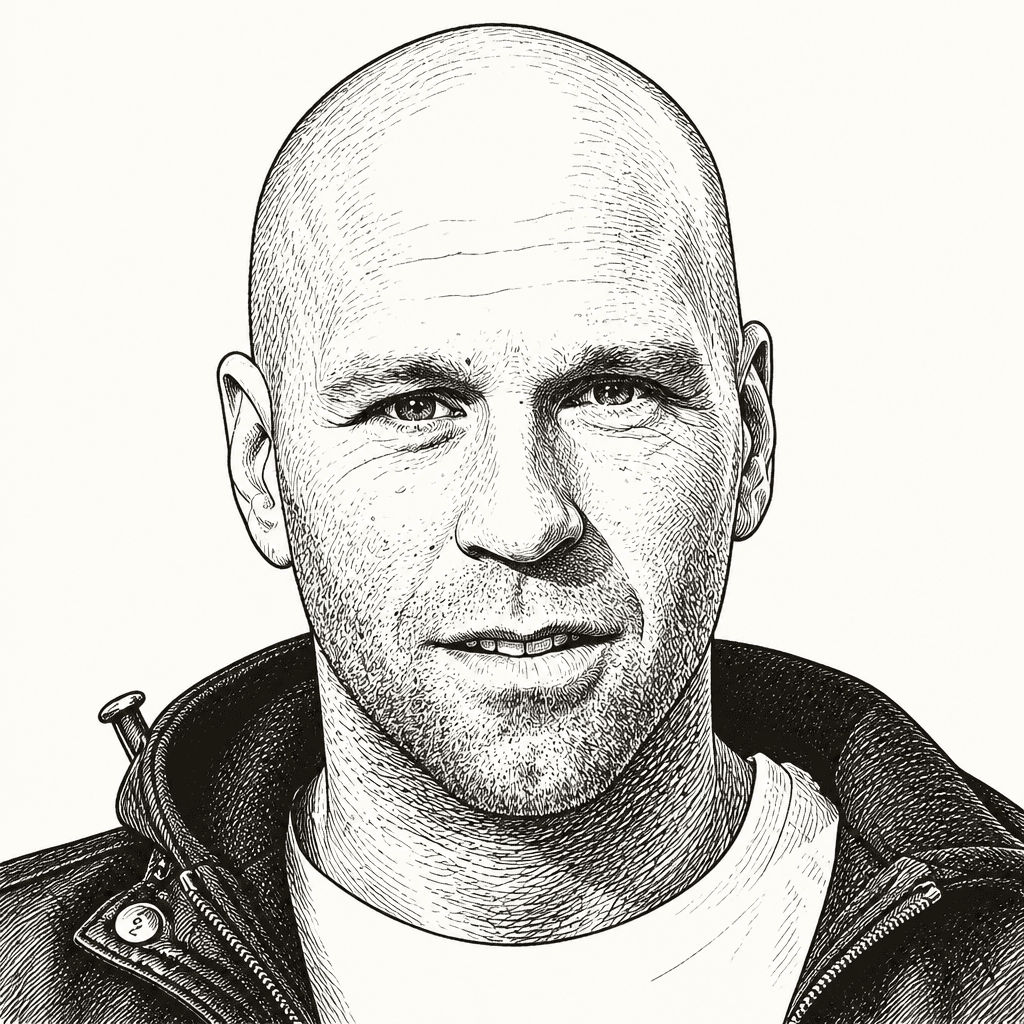
Peter Santenello, an independent journalist who reports from communities often reduced to stereotypes, argues that America’s deepest division is often isolation rather than ideology. From Appalachia and Native nations to Amish settlements, company towns and drug-affected city neighborhoods, he contends that national labels obscure how differently people live, work and understand their circumstances. His case is not for one hidden “real America,” but for replacing categories with direct contact.
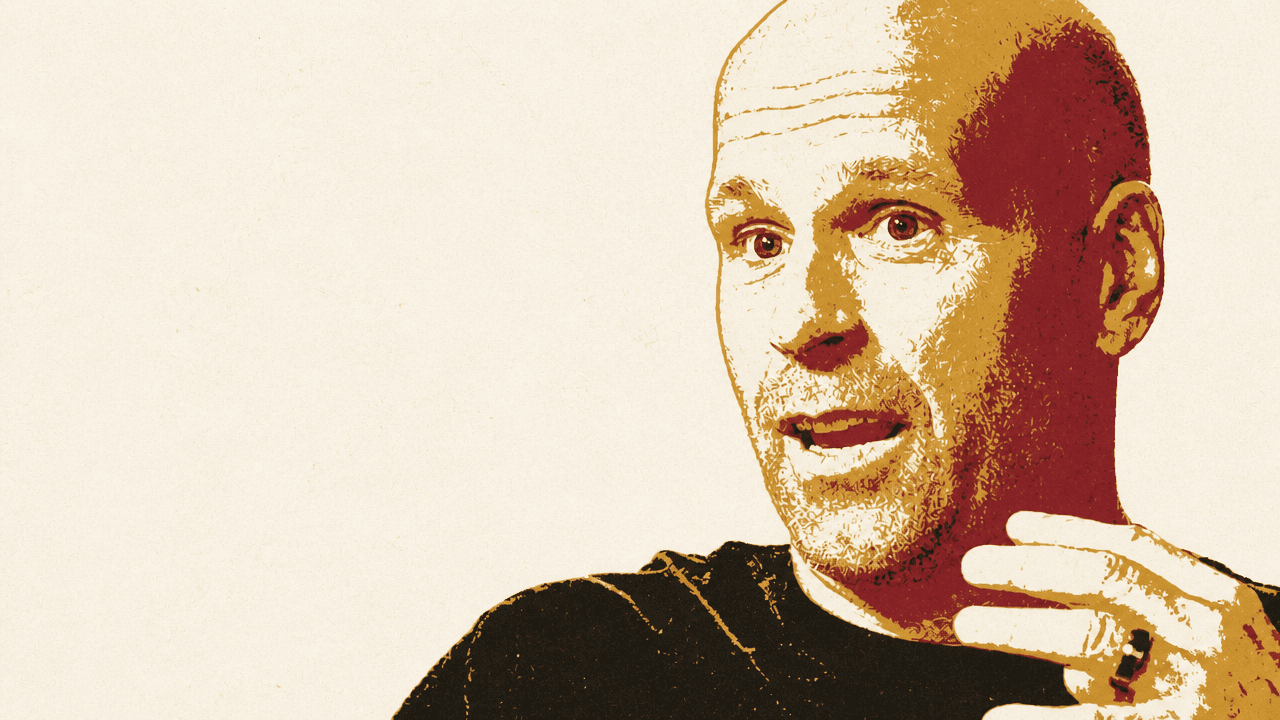
America’s deepest fracture may be be isolation, not ideology
Peter Santenello argues that Americans routinely form judgments about people and places they have never encountered. Political division matters, but he and Chris Williamson return to a prior condition: physical distance, social separation and the tendency to live inside a narrow set of local assumptions.
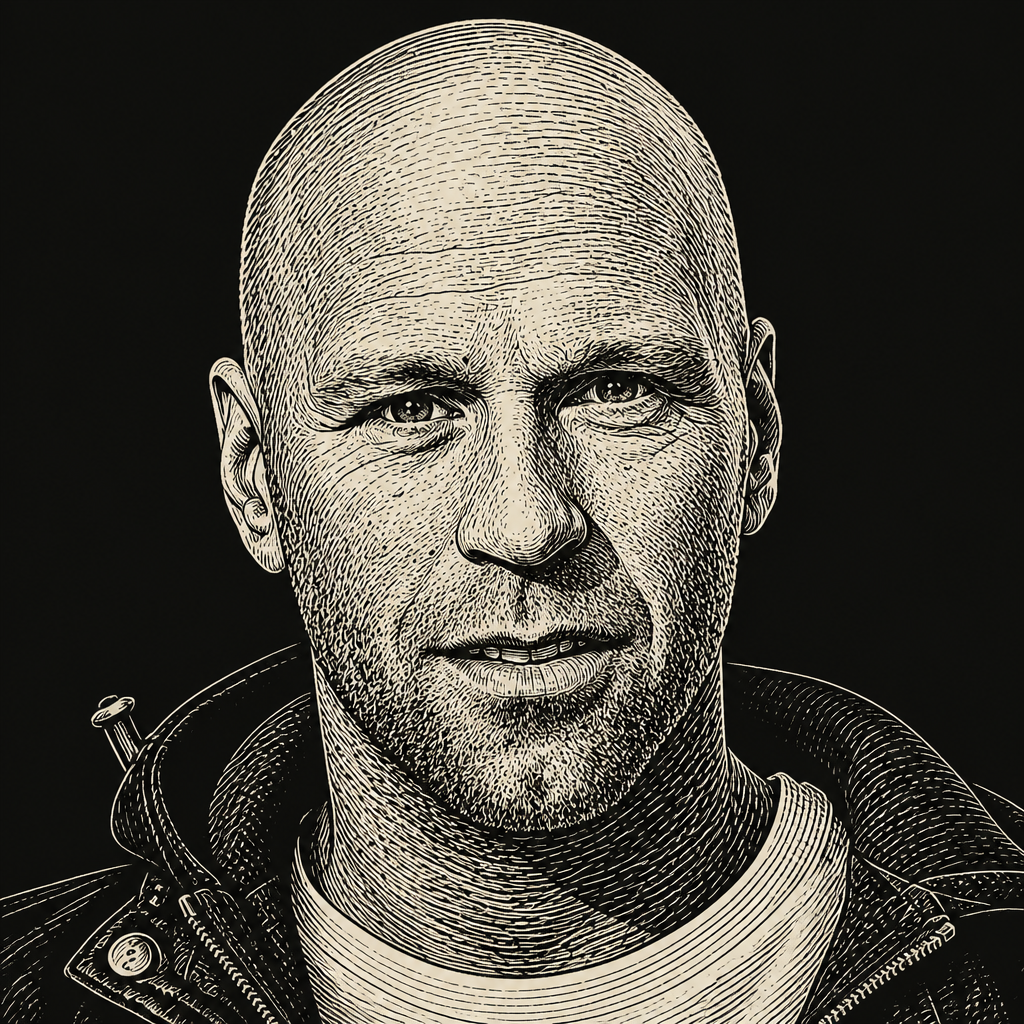

Santenello’s work is built around entering worlds that many Americans know only through stereotypes, news coverage or internet clips. Those worlds can be separated by thousands of miles, but also by a few city blocks. He has filmed in Native communities, Amish settlements, Hasidic neighborhoods, East Los Angeles, Appalachian coal country, company towns, wealthy enclaves and drug-affected neighborhoods. His point is not that these places reveal one hidden “real America.” It is that the national picture becomes misleading when it substitutes categories for contact.
He described finding St. Lawrence Island while browsing Alaska on Google Maps late at night. The island, home to Siberian Yupik people, is three times the size of Maui, he said. It has two towns, a post office and a church, but no Street View. Residents still hunt whales and reindeer, and Russia can be seen from the island. For Santenello, the striking part was that he had made a career traveling through the United States and still had not known the place existed.
We’re all in our bubbles. Doesn’t matter where you live, we’re in our bubbles.
Miami and St. Lawrence Island are in the same country, but Santenello describes them as separate universes. Miami is, in his phrase, a capital of Latin America; St. Lawrence Island is an isolated Alaskan community whose daily life bears little resemblance to the national image of urban America. Texas, California, New York and Florida have their own social and political gravity. At a smaller scale, an Amish settlement in Ohio, a Navajo community in Arizona or a Chicano neighborhood in Los Angeles may have its own customs, institutions, language habits and rules of belonging.
Williamson sees this variety as one of the country’s great attractions. A flight across the United States can pass over radically different landscapes, climates and industries. Santenello’s wife calls it a “build your own bowl country”: people can choose mountains or ocean, metropolitan density or rural isolation, a culture, politics, work and religion—and, as Santenello added, sometimes a destructive vice.
But optionality does not ensure understanding. People can live in the same nation while having little sense of how opportunity, authority, family life or daily risk look elsewhere. Santenello’s method is an attempt to narrow that gap by letting people explain their own circumstances rather than treating a place as evidence for a national argument.
In remote places, effort may have nowhere nearby to go
The poverty Santenello encountered in Central Appalachia—particularly West Virginia and eastern Kentucky—and in the Mississippi Delta stood out to him among the broad regions he has visited. Appalachia, he said, has often been reduced to the figure of the “West Virginia hillbilly,” despite the region’s role in supplying coal for American industry.
The stereotype obscures both its history and its present constraints. Coal work provided income, but it was punishing work that left many miners with injuries and chronic pain. Santenello met a fourth-generation coal miner who told him he had been among the first people put on OxyContin. In Santenello’s account, the drug was introduced into a region where physically demanding labor made pain medication attractive; addiction then became more entrenched as jobs declined and prospects worsened.
Williamson framed the problem as more than an individual question of discipline or ambition. A young person in a distressed urban neighborhood can face severe barriers, but may still be a few subway stops from a larger labor market. In remote Appalachia, Santenello agreed, there may be no comparable economy within reach. The urban teenager still has to acquire skills, work hard and navigate real obstacles. The Appalachian teenager may have fewer places to apply those efforts in the first place.
That comparison is not an argument that no one escapes, or that every Appalachian town is the same. Santenello described a sharp split in places he visited: some people are working hard and doing well enough to carry on; others are deeply caught in poverty, drug use and drug sales. He said fentanyl hit the region hard several years after the damage associated with prescription opioids.
One of his most successful Appalachian videos came from a roadside stop. He saw teenagers fishing, turned around and began talking to them. A 16-year-old gave him an unexpectedly detailed account of ancient Greek and Roman history, sang for the camera and made a point Santenello remembered: Appalachia was not just “drugs and alcoholics and coal miners.” The young man wanted viewers to see that people in the region had more in them than the label assigned to them.
That encounter is central to Santenello’s resistance to easy social categories. Stereotypes can reflect real patterns, he said, but they are inadequate as judgments of the individual in front of you. Appalachia’s problems are real in his account. So is the intellectual and cultural life that national caricature routinely misses.
Company towns make security contingent on belonging
Santenello’s reporting on company towns complicates the assumption that economic dependence always appears visibly exploitative. Historically, he said, mining companies paid workers in scrip: company money usable only in company-run stores and tied to company-owned housing. Leaving was difficult because a worker’s accumulated money had little value elsewhere.
If a miner died, Santenello said, his wife could be required to leave town, send her children into mine work or lose housing because the company owned the real estate and wanted workers in it. Williamson called the arrangement perilously close to slavery; Santenello compared it to indentured servitude.
Modern company towns, in his telling, retain some of the structural dependence without company currency. He visited Bagdad, Arizona, a copper-mining town associated with Freeport-McMoRan. Santenello said the company owns the real estate, while the mine and businesses connected to it provide the local economic center.
Yet the conditions he found were appealing enough that people sought to live there. He cited what he understood to be an average wage of about $90,000 and rent of roughly $350 for a three-bedroom, two-bath home. He also described a pool, workout facilities, childcare, good schools and low crime. In a period of high housing costs and pressure on household budgets, he understood why residents might accept the trade.
The constraint is straightforward. If someone loses the job, they can lose the housing. If they retire, Santenello said, they must leave: the company will not reserve scarce homes for people no longer contributing economically. In an isolated town, that can mean losing friends, routines and the entire social environment along with employment.
Santenello would not choose that arrangement for himself. But he does not portray its residents as dupes. Some people, he said, use the combination of high wages and low rent strategically, buying property elsewhere before retirement. The company town provides a route to security precisely because it reduces exit options.
That tension matters beyond mining towns. Independence is valuable, but autonomy can be expensive. A tightly organized institution can narrow a person’s choices while providing housing, work and social order that are otherwise difficult to obtain.
Native nations are not one cultural or economic condition
Peter Santenello makes a similar argument about Native communities, though at a different institutional scale. He noted that the United States has 576 federally recognized tribes, and argued that treating them as a single cultural or political group obscures substantial differences.
He compares Native nations to European countries. Ukrainians and Britons are both European, but that broad fact says little about language, history, religion or social life. In the same way, a person can be Native while belonging to a nation whose traditions, economy and political relationship to the United States differ substantially from another’s. Santenello said the Navajo Nation is roughly the size of New Jersey—or Israel, in his comparison—and operates with its own laws and rules. Moving children between tribes, he suggested, could be culturally disorienting in the way that moving someone between countries can be.
The communities he has visited share some qualities without becoming interchangeable. Santenello said that in Native settings the pace often slows and stories become more central. He described a Siberian Yupik woman, Adora, as such a compelling storyteller that he felt almost hypnotized by her account. He also noted the prominence of basketball—“hoops”—as a source of rivalry and connection across the communities he has encountered.
Their relationships to America differ as well. Santenello said Native Americans have the highest military enrollment per capita, and he has met people he described as deeply patriotic and flag-waving. He has also met people whose lives are more strongly organized around traditional beliefs, clan structures or Christianity. There is no single response to the country’s history, and no universal preferred vocabulary. “Indian,” “Native American,” “Indigenous” and “First Nations” may each be used, depending on the speaker and community. One Lakota medicine man told Santenello, “I’m the Native American,” on the grounds that his family had lived in America before it was called America.
Historical resentment also varies, in his account. Some people he met remained affected by particular events, including Wounded Knee, while others did not organize their identity around the same inherited grievance. He was not arguing that historical injury has been resolved. Rather, he resisted assigning hundreds of communities one shared emotional response.
Economic variation is equally pronounced. Santenello said many reservations are materially worse off than nearby non-reservation areas because of remoteness, fewer jobs and limited industry. He described Pine Ridge as visibly poor and rough. But he used the Seminole Tribe of Florida to show why even that observation cannot become a total account of Native life.
According to Santenello, the Seminoles own the Hard Rock brand worldwide and have developed businesses through gaming and other operations. He said that, by his understanding, distributions to tribal members were large enough that young people could leave high school with substantial wealth, while stressing that he did not know the precise figures.
His attempt to film there illustrated institutional power rather than merely wealth. A tribal council member contacted him after seeing his work and helped arrange access. He passed through gates, ID checks and formal procedures, and felt that he was being given an official tour that emphasized the positive. After the video went live, Santenello said a tribal attorney requested that it be removed and invoked the tribe’s legal resources in a conversation with him. Santenello said he chose not to contest the request because his own legal resources were limited by comparison.
The contrast between Pine Ridge and the Seminoles is not a tidy poor-reservation versus rich-reservation story. It is a reminder that remoteness, political autonomy, wealth, internal tradition and the capacity to control outside access vary sharply between Native nations.
Dense communities retain forms of connection modern life sheds
The Amish and Hasidic communities Santenello has visited challenge the idea that a group can be understood by its most visible external rule.
The Amish, he stressed, are not one thing. He described the Swartzentrubers as among the most conservative groups, associated with no phones and no electricity. Beachy Amish communities are much more permissive and may drive cars. Amish identity, in his account, rests on membership in an Amish church and adherence to that community’s life, rather than one fixed technological threshold.
Their restrictions do not make them socially disconnected. Santenello said news travels rapidly through Amish networks and compared their connectedness to aspen trees sharing an underground root system. During the pandemic, he said, outsiders who had viewed the Amish as left behind began to see the appeal of making food locally, gathering regularly in person and not depending on screens for all social contact.
They are not naïve about the surrounding world. Santenello learned that when an Amish man named Marcus invited him to a rural Ohio shuffleboard gathering. Santenello drove more than an hour to collect Marcus and another 45 minutes to the event. Marcus did not want to be filmed, and after reading the room, Santenello left without shooting a video. Another Amish man later told him that Marcus had simply wanted a ride from an “English”—the Amish term for anyone who is not Amish, regardless of nationality or ethnicity. Santenello found the episode funny: a supposedly technologically primitive community had thoroughly outmaneuvered a professional videographer.
Hasidic communities also contain internal variation. Santenello described Satmar communities as among the more conservative and Lubavitch communities as comparatively more outward-facing. He filmed a Shabbat dinner only after obtaining rabbinical approval. Strict religious observance could coexist with modern luxury; he mentioned a Lubavitch household in which the wife shopped at Gucci.
Neither Santenello nor Williamson argues that outsiders should copy every rule. What interests them is the transferable value of practices Williamson called cultural or social technologies. Shabbat creates a recurring period away from work, screens and commercial pressure. Williamson compared it with a digital Sabbath. Santenello said the light-switch rules might be too much for many people, but a protected interval for presence, family and rest is not difficult to understand.
East Los Angeles offers a different form of dense local belonging. Santenello said many Chicanos are bilingual, though English may be their native language and spoken with a Spanish accent. In Mexico, they may be called American; in the United States, Mexican. Their lowriders, food, language habits and social ties create a distinct culture that does not fit neatly into either national label.
These communities are not interchangeable, and Santenello does not romanticize them. But each preserves repeated contact, obligation, ritual and local memory—forms of social connection that can be difficult to sustain in a more mobile and fragmented life.
Street addiction cannot be separated from the response to it
Peter Santenello calls fentanyl and methamphetamine the worst drug problems he has encountered in the United States. He described tranq as especially disturbing because users can develop severe wounds. In Philadelphia’s Kensington neighborhood, he said, he saw people collapsed on curbs, wounds attracting flies and people appearing to deteriorate physically in public.
He had traveled through poor areas of Karachi and India, but called Kensington more disheartening. The distinction, in his view, was not that Kensington was poorer. It was that the United States has more resources and, he believes, still allows people in acute distress to remain on the street without being brought into treatment.
His definition of compassion therefore includes compulsion. If someone is severely intoxicated, bleeding or visibly deteriorating, Santenello said he would want that person taken off the street and brought into rehabilitation or therapy, even if they did not agree to go. Nobody begins taking fentanyl because life is going well, he argued; addiction is an attempt to escape an already terrible situation.
That is Santenello’s case, not a complete policy program. He acknowledged that legal limits, local rules and the question of what a person may refuse create real constraints. In Skid Row and other places he has filmed, he said, some housing exists but some people prefer the streets, do not want to stop using drugs or do not want to follow the conditions attached to housing. Where a jurisdiction cannot remove people from encampments—or chooses not to enforce restrictions—he believes the problem compounds.
He also described the argument made by harm-reduction workers: providing clean needles can reduce disease transmission and create continued contact with people who may later accept rehabilitation. Santenello said he had tried to get access to harm-reduction organizations and found it difficult; he did not present that experience as a full account of the sector.
His broader suspicion is that a “homeless industrial complex” can develop around the crisis: housing construction, nonprofit funding, public money and service provision can continue alongside visible homelessness without necessarily changing the conditions of people on the street. The claim rests on what he has observed in places including Los Angeles and San Francisco, rather than on an institutional accounting of that system.
Williamson noted the incentive for spectacle. Kensington is an easy subject for online creators: film extreme addiction, generate large audiences and leave viewers with scenes of misery. Santenello initially resisted making a video there because he considered that formula trite. He changed his mind when he found Buddy, a man running a boxing program and religious rehabilitation effort intended to bring young people off the street.
That was the story Santenello wanted to pursue: not just addiction as content, but a local attempt to interrupt it. He wants to show severe problems without making despair the only conclusion viewers can draw.
The border changes when the landscape and system change
The border discussion reinforces Santenello’s objection to national slogans. He began his reporting on the U.S.–Mexico border skeptical of a wall. After visiting the border near McAllen, Texas, he said, he left believing a wall was useful there. After visiting West Texas, where the Rio Grande is central to the landscape, he came away believing a wall would be destructive in that setting by effectively giving Mexico the river. In Tijuana, where he saw two major barriers, he considered the infrastructure understandable given the pressure to move north.
The on-screen estimate emphasized that this is not one continuous wall. Much of the remaining border, it stated, is addressed through terrain, patrols, sensors and other enforcement measures. For Santenello, the point was practical rather than symbolic: physical barriers do not stop every crossing, but they can channel movement and make surveillance easier for Customs and Border Protection.
His account of the Yuma sector described a period he considered exceptionally strained. When he visited, he said, people from roughly 140 countries were coming through. He said he encountered people from India who had traveled from Delhi to Mexico City and then toward Mexicali, where cartels organized onward movement to gaps in the barrier. Once on the U.S. side, they could call 911 and be collected by Customs and Border Protection.
Santenello described this as occurring under an asylum process that, in his telling, had become a global signal that entry was possible. People who could make a claim of political persecution were processed, moved to detention facilities and released into the interior with future court dates. The courts, he said, were overwhelmed, with some hearings scheduled years away. He believes the practical result was a perception that entry was available to anyone able to pay a cartel.
He does not blame migrants for responding to that incentive. If someone in Honduras could pay a cartel several thousand dollars and expect to earn far more in the United States, he said, he understood why they would go. His concern was the scale of the influx and the inability of destination cities to absorb it. He described seeing Venezuelan migrants sleeping in Chicago police stations, with children’s toys and sleeping bags spread across the floor.
At the time of the conversation, however, Santenello said the border was “chill”—“crickets”—and that he was seeing no illegal crossings. The contrast was part of his warning against treating the border as a fixed condition. It changes by location, enforcement environment, migration route and moment in time.
Contact is a counterweight to the internet’s caricatures
Chris Williamson thinks America may be less divided than isolated. Online life, he argues, elevates extreme performances and makes them appear normal. He called it “WWE for sociality”: a theatrical environment in which people perform identities, grievances and standards for an audience.
Without enough offline experience to counterbalance it, Santenello agreed, the distance between on-the-ground reality and online reality can become enormous. The result is not merely misinformation. It is a loss of proportion: every social conflict appears universal, every unfamiliar group becomes a type, and every difficult place becomes either a warning or an aesthetic.
Santenello’s own travels made him less judgmental about Americans who do not travel internationally. He once viewed the issue more harshly. Now he emphasizes the constraints of two weeks of vacation, family obligations, money and work. His own family did not travel much when he was growing up because his father’s job did not permit it.
The corrective to isolation, in his view, is not necessarily international travel. America itself offers an immense range of places and people to encounter. The relevant act can be modest: take an unfamiliar route, spend time in a community outside one’s ordinary social world, listen before assigning a motive or a label.
Williamson’s experience moving from Britain to the United States supplies a related insight. Sharing a language makes migration easier, but it can conceal foreignness until a cultural reference, joke or assumption fails to land. A British person in America can communicate seamlessly and still feel socially displaced. The alienation arrives intermittently rather than constantly, which can make it more surprising.
That recognition is useful because it makes a broader point about proximity. A person does not need to cross an ocean to be culturally foreign to the people around them. A few miles, a county line, a different labor market or a local institution can be enough.