Single Men Turn Solitary Evenings Into Strange Domestic Projects

Chris Williamson and Joe Santagato use a narrow comic premise — single men left alone at home after 7 pm start inventing strange things to do — as a route into increasingly odd domestic stories. Santagato describes friends doing nighttime headstands and his own inability to enjoy an empty house, while Williamson points to a housemate who filled the place with post-it notes before a long sneezing fit. The conversation escalates from harmless solitary routines to Santagato’s family stories about dangerous sneezing, construction vans and a tooth kept in a sock drawer.
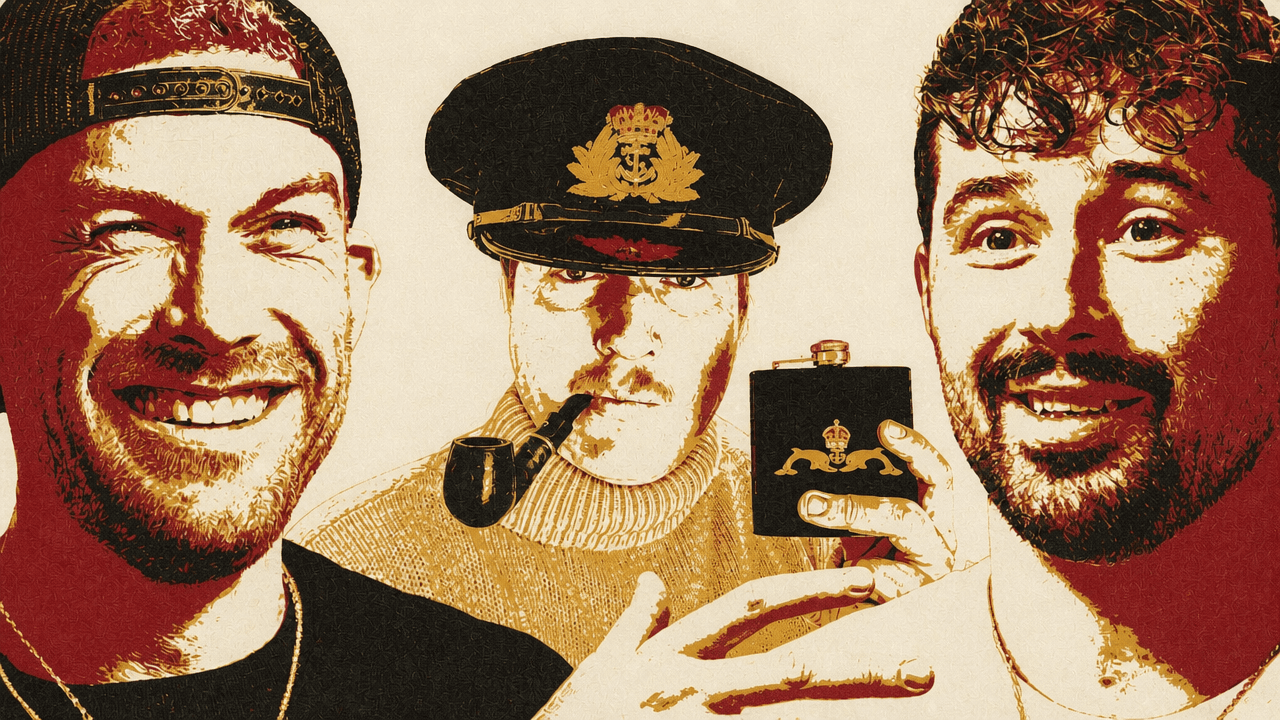
After 7 pm, unsupervised men start manufacturing activity
The working premise is simple and deliberately narrow: a man alone in a house after 7 pm begins to behave strangely. Chris Williamson puts it as a condition of missing domestic supervision, or at least missing another person whose presence interrupts the pattern.
If you're a guy who doesn't have a girlfriend in the house after 7 pm, you kind of go a bit insane.
Joe Santagato recognizes the type immediately. He has a single friend who lives alone and sends him random pictures of himself doing headstands. The oddity, for Santagato, is not stretching itself. It is the timing and implied intensity: at 8:30 pm, “what are you stretching for?” He turns the point into a question about bedtime rather than fitness: “You’re getting like how hard do you go to bed?”


Santagato says he has lost some ability to understand that kind of solitary evening. When his fiancée leaves, he does not settle into a satisfying private routine. He walks around, cleans things, wonders whether he should go for a walk, and runs into boredom. The house becomes open time without an obvious use.
Williamson supplies the same pattern from the previous night. He left for dinner with Santagato at 7:30 pm, a time he considered late. Santagato disputes that immediately — “Is this an Austin thing?” — and reminds him that, on Eastern Time, it would have felt like 8:30.
Before Williamson left, George, whose girlfriend was in Costa Rica, looked sad and asked where he was going. Williamson describes him as having “puppy dog eyes” and saying, “I don’t know what to do.” When Williamson returned, George had written things down and covered the place with post-it notes. Williamson treats the post-it notes as George’s version of the headstands: an improvised domestic project generated by being alone at night.
George’s evening turns from harmless to hard to live near
The post-it notes would have stayed in the category of harmless self-entertainment if the night had ended there. It did not. Around 10:30 or 11 pm, Williamson says he heard George sneeze 15 times in a row.
Santagato treats the number as both socially unacceptable and close to medically suspicious. He says he has maybe reached five sneezes in a row, and by then everyone tells you to “shut the fuck up.” Fifteen, he says, is enough to get someone kicked out of the house.
Williamson says the worst part was the false ending. He would think the sneezing was over, then after a 30-second break it would start again. Santagato asks whether George is a loud sneezer. Williamson says he is, and adds that George has “a big nose.”
The exchange briefly checks an old belief Santagato remembers: that sneezing makes your heart stop. Williamson asks ChatGPT whether that is true. A ChatGPT response interface appears on a wall-mounted monitor, and Williamson reads the answer: no, sneezing does not stop the heart, but it briefly changes pressure inside the chest, which can slightly affect blood flow and momentarily alter heart rhythm. That can make some people feel as if the heart skipped a beat. Santagato folds the explanation back into the scene: George is “altering his blood flow like crazy in there.”
The discussion then shifts from quantity to technique. Santagato says he prefers a loud sneeze to the kind people try to keep “inside their bodies.” That, he says, scares him. He imagines the pressure hurting someone’s neck or making their eyes explode, and his advice is simple: open your mouth and let the sneeze come out naturally.
The family stories make the bodily weirdness older and less contained
Santagato’s strongest example of dangerous sneezing is his father. He says he is convinced his father is “allergic to the sun,” because he would sneeze repeatedly in the car, including while driving him to high school.
The routine already sounded unsafe before the sneezing began. Santagato says his father would get into the car and clean out his ears with the car key before starting the engine. Williamson says that would definitely make someone deaf. Santagato says his father is not technically deaf, but “might as well be,” because he cannot hear.
Then they would be on the highway at 60 or 70 miles per hour while his father sneezed repeatedly and the car drifted out of the middle lane. Santagato says he was scared for his life mostly on the way to school. The image worsens when he describes the work van his father used for construction: he and his brother would ride in the back without seats, surrounded by tools, wood, two-by-fours, and a miter saw. Williamson adds “bricks and a washing machine” to the load. Santagato remembers sitting near the saw and hoping his father did not hit the brakes because it could go into his spine.
That family pattern leads to the strangest detail in the exchange: Santagato’s father once woke up after his “whole tooth” came out in his sleep. Santagato describes it as a complete cartoon tooth, like one from a toothbrush commercial. Williamson tries to make the event physically plausible: Was he chewing gum? Did something hit him? Was it grinding? Santagato says no. His father was sleeping.
Williamson suggests teeth grinding. Santagato allows that years of grinding could crack a tooth, then jokes that it might have been “the same demons that got Tucker Carlson in his sleep.” But Williamson keeps coming back to the intactness of the object. It was not described as a chip or fragment. It was simply a tooth.
The response is what makes the story hold. Santagato says most people would take a tooth falling out as a reason to see a dentist, or at least as evidence that they were “probably dying.” His father put it in his sock drawer and went back to sleep. When Williamson jokes that he now needs to get it out of the drawer and put it back in, Santagato says the family kept it.
The stories stay comic because no one turns them into a theory
Santagato and Williamson do not try to make the tooth story into an argument about fathers, masculinity, or neglect. They widen it only as far as the next odd domestic practice: parents keeping children’s teeth. Santagato asks whether that is an American thing or a British thing. Williamson says he thinks it is British. Santagato says his parents kept their teeth too.
The exchange ends on dental ridicule. After Williamson questions the keeping of teeth, Santagato answers, “Well yeah, cause our teeth look like cigarettes.” Williamson replies, “Yeah, yeah. You guys have crazy teeth.”
The through-line is not a serious diagnosis. It is escalation: a single man doing headstands at night, George filling the house with post-it notes, George sneezing through the walls, a father sneezing while driving children among construction equipment, and finally a tooth treated as an item for the sock drawer.