Self-Improvement Becomes Self-Punishment When Every Goal Is an Obligation
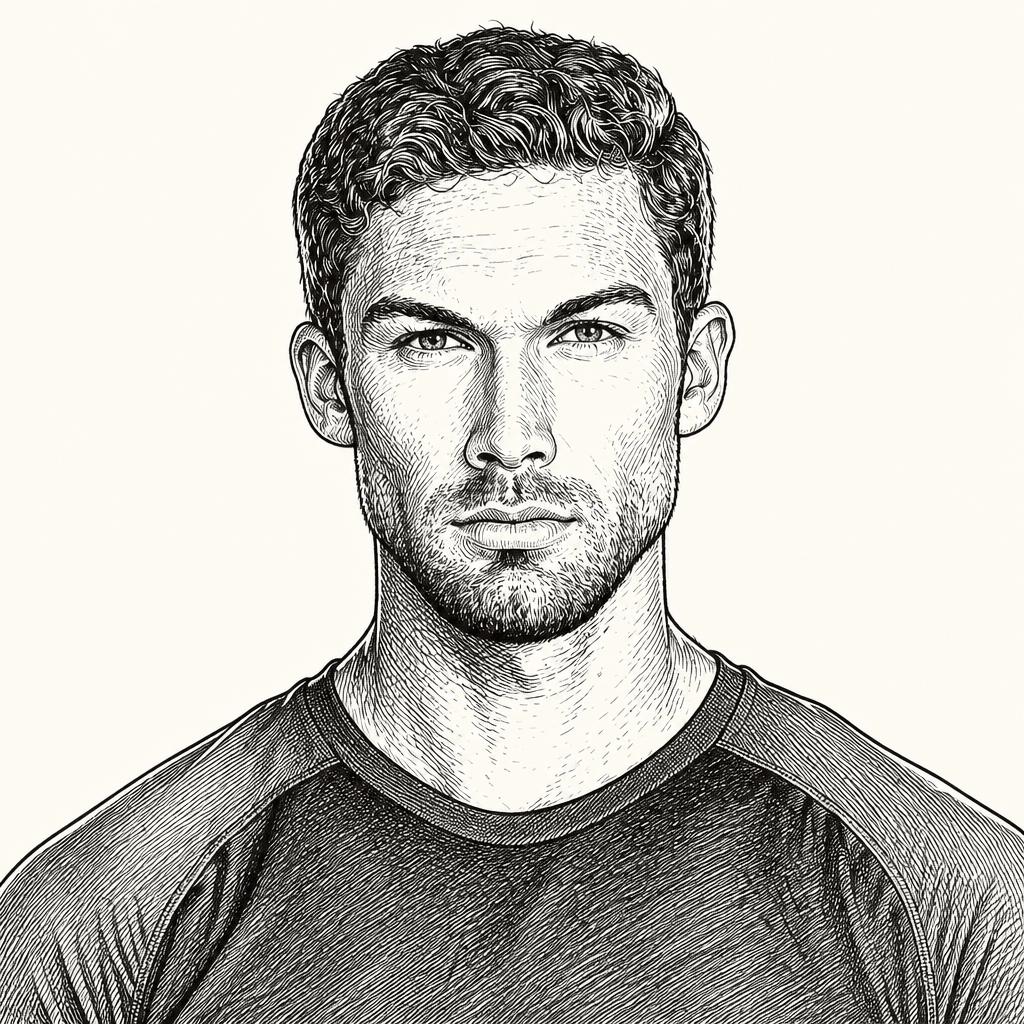
Chris Williamson argues that striving becomes destructive when self-improvement turns into self-surveillance, planning into avoidance, or work into a way of escaping feeling. The Modern Wisdom host still makes the case for action, but not for treating fear, loneliness or uncertainty as problems to be reasoned away. For Williamson, fatherhood has become the measure of that distinction: he wants his show and businesses to fit around family life rather than displace it.
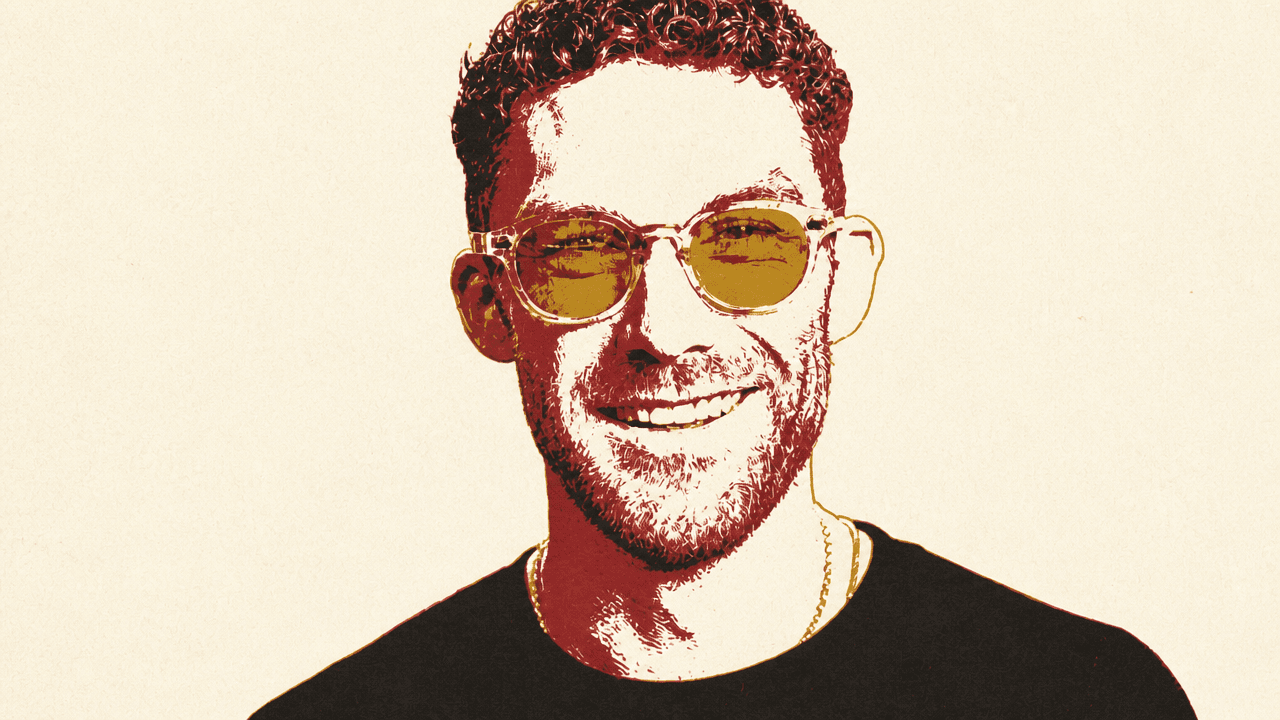
Self-improvement can become another source of exhaustion
Chris Williamson sees a growing fatigue with self-improvement culture: not necessarily a rejection of growth itself, but of the sense that every hour, habit, and piece of content must be converted into another obligation. The loudest version of the genre—“fuck your feelings, just work harder”—can turn improvement into burden, homework, and overwhelm.

He places that mood alongside what he sees as a broader turn toward short-termism. Williamson says that, in 2020, the biggest financial niches revolved around slow investing—401(k)s, dollar-cost averaging, the S&P—whereas the past year’s growth has been in fast-money categories such as Kalshi, Polymarket, and “vibe-betting” toward a quick million. He does not claim that one trend causes the other, but wonders whether an appetite for immediate outcomes has also weakened people’s appetite for long-range self-development.
The alternative, for him, is not to abandon the desire to understand oneself or improve. It is to make room for forms of learning that do not feel like an assignment. He points to a long discussion of the Odyssey as an example: a listener can enjoy a retelling, learn from it, and leave without feeling obligated to make flashcards or rebuild their life.
That distinction matters because self-improvement can quietly become self-surveillance. When every good idea is converted into a standard one has failed to meet, even valuable material produces guilt. Williamson’s intended balance is between substance and relief: work that helps people understand themselves and the world while still allowing them to sit back and relax.
Do not reason yourself out of what a relationship feels like
For someone who feels lonely “90% of the time” because their ambitious partner is continually occupied, Chris Williamson argues that the partner’s intentions do not resolve the central fact. Whether the person is genuinely chasing a dream or using busyness as an excuse, the relationship is still producing persistent loneliness.
He cautions against using rational arguments to override one’s felt experience: the work ethic may be admirable, the partner may be reliable, and the future may hold the possibility of change—but none of that alters what the relationship is like now. Betting on a future in which someone’s ambition subsides is, he says, falling in love with potential rather than the person as they are.
Williamson frames this as a problem of accepting reality rather than continuously wishing it away. If someone is always thinking, I wish they were home more; I wish this would change; I am afraid this will be my life, that tension makes it difficult to feel whole or to be a good partner. A relationship cannot be built around feeding “on the scraps relationally” after the other person has given their energy elsewhere.
His proposed boundary is direct: say that the current arrangement produces loneliness, acknowledge the other person’s ambitions, and explain that those ambitions are becoming one’s own nightmare. If the relationship cannot accommodate both people’s needs, then the choice may be painful but clear. Entering the relationship willingly in the past does not create a permanent obligation to accept its present terms.
Williamson calls romantic discernment a form of preventative healthcare. The point is not to condemn ambition. It is to resist treating emotional deprivation as the price one ought to pay for being with an impressive person.
Planning becomes avoidance when it keeps action safely theoretical
Chris Williamson identifies an old operating principle in his own life: “err on the side of caution.” It protected him when he was younger. Scrutinizing decisions, understanding the full ledger of risks, and avoiding rash moves meant fewer serious mistakes when he had fewer resources and less ability to absorb them.
But a strategy that protects can also confine. Williamson notes the common claim that young people should take more risks; his counterpoint is that older people may have more capacity to withstand risk because they have experience, contacts, money, and support. Caution may have been useful when he lacked that ballast. It becomes limiting when it prevents action after the conditions have changed.
Drawing on a line from Sasha Chapin, he says that much of what people call planning is “catastrophe fantasization”—anxiety in a publicly respectable form. Preparing thoroughly can eventually stop being preparation and become a mechanism for avoiding any exposure to failure.
What people call planning a lot of the time is just catastrophe fantasization.
His corrective is to move with more gut and less head, knowing that this may mean making more mistakes. The problem is not careful thinking itself. It is that a sufficiently analytical person can construct an argument against almost anything. The ability to foresee many outcomes can become a way of indefinitely postponing entry into any of them.
That dynamic can also make advice-seeking into a request for permission. Williamson says people often consult others because they do not entirely trust themselves; they want another person to legitimize something they already suspect is right. He does not treat consultation as a failure. In his nightclub business, he and his partner often acted as sounding boards—sometimes confirming a proposal that the other already knew was sound, sometimes exposing a flaw. Important decisions need not be made in isolation.
But advice should be contact with the real world, not a way to outsource agency. His practical suggestion is to make small decisions without asking for input, as a kind of exposure therapy for relying on one’s own judgment.
The same principle applies to people who think, plan, announce, and fantasize about a project but never begin. Talking about a goal competes with doing it, Williamson says, because planning and imagining can offer a diminished version of the reward of actual progress. There is no public failure in planning; but planning long enough to avoid action assures private failure by default.
His practical answer is to shrink the task and add social consequence. A would-be writer need not begin with a book; they can publish one or two posts a week for a month. Someone trying to train can get a training partner. Someone who responds to social pressure can use a habit group and attach a visible cost to noncompliance, including the deliberately absurd ritual of filming themselves tearing up a low-denomination note after failing to meet the day’s commitment.
The point is not that a tiny act is impressive in isolation. It is that, for a person doing nothing, there is no starting point too small. Thirty push-ups may seem trivial, but they are still thirty more than zero. The embarrassment of treating a small first step as an accomplishment can itself be part of what keeps someone immobilized.
For solitary effort, Williamson recommends making both sides emotionally concrete: write down what continued inaction has cost in the past, costs now, and will cost in the future; then write down the corresponding gains from acting. He places more faith in supportive social pressure, however, because it makes commitment less dependent on an abstract future self who can always be persuaded to start tomorrow.
Ambition can begin as escape and still become a life
Chris Williamson does not think intense ambition necessarily needs to be tamed. For someone in a highly driven period, he suggests allowing it to run its course rather than making ambition itself into a new enemy. In five or ten years, he says, the capacity for obsessive work may have naturally changed; a person may wish they had used more of it while it was available.
He distinguishes between ambition fueled by love of the work and ambition fueled by insecurity, but he does not think their outward behavior will reliably differ. Both can produce work, money, and accomplishment. The fuel can be more or less painful: one person may be moving toward something they want, another may be trying to prove they are valuable enough to deserve love or status.
His diagnostic question is what success feels like. Is it joy, or merely a temporary removal of dread? Is a person happy that something went well, or only relieved that it did not go badly? For Williamson, that difference reveals whether the work is primarily directed toward a wanted life or away from a feared self.
He thinks many people begin by turning early pain into achievement, then eventually discover that external validation has not repaired the underlying insecurity. At that point, he says, the original fuel can burn out. He compares it to booster rockets falling away after lift-off: the early propulsion may have been insecurity, but another source of motivation can take over.
That does not make the earlier pain ideal, nor does it require someone to wait passively for it to disappear. Williamson’s argument is narrower: if ambition is producing real work and a person remains introspective, they may eventually exhaust the fuel of fear and have to confront the inner problem directly.
His recurrent advice to himself is simpler: fear less. Worrying does not improve an outcome, he says, and feared scenarios are usually not as disastrous as imagined. He acknowledges that this remains a live struggle for him. Giving the advice to others is partly a way of hearing it himself.
Feeling alive means accepting that failures will hurt
The gain from becoming more emotionally available, Chris Williamson says, is that success can finally feel real. Instead of immediately looking past an achievement toward the next demand, a person is connected to what has happened in their own life.
The cost is that failures become harder to evade. Detachment can be useful: Williamson thinks some highly successful people have learned to separate themselves from pain well enough to keep working through it. But the same mechanism that mutes pain can also mute celebration. He cites Chris Bumstead’s formulation that people have to feel both the bad and the good; they do not get to select only one.
Williamson describes an earlier aspiration toward the “supercool macho grinding hustler” archetype: someone who could drive forward without needing to come into contact with much feeling. He has not rejected the capacity to switch that mode on. But he no longer wants emotional numbness to be his permanent state.
For him, emotional engagement creates a life that feels three-dimensional. Without it, a person can move through good and bad events like “a ghost inside of your own life”: things happen, but do not fully touch them. Opening up has made difficult experiences harder, including extended meditation retreats where there is no distraction from what surfaces internally. Still, he regards the resulting aliveness as worth protecting.
That position also informs his response to the painful interval in which inner development precedes visible outer change. People doing serious work on themselves often seek external proof that the effort is working: recognition, a changed social world, a career milestone, or simple reassurance. When the outer world appears indifferent, it is easy to conclude that the work is pointless.
Williamson describes this period through the image of pulling back a slingshot. There is tension before forward momentum. Growth disrupts an earlier form of congruence: even if someone used to be less capable or less virtuous, their thoughts, feelings, and actions may have felt internally aligned. Change introduces uncertainty. One is no longer fully the old person and has not yet become the new one.
His answer is not that doubt disappears. It is that people need some form of faith, plus ways to make private work visible enough to celebrate. A six-month period of sobriety, a first published essay, or a completed creative project can become a social milestone: not proof that one has arrived, but an opportunity to make inner effort tangible and share gratitude with others.
That applies, in his view, to emerging from a “lonely chapter” as well. Someone who has withdrawn from old routines, friend groups, or ways of living may be socially awkward when they begin reintegrating. Williamson advises patience with that awkwardness and against quickly condemning people who do not immediately seem to match one’s new standards.
He uses the analogy of a refined palate: increased discernment can mean fewer restaurants appeal to you. In social life, he says, development may similarly leave a person with fewer people who feel like a fit. That does not mean the person has done something wrong or needs to return to an earlier version of themselves. It means finding new relationships can take time.
He also urges people to celebrate reaching that point. Leaving behind patterns, relationships, or routines that no longer fit is difficult. If someone has reached a place of reintegration, they should allow themselves to feel that they have arrived at a meaningful pause point, rather than immediately converting it into another demand for growth.
Chronic illness turns recovery into a second full-time job
Chris Williamson says he remains in the midst of health problems he associates primarily with mold exposure, after also discussing Lyme-related issues. He describes the condition not as a solved episode but as a chronic, demanding process: binders, saunas, hyperbaric oxygen sessions, walking, sleep, and repeated efforts that amount to “putting pennies in the jar.”
He says a treatment involving a forced fever and blood filtering felt like a meaningful step change for him. But his wider conclusion from his own experience is that there is no acute solution to a chronic problem. Progress, as he describes it, is slow detoxification and sustained routine rather than a single decisive intervention.
The harder part has been deciding how much to speak about it. He does not want his health to become his entire public identity, or to become “the guy that’s always got a health problem.” He worries about being a poor companion for guests and audiences by continually describing fatigue, brain fog, low mood, or waking after nine hours of sleep feeling worse than before.
Yet he also says the condition is too substantial to minimize. Running his company is a full-time job; trying to restore his health is another. That dual burden is familiar, he suggests, to people with complex illness: much of life can become preparation to live rather than living itself.
His attempt to make sense of the unfairness has moved away from a search for cosmic justification. He describes the frustration of doing many things conventionally associated with good health—avoiding smoking and partying, training, keeping regular sleep, working on meaningful projects—and still being ill while imagining someone else living carelessly in apparent good health. Trying to turn that into a karmic story, he says, can be maddening and can reduce agency.
His preferred orientation is the belief that there is usually something one can do, and that the belief in agency can itself be more useful than the immediate practical effect of any particular intervention. He contrasts “life happening to me” with “happening to life,” while adding a third, more elusive condition: life happening through a person. That is the sensation of moving with experience rather than simply fighting against it.
Illness has also changed his view of other people’s suffering. A long voice note from Daniel Schmachtenberger offered a frame Williamson found important: truly becoming humble and empathetic often requires a period in which one does not know whether they will get better. Ordinary difficulty is common; sustained uncertainty about whether there is a way out alters one’s worldview more deeply.
Williamson says that experience has made him less dismissive of invisible suffering. From the outside, someone may seem fine; from the inside, their world may be collapsing. He does not want to romanticize victimhood or martyrdom, but he sees a need for much more care toward people whose pain is not externally legible. His hope is that, if he eventually recovers, this period will become evidence not simply of illness endured but of a project continued through it.
His peptide use is part of an attempt to fix a problem, not enhance a baseline
When asked about peptides, Chris Williamson says he has used them for a long time while trying to address his health problems. He says he probably would not use them if there were not something he was attempting to fix, describing his own preference as using medical-style therapeutics for problems rather than for enhancement.
He names BPC-157 and TB-500 in connection with recovery and gut health, while saying he has used BPC-157 and TB-500 since his Achilles rupture and believes they helped him during that recovery. At the time of the Q&A, he says he was also using thymosin alpha for immune support and SS-31 for mitochondrial support because he was tired “all the time.” He also mentions a recent tooth extraction and his attempt to regrow bone in his face as part of his rationale for recovery-oriented use.
Williamson says he has previously tried Semax, Selank, Frag 23, and PT-141, among others. But he makes no general recommendation from those experiences. He explicitly says this is not medical advice and warns that the grey market contains substantial unreliability: people considering peptides, he says, need to make sure that what they receive is actually what it claims to be.
His answer sits within a broader health approach that is not built around a single intervention. Even where he reports finding certain treatments helpful, he returns to the slower work of sleep, walking, saunas, binders, oxygen sessions, and continued medical treatment. The emphasis is on a personal effort to manage a chronic problem, not on a universal protocol.
A compassion practice that invites the difficult parts in
At a seven-day Journey retreat in Northern California, Chris Williamson encountered a Jhana meditation practice that he contrasts with mindfulness or Vipassana. In his description, mindfulness can involve noticing a thought and releasing it, returning to breath or concentration. Jhana instead invites the thought and the part of the self behind it into attention.
If a thought is about work, he says, the response might be to recognize the diligent part of oneself that cares about what it does. If shame appears over being distracted, the response is to recognize the part that wants to do things properly and has high standards. Rather than treating those parts as intrusions to defeat, he describes mentally inviting them into a safe place—his own image was a bed.
Williamson found this approach deeply compassionate, especially because self-compassion can be alien to people who are used to finding motivation in underperformance or not-enoughness. The retreat gave him several formulations that he has continued to use.
One is that goals can become “contracts to self-criticise until we succeed.” A goal then becomes less a desired direction than a permanent threat: success must continue indefinitely to prevent self-reproach from catching up. Sitting still for long periods made that dynamic palpable to him, because he could not speed up an outcome through effort or force a meditation practice to resolve on command.
Another is that forgiveness means choosing not to continue suffering over what cannot be changed. Williamson describes it as giving up the hope of altering the past—not approving of what happened, but no longer using an impossible wish as a source of continuing pain. The retreat’s forgiveness practice included forgiving oneself, and even forgiving oneself for not yet being able to forgive.
The final point was about wounds. Suppression, he says, is not strength. The expectation that someone should have “gotten over” a recurring problem by adulthood assumes that development happens with age rather than deliberate work. It also ignores that people continue accumulating wounds while they are busy being responsible, providing, working, and focusing outwardly.
The retreat’s practical difficulty was less mystical: long sits of 90 minutes to more than two hours, multiple times a day. He describes the practice as unusually effortful because the task is to remain still, notice what arises, and not escape into activity. He recommends Journey to people who want to work on self-compassion, while emphasizing that its demands are real.
A growing operation cannot replace the host's judgment
As his operation has grown from recording on a sofa to running a team and multiple sets, Chris Williamson says he has tried to preserve personal responsibility for the work that defines the show: choosing guests, identifying ideas, reading, and deciding what questions matter.
His view is that research support and operational help cannot replace taste. When creators lose contact with those choices, he believes the work becomes less distinctive. Being supplied with aggregated information has, for him, felt artificial—as if someone else were puppeteering his output. He prefers to retain responsibility for what enters a conversation and why.
He says he booked the first several hundred guests himself, handling outreach, scheduling, and logistics without an assistant. The team now gives him more room to concentrate on selection rather than execution. But he sees an ongoing need to strengthen his ability to say no, because better opportunities are more seductive distractions.
His development as an interviewer has also come less from a framework than from repetition. He names two major changes: greater comfort with guests and a greater ability to sit in silence. Early in his career, he was anxious before major conversations; hundreds of conversations have given him more stable social confidence.
Silence, he says, is frequently a form of listening. In a recorded conversation, the host, guest, and audience are all present in some sense, and each needs time to think. Even one-to-one, a pause gives the other person’s mind room to continue rather than forcing them toward the next prompt. People often add useful material after the moment when an anxious interviewer feels compelled to fill the gap.
Fatherhood has become the measure by which he ranks other ambitions
Chris Williamson tells men aged 18 to 24 not to “speedrun” becoming a man. Youth is a period for exploration, he says, and permanently wishing to be elsewhere makes a person miss the life in front of them. The desire to become an adult can dominate childhood, while adulthood often brings an opposing desire to recover something childlike.
His working definition of a good man is straightforward: someone who knows where he is going, enjoys the process of going there, and is comfortable in his own skin. He adds a moral qualification: the destination and the route should not depend on exploiting or harming other people.
For Williamson himself, the next stage is increasingly defined by fatherhood. He says he wants to become a dad and has “full on preparatory dad brain.” He describes much of his prior work—building a person, a life, a business, and what he calls an inner and outer cathedral of “good things and bullshit”—as an attempt to become ready for that responsibility.
His picture of success over the next five years is deliberately domestic: two Golden Retrievers, three children, improved health, continued work on the show, and growth at Neutonic. The company could become very large, he says, but business scale is secondary to “Golden life and dad life.” He expresses particular pride in having turned down an acquisition offer around 18 months after Neutonic launched, rather than becoming, in his phrase, honorary members of their own business.
The work remains meaningful insofar as it supports sincere conversations, brings people together, and gives audiences room to laugh and feel the weight of the world lifted for a while. But his answer makes a hierarchy clear. Building businesses and extending the show matter; they are no longer the final object of the project. The life he says he wants is one in which those pursuits fit around family rather than replace it.
Modern anxieties are not invalid because older dangers were worse
Chris Williamson rejects the idea that contemporary stress is trivial merely because earlier generations faced war, famine, severe cold, disease, or predation. His account is that the nervous system was built for acute physical threats but now responds to a modern ecology in which social isolation, rejection, and loss of standing can register as danger.
A person may never have faced a sabertooth tiger, crop failure, or a Viking invasion. Williamson argues that the nervous system does not assess distress from a generational or historical perspective; it responds to the conditions of one’s actual life. A boundary with a partner, an unanswered message, exclusion from a group chat, or fear of a traffic fine can therefore provoke a system once oriented toward predators.
He also thinks modern life may offer fewer stabilizers that once lowered the stakes of social life: families assumed to remain close, communities not organized around constant performance, and relationships in which someone’s value is not measured chiefly by their ability to contribute.
The claim is not that every fear is proportionate. It is that shame does not solve it. A person who feels anxious about setting a boundary or delivering bad news does not become stronger by adding, I should not feel this way; this is silly; my ancestors had it worse. That second judgment makes someone who already feels bad feel worse.
You're allowed to feel the way that you feel.
Feelings, in Williamson’s view, do not have to dictate action. But condemning oneself for having them is a reliable way to intensify them. The instruction is not indulgence; it is to stop treating emotional pain as evidence of moral or historical inadequacy.