Advice-Seeking Often Hides a Search for Permission

Shaan Puri argues that people often ask for advice not because they lack information, but because they want permission to act on a choice they already favor. In a discussion with Chris Williamson, Puri says the obstacles are often courage, judgment and follow-through—not intelligence—and that recognizing the permission a person is seeking can expose the fear holding them back.
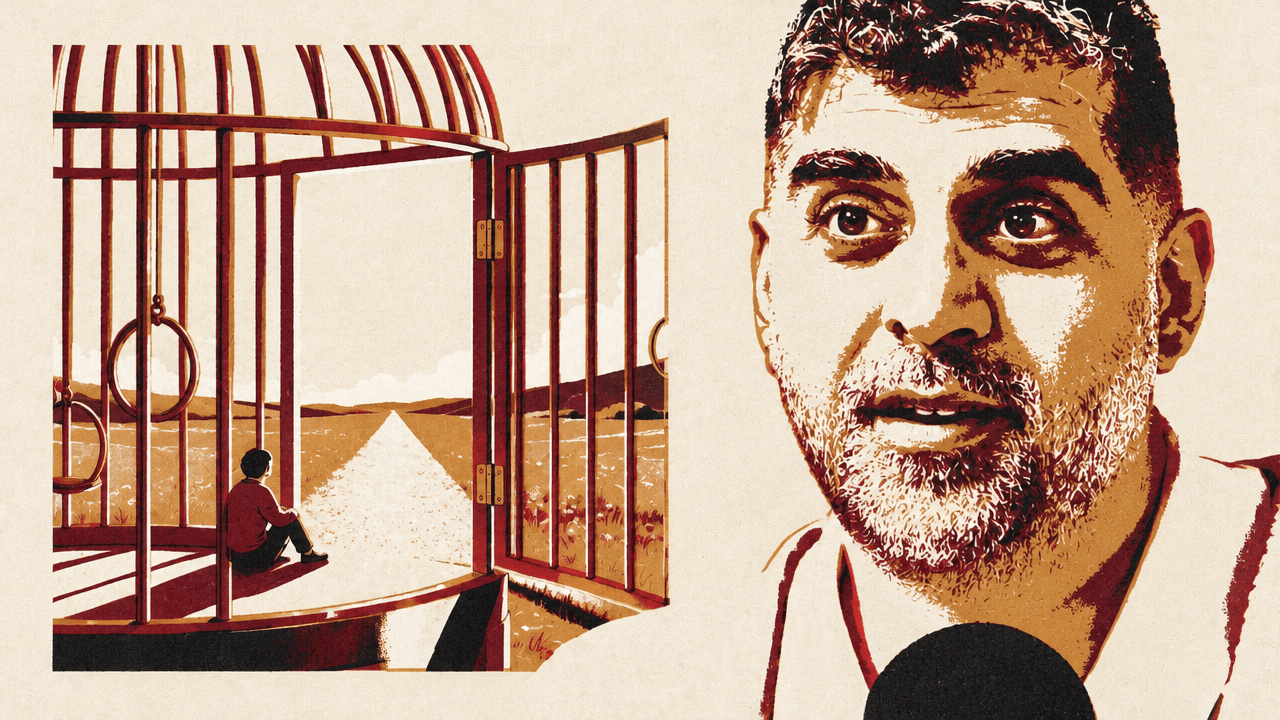
Advice often stands in for permission
Shaan Puri says many requests for advice are not really requests for new information. People may already know the direction they want to take; they are looking for someone to confirm that it is acceptable to take it. Asking several people can become a search for the one who will say what they hope to hear.


That does not make advice-seeking a flaw, Puri says. It points to a different need: courage. He calls life “courage-gated,” but also “action-gated” and “wisdom-gated.” Getting the life you want may take energy to follow through, judgment about which path to choose, and the courage to try, fail, or look foolish. A new insight may not be what is missing.
The question he suggests asking is therefore not only “What should I do?” but “What permission am I seeking?” The answer might be permission to fail, to be bad at something, or to be alone. For Puri, the question can reveal whether someone is seeking reassurance about a direction they already feel drawn toward.
Chris Williamson asks whether people can give themselves that permission, rather than needing it from someone else. Puri says awareness may make self-permission possible. But he also describes encouragement from another person as a “short payday loan of courage”: a temporary advance of belief when someone cannot yet supply enough of it themselves.
The world is not intelligence-gated. The gates in your life are not, don’t require intelligence to break through. The world is courage-gated, it’s action-gated, it’s wisdom-gated.
His account of learning to sing makes the tension concrete. Puri had wanted to sing for much of his life but assumed he could not. When his piano teacher asked whether he wanted to sing, Puri’s impulse was to prove how badly he sang. Instead, he tried. The teacher told him there was work to do, but that he had helped people sing who started out worse.
The teacher had once been afraid to sing, too. He told Puri that he had been mocked for singing and believed that people like him were expected to play football, not sing. At a new school, a choir teacher heard him singing alone and asked who had told him he could not sing. He later appeared on American Idol. Puri says his teacher described the cost of not singing as something he had only understood once he began: “It was killing me.”
The story does not cancel Puri’s point about self-permission. It shows how another person’s belief can help: a teacher’s question interrupted an assumption the singer had accepted as fact. Puri’s suggestion is to notice when advice-seeking is really a search for permission; his example also leaves room for the encouragement that can help someone take the first step.
Courage means acting while afraid
Williamson brings up a distinction he had discussed with Jocko: courage is not the absence of fear, but acting while afraid. Puri agrees that an action can look ordinary from the outside while feeling risky to the person doing it. Taking a sip is unremarkable unless the person believes they are at risk. In Puri’s example, the action’s significance depends on what the person feels they are facing.
Puri’s experience with his son applies that distinction to a child’s first steps into unfamiliar activities. His son was scared to enter classes such as jiu-jitsu, tennis, and basketball. Puri initially felt frustrated: he had brought him, paid for the classes, and gone inside with him before. But those were Puri’s reasons to expect his son to go in. His son was facing an unfamiliar room and a group of children, away from his parent.
Puri changed his approach. He told his son that he used to cry at gymnastics because he was afraid, and explained that fear sometimes wins. They could stay outside that day and try again another time. Four weeks later, after several visits when his son had not gone in, the boy entered the class. He came out and said, “I didn’t want to let the fear win today.”
Puri says the experience made him think about his own choices: whether he was letting fear win. He traces fear of failure to a deeper fear of not being enough or not being loved. Stress, anxiety, and procrastination, he argues, can be ways fear presents itself. His prompt is to keep asking why a desired action is not happening, until the fear underneath becomes visible.