Former Special Operators Face Identity Loss More Than Combat Trauma
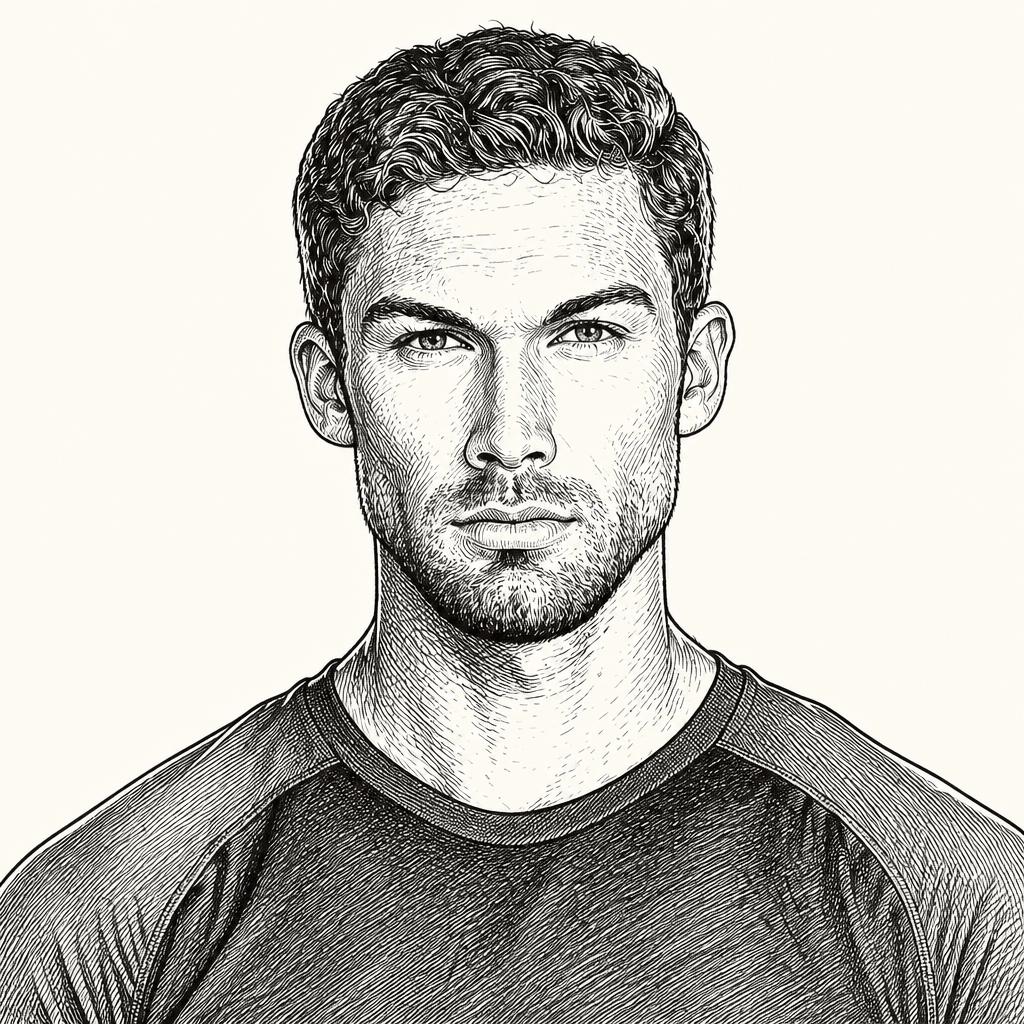
Retired Navy SEAL and former DEVGRU operator DJ Shipley argues that the deepest injury for many elite operators is not combat itself but the loss of the identity, brotherhood and purpose that made the rest of life subordinate. In a long interview with Chris Williamson, Shipley describes special operations as an all-consuming performance system built on risk, restraint and repetition, and retirement as the point where those habits kept running without a mission. His account links that rupture to addiction, family breakdown, suicidal intent and, eventually, psychedelic treatment and confession as the basis for recovery.
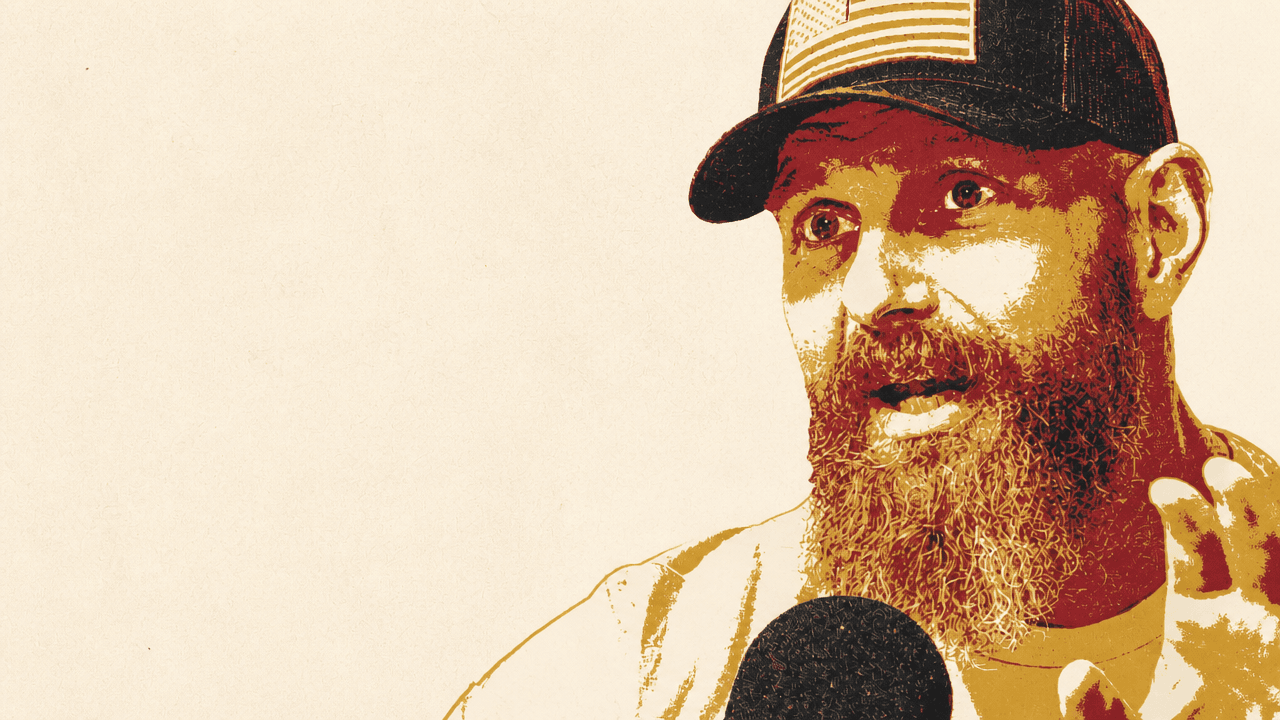
Shipley’s account is less a war story than a study of what happens when an identity built for lethal excellence loses its object. He described special operations as a life organized around purpose, risk, repetition, brotherhood, and restraint — then described retirement as the moment that whole operating system kept running after the mission disappeared.
Leaving the Teams meant losing the only identity that still made sense
Donald Shipley described leaving the military as harder than the operational work because, in his account, no one had prepared him for the loss of identity. In special operations, he said, the job becomes “the only thing you do” and the justification for everything else you do not do. A missed social life, a neglected relationship, a refusal to be photographed, a refusal to build civilian networks: all of it can be explained by the end state.
That logic collapses after retirement. Shipley said many operators expect that their résumé will translate into some civilian equivalent of purpose, status, money, and intensity. He called those expectations “fairy tales”: the billionaire who pays a former operator to live on a ranch, tell war stories, and shoot coyotes; the corporate world waiting to absorb him because of his background; the idea that the skill set itself will be in demand. Instead, he said, the reality is that no one is paying him to assault a compound, skydive into an operation, or take down a cruise ship.
I’ve spent my entire adult life developing a skill set nobody wants. What am I supposed to do now?
For Shipley, the obvious post-service route was contracting, agency work, or private security. Chris Williamson observed that this keeps the operator inside the same system. Shipley agreed: the same people, deployment schedules, routine, and culture, with slightly different pay and a slower decline until age closes the door. He said many operators either remain miserable outside the military, enter jobs close enough to military life that they have not really left, or return. He mentioned men who tried to reinvent themselves at places like Goldman Sachs and then came back after months or years because they missed the work.
What they miss, in Shipley’s framing, is not simply employment or status. It is kinetic risk. “You need something where you have a little bit of risk of dying,” he said. He compared the post-danger craving to the feeling after narrowly surviving a car accident: shaking hands, the realization that you made it through, and then, in the trained operator, a shift from relief to confirmation — of course I made it through; I trained to make it through. The sensation becomes something to chase.
Williamson tested the claim by asking whether special operations is, in effect, the war equivalent of an extreme sport. Shipley accepted the comparison. He said many operators arrive from or participate in extreme sports, MMA, skydiving, BASE jumping, wingsuiting, skateboarding, and other highly competitive activities. The distinction, he said, is that in combat, a mistake is not a lost medal. If the operator fails, he may die — or worse, someone else may die.
That “worse” is where Shipley separated thrill-seeking from responsibility. Putting his own life at risk could be exciting; putting friends’ lives at risk was not. That pressure, he said, drives obsession. The aim is to “buy down” every controllable risk through repetition: more skydives, more shooting, more close-quarters work, more operating. He argued that the way to make skydiving safer is not to limit jumps but to mandate more of them. The dangerous person, in his example, is the military skydiver with 180 jumps who thinks he is a ninja; safety comes from thousands of jumps and continued practice.
Shipley said he has about 4,000 skydives. He described elite confidence as the feeling that every base has been covered: “I couldn’t burn another rep, I couldn’t spend another hour. We are as good as you could humanly be.” He rejected the idea, raised by a friend, that limiting combat exposure might soften the eventual post-service crash. If the stakes are death, he argued, the team needs repeated, live exposure. His analogy was a football team locked in a room and then sent straight to the Super Bowl, except losing means dying. He wanted the equivalent of playing every day.
Elite performance was built through obsession, not balance
Donald Shipley described the Tier 1 environment less as a conventional military unit than as an enclosed performance ecosystem. At that level, he said, operators are drafted into teams with attention to performance, culture, trust, and fit. A man may be technically strong and still not work in a particular team because his personality clashes with the group; Shipley said lateral transfers can solve that when the same operator fits elsewhere.
He explained the tier structure in terms of parent units, response times, and readiness demands. At the highest level, he said, operators may live for significant periods on 30-minute recall. When the pager or phone goes off, they are expected to be on an airplane within 30 minutes. Shipley served in the Navy from 2002 until August 2019, and on the Tier 1 side from 2010 to 2019. He was not on alert every day of those nine years, he said, but every year included substantial blocks of alert status.
The anxiety of that life never fully shuts off. A dead phone, no signal, or a notification in another room can trigger a conditioned response. Shipley said surgeons and emergency-room doctors experience a version of it: if the phone rings, you may have to go. At 2:30 in the morning, a phone sound can wake the body before the mind has context.
Yet he also called the alert life “amazing” because it made him feel that he mattered. Operators were reading intelligence briefs, watching the news, and staring at a target’s photograph in the team room, waiting for a codeword or message. He described using euphemisms with his wife — “going fishing with the boys” — without knowing where he was going. That, he said, was “the coolest thing you can do in the military”: the cinematic fantasy of the pager going off in the middle of a wedding and the selected men walking out.
The system around them was designed to make that level of readiness possible. Shipley said Tier 1 organizations cover the logistics and put operators “inside of Disneyland”: ranges, assets, intelligence personnel, human-performance support, gyms, and everything needed to focus only on the craft. When he compared elite operators with elite athletes, he argued that the same pattern appears: isolation, routine, repetition, recovery, and an unbroken schedule that exceeds everyone else’s minimum standard. He cited Steph Curry, LeBron James, Michael Phelps, Tiger Woods, and Kevin Durant as examples of athletes whose names are known because they sustained routines others could not.
Shipley did not present that discipline as glamorous. When people say “it must be nice,” he said, they misunderstand the schedule. He argued that Michael Phelps’s genetic gifts mattered, but his discipline made the medals. If Phelps had been given a baseball bat at eight years old instead of a pool, Shipley said, “you’d still know the name.”
The lesson he drew for younger men was to “be a pro early.” He broke down the familiar 10,000-hour idea as roughly eight years at four hours a day, or four years at eight hours a day. If a person sacrifices for the first four years in his chosen lane, he said, he can lay down the foundation and later find a balance point. Shipley’s regret was that he did not do that early. He described the early-2000s special-operations culture he entered as spillover from the 1980s and 1990s: drinking, fighting, and women, “like you were the Rolling Stones.” Later in his career, he saw a different archetype: operators who never drank more than two drinks, were never seen drunk, never got DUIs, and could perform on demand year-round. They were closer to monks than rock stars.
That professionalism extended to small habits. Shipley said he has never hit snooze. If someone cannot get up early, he said, move the phone across the room so getting the alarm requires leaving the bed. Lay out clothes the night before. Put water and supplements in order. Build the sequence so momentum carries the morning. He said he can be out of the house in four and a half minutes because he has had to live that way.
He gave the interview itself as an example. He had taken an Uber to the building the night before so he knew the location, stairs, and traffic pattern. He called it “dirt-diving” the movement in advance. The point was not punctuality as etiquette; it was the same operational instinct applied to civilian appointments.
Chris Williamson connected this to habit formation in youth, arguing that young men often underestimate how much they can front-load skill acquisition. Williamson said he now uses different kinds of leverage in creative work, but when young men ask about balance at age 22, he reminds them they are “made of rubber and magic” and can sustain periods of heavy effort that create lifelong paths of least resistance. Shipley agreed that, once built, the routine becomes easy enough that a person does not notice he is following it.
The operator profile narrows when intelligence and controlled violence both matter
Chris Williamson introduced a chart connecting IQ ranges with reported violence, using it to frame a selection problem for elite special operations. The chart’s visible measure was “mean number of violence episodes,” and the bars declined as IQ group increased: from 0.72 for the 70–79 IQ group to 0.08 for the 120–129 group.
| IQ group | Mean number of violence episodes |
|---|---|
| 70–79 | 0.72 |
| 80–89 | 0.37 |
| 90–99 | 0.28 |
| 100–109 | 0.17 |
| 110–119 | 0.15 |
| 120–129 | 0.08 |
Williamson described the underlying question as whether a person had been in a physical fight or deliberately hit anyone in the past five years. He said the percentage declines as intelligence rises, with roughly 10 percent around the middle of the distribution, 5.2 percent between IQ 110 and 119, and 2.9 percent between IQ 120 and 129. He cited a line he had seen online: the percentage of men with very high IQs who enjoy both books and bar fights is very small, which is why elite special operators cannot be mass produced.
Shipley said the chart “tracks,” then joked that he did not have a 130 IQ but liked reading books and punching people in the face. His broader point was that the job requires a rare combination. He pushed against the image of special operators as polished conventional soldiers: in his view, the men suited for that work are not “Ken dolls” with flat-top haircuts, bloused boots, constant salutes, and scripted formality. The job is filthy, and the people who do it live closer to the edges of institutional culture.
He said haircuts and shaving were often used as punishment, which is why many operators hate them. Special operations, in his account, is more like a professional sports team than a conventional military organization: rarely in uniform except for promotions or funerals, relaxed grooming standards, long hair, beards, and an everyday expectation that each man earns his seat at the table.
Shipley also rejected the caricature that such men are merely brutes. He said civilians often imagine special operators as tattooed, crude, poorly read, and low-empathy. The men he admired, he said, were closer to philosophers. Around team tables, he heard conversations about training methodology, targets, human terrain, and human behavior that changed his life. The narrowness of the profile was not just capacity for violence. It was disciplined aggression, intelligence, cultural fit, philosophical curiosity, and the ability to perform in a morally and physically ugly environment without becoming uncontrolled.
Restraint, scrutiny, and the parts of war civilians do not want to see
Donald Shipley pushed back against two civilian caricatures at once: the idea that special operators are lawless murderers, and the idea that modern war can be made clean enough to satisfy civilian spectators. His account was that U.S. and Five Eyes forces place enormous priority on avoiding collateral damage, often at significant tactical risk to soldiers. Women, children, and bystanders are placed first in the risk calculation, he said, and operators are constrained accordingly.
He did not present that restraint as easy. Williamson raised the problem of modern scrutiny: a public that wants protection from invasion or attack but recoils from the ugliness of the people and methods used to provide it. Shipley’s answer was blunt: shut off the television and say thanks. “You don’t really want to see what happens,” he said. “You’re not gonna pick up a gun and go do it.”
The exchange moved into legally and reputationally sensitive territory when Shipley discussed war-crimes allegations involving special-operations figures. He described an unnamed friend in the 22 SAS who, in Shipley’s telling, had been decorated for an operation and later faced a triple-murder charge involving Afghans whom Shipley characterized as armed enemy fighters. He said the friend cannot currently come to the United States because of the record and that they are trying to fight for a visa. Shipley also referred to Australian SASR veteran Ben Roberts-Smith, calling him a legitimate war hero and objecting to accusations that he murdered Afghan civilians. These were Shipley’s characterizations and objections, not an adjudication of the underlying cases.
Shipley said he had never seen a murder in his own career and argued that, in the modern operating environment, too much technology and too many “eyes in the sky” make murder nearly impossible to get away with. He distinguished sharply between murder and combat that later appears ambiguous to outsiders. His example was an enemy fighter shooting from a second-story window with an AK, then throwing the rifle six feet away before being killed. To the operator, Shipley said, the man is an enemy combatant. To an investigator looking at the body without the weapon beside it, he may appear unarmed.
Shipley said enemy fighters learned to manipulate that system, hiding rifles behind false walls, drop cloths, posters, and paintings before assault forces entered. Families could move weapons after a shooting, he said. Photographs then became part of the post-kill documentation, partly because, according to Shipley, families received payouts for people shot in Iraq or Afghanistan and even for property damage such as doors. He did not remember the exact amounts, and his recollection of door payments was uncertain — “for a while I think we were paying like $5,000 for a door,” he said, before allowing it might have been $500. His point was not the precise figure but the “winning hearts and minds” approach, which he rejected.
His frustration was that a long counterinsurgency war taught the enemy the system. Operators might have cell-phone, email, radio, and other “atmospherics” identifying a man’s network and behavior. But if he was arrested and released after questioning, he learned tactics, detention timelines, and what to say next time. Shipley called much of that door-to-door work “glorified police” unless the target was a high-level terrorist network.
When Williamson asked whether the modern world is incompatible with the ugly realities of war, Shipley said anyone who had been to Afghanistan, Iraq, or similar wars knew that if the U.S. and its Five Eyes partners truly wanted to win fast, they could. “They don’t want us to,” he said, adding that he did not know who “they” was. His argument was partly about public tolerance: people do not want to see what clearing a place like Fallujah actually means. In his description, clearing means going door to door and killing every male left who is willing to fight after civilians are told to leave.
He contrasted that with past wars, saying previous generations fought with weapons and methods now considered unacceptable. He mentioned flamethrowers, claymore mines, munitions, and rounds that are now restricted by rules and conventions. The enemy, he said, does not follow equivalent constraints: suicide vests on children, grenades in the hands of family members, whatever tactic works. That asymmetry makes the work harder and erodes trust.
Shipley briefly extended the fast-war argument to a hypothetical Middle Eastern conflict involving nuclear weapons. Asked what he would do if an imaginary country were building nuclear weapons, threatening to use them, and known to have them, Shipley answered, “Press the button.” When Williamson removed the nuclear condition, Shipley’s alternative was a precise black-operations raid to remove the leader. The exchange served the same larger argument: Shipley distinguished between wars fought to a quick decisive end and wars prolonged inside legal, political, financial, and public-opinion constraints. He did not claim to know whether a specific real-world scenario would work.
At the same time, Shipley rejected the idea that special operations is morally unbounded. He said special operators live in gray areas to reach an end state and will find ways through rules if the group’s safety or mission requires it. He admitted he would “break every rule in the book” if it put the team in a better position, even at personal or career risk. But he distinguished that from murder, rape, and uncontrolled criminality, which he said were not what he saw.
The real strain, in his telling, was righteous anger under restraint. He said he had never seen anything in his career that he considered morally questionable, but there were times he wanted to “hoist a black flag” because of what he knew a target had done. If he were a tourist rather than a man with a flag on his shoulder, he said, he would have killed certain people. Because he wore the flag, he could not. That produced resentment toward the very symbol that imposed restraint.
That emotion intensified after Extortion 17, which Shipley described as an August helicopter shootdown that killed 31 people on board, including a whole troop. Having to deploy to the same place and sleep in the beds of the dead, he said, left him wanting to kill everyone. Instead, he had to handcuff men, put them on helicopters, and watch a detention process that might release them days later. The enemy, he said, would not extend the same mercy to him.
Publicity gave special operations recruits and damaged the force
Donald Shipley described the Osama bin Laden raid as a source of pride, resentment, recruitment, suspicion, and disruption. He was in Rob O’Neill’s team at the time but did not go on the mission because he was too junior. He said the force selected from within the same squadron in a way he described as taking higher-ranked performers from each team rather than sending a single intact team. None of the men left behind knew where the selected operators were going; Shipley said they were told it was a training mission and assumed it would be insignificant. He recalled men buying expensive watches and sunglasses because they thought they might not come home, and he thought the target might be Muammar Gaddafi.
When President Obama announced that bin Laden had been killed, Shipley was at home with his wife and a teammate on speakerphone. He said he was screaming with pride and had “never been more proud” in his life.
The aftermath was another matter. News cameras appeared around the community. Reporters came to houses, approached men in town, tried to film them, and kept digging for identities. Shipley said the scrutiny was unlike anything he had seen. He placed the raid in a sequence with earlier SEAL operations that had entered public consciousness — Marcus Luttrell and Lone Survivor, and the Maersk Alabama rescue of Captain Phillips — but said the bin Laden raid launched the SEALs into another level of public attention.
He said he wished no one had ever said a word about it. His preferred version would have been simple: announce that bin Laden was dead, but not how, who, or that it was a compound raid. He said the books and later public disclosures created internal suspicion inside the command because some published material seemed to include active information that could only have come from people still inside. That led, in his account, to people combing ceilings for bugs, fears about listening devices, operators being followed home, and teammates pointing fingers at one another.
Yet Shipley acknowledged the contradiction: the current generation of special operators exists partly because previous generations told their stories. Men read books and watched movies about Vietnam, Grenada, Panama, Black Hawk Down, and other operations. He said David Goggins and Jocko Willink have probably put more people into service over the last decade than anyone else in the previous 50 years — not necessarily as SEALs, but into the military, police, fire service, Coast Guard, and related fields. In his view, they did it “right” by promoting service and discipline rather than operational gossip. Still, the boundary is not clean. Public storytelling recruits; public storytelling also exposes and burdens those still serving.
Williamson framed it as a trade-off between “noble silence” and the recruitment effect of memoirs, podcasts, and films. Shipley did not resolve it. He said the United Kingdom, by contrast, does not give its military enough credit, and that fewer young people there grow up wanting to serve. Williamson said the British attitude toward veterans is closer to seeing them as people who were not smart enough to do something else, while America has a reflexive visible respect: boarding flights early, thanking strangers for service, and treating military identity as socially honored. Shipley said a large part of America sees service similarly to Britain, but 9/11 changed the American relationship to the military. His summary was stark: the only reason people are free is that others do not want to “fly over here and find out.”
A video shown on screen during the exchange featured an American military officer speaking over patriotic footage. The visible and spoken line was: “We will not be intimidated. We will not back down. We’ve seen war. We don’t want war. But if you want war with the United States of America, there’s one thing I can promise you, so help me God. Someone else will raise your sons and daughters.”
Shipley reacted with visible excitement and said he had goosebumps. For him, the line captured a principle: freedom is not free, and a country must be a formidable adversary or others will take what it has.
Family life became a skill set he had never practiced
Donald Shipley said the operational adaptations that made men effective in combat often made normal life and relationships punishing. The most important was compartmentalization. He described men receiving catastrophic family news while deployed — a wife leaving, taking the children, moving states — and going straight back to work. “I’ll solve that when I get home,” was the mode. He had seen it more times than he could count.
Shipley said that in a perfect world, elite assaulters would not have wives, children, or external commitments. If one were building them in a lab, he said, the template would be James Bond crossed with Neil McCauley from Heat: no attachments that cannot be abandoned in 30 seconds. But the same society wants operators to be empathetic heroes — Captain America figures who save babies and kill bad guys. Shipley’s question was whether people really want both, because the enemy does not require both.
His own family life showed the cost. He said operators could be gone 270 days a year at minimum, sometimes 325 or 350. Even at home, a day could begin at 5 a.m. with a gym session, recovery work, briefings, training blocks, meals, more training, beers in the team room, and a return home around 9 p.m., after the children were already in bed. Sleep was fragmented. The next day repeated. If he did arrive earlier, he might be packing, doing laundry, or two-hand texting because another trip was imminent.
That schedule made the home feel foreign. Shipley compared coming home to staying in an Airbnb or at an aunt’s house. He did not know what was in the fridge because he had not grocery-shopped in months. His wife had her own routine, and his return disrupted it. He said he did not know who cut the grass or whom to call if a tree fell on the house; his wife handled it all. That allowed him to focus on the craft, but it also meant reintegration became a demand he did not know how to meet.
Williamson argued that the traits rewarded publicly are paid for privately. An operator’s ability to compartmentalize can be lifesaving in combat but damaging in attachment, family presence, and ordinary emotional exchange. Shipley agreed. At a certain point, he said, everything outside work feels like a “time sucker” or “bandwidth suck.” Difficult conversations at home made him want to go back to work. The team was safe because everyone spoke the same language: movie quotes, workouts, shooting, fighting, shared routines. At home he felt outside the group.
Shipley called his wife a “unicorn.” She had been in the Navy, had been married to a SEAL who was killed, and had a father who was a SEAL. She knew the culture. Still, he said, he resented the family life he had wanted because it required attention he could not give. He wanted the dream job, house, children, Labrador, and fence, but when he came home, the same dream felt like a drain.
Vacations made no sense to him at the time. After deployment, his wife might want to go to the Bahamas. He wanted a jump trip to get better at skydiving. Sitting on a beach did not improve close-quarters battle, so he could not justify it. He now wishes he had taken those vacations. At the time, he could not see them as a useful rep.
Shipley said the divorce rate in the SEAL teams is “over 100%” because men divorce, remarry, and divorce again. His first troop chief was on his fifth marriage; his business partner was on his third. Most guys, he said, have been divorced at least once. He called it the cost of doing business.
The pattern begins young. Many men arrive between 18 and 22, marry a high-school sweetheart or a young woman they met near training, move her somewhere with no support system, and then leave her for a year. They return distant and repeat the cycle. After one or two deployments, the spouse may ask him to get out. Shipley’s answer was that he will not: he is on a “speeding bullet train” and is not jumping off for her. “Sacrifice must be made,” he said. “And usually you sacrifice the ones you love the most.”
The body was held together by pills, routine, and denial
Donald Shipley described himself as a representative case rather than an exception: sleep problems, Ambien, memory issues and traumatic brain injuries, Adderall, pain, avoided surgeries, and the effort to function as a husband, father, friend, and operator by splitting those identities apart. He said many operators are coping with alcohol, prescription pills, injuries, or some combination of all three.
Common injuries, in his account, include shoulders, hips, knees, traumatic brain injury, neck, and lower back. Causes include skydiving, climbing, boats, load carriage, shooting, and the cumulative physical roughness of the job. The body is not given enough sleep to repair. Shipley said that in operational life, “actual sleep” might be two hours a night. Overseas, operators may live on “vampire hours,” waking in the late afternoon, drinking coffee all night, returning at 5 a.m., and trying to sleep in daylight. He said early deployments had no Wi-Fi, and at the time vitamin D was difficult to prescribe because of how it was classified. He described fingernails and hair falling out from not seeing the sun for months.
Food became another stressor. Shipley said he could not eat a boiled egg now for any amount of money because he had eaten thousands overseas. When he could not tolerate other food, he lived on hard-boiled eggs and white rice three times a day.
Williamson questioned why sleep — perhaps the biggest performance enhancer — was not optimized in training given how much else was optimized. Shipley’s answer was that the schedule often made it impossible. A normal day could start early, continue through a full training day, then shift into a night profile that did not gear up until 8:30 p.m. and finished at 2 or 3 a.m. Operators then had to decide whether to maintain the early routine anyway. Many slept in “cages,” the small personal gear rooms holding weapons, ammunition, explosives, and kit. Some strung hammocks; others put mattresses on the floor. It was easier than commuting home, waking a spouse, having an awkward conversation, and driving back.
The psychology made rest harder. Shipley said he knew he might need to sleep or skip the gym, but if he broke routine his confidence and mental health could spiral. The routine itself was both treatment and trap. Williamson called it a vicious feedback loop; Shipley said it was “vicious.”
Despite all of it, Shipley said being overseas was often the best time of his life. Many operators sleep better overseas than at home because the distractions disappear and the mission consumes everything. He still sleeps better overseas, he said, even after leaving. The environment is objectively worse but subjectively familiar. He said he would not take $10 million to erase the memories, even the sleepless nights and pain.
The price became clear during retirement. After a severe skydiving injury dislocated and shredded his shoulder, he entered a medical retirement process. Doctors discovered he was on combinations of medications that, according to Shipley, they told him could cause a stroke. He was sent to Walter Reed for what was presented as a medical detox program but felt to him like a psychiatric ward. Nurses took his shoelaces and belongings. He saw fighter pilots, Green Berets, and severely injured service members around him and initially thought he did not belong there. He later realized how far he had fallen: sunken face, 185 pounds, a shell of himself.
He said he was strapped into a hospital bed for 31 consecutive days while medications were washed out. By day three or four he was vomiting, urinating on himself, and apologizing because he thought he had food poisoning. A nurse explained he was in detox. The medications he named included Adderall, Cymbalta, Zoloft, Prazosin, Tramadol, Toradol, Percocet, Vicodin, and others. He insisted he had not been abusing them by chewing, snorting, or taking excess quantities; he had simply taken what he was prescribed throughout the day for years.
In that same period, art therapy led to Tribe Skates. Instead of painting masks, he began painting skateboards. Then he discovered fracture burning: using a microwave transformer, wires, nails, and liquid to burn branching patterns into wood. He did not know how dangerous it was. On Father’s Day morning, while burning skateboards in the backyard, an EOD friend came over with an oar to burn. After sanding lacquer off the oar, the friend plugged Shipley’s machine back in, apparently leaving the leads live on wet ground. Shipley grabbed both leads, was electrocuted, contracted hard enough to shatter his collarbone and scapula, and was thrown across the yard after stepping into a pool of water.
He woke up smoking from the mouth, hair standing up, with burns through multiple parts of his body. He initially tried to drive himself to the hospital. Instead, he was taken to a burn unit. A doctor later warned him, according to Shipley, that electrocution could produce a rhabdomyolysis-like process requiring the removal of damaged muscle. Shipley cried in the hospital bed, wanting a gun. Hourly blood tests, however, did not show the enzyme rise the doctor expected. He went home days later and later had a plate and 15 screws placed in his collarbone.
His formal transition out of the military came almost immediately afterward. He retired on a Friday and started a contract with the Air Force on Monday. He could not wear real body armor, so he used foam plates. His arms were in slings. He taught close-quarters battle while hiding injuries. “That was my transition,” he said.
The collapse after service was not combat guilt but heartbreak
Donald Shipley said he wanted to kill himself from roughly 2013 until 2020 or 2021 — “every day, all day.” He did not initially understand why. Before experiencing it himself, he said, he had looked down on suicide as selfish. From the outside, he saw men with dream jobs, attractive wives, healthy children, and no visible reason to die. Then he found himself waking every day wanting to “hit the big reset button on Nintendo and start over in a different life.”
The medication helped quiet the noise for a while, he said, but the thought remained. His method was constant motion: go to the gym, go to the range, stay active, keep swimming like a shark. When he stopped, things got bad.
Retirement removed the group, group chat, purpose, and command. No one would tell him to put the gear on again. He had never planned to leave at 17 years; he thought he would do 30. He did not want to become an entrepreneur, write a book, host a podcast, or find another hobby. He wanted to keep doing the job. When that became impossible, he said, he spiraled.
His behavior after leaving broke the life he had previously managed not to break. He smoked a lot of weed, did “stupid shit,” cheated on his wife, and began doing the things he had avoided while still in. He said he wanted to be divorced because he did not know how to integrate with his family. He loved his wife and children but lacked practice being present. Being a good husband, father, or friend, he said, is a skill set requiring repetition. He had never done the reps.
His wife eventually found a possible intervention through Marcus and Amber Capone, whom Shipley knew from the Teams. They were advocating for ibogaine and 5-MeO-DMT treatment in Mexico. Shipley said he and other East Coast operators initially dismissed Marcus as a West Coast convert who had left “the motherland” and gone crazy. But Marcus, whom Shipley remembered as vicious and dangerous in the old days, now sounded balanced and in control. That was attractive: Shipley did not want to lose his edge or become a pacifist; he wanted not to be at the mercy of the version of himself he had created.
He went to Mexico with no intention of coming home. His life was unraveling: multiple affairs, one woman pregnant, and the knowledge that he would have to face consequences at home. He said he has a photo after Mexico of himself standing near an 80-foot cliff edge, close to jumping. His thought was that if it looked accidental, his wife would receive his medical and life-insurance benefits.
The treatment, as Shipley described it, was a five-day process in Tijuana with other former operators. The first step was drug testing and medication washout. Shipley had to come off stimulants, pain meds, Ambien, Adderall, Cymbalta, Gabapentin, and other substances. Coming off Cymbalta and Gabapentin produced “jolts,” involuntary nervous-system shocks that made his body jerk unpredictably. He estimated that before the process he had been taking around 60 pills a day, even after the earlier medical washout had reduced some of the harder painkillers.
The first medicine was ibogaine, which Shipley described as derived from the iboga plant in West Africa. He described taking capsules, writing something to burn, and entering a ceremonial space that felt absurd to a group of special operators — sound, lights, bowls, and ritual. On his paper, he said, he wrote “self” as the thing he wanted to get rid of.
He said he fell asleep quickly, or thought he did. The experience, as he described it, was like free-falling through a vertical wind tunnel while drawers opened into memories. He could enter memories with full sensory realism: temperature, humidity, shirt weight, the feel of the room. He could observe himself in third person, drop into his own perspective, or drop into another person’s perspective and feel their anger at him. The effect, he said, was empathy. He could see why someone had been mad and agree that he deserved it.
The ibogaine experience lasted around 16 hours, he said. Shipley also said the treatment eliminated his addictions instantly. He had used two cans of Copenhagen tobacco every single day since age 18 until that morning; after ibogaine, he said, he never touched it again. He said he could not even form it in his mouth, as if his body rejected it. He did not drink coffee for six months, not because he was trying to quit, but because he could not bring it to his mouth.
The day after ibogaine, he desperately wanted to go home, despite knowing home contained disaster. In group discussion, men he had known for years began saying “me too” about suicidal thoughts, childhood trauma, sexual abuse, and other buried pain. Shipley said he was angry that men who knew about his own suicidal episodes had never disclosed the same to him before. The compartmentalization had gone too far. Everyone had carried secrets alone.
Then came 5-MeO-DMT. Shipley said that without it, after ibogaine had surfaced everything, he probably would not have survived the return home. Ibogaine brought compressed trauma to the surface; 5-MeO emptied the cup. He described smoking it from a glass pipe, exhaling, and feeling his body consolidate into a spark that exploded into a Star Trek-like blast-off. The guide told him to let whatever happened happen: if he thought he would die, die; if he thought he would drown, drown. In practice, Shipley resisted. He screamed, curled up, cried until he vomited, and was told after the first round, “that wasn’t it.” He repeated the process six times.
On the sixth, a practitioner confronted him directly: if he wanted to die, he should do it with the medicine. Shipley took the next round with the intention of killing himself. He held the breath as long as he could. When he exhaled, he said, the experience killed his ego and reset his baseline. When he opened his eyes, he wanted only to get home to his wife and daughters.
Redemption depended on confession, not the experience alone
Donald Shipley said the psychedelic treatment did not spare him the consequences of his actions. In fact, while he was in Mexico without his phone, his wife hacked it and discovered the affairs. She found enough to contact lawyers, draw up divorce papers, box his belongings, and move them to his shop.
As he crossed back into the United States, he received his phone with a suggested script for calling home: say he was glad to be on the other side of the medicine and wanted to explain in person. His wife did not answer. During a layover in Atlanta, notifications appeared that passwords for Instagram and email accounts had been changed. He understood she had found everything.
When he arrived in Norfolk, other families and employees were at the shop. He could feel the tension. Upstairs, his office was filled floor to ceiling with 25 or 30 boxes of his belongings, perfectly folded and packed. He hugged people, said he would see them Monday, and knew he would not. He went downstairs to the armory, took a pistol, put it in his waistband, and drove toward a private beach on the back of a military base.
His wife was tracking his phone. She called while he was driving. He told her he did not have the strength to see her and hung up. He backed into a parking spot and played “Experience” by Ludovico Einaudi, planning that when the song ended he would walk into waist-deep water and shoot himself. His wife had alerted other wives on the road, who came out with their husbands and positioned themselves around the vehicle. With about 30 seconds left in the song, she called again and then arrived.
Shipley said she walked up, stood directly in front of him, removed his sunglasses, and saw that his eyes were clear and green for the first time in a decade. He took that as the moment she recognized something had changed. They cried together. She asked how he could do this to her. He had no excuse. He told her he knew they could not work it out, that she would never let him see the kids again, and that he only wanted a chance to say goodbye.
Her answer, as he recounted it, was that they did not have to stay married, but he could not end his life there. They would solve it tomorrow. First they would go home, see the girls, and not ruin the reunion for them. But before that, she wanted every detail: every person, every date, everything, so she would never have to ask again. He told her.
That night, sitting on the bed, he scrolled through his phone and blocked or deleted every person who was a conflict, potential conflict, or toxic bandwidth drain. He estimated about 150 people. He framed it in the language of special operations: control the controllables. He also signed legal paperwork, including a post-nuptial agreement, giving her the house and assets if he violated the terms. He asked for one day to show he had changed, and told her to leave him the day he did not. He said their relationship is now the strongest part of his life, but he remains haunted by how long he put her on the back burner because he knew she would stay.
Shipley’s account of trauma after treatment was striking because he rejected the common assumption that his combat experiences were the core injury. Across several ibogaine and 5-MeO experiences, he said, he has never had a military memory emerge as traumatic. The material went from childhood to transition out of service, with the operational years “gapped.” He said he loved the job, including the bad parts, and would have paid to do it. The pain was not guilt over killing or what he saw in combat. It was heartbreak: losing his number-one love, the work, the group, the identity, and then seeing what he had done to the people he sacrificed for it.
For that reason, he argues that many former operators are mislabeling the source of suffering. It may not be PTSD from service, he said, but heartbreak from leaving service.
Plant medicine became a new alert system
Donald Shipley now presents ibogaine and 5-MeO-DMT as life-saving tools, especially for veterans, first responders, and “alpha male” types with strong egos. He said he has done ibogaine four or five times, often because he was accompanying someone else. He has gone down to Mexico to host, cook meals, do dishes, and help others through the process. Williamson noted the symmetry: Shipley had once been on hair-trigger alert to go kill people around the world, and now he is on hair-trigger alert to take people to Mexico for treatment. Shipley accepted the comparison.
I get so much more benefit out of saving people through mental health than I ever did killing people. And I loved killing people. Best job you’ll ever have.
His advocacy is rooted in the belief that no one came for him when he was alone in a guest room with a trash bag and a pistol, planning to shoot himself without making a mess so his wife could sell the house. No one said “me too.” He wants others to hear it earlier.
He recommended Ambio Life Sciences and Veterans Solutions for veterans seeking ibogaine and 5-MeO treatment. He described the clinic he uses as a private compound across the border with shuttles, staff, food, pools, and a structured process. He repeatedly warned, however, that integration matters. He said he has not seen people psychologically fracture from the medicine unless they return to the same toxic situation without changing it. Some men come back and realize their marriage is toxic, then divorce and improve. Others realize alcohol or other addictions are the core problem and stop drinking. If someone intends to take the medicine and return to drinking a 12-pack a day, he said, it will not “iron out.”
Williamson, who lives in Austin, was skeptical of psychedelic culture as fashion and spiritual tourism. He distinguished that from Shipley’s description of ibogaine as inescapable. Shipley agreed that ibogaine cannot be powered through. He said he can overpower MDMA, cannabis, ketamine, and other substances, but not ibogaine. It is stronger than ego. Whatever it will show you, it will show you. He said he tried to force the experience toward military memories, black helicopters, dead friends, and operational scenes because he assumed that was where his trauma lived. The medicine showed him none of that.
Shipley did not describe the treatment as risk-free. He said people with pre-existing heart conditions or severe health problems should not do it, noting that ibogaine can drop heart rate significantly. His own resting heart rate is low, and it dropped into the high 30s during treatment. He also said prospective participants should prepare seriously: work with therapists, clarify intentions, and commit to post-treatment integration. If someone with money jumps the line ahead of veterans and first responders and treats it casually, he said, they waste a scarce slot and risk giving ibogaine a bad name.
Shipley estimated — without presenting underlying study data in the interview — that symptoms of depression and PTSD can drop 80 or 90 percent almost instantly in some people. He described severely hypervigilant men who could not sit in a room with people behind them returning to a baseline where one could not tell what they had been carrying. He also said the trip itself can last 12 to 18 hours, depending on the person, and that during ibogaine one can sit up, lift eye shades, recognize the room, ask to use the bathroom, and then return to the experience. He described strange perceptual phenomena, including seeing other participants through eye shades and later confirming their positions.
His broader mental-health message now extends beyond veterans. Shipley speaks to military bases, police, firefighters, and other service groups. At Moody Air Force Base, he said, he asked an audience of more than a thousand people how many had struggled with mental health; no one raised a hand. He used the silence to make the point: he had once believed he was the only Navy SEAL with trauma, depression, or suicidal thoughts. The direct messages he receives after public appearances are overwhelmingly about mental health, he said, and often contain extreme stories.
First responders, he argued, carry their own version of compartmentalized trauma. A firefighter may recover drowned children from a bathtub after a mother runs out of pain medication, then return home within 45 minutes and bathe his own daughter. The station may not discuss it. The wife may not hear it. The pattern mirrors what operators did: hold it inside, stay functional, and call that strength. Shipley’s view now is that teams become stronger when someone is willing to say the unsaid. Open communication, not silence, is what could make a unit a “dynasty.”