Autism Can Explain Social Misfires Without Excusing Them
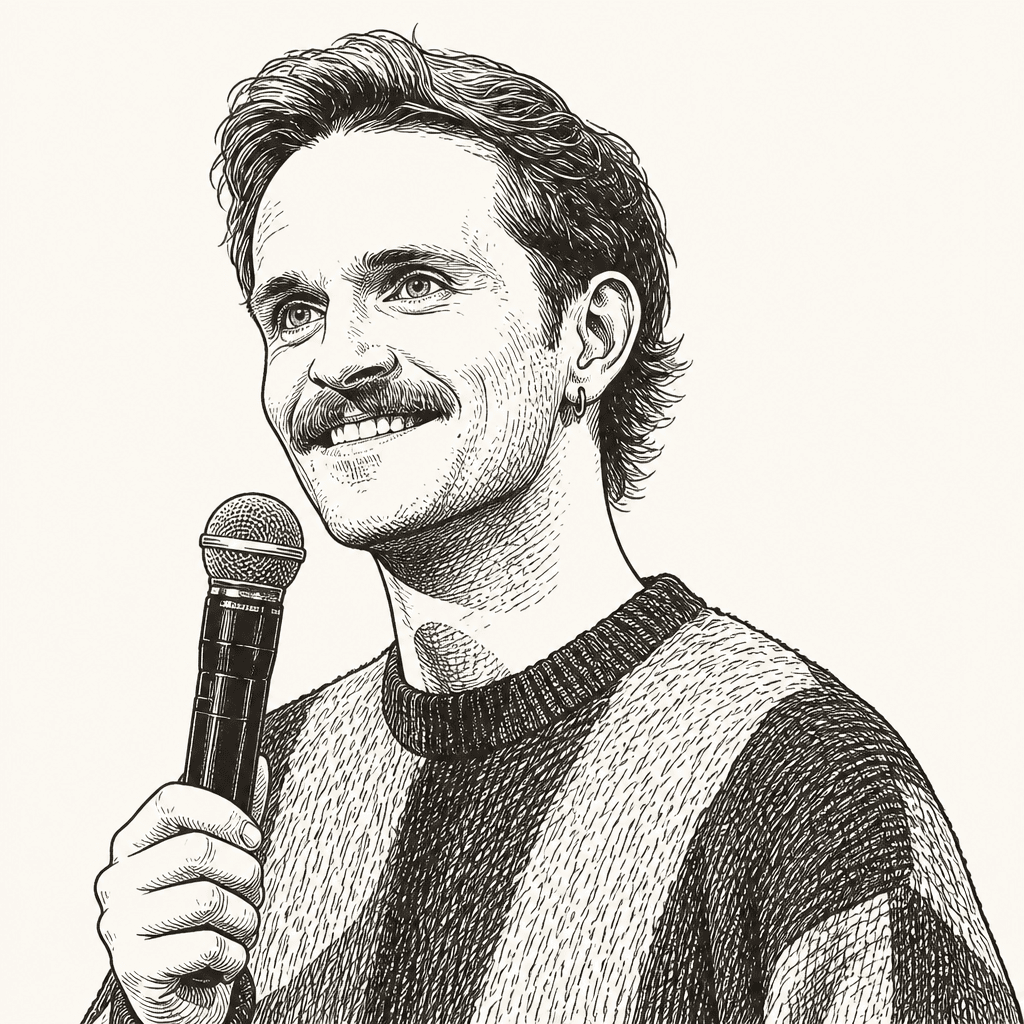
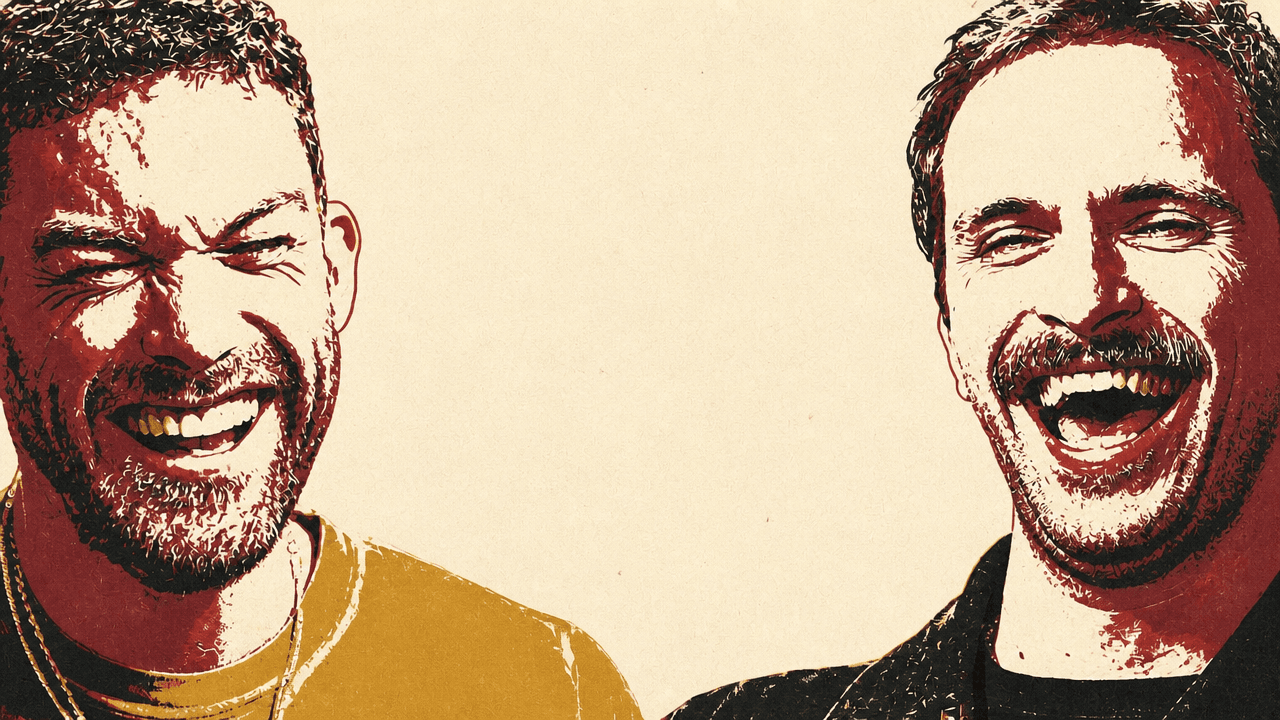
Comedian Vittorio Angelone uses his adult autism diagnosis to explain a recurring social problem: he often cares intensely about upsetting people but cannot reliably tell when he has done it. In conversation with Chris Williamson, he argues that diagnosis can clarify mistakes without excusing them, and that the hardest forms of inclusion are those that disrupt social decorum rather than fit neatly into public sympathy. The exchange extends that concern into comedy, masculinity and online reaction culture, where Angelone repeatedly resists turning identity, vulnerability or transgression into a substitute for judgment.
Autism, for Angelone, is fear without reliable feedback
Vittorio Angelone describes his adult autism diagnosis less as a sudden revelation than as the end point of accumulated social misfires. He was diagnosed at 29. Other people, he says, often describe diagnosis as the moment “everything suddenly made sense.” For him, the process was more gradual: friends joking that he was autistic, repeated negative social encounters, and a recurring pattern in which a conversation he experienced as positive would be followed by a message the next day saying he had hurt or insulted someone.
The central difficulty, as Angelone explains it, is not a blissful lack of awareness. It is an anxious inability to tell whether damage has been done.
It’s definitely not blissful. It’s unaware. I am constantly so worried that I’ve upset people, but I have no way to tell if that’s the case whatsoever.
Angelone’s description is specific: he is “apologizing when I had no need to apologize” and “patting myself on the back when I’ve ruined somebody’s day.” He compares it to “swinging punches with a blindfold on.” What he describes is high concern with unreliable feedback. The problem is not that he does not care whether he upsets people. He says upsetting people is his least favorite thing. The problem is that he often cannot tell, in the moment, whether he has.
He links the diagnosis to a childhood he remembers as highly anxious and socially overwhelmed. He describes himself as “a very strange child,” with panic attacks around ages nine, ten, and eleven. He ran away from school, tried to run home, and had to do lessons separately in another room with worksheets. He entered primary school through a different door because he could not handle crowds. At nine, while trying to run away, he punched his primary school principal when she tried to stop him.
The joke that follows — whether a nine-year-old’s punch is still more like a puppy’s nip or already assault — sits beside the more serious history: by the time he sought assessment, he was not starting from one isolated adult concern but from years of distress around ordinary social and institutional settings.
The route to diagnosis also shows how informal recognition preceded formal assessment. Angelone first approached his GP in London, was referred for an NHS assessment, and was told the wait could be four years. His stand-up audience unexpectedly changed that. Touring a show that included material about possible autism brought him into contact with autistic audience members and autism practitioners; five people offered to assess him privately for free. He accepted the offer closest to London and went through several appointments, with forms completed by him, his girlfriend, and his mother.
The result, as he describes it, was that he was “a little bit raised” across several autistic traits but “incredibly high on masking.” In the terms he says he was given, that high masking score helped explain why some of the other scores were not as elevated. He connects this, in his own understanding, to both gendered expectations and to his profession. Women, he says, can be harder to diagnose because they are more concerned with group dynamics, more adept at masking, and more expected to mask socially. He jokes that he has “girl autism,” but the mechanism he is pointing to is a learned ability to perform normality while still finding social life effortful and uncertain.
Stand-up, in Angelone’s account, is also a masking profession. The job is to say something one has said many times as if saying it for the first time. That resembles the way he often navigates ordinary interaction: someone asks a question, and he has a script ready, not because the exchange is intuitively flowing but because he has learned “how people like to be interacted with.” He calls himself “a touring masker.”
The diagnosis raises a practical and ethical problem for him: what does “unmasking” mean if he does not want to become rude? He is wary of people who receive a diagnosis and then, in his words, “decide that they can just be a dickhead.” He does not want an “autism card” that exempts him from criticism. What he wants is for people not to take social mistakes personally, because he does not intend them as contempt.
Chris Williamson frames the issue as one of culpability: at what point does someone become responsible for behavior shaped by a condition? Angelone’s answer is immediate: “You have to be.” Accountability remains necessary in his account. But the diagnosis changes the interpretation of mistakes. It does not make him exempt from the social world; it helps explain why the social world can feel like a set of rules he is always trying, and sometimes failing, to infer.
That same fear of invisible lines appears in Williamson’s account of his own recurring dreams. The repeated nightmare is not about intentionally hurting someone. It is about doing something he thinks is normal or playful, then realizing he crossed a line he did not know existed, and feeling immediate horror. In a recent dream, he splashed water from a Gatorade bottle at his guest booker Yasmin, thinking they were messing around; it turned out to be a huge faux pas. The fear is not merely misbehavior. It is discovering too late that the rules were different from the rules he thought he was playing by.
Angelone distinguishes that from situations where one knowingly chooses a difficult action: sometimes a person enters a conversation or decision aware it may upset someone but believing it remains the right thing to do. The more destabilizing case is being blindsided by someone else’s hurt. That is the shared territory in their exchange: not the fear of being caught doing wrong, but the fear of learning after the fact that one has done harm without seeing it.
The disabilities that break decorum are the hardest to include
Vittorio Angelone becomes most forceful when discussing the public reaction to a man with Tourette’s at the BAFTAs. His anger is directed not at discomfort itself but at the way people interpreted a visible manifestation of a neurological condition as moral intent.
In Angelone’s account, actors and online commentators responded as though the man must have meant the inappropriate thing he shouted. He says the basic nature of Tourette’s, as he understands it, is that the word appears precisely because it is the worst thing to say in the moment. He and Williamson also refer to a documentary example involving a man with Tourette’s and his dog near a road, using it to make the same point: the condition can produce an instruction or word that is exactly wrong for the situation, not because the person wants the bad outcome.
Angelone’s objection is also classed. He says he hated the framing that centered “these poor actors on stage” rather than the working-class school caretaker who had lived with a debilitating neurological condition and then displayed it on the biggest stage of his life. The actors were “Hollywood elite millionaire[s]” exposed to an unpleasant word; the man with Tourette’s had to return to ordinary life with the shame and consequences of the incident. Angelone adds that people in the BAFTA room were supposed to have watched the film involving the man who shouts inappropriate things. If they did not understand what was happening, he says, they had failed at the basic job of attending the awards.
Chris Williamson broadens the point to “social decorums”: people say they support disability, but support becomes harder when the disability violates conversational norms, politeness, or the smooth running of an event. He names autism and OCD as conditions that can require accommodation in ways inconvenient to other people. The easier forms of public compassion are for “young kids that need help in very obvious ways”; the more difficult cases are those that make everyone socially uncomfortable.
Angelone puts the tension as “where accessibility meets inclusivity.” If a person in a wheelchair could not access a stage, he suggests, few progressive people would say the person should not have been there. Yet with Tourette’s, people argued that the man should not have attended. The disability that breaks social decorum is treated less like a ramp-access problem and more like a reason to exclude.
The two also discuss the instability of the autism label itself. Williamson notes that many traits exist on spectra and only become clinical when they cross a threshold. He jokes that he does not know the difference between being an only child and being autistic. Angelone’s reply is blunt: “You’re just an unsocialized boy.” The joke opens a serious question about where personality, upbringing, anxiety, and diagnosis meet.
Angelone cites two books by comedians on adult autism diagnosis — Fern Brady’s Strong Female Character and Pierre Novellie’s Why Can’t I Just Enjoy Things — and says Novellie discusses the possibility that the word “autism” may become less useful because it is such a broad umbrella. Angelone also says the older Asperger’s category was descriptively helpful but is no longer used because, in his phrasing, “he was a Nazi.” He describes his own diagnosis conversationally as Autism Level 1, which he equates with what Asperger’s previously described.
His explanation of levels is explicitly his working description rather than a clinical lecture: Level 1, in his shorthand, means he can move through life without outside assistance; Level 2 may require some help or care; Level 3 can mean full-time support and inability to live independently. The purpose of the distinction is to show how strange the shared label can feel. He finds it odd that he shares a diagnosis with someone who is nonverbal, self-injures, and needs constant care. He offers the comparison of cancer stages: one word can contain very different levels of severity. But unlike cancer, he notes, autism does not “develop” from one level to another in the same way.
Angelone also received an ADHD diagnosis, though he says he cares about it less. His skepticism is not that ADHD is unreal but that, because there is medication for it, he worries about overdiagnosis and pharmaceutical incentives. Autism feels “cleaner” to him because there is no equivalent medication market. He has not tried ADHD medication, which he describes jokingly as “speed” or Ritalin, and accepts the common claim, as they discuss it, that stimulants can work differently for people with ADHD: they help someone sit down and “do your taxes.”
He also mentions, cautiously, that he has read about a possible comorbidity between autism and Ehlers-Danlos syndrome or hypermobility. He says he does not know whether the idea is “even nearly scientifically true,” but it interests him because he is hypermobile himself, with wrists that pop out and joints that have dislocated. Williamson turns the thought into a joke about “bone autism”; Angelone’s actual speculation, presented as speculation, is about whether connective tissue might matter in both joints and the brain.
Angelone does not deny the usefulness of the label. He also does not treat it as a total explanation or a release from responsibility. It names a pattern, helps others interpret his mistakes less personally, and gives him a way to think about masking. But it does not settle the ethical problem of how to move through other people’s lives without hurting them.
A mild correction can become an internet event
Vittorio Angelone gives a concrete example of how a social misunderstanding can escalate once it enters the internet. An Irish Times article, as he describes it, included him alongside Sally Rooney and Kneecap. The journalist had spoken to Angelone beforehand, and he says he respected her broader writing, including articles he characterizes as being about Ireland’s high GDP, weak public services, poor public transport, and the question of whether corporate wealth in Dublin is translating into better life for people. But he objected to the way she described his show.
According to Angelone, the article characterized the show as “unapologetically local” and suggested that if the reader did not get the references, that was their problem. It also quoted a two-star Fringe review that he says came from someone who “clearly just didn’t get the show.” His concern was reputational and artistic: if a reader did not already know his work, they might assume he was another Northern Irish comedian trading on local in-jokes. Williamson adds that such a description could make the show sound inaccessible to potential ticket buyers — as though they would need to “speak Belfast.”
Angelone says the reality was the opposite. He wrote the show in London, trialed it around England, performed it at the Edinburgh Fringe, and later did it in New York and America. Explaining Northern Ireland to outsiders is part of the show’s work. The fun, in his account, lies in opening up the place he is from: “here’s why” it is “a bit fucked up,” here are its quirks, here is the context. He did not see himself as refusing to explain; explanation was half the point.
His response was an Instagram post. He intended it as a small correction or a bit of fun. It became much larger, gathering around 40,000 likes.
Some people said he had misread the article and that the journalist had intended a compliment. He agrees she may have meant to compliment him but still thinks the phrasing landed badly. The journalist reached out and said he had taken her out of context. Angelone’s reply was: “You and me both sister.”
The phone call that followed did not resolve the dispute cleanly. She asked whether he would apologize; he asked whether she would. His conclusion is that both had probably phrased themselves badly. He also acknowledges a responsibility problem: by posting a screenshot that included her name and the article, he helped direct attention toward her, and people sent her horrible messages. He says he apologized that it happened and that it was not his intention, while also noting that her byline was already public.
Angelone gives another example from a Belfast run of shows. When about 20 people arrived 30 minutes late, he asked the audience whether the website had made the start time unclear. They said it had. During the interval, he posted a plain Instagram story clarifying doors and show times for the remaining dates. It got more views than most of his stand-up clips because, he thinks, people perceived him as being rude or catty rather than simply informative.
His own formulation remains cautious: “I don’t know how much responsibility I need to take for my audience.” He does not shrug it off. He also does not accept that every reaction by strangers is fully his fault. The episode leaves him in the middle: he upset someone, reached out, talked it through, and accepted an unresolved “agree to disagree.”
Comedians can easily default to “fuck everybody, I don’t care” or “I’m just a comedian.” Angelone says he does not want to exist that way. The phone call may not have produced mutual apologies, but it produced recognition that both sides had been annoyed and both sides had reasons.
A roast is not a fight, but reaction culture keeps treating it like one
Chris Williamson compares the American reaction to a Kevin Hart roast to a boxing post-fight press conference. A big cultural event happens, and then everyone waits for each faction’s interpretation: Chelsea Handler on Don Lemon, Shane Gillis with Matt, Tony Hinchcliffe potentially weighing in, others offering tactical analysis and grievance. The roast itself becomes only the first event; the second event is everyone explaining what it meant, who won, who missed weight, who needs a rematch.
Williamson contrasts this with the UK comedy scene, where he senses less of the same factional cattiness. He is not sure whether the difference is cultural, structural, or simply scale. America may be larger, more contentious, and less socially enforced by the likelihood of bumping into people again. The UK comedy world may be small enough that open hostility has more interpersonal consequences. Or he may simply be missing the UK’s own version of the same dynamic.
Vittorio Angelone starts with history. Roasts have been embedded in American comedy for much longer, from figures like Don Rickles onward. In the UK, a roast of Jimmy Carr on Netflix would be possible, but the format does not occupy the same cultural position. The roast Angelone participated in was produced by the Have A Word podcast, involved people in that network, lived largely on Patreon and clips, and did not become the same national combat sport.
For Angelone, the deeper shift is reaction culture. He half-jokingly identifies Two Girls One Cup as “patient zero”: the viral object mattered, but the real scale came from people filming themselves reacting to it. In the same way, a roast now generates a second economy of reaction. People have platforms, incentives, and a reason to turn every take into a clip.
Angelone says he saw many of the jokes from the Kevin Hart roast rehearsed at the Comedy Store during the Netflix Is A Joke festival. He had gone on a Sunday night intending to watch bad open-mic comedy, partly as a confidence boost after arriving in LA. Instead, the night escalated: Dave Chappelle appeared, then brought on Shane Gillis, Louis C.K., Chris Rock, and Kanye West. Angelone had been seated in the front row after paying $20 and handing over his phone. He says he is not a demonstrative comedy audience member, so multiple comedians referenced his lack of laughter; Pauly Shore spent his set calling him gay and a gay Nazi. Then Gillis came on, and Angelone says he was “folded in half laughing.”
The joke he found funniest — about Kevin Hart being so short he would have to be lynched from a bonsai tree — was, according to Angelone, the one that later drew outrage online. Handler’s comment that lynching is worse than rape leads both men to reject the premise of ranking atrocities. “I think they’re both bad,” Angelone says. Williamson adds that it is “not a competition.”
The disagreement is partly about what a roast is. Angelone rejects the idea that it is fundamentally a competition. Even roast battles, in his view, should be understood as a double act: more dance partners than fighters. A roast is an ensemble performance in which comics try to say funny things about friends, colleagues, and public figures. The aim is not simply to be mean.
That does not mean Angelone adopts the cliché that everyone is too offended now. His complaint is different: everyone has too much incentive to have and broadcast an opinion. He is on a large podcast, he notes, and could give a hot take that becomes a clip. His actual take is deliberately mild: he liked the roast, it was too long, some people did not do great, and some of them were actresses rather than comedians.
Williamson then introduces the idea of “cringe cancellation”: not cancellation because someone did something illegal or said something reprehensible, but because someone’s brand becomes embarrassing to be associated with. If ordinary cancellation attacks moral legitimacy, cringe cancellation attacks social desirability. It makes someone uncool to like.
Angelone immediately sees its force. If a person pushes back against being cringe, the pushback can itself become more cringe. Williamson describes it through an epidemiological metaphor, while making clear he is using it conversationally: positive word of mouth can create growth, as he says Morgan Housel’s The Psychology of Money did by causing each buyer to generate more buyers. Cringe cancellation reverses that dynamic. Each exposure makes fewer people want to associate.
The examples are loose and conversational. Williamson says Jay Shetty and Steven Bartlett came close when Angelone and Mike Rice produced a collaboration mocking them as “wizards of nothing.” He describes Bryan Callen and The Fighter and the Kid as having been on the receiving end of a hard-to-reverse cringe spiral. Angelone cites Bill Burr’s joke that roller skating was huge until a homophobic joke made it socially embarrassing. Williamson suggests The Rock as the canonical example of cringe cancellation: overexposed, too family-friendly, then seemingly trying to rebrand as edgier, including at the Kevin Hart roast.
The issue, as Williamson frames it, is not only who is offended. It is what becomes embarrassing to like. That is why he thinks people try to recruit comedians as “ammunition bullets” for a perspective: point the comic at a target, let the joke make the target socially toxic, and enjoy the reputational damage.
Comedy fails when it confuses tension with a forbidden sentence
Vittorio Angelone is not arguing for safe comedy. He says stand-up requires creating tension in a room. If a topic makes people uncomfortable, a strong joke can release that discomfort and produce a powerful laugh. His objection is to comedy that uses transgression as a substitute for craft.
After spending time around American comedy, he says there is something “embarrassing” about the pattern where a weak joke can be rescued by adding a slur at the end. Audiences clap not because the joke was funny but because they think the comic is fighting a cultural battle. He compares it to the progressive “clapter” of jokes whose punchline is essentially “we don’t like that orange guy.” Both are pandering. Both produce applause by signaling the audience’s side rather than by doing comedy.
His own touring show, as he describes it, is designed to make different parts of the audience uncomfortable for different reasons. People who arrive for edgier, darker material may become uncomfortable when he is vulnerable and sincere in the middle of the show. People who prefer vulnerable, narrative, thematic comedy may become uncomfortable with the jokes later on. He wants to “stretch” the audience rather than simply give each group what it came for.
Chris Williamson links that to a broader authenticity problem. There is performative edginess, where someone pushes the Overton Window because transgression itself is rewarded. But there is also performative vulnerability, which he describes with the phrase “speed running relatability”: hurrying through trauma or intimacy to prove one is a real person. When authenticity becomes incentivized, creators learn to reverse engineer the appearance of authenticity. It need not be sincere; it only has to look sincere and align with the brand.
Angelone says audiences often want to know the angle from the start. In America, he notices people often identify through ancestry or category — Italian, Irish, this, that — and jokes are filtered through that lens. He is resistant to being reduced that way. He is Irish, autistic, Italian, and other things, but none of those categories fully define him. He wants to say what he thinks rather than make every thought an output of a demographic identity.
That insistence matters because identity is also the subject of his show Who Do You Think You Are I Am, named after professional bowler Pete Weber’s viral line. Angelone began with the phrase as a funny meme title for a show about identity, perception, and self-perception. As he performed the show, he realized many audience members had never seen the clip, so he had to build an explanation into the opening. Over time, Weber became more than a title. Angelone began to see him as a kind of avatar: the “bad boy of bowling,” a ridiculous and appealing figure of swagger in a niche world.
The show grew out of a painful experience at the Edinburgh Fringe. A clip from Angelone’s podcast was screen recorded and circulated through comedians’ WhatsApp groups. In the full context, he had been describing the stress of an unexpectedly good Fringe run, where people kept telling him he was “the guy” that year. He was anxious about living up to buzz from people who had not yet seen the show. But the clip that circulated cut away that context, leaving him saying, “People keep telling me I’m the fucking guy this year.” Comedians mocked him. People approached him during the festival saying, “Oh, it’s the fucking guy,” and he did not understand why until a month later.
That revelation altered his memory of what had been the best month of his career so far. What he had experienced as success, pride, and fun suddenly acquired a hidden layer: people were making fun of him. He admits that if he had received the same clip of another comedian, he probably would have mocked it too. But the effect on him was to suppress his self-promotion and bravado for a year and a half or two years.
The show became a way of recovering that swagger. Pete Weber’s heel-turn energy — “fuck you,” steering into arrogance, becoming the bad boy of bowling — gave Angelone a frame for rebuilding a part of himself that had been shamed. Stand-up, he says, is hard to promote without any bravado. “Come see the show, it’s fine” does not sell tickets. Comedians who complain about self-promotion may be sincere, but the job still includes marketing.
Notions, meekness, and the cost of downplaying ambition
Chris Williamson recognizes Angelone’s account of lost bravado in himself. Growing up in Stockton-on-Tees, he learned that aggressively downplaying ambition made him more likable and less threatening. Vittorio Angelone identifies the Irish version as “notions”: the accusation that someone thinks they are somebody. It is tall-poppy syndrome with a local name.
Williamson distinguishes this from genuine humility. It is closer to performative meekness, a fear of judgment masquerading as modesty. He says he still does it in interviews, loading every line with self-deprecation rather than plainly saying, for example, that he is “the eighth biggest podcaster in the world.” Angelone pushes him to admit that he is not done and wants to move higher. Williamson resists slightly, but accepts that he is still downplaying.
The danger, Williamson says, is “believing my own reverse hype.” A person can perform smallness for so long that ambition itself shrinks to fit the performance. Angelone’s response is not that ego should run unchecked. Ego, superego, and id all have to balance each other. The question is when ego is useful, when ambition is gratitude for what one has built, and when it becomes bragging.
Angelone traces one counterforce to the film Coach Carter. He remembers Samuel L. Jackson’s coach repeatedly asking a player, Timo Cruz, “What’s your deepest fear?” The eventual answer, as Angelone recalls it, is the line that “our deepest fear is not that we are inadequate” but that we are “powerful beyond measure.” He does not present it as a carefully sourced literary citation; he presents it as a formative line from a sports movie that gave him permission to think that shining one’s light might help others do the same.
His sharper claim is that many people, especially in the UK, are held back more by lack of confidence than lack of competence.
There’s a guy out there who’s half as good as you with twice your confidence making ten times the progress.
Williamson adds that sometimes “you can just do things,” and apparently doing things can function much like believing in yourself. Angelone qualifies that: a person still needs some belief that they will keep themselves in check. If one is deeply worried about becoming arrogant, narcissistic, or socially dangerous, he suggests, that worry itself makes a catastrophic overshoot less likely.
Williamson puts it similarly: the fear of being a thing often means one is almost certainly not that thing. He likens it to the line that if someone worries they are a psychopath, they probably are not. Angelone connects that to autism and sociopathy, saying many undiagnosed autistic people may worry that their social difficulties mean they are bad people or do not care about others. In his telling, the internal experience is often the opposite: care without a reliable social instrument panel.
Young men still need someone to reach them before the worst voices do
Vittorio Angelone begins with an admission that would surprise some of his audience: at 22, he read Jordan Peterson’s 12 Rules for Life and found it helpful. He is embarrassed by the period when he made his girlfriend watch Peterson clips and mocked Cathy Newman, but he does not disown the usefulness of the self-help message. At that age, he says, he needed someone to say, “Come on man, grow up, get your shit together.”
The embarrassment is social and cultural. He thinks some of his audience would be unhappy or surprised to hear it. But he wants to be honest because he would have liked to hear someone else say that a figure later regarded by many as having “went a bit crazy” had once been helpful. His wider self-description is intentionally deflating: he writes thoughtful, narrative stand-up shows, but he is still “a dumb idiot guy.”
That ambivalence returns later when producers ask whether Angelone and Mike Rice worry that their podcast audience might include men vulnerable to manosphere or incel influences. Angelone says that is “the opposite of a worry.” If he and Rice reach those listeners before Andrew Tate does, he believes they are less likely to become misogynistic, violent, or abusive. The podcast models something softer and more open while making fun of the harder, misogynistic posture.
Someone has to talk to young men or else you’re abandoning that to all of the influences that you have the biggest concerns about.
He cites Mortimer & Whitehouse: Gone Fishing as an example of older male tenderness: two men being lovely to each other, saying each other’s names with care, showing male intimacy through friendship. Angelone does not claim to be programmatically doing that, but he sees value in putting that sort of male relationship in front of listeners. His objection to producers’ concern is practical: if mainstream or softer voices refuse to talk to young men, the audience is left to the influences those producers fear most.
This is also how he now explains what Peterson gave him at 22. It was not patronizing, Williamson says, and it did not push him in a direction he felt was unethical. Angelone adds that it did not tell him he was “a piece of shit for being a man.” The need being met was not necessarily ideology; it was intelligible instruction and permission to take up a positive space in the world.
Chris Williamson is sensitive to the accusation that his own work is adjacent to the manosphere. He rejects being in it, noting that “they hate me,” while Angelone says Williamson is still closer to it than he is. The ambiguity, Angelone suggests, may come from the overlap between health, fitness, mindset, sex differences, and the more problematic male media ecosystem. Williamson calls the unkind interpretation that he is “the narrowest end of the wedge,” or the “gateway drug to the manosphere.”
He says he is attacked from both sides. After an appearance with Steven Bartlett, he was described in newspaper articles as right-wing, manosphere, and misogynist; after doing Tucker Carlson’s podcast, he says he was accused of being blue-pilled and infected with feminist lies. He recounts being criticized for sharing a C.S. Lewis quote about homemaking, with one reply accusing him of feminist bullshit. “I’m getting ideologically spit-roasted here,” he says.
The point is not to settle Williamson’s ideological placement. It is to show how quickly the internet pattern-matches based on presentation and topic. A muscular man discussing self-improvement and sex differences can be mapped onto one ecosystem by critics and simultaneously rejected by that ecosystem as insufficiently masculine or too feminist. Angelone jokes that he is far from that world — “a low-t mustached” man with an earring, called gay online every day — but he takes seriously the need for alternative models of masculinity.
That need also helps explain the popularity of Angelone and Rice’s podcast, Mike and Vittorio’s Guide to Parenting. The name was not intended as a jab at parenting podcasts. It was chosen because the show was two idiots talking nonsense, and Angelone thought the name should be as stupid as the vibe. He even placed it in Spotify’s children and family category, so new parents sometimes get it recommended and occasionally message expecting actual advice.
The audience composition surprised him. Many listeners assume the show is for men, but Angelone says a large part of the audience is “girls with fringes.” His theory is that women are often socially better at emotional communication — asking how a friend’s mother is, how work is going, whether he is seeing anyone — while men are often poor at that but good at “abstract fucking around chat.” For some male listeners, the podcast recreates messing around with friends, especially if they are in a new city and lack that group. For many female listeners, he thinks it provides a style of playful, silly male conversation they may not get from their own friends.
Williamson connects that to Joe Santagato’s The Basement Yard, which he says sold out Madison Square Garden with an audience that was 90% women. The screams were so loud, Williamson says, that Apple Watches warned people they were in an unsafe noise environment. Angelone sees the same mechanism: maybe women are not given as much permission to be stupid, silly, or unserious, while men have more freedom to “fuck around.”
Williamson adds that many male comedy podcasts skew into edginess or right-coded material in ways that deselect female listeners. Angelone’s answer is not to strip out silliness or male energy, but to avoid letting it harden into grievance. His concern is not that vulnerable young men might hear him and Rice; it is that, if they do not, they may hear only harder voices.
The shift from information to hanging out is a response to loneliness
Chris Williamson says he has been feeling the limits of what he calls “grind slop”: the endless online diet of productivity, optimization, work-until-your-eyes-bleed content. After more than a thousand podcast episodes, much of his work has been driven by a young man’s attempt to understand how to operate in the world: how to sleep, eat, train, manage emotions, build friendships, and think about self-development. But he now believes much of the 80/20 of that material has already been covered, by him or by others.
That realization is sharpened by AI. Raw information dumping, he says, may not be what people need more of. The studio table and multi-person episodes are part of a deliberate shift toward “hang” episodes: conversations with friends, less homework, more social texture. He expects to lose some of the audience by doing it. But he senses that people are lonelier, and he includes himself in that. Sometimes he does not want another lesson; he wants to listen to Matt and Shane, Angelone and Rice, or other friends talking nonsense.
I get the sense in the age of AI that just raw information dumping is probably not more of what people need.
The desired outcome is modest: not “I learned something,” but “I had a nice time.” Williamson is not rejecting learning; he is separating companionship from instruction. In his account, some listeners still want information, but another need is becoming more visible: the experience of being in the room with people who are enjoying each other.
Vittorio Angelone offers a related “white pill” about AI: it may put a premium on live experiences. If the phone becomes untrustworthy — if one cannot tell whether a cat video is a real cat or an AI-generated imitation — then music gigs, stand-up shows, and real-world events may become more attractive. The screen already had a credibility and desirability problem. AI intensifies it. Even silly internet videos become less innocent when the viewer is not sure what is real.
“Being in the real world might become back in fashion,” Angelone says. Williamson agrees, though he notes that nightclubs, his old industry, are in decline in the UK, with roughly one closing each week by his account. Still, the broader point in their exchange is that digital abundance does not remove the appetite for presence.
Angelone’s own career plans reflect a similar concern with living rather than merely producing. The next logical step in comedy is to tour, write another show, sell another tour, and repeat annually. He wants to resist sliding into that pattern. He says he would like to do no stand-up in 2027, instead writing scripts, maybe writing a book, building the podcast, and “just live.” Williamson frames it as a requirement for art: for art to imitate life, there must be a life.
Angelone agrees. Comedians who only tour eventually write about airplanes, dinners, backstage, and green rooms. To make work about the world, they have to re-enter it. In his own comic register, he says one must “shit yourself at the 9/11 Memorial” — a reference to his own disastrous New York tourism story — but the artistic principle is plain. Experience has to come from somewhere other than the content treadmill.
The same idea appears in their discussion of instinct. Angelone says “trust your gut” has never worked well for him because his gut is “a very stressy little gut.” He is terrified of everything, including leaving the house, so anxiety cannot be treated as a reliable compass. Instead, he scripts interactions and uses prefabricated responses to avoid relying on instinct.
But the scripting has costs. His true conversational instinct is to ask intense questions immediately. When an uncle who travels for work said he no longer enjoyed it, Angelone wanted to interrogate the whole structure: how does it make you feel, how can you fix it, what are your options? He is interested in the reasons people do things partly because many people have never considered that they could do otherwise.
Williamson names that pattern “sliding versus deciding,” a concept he associates with couples counseling. People move through relationships by momentum — evening hangouts, situationship, toothbrush, drawer, living together, dog, marriage, child — and eventually wake up inside a life they never explicitly chose. He sees the same thing in careers: study business because one does not know what else to do, join KPMG, get promoted, keep going.
Angelone recognizes the same risk in comedy. The obvious next step can become a trap if it is never consciously chosen. His hoped-for year away from stand-up is an attempt to decide rather than slide.
Help, access, and community often depend on saying the right thing
Vittorio Angelone’s first North American tour, as he tells it, quickly became defined by his digestive system and by the oddness of American infrastructure. In New York, after landing and doing tourist activities with his girlfriend, he visited the 9/11 Memorial and realized he had sharted. He turned to his girlfriend and said, “Oh no.” She thought he meant the memorial was sad. He had to clarify: he had shit his pants.
In Nashville, the story became more serious. After a show, a few drinks, and a game of pool, he remembers a friend driving him back to the hotel and realizing he was suddenly far drunker than expected. He played Mongolian throat singing on Spotify. He does not remember getting into the room. The next morning, his phone was in the bathroom, his belongings were scattered, and he assumed he had an “unjust” hangover: a punishment disproportionate to the drinking.
Then he began vomiting every 30 minutes through the morning. He checked out of the hotel, vomited in the lobby bathroom, and concluded that this was no hangover he recognized. A friend suggested an IV clinic, which Angelone found comically American; it was closed, so they went to urgent care, which he describes as neither emergency room nor ordinary clinic and, in this case, located beside a burger restaurant.
Because he was polite at the desk, he thinks the staff initially assumed he was fine. His mother advised him by text to vomit in the lobby so they would see how ill he was. He did not do that, but because the bathroom was near reception, his loud vomiting made the point. Staff told him they had heard and that someone would see him. After assessing him, they suggested something had probably been slipped into his drink and said that this was common in certain areas of Nashville.
Angelone’s working theory, offered as comedy rather than certainty, is that he was spiked by one of the redneck pool players he had beaten badly enough to annoy. The man’s name, he says, was Jimbo. Angelone had been in a buoyant mood after the show, laughing when shots went in and possibly appearing to showboat. His friend had told him to cool it. He does not say Jimbo definitely did it, but if he were betting, “my money’s on Jimbo.”
Urgent care gave him an anti-vomiting injection in the backside, charged him $200, and he made his flight to Austin. The flight delay helped. He also requested wheelchair assistance through the airport, saying he had an ankle injury rather than that he had possibly been drugged and could not stop vomiting. He felt bad about being pushed through the airport but believed he might collapse if he stood in security lines. He also worried that if he told the airline he had been drugged and was vomiting, they might not let him fly because of insurance or risk.
The practical calculation is the point: what can he say that gets him help without triggering exclusion? What symptom will be understood as legitimate? Which truth is too administratively inconvenient?
That same question — what can be said, what will be understood, what the local code means — runs through his Belfast material. Angelone describes a moment in his show where he asks if anyone is from where he is from, then jokes about the naming conventions of Northern Ireland versus “the North of Ireland.” In Newcastle and Nashville, someone shouted “Trench,” the West Belfast street where his father grew up. On its face, that is not a threat. But in a contentious show about Northern Ireland, someone naming the exact street tied to his family feels intense: a way of saying, we know who you are.
He compares it to Patrick Radden Keefe’s reporting, where gangsters would mention a journalist’s children’s names or dog’s name as a flex. It does not have to be an explicit threat to communicate knowledge and proximity. Angelone says West Belfast is small; everybody knows everybody.
Community can be gentler than that, but it still depends on need and proximity. Angelone describes an old Italian woman in his North London block who feeds the foxes. She throws chicken into the bushes. If she notices a fox has mange, she calls a fox charity, gets medicine delivered, hides it in chicken, and treats the fox. The consequence is a growing fox problem around the flats. But the same woman sometimes needs help sending a WhatsApp, so she knocks on Angelone’s door.
Chris Williamson calls that “fully integrated.” Angelone says he tries to build that kind of connection and thinks it is an important part of life. He is not doing as much of it as he should, but it is possible. It is scary to say hello to neighbors or people on the street, but communities can be built in small ways. Williamson adds that it is nice to be needed. The bleak alternative is a world of solopreneurs, digital nomads, and online workers messaging through their day, none of whom need one another for anything.
Near the end, Williamson searches whether left-handed people are more likely to be autistic. The on-screen Google result, attributed in the frame to Google and WebMD, shows a snippet saying people with autism are more than twice as likely to be left-handed as people without the condition. In the exchange, the snippet functions as an on-screen prompt for a joke, not as a clinically developed point. Angelone is not left-handed. He says his left hand is “essentially for show,” though percussion training forced him to make it less useless.
They also discuss echolalia, which Angelone explains as repeating words or noises, a kind of auditory stim or loop. He experiences it when a word’s sound catches him. He might repeat “indigo” over and over until his girlfriend tells him to stop.
That detail brings the larger discussion back to the ordinary management of one’s effects on other people. Autism in Angelone’s telling is not only diagnosis, masking, public misunderstanding, or moral culpability. It is also a word that feels good in the mouth and gets stuck; a girlfriend saying stop; a neighbor at the door; a family street name shouted from the audience; and the ongoing work of knowing when one has affected someone else.