Women’s Equality Should Not Depend on Doing Men’s Work

Chris Williamson argues that a strand of modern feminism still ranks women’s choices by how closely they resemble traditionally masculine work. He says careers and leadership are treated as signs of progress, while motherhood, caregiving and homemaking are often dismissed—even when women choose them for themselves. For Williamson, that hierarchy undermines feminism’s promise of expanding women’s options: equality should not depend on treating femininity as lesser.
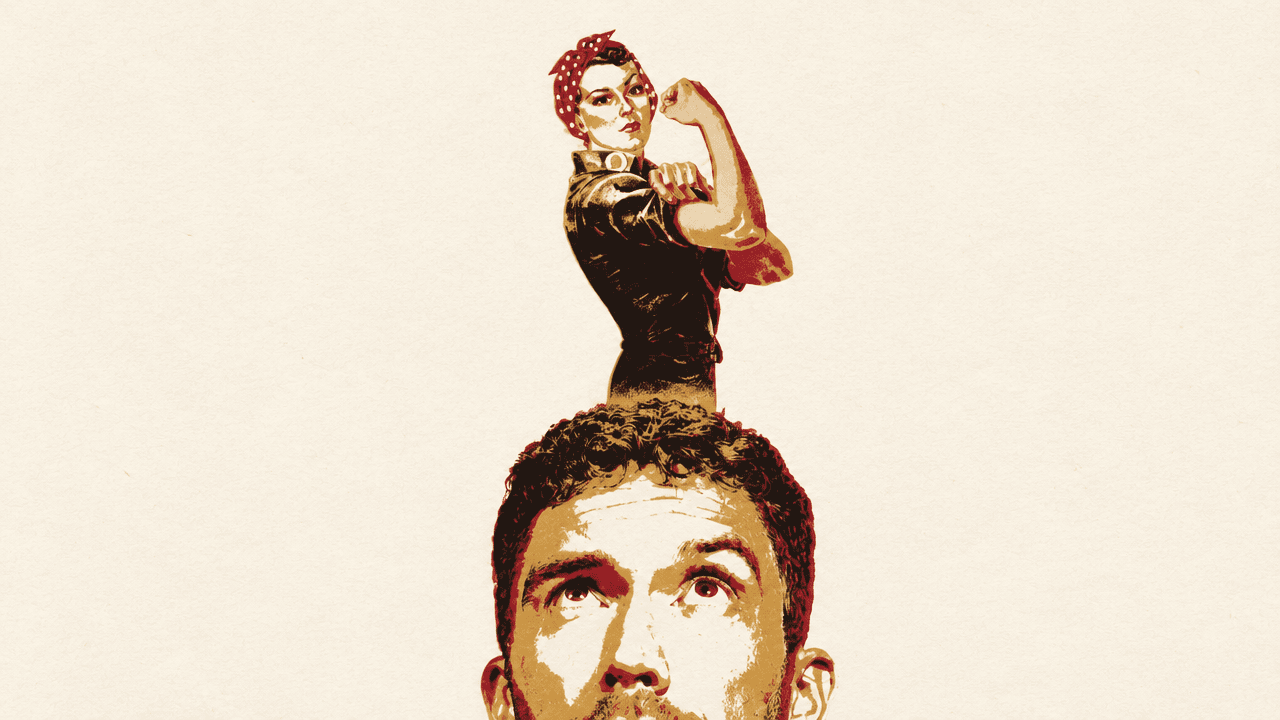
Empowerment becomes a hierarchy when only some choices count
Chris Williamson’s central claim is that a strand of modern feminism treats traditionally masculine work as achievement and traditionally feminine work as lesser. In his account, that hierarchy turns empowerment into a judgment about which choices women are allowed to value.
He illustrates the point with a friend who reached the top of her career as an executive at a major technology company, then chose not to return to work after having a third child. During the pandemic, she had reconsidered how present she had been with her first two children and decided to become a full-time mother. After moving, she joined a group for mothers with young children. One woman told her, “I wish I’d known you when you were still working, you know, when you had a lot going on.”
Williamson reads the remark as a judgment not of her friend’s ability, but of her decision to leave paid work. Although she had reached the top of her career, Williamson says she was regarded as less because she was now “just a mum.” To him, that is difficult to distinguish from contempt for femininity.
Equality should not require women to resemble men
Williamson calls the underlying assumption “the soft bigotry of male expectations”: the idea that women’s contributions become impressive when they resemble work traditionally associated with men, while feminine-coded roles remain low-status.
He applies that argument to a 2023 study, The Myth of Man the Hunter, which challenged the familiar picture of men hunting and women gathering. The study reported evidence of women hunting in 50 of 63 foraging societies. Williamson says it also found women hunting large game in 33 percent of the societies where women hunted, presenting the findings as a major challenge to the conventional account.
A subsequent critique by 15 hunter-gatherer researchers argued that the study had sample-selection bias and numerous coding errors, and that its methodological problems pushed its results in the same direction. Williamson accuses the original researchers of manipulating data to support a preferred conclusion.
But his broader objection is not only about the dispute over the data. He points to the original paper’s stated aim of shifting the male-hunter, female-gatherer paradigm and asks why demonstrating that women hunted is treated as more emancipatory than recognizing the importance of gathering, childcare, food processing, and maintaining a social group. If hunting is the measure of value, he argues, equality is being made to depend on women’s ability to meet a male-coded standard. The compliment becomes: women matter because they did men’s work too.
The same ranking appears in stories about work and love
Williamson sees a similar pattern in entertainment and online culture. He cites Rachel Zegler describing her portrayal of Snow White: “She’s not going to be dreaming about true love. She’s dreaming about becoming the leader she knows she can be.”
Williamson does not object to women becoming leaders. He questions why leadership is set against falling in love, as though one ambition must make the other less worthy. In his reading, the contrast assigns status to the independent, career-minded path while casting romantic or domestic aspirations as something to outgrow.
He makes the same point about Nara Smith, a cooking and lifestyle influencer who prepares meals for her family and shares them online. Williamson says that, in a 2024 Harper’s Bazaar article, Smith described receiving hostile comments from women calling her a “tradwife” and accusing her of setting feminism back by decades. The reaction, Williamson argues, makes domestic work seem suspect even when a woman chooses it for herself.
This is not an argument that any one path is best. Williamson says career, homemaking, and combinations of the two are individual choices shaped by preferences and constraints including economics and age. His criticism is that prestige seems to flow in only one direction: women are celebrated for becoming CEOs, soldiers, hunters, founders, or breadwinners, while motherhood, caregiving, homemaking, and emotional labor receive less attention.
Using femininity as an insult disparages women too
The hierarchy, in Williamson’s view, also surfaces when women mock men for behaving in ways described as feminine. He discusses a post showing a woman carrying a man, captioned “How today’s men want to be treated,” and highlights a reply: “You cannot believe this without believing that women are inferior. The only way debasing a man for being in a position you consider feminine works is if you think of femininity as degrading.”
The point is that an insult aimed at men can rely on a judgment about women: if being treated in a feminine-coded way is humiliating, femininity itself is being cast as inferior. Williamson says people eager to belittle men may fail to notice that they are also belittling women—and potentially themselves.
He acknowledges why some feminists reject traditional domestic roles: for much of history, women had few alternatives to housework and raising children, so homemaking did not always represent a free choice. But that history, he argues, should not make women who now choose those roles seem foolish or less valuable. Treating stay-at-home mothers as dupes of patriarchy does not honor their agency; it dismisses their choices.
Williamson’s distinction is between expanding women’s options and ranking them. Feminism can make careers available without treating domestic life as failure, he argues. The troubling pattern is a movement that calls women’s entry into male-coded roles progress, treats women’s entry into female-coded roles as pitiful, and turns men’s entry into those same roles into a punchline.