A Breakout Hit Can Turn an Artist Into a Business Manager

Country singer and songwriter Dylan Gossett argues that artists risk losing the conditions that make their work distinctive when they let a breakout dictate what comes next. In an interview with Chris Williamson, he describes how “Coal” reached a large audience without a planned campaign, then considers the pressures to repeat a hit, follow audience feedback and outsource creative work to AI. Gossett’s point is not to reject promotion or new tools, but to protect the time, experience and freedom that allow him to write songs on his own terms.
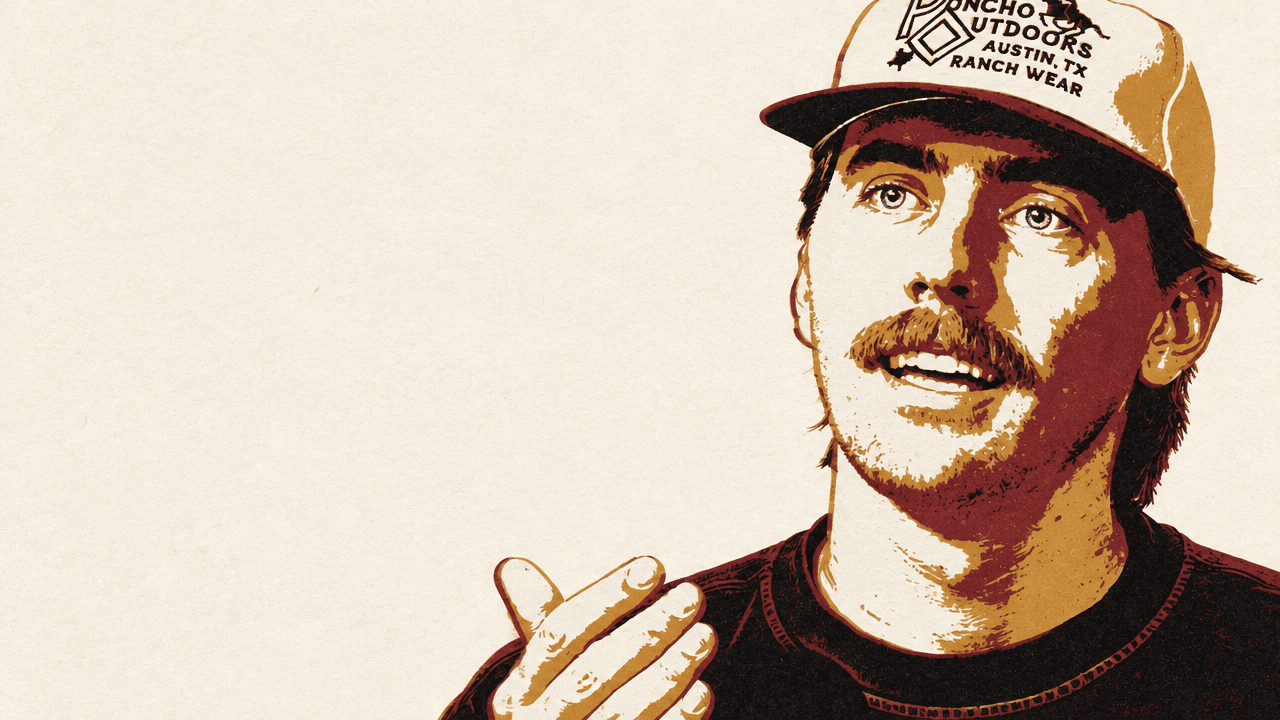
“Coal” reached people without being built as a campaign
Dylan Gossett says he wrote “Coal” in about 25 minutes, beginning with the line “They say pressure makes diamonds, how the hell am I coal?” He built the verses around it while typing on his phone atop a dog kennel in his apartment. He was about to go out with work friends, none of whom knew he sang. His wife, Julia, liked the song and shared clips with people; when they asked whether Dylan sang, he figured the secret was out. Then he did very little with the song for a year or two.
At the time, Gossett was working in event operations at Circuit of the Americas in Austin. He had started as an intern and spent months living at the job site in his parents’ RV. During Formula One season, he says, the work could mean 20-hour days. “Coal” came out of a hard stretch, but not what he calls the worst point in his life. He and Julia were happy, yet he felt stuck: putting in hours without feeling that he was getting anywhere. The song gave that ordinary frustration a line and a shape.
That distinction matters to the way Gossett describes the song. He does not present it as a carefully engineered account of rock bottom, or as a story he wrote to fit a promotion plan. Its emotional force came from a period when life was good in some ways and difficult in others. Chris Williamson connected that feeling to the gap between effort and visible results: people may be accumulating experience and putting in work without seeing a payoff. Gossett agreed that it was close to how he felt.


He also thinks the years before “Coal” took off gave him a frame of reference he would have lacked if success had arrived earlier. Working outside music and navigating adult relationships gave him what he calls “real-world items” to draw on. He cannot imagine being thrown straight into the music business, or trying to write songs, without those experiences. For him, the song’s subject was not a persona assembled for listeners. It was grounded in a life that had not yet become a music career.
The path from private song to large audience was contingent. Gossett says he brought his guitar on a camping trip with his wife, his friend Caden, and Caden’s partner. Caden, whose ear Gossett trusts, asked to hear “Coal” again, recorded a voice memo, and told him to do something with it. Julia suggested TikTok. Gossett disliked the platform and did not think of himself as a TikToker, but he began posting. An early video of “Coal” did nothing. After releasing “To Be Free” and gaining some traction, he posted “Coal” again.
The video that changed things was one of several he recorded that day. Gossett chose it, but does not describe the choice as a repeatable formula. He wonders whether a different clip, a different day, or simply never posting the song again would have left the result entirely different. The song’s attention depended on a particular piece of writing meeting a particular piece of distribution at a moment he could not plan with confidence.
His choice of excerpt also resisted one common logic of short-form promotion. Gossett disliked the practice of isolating a brief hook, repeating pre-save requests, and stretching a release campaign over months. He thought the strength of “Coal” was in the writing, and wanted the clip to lead listeners through the song rather than offer its conclusion immediately. The central line—“They say pressure makes diamonds, how the hell am I still coal?”—arrives as a payoff, not as the opening bait. Before it, the song moves through “I’ve seen heaven without dying, met the devil without trying,” then the sense of being out of luck and struggling to land on one’s feet. Gossett was proud of those lines and wanted them heard.
He was not, he says, weighing the likely view count against the length when he made it. He liked the shape of the song and believed the writing would carry the listener to the last line. Its eventual reach came without cutting away the structure he valued.
A career can crowd out the conditions that made the song
The recording of “Coal” was as modest as its origin. Gossett made and engineered it on his laptop at the edge of his bed. He says that if he heard the same version now, he would think of it as a demo and would not release it that way. The first release had to be taken down and remastered because its levels did not sit properly alongside other music. The roughness was not a calculated positioning exercise. It reflected what he could make at home with the tools he had.
That history sits uneasily beside the professional expectations that followed. Gossett says he has worried about turning a successful approach into a formula: for a time, he resisted running ads and other promotional tactics, even though he knew that might cost him opportunities and frustrate his team. He estimates he has posted “Coal” only seven to ten times in total, including about four times around its release. The advice he hears now, by contrast, is to post a successful song repeatedly—perhaps dozens of times—and extend the campaign.
He does not argue that restraint is the right plan for every artist. His concern is the pressure to treat one success as an instruction. Once a raw, unpolished presentation works, it can become a style teams try to reproduce. Then the performance of authenticity risks becoming as deliberate as any polished campaign. Gossett says he does not have a general answer for how to stand out when both the highly produced and the stripped-back approaches are widely used.
The machinery is not limited to an artist’s own account. Gossett describes teams placing songs with accounts that post truck videos, moody lighting, and lyrics, among other themed clips that their followers use to discover music. That can put more ears on a track, he says, but does not ensure it will catch. A song that is not compelling, or sounds too much like something else, may not hold attention simply because it has been distributed widely. Promotion can make a song more available; in Gossett’s account, it cannot guarantee that people will care about it.
He has generally measured progress less by repeated viral moments than by whether people come to shows. “Coal” was his major viral moment, he says, rather than one in a series. But even ticket sales are an imperfect measure of momentum when the cost of attending a concert has risen in his view. Seeing a major act can mean paying for tickets, transport, parking, a hotel, food, merchandise, and childcare. Gossett describes a night out for him and his wife at a large stadium as potentially a four-figure expense, even in poor seats. A listener may instead choose a newer artist nearby for a $15 ticket.
That choice affects how a career grows. A previous sellout might encourage an agent to book more seats the next time an artist returns to a city. But the same audience may have to choose among many shows and may not be able to afford to see the same act again. Gossett says touring is harder amid the number of artists on the road and the costs facing fans. He does not frame ticket sales as a simple referendum on whether an artist has stayed relevant; ability to pay and the range of competing events matter too.
The pressure becomes sharper after a breakout because success changes the work around the work. Gossett says he was not fully ready for sudden attention, though its timing helped: he and Julia had married six months earlier and were settling into a house together. The harder task, in his view, is maintaining a career after a song has had a large moment. An artist may become known for one track and still struggle to sell tickets a year later. Gossett says he has deleted much of his social media and unfollowed many country accounts. Instagram, which used to show him friends’ posts, now often feels like a stream of advertising, promotion, and industry commentary.
The shift from making songs to managing a career is captured by Williamson’s bakery analogy. Someone opens a bakery because she loves making cakes. It gets popular, she hires staff, and then the work of accounts, staffing, and operations gradually takes over. Eventually she may not have made a cake in years. Gossett recognizes the parallel: he says there are times he feels more like a business manager than an artist.
The risk is not simply that a successful musician has more obligations. It is that the work of running the business can consume the conditions that enabled the writing: unstructured time, attention, and a life outside the industry. Williamson argues that time spent walking, thinking, or letting ideas develop can look unproductive next to a full schedule of calls and measurable tasks. Gossett’s own songwriting often begins without a plan, on the couch while Julia watches television, with him humming until a word arrives. That kind of time is difficult to protect once music becomes a business with deadlines and expectations.
Gossett remembers writing “Coal” because he wanted to pick up a guitar, not because a release plan required a song. Now, he says, he tries to remind himself that album work and other pressures are things he once would have been grateful to have. He still has the passion, but the goalposts and expectations have changed. The challenge is to accept the demands of a career without letting them replace the conditions in which he makes music.
His songs often begin before he knows what they are about
Gossett describes songwriting as a process of staying with a sound before words arrive. He might be on the couch while Julia watches television, singing gibberish and trying out a melody. He is not necessarily sitting down to write; often he is noodling because he enjoys it. A consonant or vowel gradually becomes a word, and a phrase that feels thought-provoking can give the song somewhere to go. “Headed Back to Austin,” he says, began with him on the couch for about half an hour, knowing the direction he wanted without yet having the words.
That process is far from the Nashville writing-room model Williamson asks about. Gossett says he has not tried writing in that kind of room and does not criticize the people who do; he considers them talented. It simply is not how he tends to find the material he likes. He has written with his brother Blake and with the multi-instrumentalist Colton, and describes those sessions as a different kind of work. Blake wrote “Ramblin’,” the title track of Gossett’s album, and Gossett contributed the chorus and a melody. He admires the song and Blake’s fingerpicking, which he says he cannot play himself.
Collaboration has become easier for him over time, but the words remain a point of ownership. Gossett says writing is at least as much his passion as singing, and he is particular about what a song says and sounds like. If he has a verse and chorus and only needs a bridge, he may not want help finishing the thought. He can imagine singing a song someone else wrote, but says he might struggle to write a song for another artist if he wanted to sing it himself.
That attachment to authorship shaped a discussion about AI. Williamson describes having an essay idea he had worked on, then considering whether to give his notes to ChatGPT to organize into a finished piece. He chose not to, in part because the final structure, story, and examples would become the version he remembered, even though he would know the finishing work had not been his. Gossett recognizes a similar unease in the spread of automated help on phones: he turned off message summaries and suggested replies because he wanted to read and respond himself.
For Gossett, the concern is not that every use of technology is wrong. He does not hand-wash his clothes, and he accepts that tools can make work easier. The distinction he reaches for is between practical convenience and work that is artistic or sentimental. A handwritten letter matters not just as a piece of paper but as evidence that someone took the time to write it. Likewise, a song’s imperfections may be part of what makes it feel human to him.
He also connects authorship to the experience of getting better. He says there is a particular satisfaction in failing, trying again, and eventually writing a song that feels right. In his view, having AI do the work from the outset could remove that sequence of effort and reward. A dictionary or rhyming site can help a writer find a word, while a system that supplies the song’s creative decisions may feel different. Gossett’s rough test is whether the person is making the music or something else is making it for them.
The same uncertainty appears in production. Gossett notes that tools could assist with equalization or other technical tasks, just as digital audio workstations have changed how recording and editing are done. He sees real value in lowering barriers: “Coal” was recorded on his laptop and, in his telling, did better than many songs backed by substantial budgets and multiple writers. He likes that people can make and release work without first passing through every established gatekeeper. But when a method succeeds, he says, other people try to identify what worked and reproduce it, often with more resources. Access can widen who gets to make music while also making successful approaches easier to imitate.
A related tension runs through his view of recording imperfections. Earlier recording methods sometimes meant keeping a take despite a stray sound, because fixing it was difficult. Gossett says small imperfections can give a record life. But once an imperfection is recognized as desirable, it can be deliberately staged: Williamson jokes that a producer might arrange for a hat to fall on the keys at the right moment. Gossett recognizes the broader problem in production choices that are made to sound spontaneous. The attempt to manufacture naturalness can become its own kind of performance.
None of this leads Gossett to a rule about which tools to use. He says the boundary is a gray area and returns to the person’s intent: is the tool helping them complete a thought, or are they looking for how much of the creative work they can outsource without others noticing? The distinction matters to him, but he does not present it as a technical standard that will settle every case.
Country songs give some men a way to voice sadness
Gossett says sad songs can be easier for him to write than straightforwardly happy ones. That does not mean he struggles to write about love: he has written many songs about his wife and considers some of them among his favorites. The difficulty is a different kind of happiness—the song that is simply upbeat and ready to go out to a bar. He thinks some writers do that well, but says it does not come as naturally to him.
He connects the mood of a song to its arrangement as well as its words. The same lyrics can land differently against an upbeat track than against minor chords and a more subdued guitar part. He uses the example of sad piano versions of familiar theme songs: a change in musical setting can make a song seem newly melancholy. Gossett likes listening to sad music even when he is happy, and says he leans into that sound in his own writing.
Asked why male sadness has become prominent in country music, he offers a tentative explanation. He thinks country songs can give men permission to express feelings they might not share in a group chat or with their friends. A man who says he feels the way “Coal” describes might be told to get it together; the same feeling, put into a song, can be heard as moving. Gossett calls it a kind of “dude therapy session.” At his shows, he says, men are often the ones singing the words with their whole hearts, arms around one another, even if they would not talk about those feelings afterward.
Williamson wonders whether that points to a gap between men’s willingness to sing about emotion and their willingness to express it directly. A song creates some distance: the listener can inhabit the feeling through another person’s words without having to make a personal declaration. Gossett agrees that the show can be an outlet for people who cannot sing or write the feeling themselves.
They also consider whether women and men are received differently when they sing about vulnerability. Gossett speculates that some listeners may be more accepting of male vulnerability in a song while dismissing women’s songs about breakups as familiar. He immediately qualifies the point, saying he is not speaking for women and may be wrong. Williamson agrees that country’s conventions could make male vulnerability feel less expected, and offers Kelsea Ballerini’s “I Sit in Parks” as a complicated account of a woman weighing a past relationship and a choice about having children. Gossett says he has not heard it, then names Ballerini’s “Penthouse” as another example that complicates his initial generalization.
For Gossett, storytelling offers another route into emotion. He has written “Lone Ole Cowboy,” about a man who is cheated on, kills the other man, and goes on the run. He has not lived that story; he likes the tradition of country ballads that build a narrative world, and mentions Marty Robbins’s Gunfighter Ballads. A songwriter can also begin with a real detail and make a story from it. Williamson brings up the origin of Dolly Parton’s “Jolene”: a bank teller who paid attention to Parton’s husband supplied the seed, while the name came from a young fan. In the account Williamson shares, Parton combined separate details rather than simply transcribing an event.
That kind of invention does not make a song emotionally empty. Gossett distinguishes a made-up plot from a feeling presented as autobiographical, but sees value in both. A songwriter may imagine the life of a stranger or draw on a story that never happened to them. The work is still shaped by choices about what to notice, what to invent, and how to make the listener feel the stakes.
The audience can become a constraint in either direction
For Gossett, the risk of formula is not only that a team repeats a successful promotional tactic. It is that an artist starts to treat listeners’ response as a verdict on what the next song should be. He describes a familiar tension: play a song acoustically on a porch, then record it with drums or slide guitar, and some listeners ask for the porch version. Their preference may be sincere, and the acoustic performance may have qualities they value. But Gossett does not want that response to become a permanent instruction to remain an acoustic artist.
He thinks musicians have to be able to expand their sound. He points to artists such as Billy Joel and Bob Dylan as examples of musicians who changed their approach rather than staying inside the form audiences already knew. At the same time, he understands why artists may hesitate. If listeners have responded to one kind of song, making more of it can seem like the safer choice. Gossett says he tries not to overthink that trade-off, but knows other artists who fear putting out different music because it may perform less well.
Williamson calls one version of this pressure audience capture. A creator tries different work, sees one style get a stronger response, and repeats it. Feedback can be useful: Williamson notes that films are sometimes screened so creators can learn where viewers are confused or bored. But repeated adjustment can shift the purpose of the work. Instead of making what they want to make, creators begin making what they believe the audience wants from them.
The result, as Williamson describes it, is a kind of reverse puppet: the audience’s response guides the creator’s choices, while the creator performs a version of themselves shaped around those responses. The audience may then become attached to that version rather than to the full range of the person making the work. If the creator later wants to change direction, the audience’s earlier approval can feel like a contract. Williamson says he has seen people resent the very audience they tried to please, after contorting themselves to hold on to its attention.
There is a second pressure that works in the opposite direction. Williamson calls it criticism capture: making choices to avoid expected attacks rather than to earn a positive response. A creator may add caveats before saying anything, trying to head off criticism, or adopt an aggressively combative stance to discourage objections in advance. In either case, anticipated reactions shape the work before it is made. Gossett says the combination can leave artists “on eggshells,” unsure how to act.
Social media can make those pressures feel immediate. Gossett says an artist can walk offstage, go to the green room, and encounter comments almost at once. Feedback arrives before a performer has had time to put the show behind them. It is difficult to know which reactions are meaningful and which are merely the fastest ones to reach the artist. That speed can intensify the impulse to adjust, even when a creative decision needs time before its value becomes clear.
That distance from ordinary life worries him for another reason: it can weaken the material itself. Williamson argues that art draws on lived experience, and that success can reduce access to the circumstances that once supplied it. A touring comedian may spend so much time in airports, hotels, and venues that those become the only subjects available. Gossett recognizes a version of this in his own career. He used to imagine himself as the listener he was trying to reach: “I want Dylan to be a fan of Dylan.” Now, he is more exposed to the industry’s promotion and commentary. He says he has to find time away from it to live.
The tension also reaches release decisions. Before playing “Clothesline,” a song he thinks may become a single, Gossett says he would rather feel things out week by week than commit to a fixed calendar. He is not claiming that planning is wrong; he says he struggles with the system and formula. He also misses the surprise of hearing an album without already knowing several of its songs. Gossett likes the idea of giving listeners twelve new tracks, perhaps in a different sound, and letting them discover the record together.
He points to Turnpike’s Price of Admission, which he says was announced with a billboard in the desert two weeks before release and no advance singles. He knows that approach may not be the most effective way to work with recommendation systems, and does not suggest every artist can take the same route. What appeals to him is the possibility that a record can arrive as a complete work rather than as a set of tested excerpts. Teasing a song can help build interest and support the business; holding it back can preserve the surprise he values.
Gossett does not offer a reliable way to predict which choice will work. His account instead keeps returning to a personal question: whether he still recognizes the work as his own. An audience can help an artist understand what reached people. But when its preferences become a standing instruction—or when fear of criticism determines what can be tried—the artist may have less room to change.
If you just write AI the rest of your life, there's no highs and lows in that. You're just very, yeah, I don't know. It's the payoff.