Fear Can Narrow Decisions Before People Consider Their Options

Coach and entrepreneur Joe Hudson argues that better decision-making depends less on eliminating uncertainty than on understanding the emotions driving a choice. Fear of rejection, failure or loss can narrow the options people consider, while personal principles can help them act without needing a guaranteed outcome. In conversation with Chris Williamson, Hudson says the ability to tolerate difficult feelings makes it easier to decide, learn from the result and choose again.
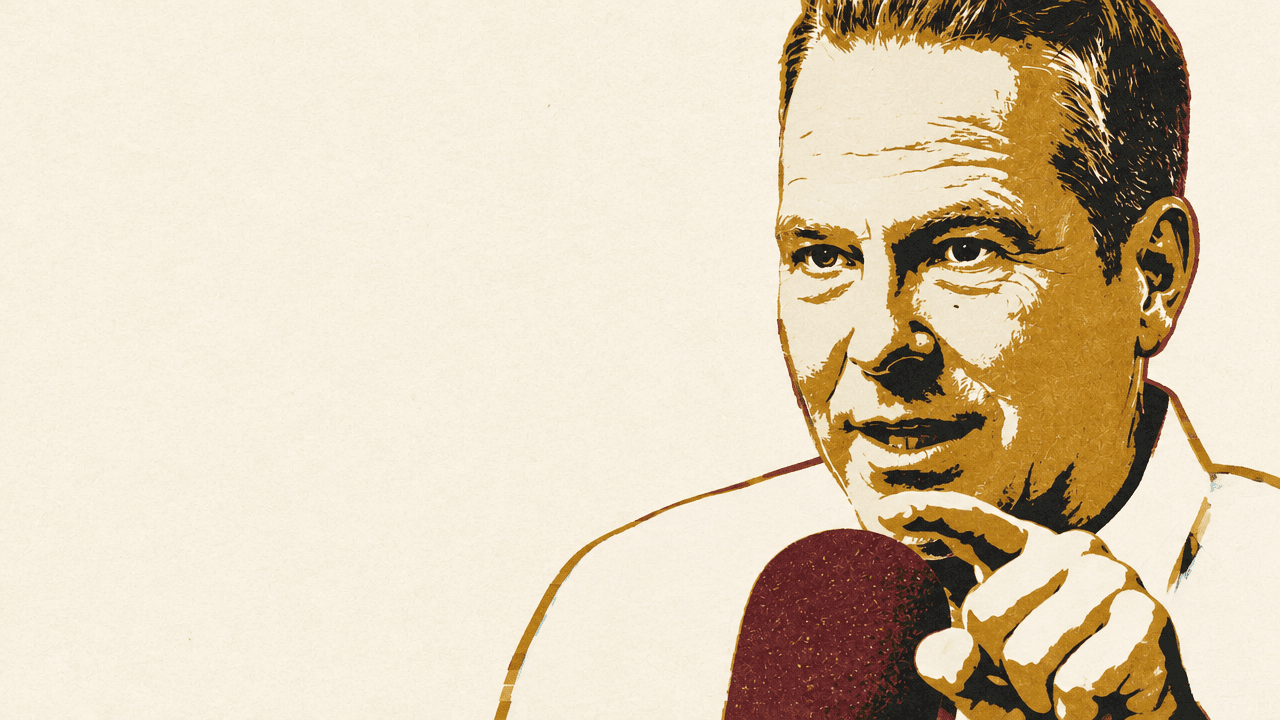
Fear narrows the choices before a decision is made
For Joe Hudson Hudson, decision-making is not a narrow skill reserved for career changes or major investments. It is part of how a life is made. In a business, he says, the essentials are the relationships people hold and the decisions they make; capital and intellectual property matter, but they arise from those things. The same applies personally: smoking, building a company, choosing a partner, staying married and deciding how to argue all involve decisions.


Hudson distinguishes a choice from a decision. A choice happens without much conscious deliberation: sitting in a particular way, turning left, calling a friend. A decision is something a person spends time weighing. The distinction is not about how important an action turns out to be. A small-seeming action can become a decision if it is loaded with deliberation; a consequential choice may initially happen without someone recognizing its significance.
The aim is not to deliberate over everything. Hudson says that understanding what makes some decisions difficult can mean fewer situations require prolonged deliberation and more can be handled as choices. That does not mean removing care from important decisions. It means not treating every action as if it requires the same scrutiny—or as if deliberation alone can eliminate uncertainty.
Hudson argues that decision-making is primarily emotional. He invokes Descartes’ Error, describing people whose emotional brain systems have been damaged: their IQ remains intact, he says, but they may become unable to make ordinary decisions, getting stuck on matters such as which pen to use or where to eat. He allows that some rapid reactions, such as jumping away from a snake, work differently. For choices such as whom to hire or where to invest, Hudson’s view is that people are also deciding how they want to feel.
In this account, logic helps people estimate which option will bring about a desired emotional state. A spreadsheet may organize the considerations around an investment; it does not replace the feeling the person is trying to secure. Hudson says people make decisions to feel loved, liked, valuable, happy or meaningful—and to avoid feeling rejected, dismissed, like a failure or like a loser. He estimates that these motives account for most of life’s decisions.
That emotional basis matters because the feelings a person is trying not to experience can remove options before they are consciously considered. Someone afraid of rejection may decide not to approach a woman, while someone less troubled by rejection can make the attempt and discover whether it leads anywhere. Someone afraid of being yelled at by a boss may stay silent about a problem. In both cases, the available choices have narrowed around avoiding a feeling.
Hudson’s point is that fear restricts what people can bring themselves to do. Becoming more comfortable with feelings such as rejection, embarrassment or failure can expand the options from which someone can choose. It is not necessary to enjoy those feelings or disregard what a consequence might cost. The task is to stop allowing the wish not to feel something to rule out a course of action before it can be considered.
Williamson’s example is a door-to-door salesperson who needed two more sales to meet a target. The team leader asked about the salesperson’s conversion rate: one sale for every 50 doors. At that rate, 100 more doors would mean 98 rejections and the two sales needed. Hudson offered his barber a similar challenge, promising $2,000 if the artist could get 50 rejections in 60 days. The barber did not get 50 rejections; he got two acceptances and began making a living selling his paintings.
The shift in both stories is from treating rejection as evidence of failure to treating it as part of the work—or, as Hudson puts it, as winning when the effort is the point. He acknowledges that his offer to the barber was manipulative. The barber, he says, was not avoiding the money; he was avoiding the feeling of failing. The practical obstacle was emotional.
These examples show why additional information may not be enough. Knowing a conversion rate did not, by itself, make rejection easier to experience. The team leader’s framing changed what the salesperson counted as progress. Hudson’s challenge gave the barber a reason to approach people who might reject him. In each case, it became possible to act once rejection was no longer the only thing being measured.
Fear also changes how people picture a decision. Hudson says it encourages binary thinking: should I take the job or not, end the relationship or stay? The person stops seeing possibilities such as asking for a change, discussing a need, testing a different arrangement or trying a smaller step toward the same goal. The decision appears to have only two doors because fear has narrowed the view.
A second effect is what Hudson calls a “false end.” Someone treats the choice as if it will determine everything, rather than as one decision among many that will follow. A decision to end a relationship can appear to contain the whole future: loss, loneliness and the impossibility of finding another partner. A job choice can seem to decide whether the person is successful. When the imagined consequence becomes the endpoint, the decision grows larger and more frightening.
Hudson describes his marriage as one place where this pattern became visible. He and his wife have been married for 27 years, and he says they have each changed substantially over that time. During difficult periods, he was afraid of losing her. Trying to make decisions that would keep her, he says, meant abandoning his own principles. He and his wife developed a practice of mourning the marriage: imagining not just the moment of separation, but the loneliness afterward, the possibility of not finding another partner and what might come after that. Having felt more of the feared consequence in imagination, Hudson could show up as himself and the two of them could work out whether they wanted to be together.
Hudson relates that practice to contemplations of death, in which a person imagines the feared event and what follows it. The point is to go past the false end. In his marriage example, that means not stopping at divorce, as if the rest of life disappears, but imagining the lonely period and then whatever comes after. He says that if making a decision feels unusually difficult, the obstacle is often not a lack of knowledge about what to do, but fear of an emotional consequence.
He also recommends thinking of decisions as a portfolio rather than as isolated tests. An investor does not need every investment to succeed; the aim is to follow a sound approach across many decisions. Likewise, a person need not make one choice perfectly for life to go well. If someone treats the present decision as the last one they will ever make, its apparent stakes swell. Seeing it as one decision within a continuing series makes room for learning and for the next move.
Hudson connects the false end to reversibility. He refers to a decision rule associated in the interview with Amazon: make a decision quickly if it can be pulled back; take more time if it cannot. A reversible decision leaves a route to adjust after acting. That does not mean that every reversible choice is trivial, or that a consequential choice should be made carelessly. It means that the cost of being wrong is different when the decision can be changed.
Thinking in portfolios and thinking about reversibility both make a decision less like a final verdict. If the decision can be reversed, action can test an assumption. If it cannot, extra deliberation may be warranted. Either way, the person is not required to treat every uncertainty as evidence that the entire future rests on one perfect choice.
Principles make action possible without promising the outcome
Hudson says fear in decision-making is often tied to identity. A person may believe being successful is central to who they are, so a job that could look like a setback threatens more than their income or title. The choice reaches into the person’s idea of themselves. In that sense, a difficult decision can reveal where someone feels unable to act without protecting an identity.
Hudson uses personal principles to reduce the burden of deciding from scratch. He says he makes roughly 80 percent of his decisions by referring to principles about the person he wants to be. He tests those principles by asking whether, across time, they help him succeed and solve most of his problems—not whether they guarantee that any one decision will work.
A principle, in this account, is not a prediction that a particular action will succeed. It is a rule for approaching a class of situations. The aim is to use a small number of commitments to orient many decisions, then assess whether those commitments are useful across a portfolio of outcomes. Hudson compares this to an investor who knows what they are willing to invest in and can choose to hold back when nothing meets the criteria. Principles constrain action, but they can also relieve the pressure to invent a new standard every time.
One business principle at Hudson’s company is to build first the part of a new project the team understands least. If a team knows how to build a car but does not know how to make a catalytic converter, it should solve the converter first and build the car around it. Otherwise, the team may finish the familiar work only to discover that the unfamiliar component does not fit, forcing a rebuild. The principle directs attention toward the uncertainty most likely to create expensive rework.
His personal principle, “everything is an iteration,” applies the same logic to setbacks. Instead of dividing experience into success and failure, Hudson treats actions as experiments: try something, learn, and try again. He describes how one lapse can derail someone’s attempt to follow a diet. After eating one piece of cake, the person may conclude that the diet is ruined. An iterative view treats the lapse as one event, not a verdict on the whole effort: return to the plan, learn what happened and try again.
Hudson mentions the habenula while describing the tendency to give up after a setback. He says it helps prevent repeated failure, offering the example of a person who breaks a diet and then abandons it rather than starting again. He qualifies his description as loose. His point is the mental habit of treating one lapse as a reason not to try again. An experiment that does not produce the hoped-for result can still produce information.
The company puts the iteration principle into practice by asking employees to run three to five experiments each quarter, depending on their role, to try doing their work differently. Williamson praises Hudson’s team for experimenting with video critiques: early efforts included both misses and successes, and the team kept adjusting until the format improved. Hudson says the company makes room for experiments as long as they stay within the brand.
That changes what a person is trying to optimize. If the task is to get the first attempt right, an error threatens the whole undertaking. If the task is to learn through repeated attempts, the next experiment remains available. Williamson says that thinking this way reduces the grandeur and pressure around a decision: an experiment that does not confirm a hypothesis has still taught something. Hudson adds that he is “never done”—he expects to keep learning.
Most people will lose in life because they are trying to get it right rather than trying to keep a pace.
The principle is not a reason to ignore the cost of a mistake. It is a way of keeping a mistake from ending the process. Hudson says that forward progress matters more than getting everything right on the first attempt. If an experiment fails, he asks what the next experiment should be. If a decision does not work, a person can make another one tomorrow.
A principle can also direct attention toward a value. Hudson describes “connection” as one of his own principles: when billing someone, running a course or talking with a person, he asks how the interaction can build connection. He recounts coaching a business owner through that lens and says it helped generate multiple possible solutions to business problems. The principle does not supply a single answer. It gives a person a consistent way to look for answers.
For Hudson, principles do not eliminate courage. They make it possible to decide what one is willing to stand behind even when the outcome cannot be controlled. If a decision follows a principle that has worked across many situations, a person may still dislike the action in front of them. But they can ask whether they are proud of how they made the decision, and revise the principle later if it does not hold up.
That distinction shapes how Hudson describes courage. From outside, acting on a difficult principle may look brave. From inside, he says, it can feel more like being honest. The alternative—compromising oneself to secure an outcome—can feel worse than being rejected after acting in accordance with one’s values. He recalls a comedian, whom he names as Margaret Cho tentatively, describing a failed sitcom: what hurt, as Hudson remembers the story, was not simply that it failed, but that she had abandoned herself and then failed anyway. The preference, he says, is to be true to oneself and fail rather than to be false and succeed.
Hudson says that as a person acts on principles, courage becomes less necessary. Most situations are straightforward: the principle points to a course of action, and the person takes it. Occasionally there is a decision they do not want to make, but their principles still point clearly toward it. Acting on the principle can bring the anticipated result, but it also offers a reward independent of that result: the person has acted as they wanted to act.
Hudson also separates agency from assertiveness. Decisiveness can give someone more agency—the capacity to pursue the life they want—but that does not require an aggressive manner. He offers the example of an actor who commits to particular kinds of roles and goes to auditions. The actor is exercising agency even if they do not create and produce their own role. Some people may express agency assertively; others may not. Hudson says the two qualities are not opposites, but they are not the same thing.
To illustrate the difference, Hudson recalls a German teacher who had lived through the Berlin bombings. The teacher said that when people were trapped in tunnels, it was often the quiet, non-macho men who went up to pull them out, while the bravado-driven men did not. For Hudson, the story separates outward displays of force from the willingness to act according to what matters. He says that becoming good at decision-making tends to put a person in a high-agency position.
Approval can crowd out a person’s own judgment
Chris Williamson Williamson introduces “audience capture” as a case in which a creator stops making what they want to make and starts making what they think their audience wants. A creator notices which opinions earn positive responses and gradually repeats them. The result, Williamson argues, can be estrangement from their own taste: they are no longer responding to the audience itself so much as to their own idea of what the audience will reward.

He extends the idea to criticism. Some people adapt not to win approval but to avoid attack: they become more inflammatory, or else cautious and noncommittal, anticipating every possible objection. Williamson calls this criticism capture and argues that negative feedback can shape people as powerfully as praise. A creator who has repeatedly pushed their preferences aside may resent the audience if the work still fails to please it: I compromised myself for you, and you still did not value it.
Hudson sees the same pattern beyond media. Someone can shape their conduct around keeping a boss, partner or group happy. That may reduce immediate friction, but it can also pull them away from their principles. He argues that people and organizations are better able to sustain their work when they stay oriented around their mission or values while adapting how they pursue them. A company can find different ways to fulfill its mission without abandoning it; a person can listen and respond to others without allowing their approval to decide what matters.
Hudson says principles need not be established before someone can make good decisions. One starting point is to review decisions from the past year and ask what principles the person has actually lived by, whether they are proud of those principles and whether they are working. The review can be uncomfortable, but it shows that people are already making decisions according to some priorities, whether or not they have named them.
Hudson summarizes two parts of the work: becoming comfortable with a range of emotions so that fear does not remove possible actions, and identifying principles that solve many problems over time. The point is not to create a flowchart that avoids every negative feeling. It is to make choices with access to more of the available options and with a clearer sense of the person one wants to be.
That is why Hudson distinguishes listening to advice from asking for permission. Advice can supply perspective, especially from someone who knows the person or has relevant expertise. The problem arises when someone cannot say, “I feel good about doing this,” without asking another person whether it is acceptable. In that moment, Hudson says, they are handing over responsibility for their own happiness and judgment.
Hudson puts the claim starkly: “Every single one of those moments of needing reassurance from others is a self-abandonment.” He explains that the person is saying, in effect, “I don’t know what’s right for me,” and giving someone else responsibility for their happiness. The distinction is not between self-reliance and counsel. It is between hearing another person’s view and treating their approval as the authority that makes the choice legitimate.
A habit may preserve an emotional bargain that has expired
Not every consequential choice feels like a decision. Habits often operate below conscious attention: reaching for a cigarette, scrolling on a phone or using a routine to avoid an uncomfortable feeling. Hudson says changing those habits requires slowing down enough to notice what is happening emotionally before the action.
A person may once have made a conscious decision to use a behavior to handle discomfort. Repeated often enough, the behavior can become an automatic choice, made without revisiting what it is doing or whether it is still needed. Hudson calls the work “turning choices into conscious choices”: noticing the moment before an automatic action and asking what feeling is present.
The question is not only, “How do I stop doing this?” It is also, “What am I feeling just before I do it, and what am I trying to avoid or obtain?” Practical habit techniques can help, Hudson says, but on the emotional level a key move is to slow down, unpack and feel what a habit has been used to manage.
Williamson offers the example of waking in the early hours after a period of poor sleep. He describes a chain of thoughts about the day being ruined, performing badly, being laughed at and life falling apart. Reaching for his phone helped distract him from the distress. Later, when his sleep improved and the fear eased, the phone habit remained. The coping behavior had outlasted the feeling that had prompted it.
Hudson calls this an “emotional bureaucracy”: a sequence of procedures built up around a feeling. A person wakes tired and distressed, reaches for the phone, feels worse after scrolling, then reaches for caffeine and becomes anxious. Each step can become a prerequisite for getting back to a sense of normality. Like bureaucracy in an organization, Hudson says, this accumulation does not automatically dismantle itself; someone has to notice it and deliberately change it.
When he reflects Williamson’s example back to him, Hudson suggests sadness and helplessness may sit underneath the anxious thoughts, with shame perhaps blocking access to those feelings. His proposed alternative is not another distraction but allowing the emotion: crying, feeling scared and perhaps returning to sleep. The point is to meet the feeling directly rather than continue adding behaviors around it.
Hudson connects this approach to his own history of emotional abandonment. He says that as a young adult he expected people to abandon him emotionally. When that feeling arose, he would either push people away—“I don’t need you anyhow”—or become needy and try to pull them closer. Both responses helped reproduce the pattern he feared. When he learned to allow the feeling of abandonment without immediately acting against it, he stopped responding in those ways.
Other people still sometimes let him down emotionally, he says, but the experience no longer carries the same power. He says that being abandoned emotionally does not hurt half as much as abandoning himself. The point is not that another person’s behavior becomes acceptable. It is that a feeling can be experienced without automatically triggering a strategy to escape it.
Hudson says that when people learn to accept emotions they have been avoiding, longstanding patterns can start to collapse. The process can feel destabilizing because choices change as the old responses lose their grip. A behavior that once managed an emotion may no longer be necessary once the person can feel that emotion directly.
The identity at stake can make a small choice feel enormous
The size of a decision does not necessarily determine why it feels difficult. Hudson says that a conversation with a barista can feel high-stakes if it threatens someone’s identity as a person who is bad with other people. Moving to a new country can raise the same question on a larger scale: who will I be there, and what will it mean if I do not belong?
Hudson also cautions against assuming that people know in advance which decisions will shape their lives. His marriage is an example: marrying his wife mattered, but so did the earlier decisions that led to meeting her and going on a first date. Those choices did not look like the eventual decision to marry, yet without them the later choice would not have existed.
Williamson points out that some choices—moving countries, for example—are plainly likely to be consequential. Hudson agrees, but says that tracing the smaller choices around a major decision can help remove some of the identity pressure. The purpose is not to deny that the choice matters. It is to loosen the assumption that one decision alone will define who the person is.
Hudson recommends asking what a bad outcome would mean about oneself. If a move leaves someone without friends, what does that mean? What are they afraid it says about them? How could they still be proud of themselves if it happened? He describes asking himself, “What am I essentially?”—a question intended to challenge the identities and limits a person has attached to themselves.
For Hudson, fear of change is not usually the deepest issue. Change introduces the unknown, and the unknown can prompt the fear that one will not be okay. That fear returns to identity and self-worth. The decision may have real practical consequences, but the emotional threat is not simply that circumstances will change. It is what the change seems to say about the person who must live through it.
Hudson sees moments of transformation as opportunities for growth. He says that when clients are in the middle of a major life change, he feels excited for them—not because the process is easy, but because it can reveal the person beneath an existing identity. The work may involve anger, fear, sadness or helplessness.
In the example of his daughter writing college essays, he saw her caught in the fear of choosing the “right” subject and proving herself. He urged her to stop organizing the essays around what colleges might want and ask what she wanted to say. He encouraged her to get angry about the pressure to prove herself. At home, anger could be expressed by hitting a tennis racket against something. The next day, she told him she had already written three essays and had ideas for more. They were not yet what she wanted them to be, but she was writing.
Hudson says the anger helped his daughter challenge the identity of being the smart student who could get everything right. Beneath the apparent decision about an essay was the question of whether she could present herself honestly and tolerate judgment. What others might call confidence or courage, he says, felt to her more like honesty. The change did not come from finding a better analysis of the essay options; it came when she could feel and express what had been keeping her stuck.
A good decision can still produce an unwanted result
Hudson challenges the idea that a decision is good when it produces the immediate outcome someone wants. Getting the cigarette, the job, the money or the person may satisfy a short-term aim without providing what the person hoped it would provide over a longer period. He asks what the outcome actually gives someone across a week, a month, a year or a decade.
The standard he offers is whether the person compromised themselves to get it. A choice that produces the desired result can still be a bad decision if getting there required acting against one’s principles. Conversely, a person can make a good decision and not get the immediate result they wanted. Hudson’s measure is not a guarantee of success; it is a way to distinguish the result from how someone chose to act.
Hudson also offers a narrower observation about fear: when someone is afraid of not getting what they want, he says, that fear may make the desired outcome less likely. He illustrates this with a donation request, contrasting an anxious appeal with a confident presentation of a cause. He is not arguing that fear is intrinsically bad; he says the issue is fear that has not been processed.
Indecision keeps people inside the consequence they fear
Hudson says that in business, many CEOs learn that making decisions is more valuable than trying to ensure every decision is right. A person who makes more decisions can test more ideas against reality. Someone who keeps gathering information in order to find the best marketing strategy, for instance, has not yet learned what an audience actually responds to. Action creates a result; the result provides information; that information can shape the next decision.
The same reasoning applies outside business. Indecision delays contact with the world and the learning it provides. Hudson agrees with Williamson’s formulation that he would rather be high-conviction and wrong than low-conviction and right, because being wrong becomes visible sooner. That does not mean refusing to change one’s mind. Hudson describes good decision-makers as both open and convicted: conviction supplies the impetus to act, while openness allows new evidence to change the view. He says he can hold both because being wrong does not undermine his identity.
Regret often keeps people from acting, but Hudson asks whether they are already living inside the situation they fear. Someone who worries that marriage will trap them may spend months feeling trapped by the decision process. Someone afraid of wasting time by choosing wrongly may waste time by not choosing. The imagined consequence is not necessarily worse than the present cost of indecision.
Williamson calls this a “low-conviction stew.” Hudson agrees: the emotional consequence people fear may already be happening while they deliberate. Someone worried about being lonely after leaving a relationship may already be enduring loneliness within it. Leaving could be the first step toward feeling connected, Williamson says, and Hudson agrees that the feared condition may be the one the person is already suffering.
There is a difference, Hudson adds, between a consequence one can only imagine and a situation that cannot change unless one acts. The decision does not guarantee that the feared outcome will disappear. But staying undecided can prevent the person from finding out what else is possible.
Hudson says that people in prolonged indecision may also be treating themselves as incapable. They insist that they have to get it right and that they will not be able to recover if they get it wrong. That is a form of self-abuse, he argues: a person is telling themselves they cannot learn, adapt or work through what happens next.
Asked what indecision costs, Hudson resists using shame to force a person into action. His answer is that people do not need to be perfect in order to be valuable, loved or worthy. They can make the decision they are proud of. The emphasis is not on applying pressure for its own sake, but on recognizing that paralysis does not protect someone from all possible pain. It can keep them in a painful situation while reinforcing the belief that they cannot handle a mistake.
Intuition depends, in part, on seeing yourself clearly
Williamson asks how to distinguish intuition from fear, impulsiveness or a clever rationalization. Hudson gives a brief answer rather than a test: in a coaching relationship, he says, the person’s capacity to understand themselves matters. The more clearly someone sees themselves, the more clearly they can see others. “In exactly the way I can’t see myself,” he says, “is exactly the way I’m not going to be able to see you.”
Hudson does not lay out a separate procedure for validating intuition. The earlier discussion suggests questions a reader might use, but they are a synthesis of his points, not a checklist he explicitly offers: What emotion is present? What consequence am I afraid of? What identity feels at stake? Does this action fit the principles I want to live by? Those questions may help bring a choice into view; they do not certify that an intuition is correct.