Hard Training and Simple Routines Matter More Than Fitness Optimization
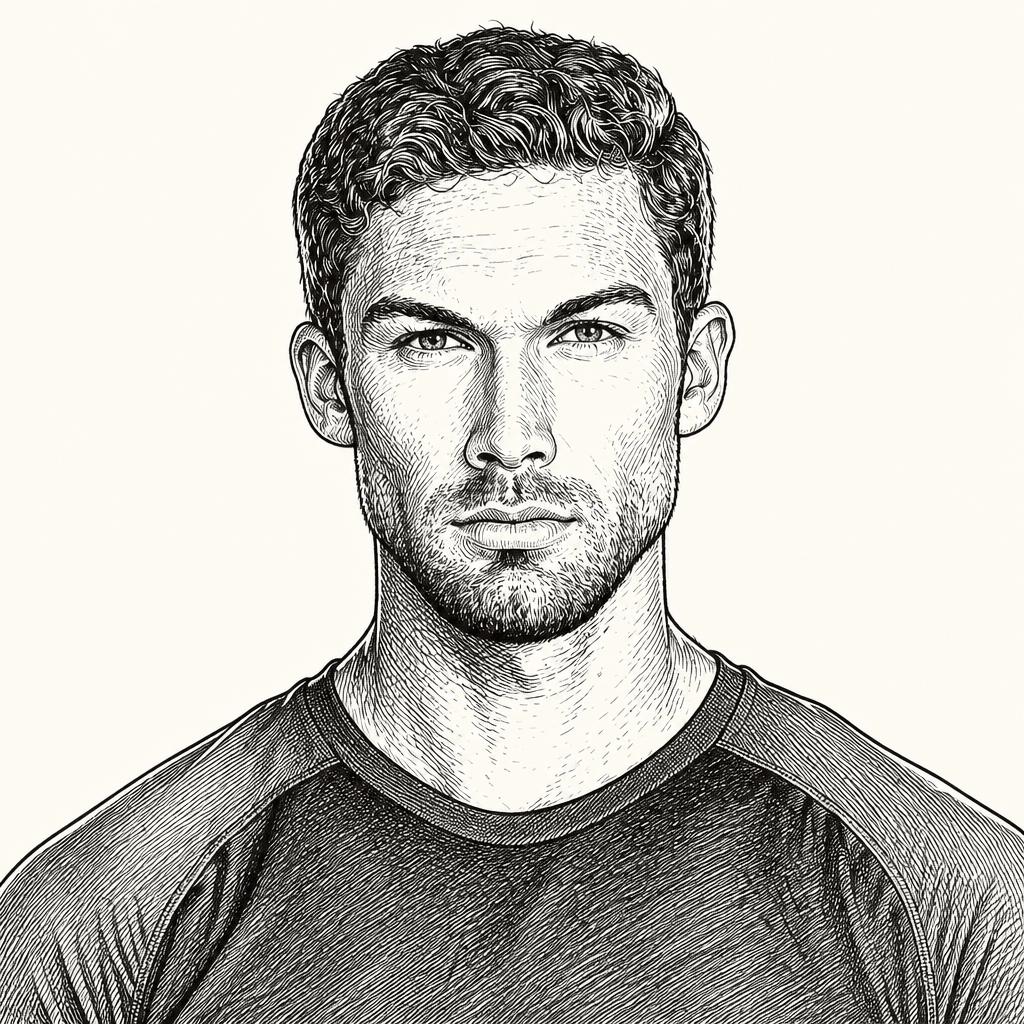
Bodybuilder and YouTuber Sam Sulek argues that progress depends less on finding perfect exercises or plans than on making sustained effort and basic habits part of ordinary life. He favors hard training over chasing novel variations, and applies the same preference for fundamentals to diet and motivation. Sulek also says he has chosen to coach himself because he wants to own both the decisions and their results.

The standard rises by becoming ordinary
For Sam Sulek, getting better is less about finding a finish line than continually moving his own standard. He has trained for about eight years, but does not expect to reach a point where he knows everything or has perfected his approach. He meets a bar, then raises it. Each increase makes a higher level of effort feel more normal.
That is why Sulek can look at a dramatically larger bodybuilder without deciding that he himself is inadequate. The comparison that matters is with his younger self: seeing old photos and realizing how far he has come. His aim is to make harder work feel almost seamless—to bring full effort without treating every hard set as an extraordinary event. He calls the ideal “practice without striving”: go as hard as you can, but make that level of effort part of what you simply do.
You’re going as hard as you can, but you want that going as hard as you can to just be seamless. Like it’s just what you do.
The same long horizon shapes how he thinks about progress. A man who had gone from 500 pounds to 200 pounds showed Sulek a before-and-after picture at a fitness expo and said the videos had helped him begin. Sulek says it still feels strange to hear that, but the scale of the transformation makes the time involved plain. Getting visibly bigger or losing a substantial amount of weight takes years. In that context, the useful question is not how to produce a dramatic result immediately, but how to keep lifting the standard over time.
Sulek also tries to separate the standard he sets for himself from the advice he gives a broad audience. He might estimate the fat and carbohydrates in a restaurant meal, but he would not present that level of attention as the starting point for someone new to training. People have to work their way toward more demanding routines and more detailed decisions. A standard that is useful for an experienced bodybuilder may overwhelm a beginner.
That distinction underlies his criticism of what he calls a tutorial-based approach to fitness: the idea that there must be a specific sequence of steps, movements, or rules that unlocks a result. People fixate on unusual variations—using a machine backwards, inventing a squat on a seated cable row, or trying to find a specially engineered curl—because they hope that doing the “right” version will guarantee progress. Sulek is not against experimentation. During COVID, with little equipment available, he attached a dumbbell to his ankle with a belt and used it for leg extensions. His objection is to treating novelty as more important than effort.
A basic dumbbell curl is an obvious way to train biceps. Sulek’s point is that a person who works hard on that ordinary movement is more likely to benefit than someone who spends time searching for a clever variation but does not train with comparable effort. He would put hard training first and highly optimized technique second, while stressing that the two still matter together. “There’s more to it,” he acknowledges when Williamson summarizes the idea as simply going harder; his claim is about priority, not about technique being irrelevant.
That preference also explains his skepticism about applying exercise research directly to every lifter. Sulek says many study participants do not resemble people who are unusually committed to training, and that a population average may not describe those who train very hard. He does not reject the information. He distinguishes its intellectual value from its practical value: learning about a new ingredient or a more specialized training idea can be interesting, but that knowledge is no substitute for going to the gym and working.
Principles travel better than perfect plans
Chris Williamson connects Sulek’s training philosophy to a broader fatigue with optimization: people trying to perfect every meal, sleep habit, and morning routine until ordinary life feels like homework. A plan built around precise conditions can be brittle. If one part fails, the whole system can feel unusable.
Sulek agrees that basic principles are more robust than a catalogue of ideal tactics. He jokes that someone whose house is burning down should not refuse to call for help because using a phone would expose them to blue light. The exaggerated example makes the point: a rule meant to support health can become absurd when treated as an absolute that overrides the situation.
His account of eating is an example of keeping the principles visible. A typical day for him might include egg whites with rice, chicken pot-pie casserole made by his wife, steak, and rice cakes. He describes the protein sources—beef, chicken, dairy, eggs, fish—as high quality for his purposes, and says he does not count the protein in rice. He is not presenting the menu as a universal prescription. It works for his goals, and the broader lesson he wants people to take is simpler: get enough protein and carbohydrates for your needs without letting fats or total intake drift too high.
He has little interest in making ordinary eating look like a styled food shoot. A carefully garnished avocado toast may work as an appealing social-media image, but it can make eating for training seem more elaborate than it needs to be. One viewer thanked him for emphasizing basic meals after years of seeing ornate food content. The bowl Sulek describes is not a culinary performance: a carbohydrate, a protein, and perhaps vegetables or sauce, mixed together in a portion he can track and enjoy. Williamson and Sulek also joke about the practical details—the right bowl is large enough to mix food without spilling it, and works for reheating.
That food serves two purposes for Sulek. It tastes good and leaves him full, but it also gives him the satisfaction of knowing it fits his goals. Someone who sees food primarily as an immediate treat may not understand the appeal of a simple bowl of rice and steak. Sulek says he enjoys it both as food and as a choice that supports the body he is trying to build. The meal does not need to be visually impressive to be satisfying.
The same preference for principles over scripts shapes his own training. Sulek has not hired a coach for his competitions, in part because he likes figuring things out for himself. A workout and meal plan handed to him by someone else would feel like homework; a plan he has assembled himself feels different. More than that, self-coaching lets him own the outcome. If he looks good, he does not want the credit redirected to a coach who “reeled him in”; if he looks bad, he is prepared to admit that he got it wrong.
There are practical and personal reasons for his choice. Sulek’s social-media presence had become large before he began competing, and he had seen influencer-bodybuilders attract drama around coaching relationships. But the more important reason is that he sees bodybuilding as something he wants to do for himself, not a project whose only purpose is to maximize every competitive variable. A fully regimented team approach might make sense if he decided to target an Olympia debut, which would require first winning a professional show. He notes that competitors can choose smaller shows, where the field may be less difficult, to qualify. For his initial competitions, however, the independent process is part of the appeal.
The choice is not a claim that all competitors should coach themselves. Sulek says he had been training on his own for years, and that doing the prep himself made the result feel like his own accomplishment. He also understood the reputational risk. If he did well after hiring a coach, viewers might credit the coach; if he did poorly, the coach could say he had not followed the program. Doing it himself avoids that dispute, but it also removes an easy explanation if the outcome is bad. As Williamson puts it, Sulek wants to own the consequences in either direction.
Sulek describes one moment when advice from an experienced bodybuilder did affect his decisions. A few months before a show, Jay Cutler told him his condition was decent. Sulek understood the remark less as a full endorsement than as a polite way of saying he needed to get serious, and added cardio. The exchange shows that he is not closed to outside input; he is selective about handing someone else control of the process.
He says he wants to hear advice from everyone and judge whether it makes sense. He sees knowledge as something a person can learn and gather, not a mysterious property that only an expert can possess. At the same time, he recognizes why people consult experts: a coach can compress years of experience into guidance. He does not rule out hiring one later; he just does not want one now.
Build the routine before motivation disappears
Winter makes Sulek’s preference for routine especially useful. He says the season can narrow people’s activities: it is colder, people go out less, and staying home becomes easier. He wonders how many people actually maintain an active social routine through the winter, rather than withdrawing into the house or going out only occasionally. For him, bodybuilding prep can intensify that pattern.
During a winter prep, he sometimes did an hour of cardio in the morning, trained later, then returned for another hour on the bike. The work was repetitive, with the competition as the reward at the end. Looking back at photos from those periods, he sometimes barely remembers the days because so much attention was fixed on the show. He describes the prep as a period when he was often thinking about the competition rather than taking in the ordinary days around him. The second prep was less isolating in that way, he says, partly because he had learned from the first.
The way through that stretch, Sulek says, is to treat the difficult day as a chance to practice the standard rather than a reason to wait for better conditions. He imagines a more disciplined version of himself seeing an unusually hard day and responding, in effect: good—make it harder. He also asks what his future self, three months from now, would want him to do today.
Williamson shows a clip of Mike Tyson being asked why he runs early. In the clip, Tyson answers, “Because I don’t wanna do it,” and says discipline means doing things you do not want to do. He describes seeing people coming from parties while he is out running. Sulek’s takeaway is not that everyone should adopt Tyson’s schedule; it is a way of thinking about doing the work precisely when the easier option is appealing.
Williamson relates that idea to his own periods of “monk mode,” which included stretches without alcohol or caffeine and a carefully built morning routine. He describes some of that routine as an unnecessary “cathedral” of activities, but says the period helped him work out what he wanted to do. After years when he had gone out frequently, he wanted to focus on himself. His point is that a difficult season can be approached either as something to complain about or as an opportunity to concentrate on a chosen goal.
Sulek’s advice for someone in a slump is deliberately modest. If a person has lost momentum, it may help to watch someone who has done what they want to do. He cites watching a Tom Platz training video before squatting: seeing someone perform the exercise can make him more excited to do it himself. For a person trying to lose a large amount of weight, he would look for someone who began in a similar position and has documented the change. Sulek can offer general advice, but he has not lived every kind of transformation; someone who has made that specific journey may be better placed to show what it involves.
The more basic prescription is to keep the ordinary routine going, even when the person cannot bring their best. Sulek says that if a funk passes after three months, someone who maintained their habits—even at less than full intensity—will be glad they did. If they abandoned everything, the return to normal life may reveal that they have gained weight or lost ground toward a goal. He recognizes that telling a person to “go through the motions” is not especially energizing. People may prefer doing nothing to repeating an activity without enthusiasm. But waiting until they feel fully motivated can turn motivation into a condition that must be met before anything happens.
Williamson frames the idea as resilience: systems need spare capacity. A life that uses nearly all its energy simply to stay functional has little room for disruption. He says that the periods when he pushed himself hard helped him build routines and momentum that could carry him through later setbacks. Sulek describes a similar compounding effect in training. A hard workout can make him hungrier, leading him to eat more; it can make him tired enough to sleep well; eating, drinking, and sleeping well can make the next workout more productive. Visible progress adds another incentive: the person sees that the routine is working and wants to continue. In his account, the workout is not an isolated act of willpower; it can affect what happens at the next meal, at bedtime, and the following day.
The downward version can compound too. Sulek describes skipping workouts, deciding not to prepare food, ordering fast food instead, staying up playing games, and missing an early class. Poor sleep and worse eating then make the next choice harder. One missed workout does not mechanically cause every later decision, but in his example the choices reinforce each other: a person who already feels off track may be more inclined to skip cooking or stay up late, and those decisions can make training feel harder the next day.
Sulek says a person can change direction, but he is careful not to claim he can give every listener a precise method for doing it. “That’s where all my motivational speeches end,” he says: he can describe what he does and how he thinks, but another person is not him. His example is not a promise that changing one habit will resolve every underlying difficulty. It is a description of how he understands the momentum of a routine, in both directions.
That is also why Williamson’s question about entering January with momentum leads Sulek to argue for starting before New Year’s resolutions begin. Someone at zero gym days per week does not need to start with a punishing schedule. One day is more than zero; once a person has done one day, two may feel easier, and a membership or a short cardio session can be a real beginning. Sulek says people often fail before the first workout by setting an unnecessarily demanding launch plan—deciding to join at a particular time, or expecting a sudden overhaul.
Incremental change can feel small while being substantial relative to the starting point. Sulek remembers being self-conscious at a Florida YMCA when, about two years into training, he was shoulder-pressing 50-pound dumbbells at a body weight of roughly 170 pounds. He was still wondering whether other people were watching him. Every regular had once been new, and uncertainty is not evidence that a person does not belong.
The obstacle, he says, is often the belief that if someone cannot do the ideal version, there is no point starting. That belief can sit alongside a confident claim that the person could get shredded or become a bodybuilder if they chose. Sulek and Williamson press on the contradiction: “I could do it if” may be a way of avoiding the more direct admission, “I don’t want to do it.” The small first steps are not beneath the goal; they are how a person begins moving toward it.
A public career does not require a public private life
Sulek’s sudden marriage announcement surprised viewers who had watched his videos for years without knowing he was engaged. He says he has kept a distinction between the version of himself who appears on camera and the rest of his ordinary life. He is not interested in adding relationship drama to his content simply because creators may feel pressure to make repetitive subjects more exciting.
He has uploaded hundreds of chest-day videos—he estimates at least 250 across roughly 1,200 videos—because chest day comes around regularly and documenting his training is something he enjoys. Some creators, he says, respond to repetition by expanding into personal drama, first other people’s and then their own. He prefers to keep some areas of life private.
Williamson calls this a “digital hijab”: the idea that parts of a person belong to the internet while other parts remain private. Once an audience is invited into a relationship, it can be difficult to close the door again. Viewers may continue asking about a former partner after a breakup or judge a new relationship against the one they watched before. A couple is already managing a relationship; doing so in public adds the audience’s expectations to it.
For Sulek, that boundary is not a rejection of openness so much as a decision about what he wants his work to be. His videos are centered on an activity he would be doing anyway. He works out, turns the camera on, and talks about what he is doing and thinking. Recording does not feel like an extra burden on the gym, except that he talks out loud more. He does not script a list of topics or try to manufacture relatability.
That point extends to social-media advice more broadly. People tell creators to find a niche or become more relatable, but Sulek is wary of making the end goal—followers or a successful account—the reason for doing something. He points to creators whose videos grow out of activities they already enjoy. The appeal, he suggests, is not a strategy for looking authentic; it is the sense that the person is having fun.
Commitment can be built alongside ambition
Marriage has changed Sulek’s sense of what matters over the long term. He does not claim that every person should follow the same timetable, or that he is about to have children immediately. But he is struck by the appeal of people whose lives include a committed partner and children, and he questions the idea that a person must first finish building a career before beginning a serious relationship.
He points to Chris Hemsworth surfing with his children as an image that seems more compelling to him than accumulating another material marker of success. He also admires Chris Bumstead’s family life, while noting that Bumstead had already achieved much of his professional success. Sulek’s broader point is that people often talk as if commitment must wait until a business is established or a career has reached some undefined point of readiness. If someone already believes that a long-term relationship and family are what they want, he asks, why not build toward that future now?
Williamson agrees that there is a case for getting one’s life in order before committing. But he distinguishes that from postponing a relationship with someone who already feels right because another achievement might come first. Cynicism can protect a person against heartbreak, he says, but taken too far it can also prevent attachment. A satisfying relationship can be a source of security when professional outcomes go badly: someone who has done their best and then loses a competition can return to a partner who still values them.
Sulek adds a caution: hearing that a good relationship is valuable should not become a hunt for a particular person or a guarantee that the right relationship can be found on demand. Sometimes it happens without a plan. Still, he believes that people can pursue other ambitions while building a relationship; the two need not be mutually exclusive. He pushes back on the idea that a person must finish one life project before beginning another, especially when they already expect the relationship and family to matter more to them in the long run.
Bodybuilding prep is the part of his life that has required the clearest adjustment at home. Ordinary training and eating are so established that they do not demand much from his wife. He describes going to the gym and then coming back to do something together as relatively seamless; he does not expect to be catered to. A show prep is different. The extra cardio, focused attention on a contest, and weeks of repetitive effort can make him withdraw.
The shows he did required winter preps leading into competitions in March. Sulek recalls the routine of early cardio, training later, and more cardio, with the contest taking up much of his attention. He says he sometimes looks at a photograph from prep and barely remembers the day because his mind was occupied with the show. That is part of why he says prep can make him resent the shows: not because he rejects bodybuilding, but because the preparation takes up time and attention that might otherwise be more casual or shared.
He says the second prep was easier in this respect, because the first had taught him what to expect. Looking back, he thinks he handled the process reasonably well. He also does not experience himself as a bodybuilder and nothing else, even if that may be how others perceive him. His point is not that prep has no effect on a relationship, but that ordinary bodybuilding routines and contest preparation impose different demands.
Bodybuilding needs characters as well as physiques
Sulek and Williamson describe bodybuilding’s 1990s and early-2000s era as having a stronger cast of recognizable personalities, comparing its presentation to professional wrestling. Williamson recalls Branch Warren as a hard-edged, heavy-metal figure; Kai Greene as an artist and philosopher; Phil Heath as an all-American athlete; and Jay Cutler as a successful, larger-than-life competitor. Sulek adds that Tom Platz’s appeal came partly from the way he spoke about training and the pleasure of doing it, not simply the pressure to win.
Their point is not that the older era lacked competition. Sulek calls it one of bodybuilding’s most competitive periods, and describes the rivalry between Ronnie Coleman and Jay Cutler as intense. What distinguishes the period in their recollections is that the competitive stakes coexisted with spectacle and recognizable personalities. These athletes were not only physiques to compare on stage; they were characters whose styles and public identities gave fans something to follow.
That matters particularly in bodybuilding because, as Williamson argues, the sport may depend more than many others on the personalities of its competitors. A large team sport can be followed as a contest between teams; in bodybuilding, the individual is the event. The physique is central, but it does not necessarily create a connection on its own. The audience also responds to the person presenting it.
Sulek says Tom Platz’s way of talking about training exemplified a different emphasis. He recalls Platz describing the enjoyment of performing and being surrounded by people who were cheering, rather than speaking only about needing to win. During the conversation, the hosts play archival footage of Platz doing leg extensions, grimacing and shouting through the effort. The clip is a demonstration of the intensity Sulek admires: to someone outside the gym it might look extreme, while someone familiar with training may see a hard set. The visible effort is part of the appeal, not incidental to the physique.
Sulek contrasts that attitude with contemporary competitors he has seen in interviews or short documentaries who say they should quit if they fail to place in the top five. To him, that language makes the result sound like the whole point. The older character of the sport, as he remembers it, could make participation and performance compelling even apart from the final placing.
The exchange turns to what may have changed. Sulek offers social media as one possibility, while making clear that he is forming the thought as he speaks. Athletes now publish their training, prep, and everyday routines themselves. In the earlier period, he says, competitors made a limited number of DVDs and the show carried more of the anticipation: athletes arrived to present themselves there. With continuous self-documentation, the contest may no longer be the sole public event around which interest accumulates. This is his hypothesis about a change in how bodybuilding is presented, not a settled explanation for why the sport’s personalities may feel different.
Williamson sees a tension in that change. There is more access to athletes, but that does not guarantee more felt familiarity. He says he felt he knew Kai Greene as a public personality despite having little in common with him, while the current competitors who have broken through most clearly for him are Sulek and Chris Bumstead. More footage can show more of a person’s life without necessarily making that person feel more relatable.
Sulek’s account of Bumstead helps explain the difference between access and presence. At an Olympia, before Bumstead competed, Sulek saw people around him respond to him with unusual intensity. He compares the effect to watching Arnold Schwarzenegger walk into Gold’s Gym for a workout: the room seemed to change around the person. Yet when he has talked with Bumstead at events, he has found him casual. Sulek has not treated those encounters as opportunities to solicit a stream of training tips; part of the appeal is watching someone he respects while still working things out for himself.
Sulek also suggests that successful creators often have an advantage when their content is continuous with what they would do anyway. He already trains and records it; the camera does not turn the gym into a separate performance. By contrast, advice to “be relatable” can become another artificial target when someone is trying to manufacture a persona for an audience. The appeal of a creator who seems natural may come from the fact that the activity and the content already belong together.
Interventions need context, and personal experience is not medical guidance
Sulek’s discussion of peptides follows the same pattern as his views on training and diet: he describes his own experience and opinions, while saying the subject is often hyped. He says he has used BPC and TB-500, and more recently GHK. He feels his skin has looked better while using GHK, but does not describe dramatic effects such as suddenly growing hair.
He compares peptides’ current popularity with earlier interest in ashwagandha and turkesterone. He is cautious about making them a central part of his videos. He worries that some viewers may wait for an official “green light” before thinking for themselves; he also says people who already know about them may see them as ordinary tools. Meanwhile, he sees social-media accounts, including those run by teenagers, promoting products in exaggerated terms. His position is not simply that peptides are useful or that they should be avoided: he describes using some, while objecting to the confidence and hype with which people promote them.
The speakers do not settle how to draw boundaries between interventions. Sulek asks whether a drug that affects a bodily process is different in kind from other ways of influencing it. Williamson brings up caffeine, sleep, leg training, and compounds discussed as ways to affect testosterone or growth hormone. Their exchange suggests that familiarity may shape public reaction: caffeine is widely used and rarely described as an unfair advantage, while less common substances can seem alien or suspect. Neither speaker treats that contrast as a sufficient basis for deciding what a person should take.
They also discuss the way a substance is administered. Williamson speculates that people might react differently to a drug that reduced appetite if it came as a drink or tablet rather than an injection. He suggests the needle can make an intervention feel more medical or more unsettling. This is a reflection on perception, not advice about using a drug or a claim that one delivery method is safer than another.
Sulek says he has not tried GLP-1 drugs. His own appetite, he says, sits in a “sweet spot”: eating somewhat more or somewhat less than he needs is manageable. He recognizes that others have a harder time dieting because appetite varies. Some people can stay lean with little effort, while others feel persistently hungry and find fat loss difficult. He does not present his own experience as a model that will work for everyone.
Williamson makes the point through an example of a person who does not enjoy exercise and has a strong appetite when exposed to food. The same advice may require much more effort from that person than from someone who enjoys training and finds eating less relatively easy. Sulek’s analogy is that knowing a tactic is not the same as understanding the system. A person can be shown how to replace a specific part on a car, but if the underlying mechanics are unfamiliar, they may not know how to respond when something is out of alignment. The principles provide a way to diagnose and adjust; they do not remove the differences between people.
The discussion also touches on retatrutide and the changing market around peptide products. Sulek speculates that some sellers may be trying to move stock because they expect they will not be able to sell it in the same way later. Williamson raises questions about pharmaceutical involvement and whether current access will continue. They do not resolve the regulatory situation or establish what will happen. Sulek’s broader concern is that a substance can move from being treated as suspect to being treated as acceptable once a wider public believes it has received an official green light. That shift in acceptance is not, in itself, the point he makes about how people form opinions.