Modern Life Feels Simulated Because Meaning Cannot Be Engineered
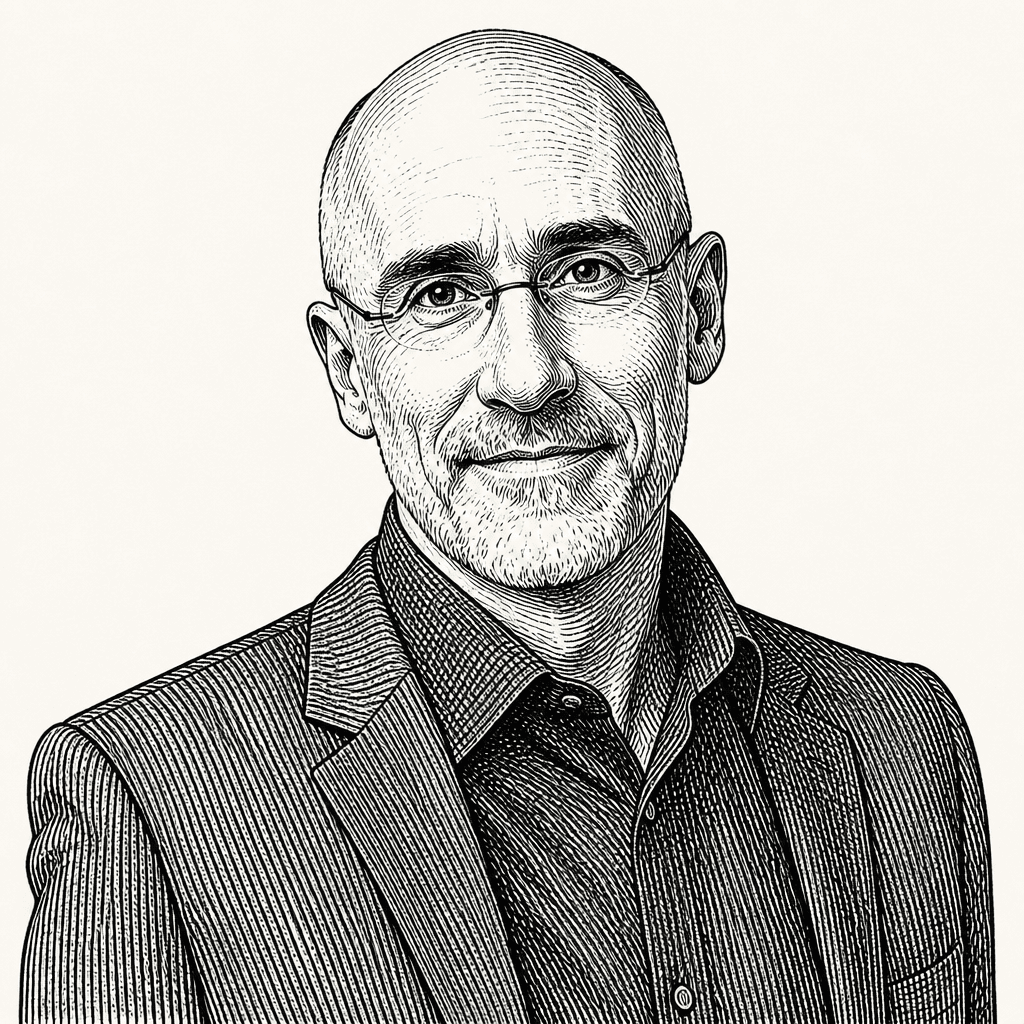
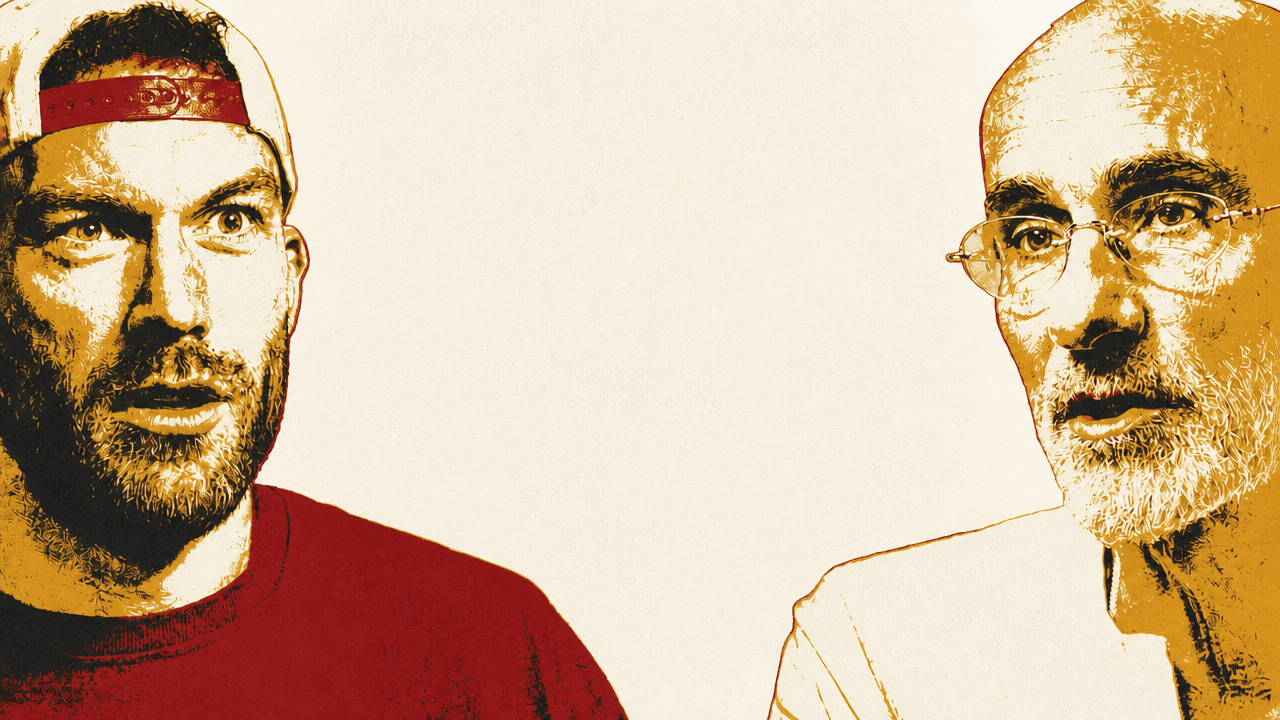
Harvard social scientist Arthur Brooks argues that modern life feels unreal because many of its central experiences — dating, friendship, achievement, even suffering — have been replaced by low-friction simulations that cannot supply meaning. In a conversation with Chris Williamson, Brooks says the resulting crisis is not mainly about comfort or success but about the loss of coherence, purpose, and significance. His prescription is a return to embodied life: boredom, real relationships, service, beauty, transcendence, and a willingness to suffer without anesthetizing it.
The simulated life is pleasant enough to keep people from noticing what is missing
Arthur Brooks’s central claim is blunt: many people feel as if modern life is simulated because, in the ways that matter most, it is. He compares contemporary life to The Matrix, not because people are literally trapped by a hostile artificial intelligence, but because algorithms increasingly offer what he calls “a simulated version of a real life” that is pleasant enough to prevent boredom while extracting attention, energy, and money.
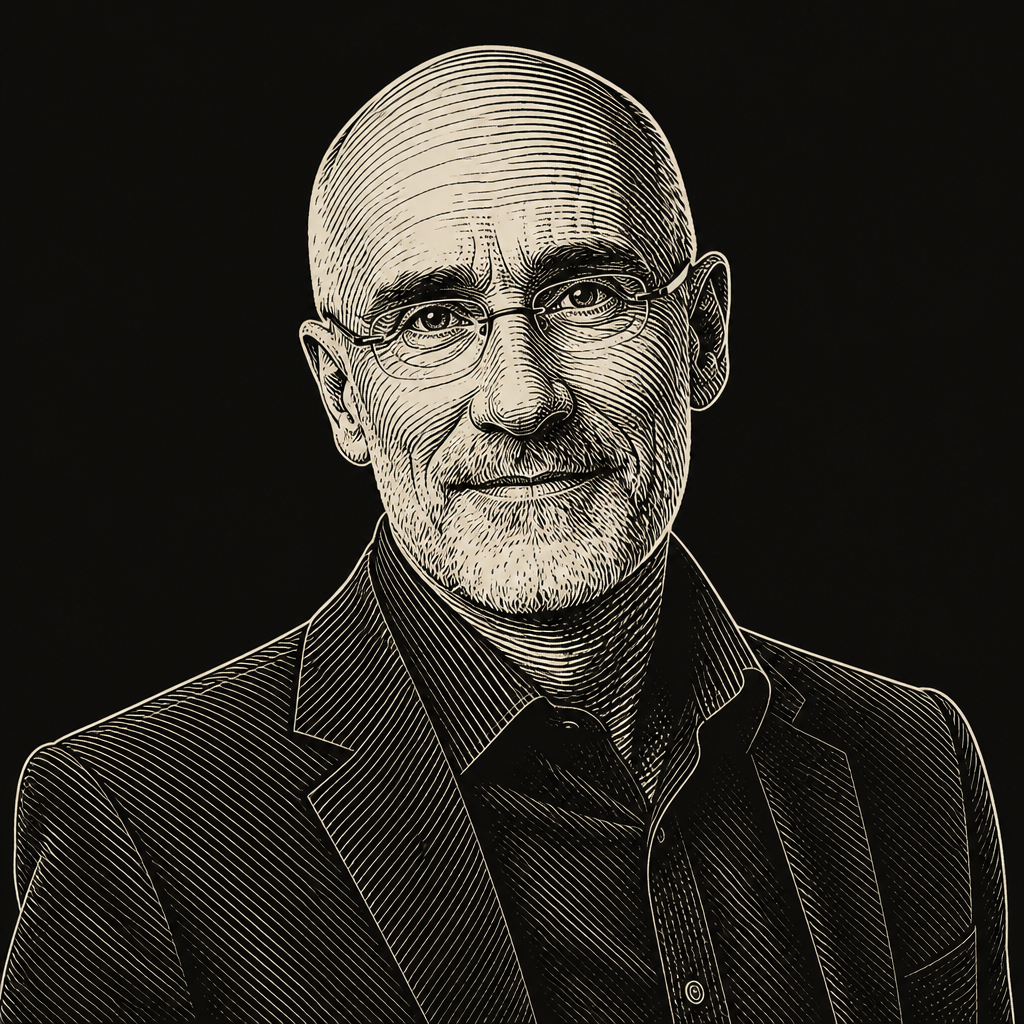
We're living in the matrix. And that's why people say, I don't know, it doesn't feel like real dating. It doesn't feel like real friends, scroll, scroll, scroll. It doesn't feel like real achievement, game, game, game. Because we're living in a simulation.
Dating starts to feel unreal. Friendship becomes scrolling. Achievement becomes gaming. The common feature, in Brooks’s account, is not merely that these activities are mediated by screens, but that they are counterfeit versions of experiences the brain evolved to seek in embodied, difficult, unsolved life.
His explanation relies on Iain McGilchrist’s account of hemispheric lateralization. Brooks rejects the old popular split between “right-brained creative people” and “left-brained analytical people.” The more useful distinction, he says, is between the kinds of questions each hemisphere is suited to handle. The left hemisphere deals with “how-to and what”: execution, analysis, engineering, linearity, the “apps of life.” The right hemisphere deals with “why”: mystery, meaning, love, complex human realities.
A simulated life, in Brooks’s account, tries to use left-hemisphere tools to answer right-hemisphere questions. It tries to engineer love, friendship, significance, and purpose as if they were solvable technical problems. That is why it can feel convincing in the moment and still leave people emptier afterward.
You can't simulate the meaning of life.
Brooks does not argue against rationality or analysis. When Chris Williamson asks whether it is good for people to become more rational and objective, Brooks says people need both hemispheres because life contains both kinds of problems. A person who knows the “why” but cannot execute becomes incompetent. A person who can execute without knowing why has no purpose.

His examples are deliberately ordinary. He says he does not know how his car works, but he could learn: the car is complicated, and complicated problems can be solved. His marriage, by contrast, is complex and unsolvable. He has been married for 35 years; his wife might text that she loves him before a podcast and be angry with him later that night. That is not a bug. “The reason I love my marriage is because it’s unsolvable,” he says. Living things are right-hemisphere problems. Mechanical things are left-hemisphere problems.
The mistake of the age, Brooks argues, is that modern culture keeps trying to “solve life.” Silicon Valley-style solutions, and increasingly artificial intelligence, fit curves through “the messy business of life” with left-brain algorithms. But the experiences people care about most are not just complicated. They are complex, embodied, relational, and metaphysical. Trying to simulate them may reduce friction, but it also strips out the thing being sought.
Pornography is Brooks’s clearest example of this dynamic. He says more than 85% of pornography is consumed by men, and that the more pornography men look at, the lonelier they get. In the moment, he says, it may reduce loneliness and produce satisfaction. Over time, he argues, it deepens dissatisfaction because it substitutes “a two-dimensional simulacrum” for actual human connection.
Achievement can be counterfeit in the same way. Brooks distinguishes real achievements in real life from simulated achievements that behave like a score in a game. A score produces a short-term sense of progress and purpose, but it does not build anything of real consequence. He invokes the old line that a good life involves having a son, planting a tree, and writing a book, then notes what those have in common: they are real. “You don’t say, plant a tree online,” he says. “Have a son online.”
Friendship follows the same pattern. Williamson describes making online friends while working in nightlife in northeast England, then noticing that even a 30-minute coffee with someone as he passed through a city changed the relationship. That person became real in a different way. Brooks says that happened because the brain apprehended the person in flesh and blood. Human brains evolved, he says, for in-person relations in small kin-based groups; eye contact, in his account, produces oxytocin, a bonding hormone, in ways that Zoom screens do not.
That is why Brooks and his wife sometimes tell couples at marriage retreats to lie in bed facing each other and stare into each other’s eyes for five minutes before sleep. It is not framed as a sentimental exercise. It is an attempt to re-establish the embodied signal: “That’s my person.” His claim is not that mediated communication is useless. He and Williamson text. But the texting works, Brooks says, because it rests on a relationship formed by “real, no-fooling conversations” in person.
Williamson pushes on the resistance this argument often meets online. Some people say the simulated version is good enough: AI partners, sex robots, even AI versions of exes. Williamson reads that as sadness and fear — people choosing a compliant, low-rejection substitute because the real world has hurt them or seems unlikely to give them what they need. Brooks replies that most people do know they want real connection; they often do not know how to get it. He says that when 62% of couples are forming online, and when people live remotely, become exceptionally online, or came of age during COVID without normal social skill development, offline formation becomes harder.
The stakes, for Brooks, are psychological. He says the biggest predictor of depression and anxiety is saying, “I don’t know the meaning of my life,” or that life feels meaningless. He rejects explanations that put the rise of depression and anxiety mainly on economic or generational causes. Since around 2008, Brooks says, depression has tripled and anxiety has doubled clinically, while life has become increasingly online and, in his telling, the average American checks a phone 205 times a day. His diagnosis: people have pushed themselves into the wrong side of the brain and lost access to the experiences that naturally generate meaning.
“We have a meaning crisis,” he says.
The meaningless day has no boredom in the moment and total boredom in the aggregate
Asked to design a life with as little meaning as possible, Arthur Brooks offers a day that sounds less like collapse than normality.
Wake after the sun is already warm. Use the phone as an alarm clock. Look at it before getting out of bed. Eat highly processed, sugary food. Drink coffee in the first five minutes. Scroll while eating. Program the first hour of the day around a screen. Work remotely from the bedroom, seeing colleagues and clients as squares on a screen, with no real knowledge of where they live and no real relationships with them. Date by swiping, reducing potential partners to two-dimensional impressions, while lying on your own profile. Spend the evening scrolling, watching YouTube Shorts, or gaming. Do no exercise. Repeat indefinitely.
The key design principle is paradoxical: make sure there is no boredom from moment to moment, but make the life as a whole grindingly boring.
If you want your life to have no meaning, make sure that there's no boredom moment-to-moment, but that day-to-day and week-to-week and month-to-month, life is boring.
A meaningful life reverses the pattern: plenty of moment-to-moment boredom, but no boredom in the larger arc.
Brooks illustrates this with his great-grandfather Leroy Brooks, who farmed behind a mule in Kansas. Brooks imagines that life as intensely boring in the moment — “looking at a mule’s butt” — but not boring as a life, because it was real. He doubts Leroy came home and told his wife he had a panic attack behind the mule. His brain, Brooks says, was working the way it was supposed to.
The modern person can avoid boredom every second and still end up with a boring life because, in Brooks’s account, the brain is continuously distracted from the conditions under which meaning emerges. Brooks later connects this to the default mode network: mind-wandering, he says, “leads to meaning” predictably. But mind-wandering requires the friction people now reflexively eliminate.
That is why “go get bored” becomes one of Brooks’s practical recommendations. He does not mean stunt-like deprivation, such as staring at the seat in front of you for a nine-hour flight. He means learning to sit on a train with hands in your lap, look out the window, and notice a tree. He means living long enough without immediate input for the brain to wander, integrate, and ask why.
The phone “doom loop” is, in his account, a cycle of distraction and reduced tolerance for ordinary unfilled time. A person does not want to be bored, so they distract themselves. Distraction lowers their tolerance for boredom. Their life feels less meaningful because, Brooks says, the parts of the brain required for meaning are not being engaged. They become more restless and spend more time scrolling. The cycle repeats and intensifies.
Brooks draws an analogy to alcohol. Anxiety and boredom are, he says, the two biggest predictors of alcoholism: a person drinks because they are anxious and bored, which makes anxiety and boredom worse the next day, which leads to more drinking. Phone use can follow a similar loop, but it is harder to detect because it remains socially acceptable. Williamson notes that people recognize escalating drinking more readily than escalating phone use. “Dude, you’re on your phone a lot tonight” does not carry the same force as “you’re pissed again and it’s five nights in a row.”
Brooks adds that some dependencies are not merely tolerated but rewarded. A person drinking a large amount of gin every night will be told they have a problem. A person working 16 hours a day and neglecting family may get a promotion and a raise. Workaholism can be applauded because it enriches institutions and produces visible success.
Breaking the loop, Brooks says, involves three behavioral steps common to addiction recovery. First, “you gotta get pissed”: the person has to see the behavior as subjugation and rebel against being owned by a company, a behavior, or a culture. Second, they need a method for stopping, tailored to the substance or behavior. Third, and hardest, they need to learn to live with themselves again. Addiction means “you didn’t like being home in your head.”
Brooks speaks from his own experience with alcohol. He has not had a drink since age 38. In his 30s, he says, he did not like being “home” in his head and used alcohol as a vacation from himself. After his father died, people close to him told him he had seen his future. He stopped, but the hardest part was being alone with himself, awake and alive without the escape.
For technology, he offers phone boundaries rather than total renunciation. Do not look at the phone for the first hour of the day if possible. If work requires a quick check, check for fires and put it down. Do not eat with a device. Ideally, do not eat alone; if alone, read a book or listen to music, but do not look at the phone. Do not use the phone for the last hour of the day. Keep the phone out of the bedroom entirely, preferably on a different floor, in a closet, plugged in somewhere else, from an hour before bed until an hour after waking.
The reason eating matters is not etiquette. Brooks says eating with another person releases neuropeptides, especially oxytocin, in ways linked to kin bonding. Humans evolved around shared food, eye contact, and conversation. A phone on the table disrupts that neurochemistry, in his account.
He extends the argument to schools with unusual force: there should not be phones in any classroom, from kindergarten through Ph.D. programs. He calls phones in classrooms “complete insanity” and “child abuse,” and says the most important phone-free hour is lunch.
He also recommends technology fasts: 96 hours a year. He describes taking a four-day spiritual retreat without a phone. The first day feels like “children screaming” in his head; the second calms; the third feels good; by the fourth he wishes it could last all year. The point is to prove that the relationship with the device can be broken and renegotiated.
Those practices, however, solve only the behavioral middle step. Rebellion must come first. Learning to live inside one’s own mind must follow.
Meaning is made of coherence, purpose, and significance
For Arthur Brooks, “meaning” is not a vague synonym for feeling good. Drawing on the work of social psychologist Michael Steger, he says meaning has three elements: coherence, purpose, and significance. Each corresponds to a “why” question.
Coherence asks: why are things happening the way they are in my life? Purpose asks: why am I doing what I am doing? Significance asks: why does my life matter?
| Element | Question | What Brooks says collapses when it is absent |
|---|---|---|
| Coherence | Why are things happening the way they are? | Agency; life feels random and uncontrollable. |
| Purpose | Why am I doing what I am doing? | Direction; progress becomes impossible. |
| Significance | Why does my life matter? | Love and mattering; the person feels useless or unseen. |
Coherence can come from religion, science, or even conspiracy. Brooks does not treat all explanations as equal, but he argues that conspiracy theories are often a distorted attempt to answer the coherence question. A person going down a conspiracy rabbit hole is not best reached, in his view, by having data thrown in their face. They are having a meaning crisis, and therefore a happiness crisis. The conspiracy supplies a pattern where life otherwise feels random.
When life feels random, people lose agency. Brooks compares this to learning to drive: at first traffic looks like chaos, and the lack of pattern is frightening. Any system that cannot be understood makes a person feel powerless because there are no apparent levers to pull. If someone believes events reflect God’s will, they may pray. If they believe events follow scientific laws, they may study science. If they believe events are controlled by powerful hidden actors, they will go online and share theories. In each case, Brooks says, the explanation gives them something to do.
Purpose, Brooks says, is not identical to meaning. It is the element of meaning concerned with goals and direction. If the answer to “why am I doing what I’m doing?” is “I don’t know,” then the person cannot make progress. They are moving in circles, like a cruise ship that goes nowhere. Brooks calls cruises depressing for precisely this reason: he sees himself as “teleological,” needing a goal.
He cites Sonja Lyubomirsky’s work on goals, describing students who become happier and more directed when given even arbitrary objectives, such as moving from a B-minus to a B-plus in physics. Arbitrary goals can work; meaningful goals are better. Brooks’s emphasis is on progress toward a goal.
This is why, in his account, directionless people are fragile. Brooks defines satisfaction as “the joy of an accomplishment, of making progress toward an accomplishment with struggle.” Without direction, a person cannot make progress; without progress, one of the macronutrients of happiness disappears.
The failure of dieting is Brooks’s example of a goal structure that produces short-term progress and long-term collapse. Almost any diet will make someone lose weight, he says, but diets have an 80% to 95% failure rate after a year, meaning people gain the weight back and often more. Diets work temporarily because they create progress. They fail because, as he puts it, the reward for reaching the goal is “never getting to eat what you like ever again for the rest of your life.” The goal terminates, and then the arrival fallacy takes over.
Better goals, in Brooks’s view, are open-ended and inexhaustible: become a better father, husband, friend, citizen; create more value through work; love one’s country more; serve moral objectives more fully.
I need goals I can't meet.
The point is not futility. It is permanent direction.
Significance is the mattering question: my life matters to someone — a spouse, a child, a dog, God. Brooks ties significance to love. The modern crisis is that many people have no answer to any of the three questions. They do not know why things happen. They do not know why they do what they do. They do not believe their lives matter.
That is the collapse he sees beneath much of modern unhappiness.
Ambition can anesthetize the person who cannot sit still inside his own life
Chris Williamson asks whether ambitious people are especially vulnerable to meaninglessness. Arthur Brooks answers yes and no, but his diagnosis is severe: ambition, striving, and busyness often function as anesthesia for people who do not know how to live with themselves.
He gives the example of a friend who traveled constantly for work while his wife and children missed him. The problem, Brooks eventually concluded, was not that the job forced too much travel. The problem was that the man did not want to be home. His life stressed him out, so he stayed distracted.
Strivers, in Brooks’s account, often use ambition, success, applause, alcohol, drugs, pornography, screens, and busyness to avoid being alone with “the storms and things inside” their heads. He cites OECD data as showing that busier-than-average people are at above-average risk for alcohol abuse, then notes that the stereotype of alcoholism as a “down and out” problem misses the investment banker, the executive, or the successful podcaster who anesthetizes himself with socially rewarded intensity.
The psychological trap behind much striving is what Brooks calls the arrival fallacy: the belief that when a goal is reached, a person will finally feel worthy, special, and whole. Olympic athletes, he says, often experience depression after winning gold. Williamson notes that this is commonly called “gold medalist syndrome.” Brooks says behavioral scientists call it the arrival fallacy.
Williamson observes that the arrival fallacy is almost impossible to popularize. Mark Manson, he says, told him he had tried to talk about it publicly and failed each time. Williamson calls it “actively anti-mimetic”: people do not want to hear that the view from the top of the mountain is not as good as they think, because it feels like taking fuel from them while they are still climbing. The alternative would be a conspiracy in which every successful person secretly knows success solved their inner problems but tells poorer people otherwise. More likely, Williamson suggests, many successful people are reporting the truth: the attainment did not fix the void.
Brooks explains the anti-mimetic quality by appealing to evolutionary psychology. “Mother Nature wants you to be fooled.” Humans stay in the hunt because they believe the next attainment will finally satisfy them. The organism needs hunger and pursuit, so it wires in a mistake: repeated belief in arrival.
There is a metaphysical aside in Brooks’s argument. He says the desire for something can be evidence of the existence of its object: thirst suggests water, hunger suggests food. Human beings desire unremitting happiness but cannot find it in this life. Philosophically, he says, that may be evidence for heaven, nirvana, or a divine afterlife. Whether or not one accepts that inference, his practical point is that people keep chasing a kind of total happiness the world cannot supply.
The arrival fallacy becomes tyrannical after success because success creates a new floor. Brooks recounts Ryan Holiday’s experience of reaching number one on the New York Times bestseller list and then realizing the next week someone else occupied the spot. Worse, if the next book does not hit number one, the person is no longer merely striving; he “used to be great.” Williamson compresses the fear: the only thing worse than never having made it is having fallen off.
This relates to Brooks’s distinction between specialness and happiness. Some strivers, he says, explicitly or implicitly think ordinary sources of happiness are beneath them: any “loser” can have a family, an ordinary job, a spouse and children. Not everyone can start a company, become CEO, or have a famous podcast. They give up the happiness they know for the promise of a “happiness beyond it,” which Brooks says is specialness. That always leads to ruin.
His most painful example is a friend 25 years older, an icon in finance. Brooks asked when he knew he would become rich. The man said age 32. Brooks asked what he thought richness would change. After thinking, the man said he believed that when he got rich, his wife would “really love” him. She did not. Brooks describes the moment as one of pathos: perhaps the first time the man had ever articulated the belief clearly enough to understand it.
Williamson asks whether the man had selected a wife whose love needed to be won. Brooks says of course. People who believe love is earned surround themselves with people who make them earn love.
Brooks sees a common childhood pattern among “super strivers” who are never satisfied. They often received attention and affection from parents only when they did something: good grades, sports success, musical achievement, entrepreneurial precocity. Parents may think they are wiring in success and happiness. The lesson the child learns is that love is earned. Because children’s brains are synaptically plastic, they overlearn it. They spend adult life trying to earn love from partners, bosses, publics, followers, and sycophants.
But real love, Brooks says, is not earned. It is “a free gift, freely given.” Anyone who makes you earn their love does not love you.
The internet magnifies the pathology. A person who once sought approval from family, community, church, or city can now seek the adoration of strangers at global scale. Brooks calls it the “best possible dopamine hit.” Life then feels gray without it. The more talented the person, the more danger they are in.
The wound is often the same thing as the gift
Chris Williamson offers a line from his own writing: “What you are praised for in public, you will pay for in private.” He gives examples. Psychological resilience in the boardroom may be called strength, decisiveness, assertiveness, or anti-fragility; around the kitchen table, the same quality may keep someone in a relationship they should have left years earlier. A Navy SEAL, Andy Stumpf, told Williamson that a career built on not quitting made him stay in a toxic marriage for 10 years too long.
Arthur Brooks responds with a riddle-like formulation: “Your strengths are your weaknesses, but your weaknesses are your strengths.”
He then turns the idea on Williamson. Williamson identifies uncertainty as a weakness. Brooks asks how it has become a strength. Williamson answers: paying attention to every possible permutation, planning, hypervigilance, and extreme attention to detail. Overthinking and fear of shame, he says, drive him to work hard enough that he does not have to feel shame. Brooks notes the private cost: difficulty opening up about weakness and vulnerability because the public identity rests on competence.
This produces a split life. The tactics that win public praise do damage in intimate settings. Brooks likens it to being Batman and Bruce Wayne: a person has one set of skills for the public theater and another set required at home. Famous people can become more comfortable in front of a thousand people than in front of one, because the latter requires different social skills.
Yet Brooks does not recommend repudiating the trait. The same wound may be the source of the public strength. The “pro move,” he says, is not merely gratitude for the strength but gratitude for the weakness itself. That is how people learn to manage themselves: seeing frailty, “feet of clay,” and saying thank you.
Williamson extends the point to what he calls the “parental attribution error.” Modern therapeutic culture often encourages people to blame parents for wounds, but Williamson argues that if people are not willing to credit parents for strengths, they should be slower to make parents villains for weaknesses. The same conditions that made someone driven may have made them feel love was conditional. The same neglect that produced hypervigilance may have produced extraordinary concern for others’ welfare. It is “a single piece of metal,” not two sides of a coin.
Brooks calls this subversive because it cuts against a culture of grievance. In his view, the unhappiest people are those whose identity revolves around grievance and victimization. He argues that people in cultural authority can conscript younger people into movements by convincing them they are victims who should be aggrieved: by older generations, by culture, by economic conditions. Williamson summarizes the defeatist version: “It was easier before you, so there’s no point in trying now.” Brooks says the message may instead be to be angry, carry signs, and apply effort to complaint rather than lifting oneself out.
The point is not to deny wounds. Brooks’s stronger claim is that acceptance is not enough. Drawing on Eastern philosophy, he says people should not merely bear suffering stoically. They should love it. “My will,” he says, becomes wanting what is happening, axiomatically. That is a demanding philosophical position, but it connects to a broader theme: becoming fully human means being grateful not only for strengths, but also for weaknesses and wounds.
The culture of engineering tries to solve what can only be lived
Technology, for Arthur Brooks, is the tip of the spear, not the whole problem. The deeper issue is a culture of engineering that produces “scientism”: the conceit that every problem is a complicated problem that can be solved. The most important problems, he argues, are not merely complicated. They are complex. They cannot be solved; they can only be lived with, understood, and held as permanent mysteries.
The modern West has overdeveloped confidence in solvability. Apps, supplements, AI systems, therapy, policy designs, and technological progress all feed the idea that enough technique can solve the human condition. Brooks says this is visible in dreams of the singularity, brain uploading, living forever, and solving every problem with a product or protocol.
His objection is not that science and technology fail to solve real problems. Williamson mentions modern medicine and the historical horror of infection before handwashing. Brooks agrees that many complicated problems can and should be solved. The mistake is extrapolating from those successes to “all problems.” Some questions are more like the final digit of pi: the desire for an answer does not mean the question is answerable in that way.
Brooks uses depression and therapy as one example of a broken assumption. If more therapists meant less depression, then tripling the number of therapists should have reduced depression. Instead, he says, depression has tripled alongside the number of therapists. His conclusion is not that therapy is useless, but that the logic “more of the solving apparatus will solve the condition” is flawed.
He briefly applies the same concern to social policy. Social welfare programs, he says, did real good: lowering caloric deprivation, expanding access to education, and other gains. But after a certain point, he argues, some programs can wire in pathologies by making independence harder. When he asked one architect of the war on poverty what would have finally won it, the answer was “just a little more money.” Brooks sees the same assumption in Silicon Valley: go deeper, spend more, build another app, and the human problem will yield.
Williamson brings up universal basic income experiments from a couple of years earlier and says, from memory, that they “failed massively.” He recalls questions about discretionary spending, savings, healthcare, food quality, and whether money went toward the priorities advocates expected. Brooks responds that the premise assumed shared values and priorities that people do not in fact share. He also argues that giving people something for nothing can strip away “earned success,” which he sees as a core part of satisfaction. Earned success means being recognized and rewarded for real value created through effort. It aligns with the human need for progress through struggle.
Brooks’s recurring warning is that social designs fail when they try to reorder human beings against evolutionary wiring. He applies that not only to economic policy, but also to gender theories, technological utopias, and attempts to redesign ordinary human incentives. “You need to go with the current,” he says, “or you’re ultimately going to fail.”
This is why the question of big “why” questions matters. Brooks does not want people to stop asking them. He wants them to stop treating them as if they can be answered by enough internet videos, supplements, Google searches, or ChatGPT prompts. Every serious philosophical school, he says, includes what the ancient Greeks called aporia: sitting in puzzlement over questions that cannot be answered. Zen koans serve a similar function. The point is not to solve the riddle but to be changed by contemplating it.
Brooks sees a generational loss here. In 1985, he says, college students came home from parties and had late-night conversations: Does God exist? What is life about? Now the equivalent moment is filled by phone vibrations. The problem is not big questions. The problem is that people ask only questions addressable by Google or ChatGPT, or believe enough scientific knowledge will finally settle the existential ones.
That, in Brooks’s frame, is both a philosophical wrong turn and a neurobiological one.
Love, transcendence, beauty, and suffering all resist simulation
Romantic love is one of the most powerful ways to activate the right hemisphere, Arthur Brooks says, precisely because it cannot be solved. Dating apps are left-brain solutions to right-brain problems. The better versions, in his view, are improving by reintroducing human friction: involving friends in match selection, creating group mixers, or otherwise adding embodied judgment and social context rather than reducing the process to swipe mechanics.
Love is not irrational in the sense of being unknowable at every level. Brooks describes the neurochemistry of falling in love: sex hormones, catecholamines, drops in serotonin, neuropeptides such as oxytocin and vasopressin. But scientific explanation does not dissolve mystery. Neuroscientists who study falling in love still fall in love and cannot master the experience. Brooks teaches the neuroscience at Harvard Business School, but says it does not explain his marriage. “I just love her.”
He connects this to Diotima of Mantinea, the prophetess Socrates consults in Plato’s account of love. Brooks presents her “ladder of love” as beginning with attraction to the beautiful other. Romantic love, in this view, becomes the beginning of an antenna to the divine. Many religions, he says, treat serious marriage as a conduit of God’s love: to deny love to a spouse is to deny a form of divine love. Whether framed religiously or not, Brooks’s point is that romantic love is a meaning-rich, right-hemisphere experience.
Heartbreak, too, is meaning-rich. “Go get your heart broken,” he says to the person who wants more meaning. Take the risk. It is horrible and difficult, but it makes people feel alive and ask the big questions. The caveat is important: unless they stay drunk. Suffering can generate meaning only if it is not permanently anesthetized.
Transcendence matters because it interrupts what Brooks calls Mother Nature’s tyranny: the constant psychodrama of the “Me-self.” Borrowing from William James, he distinguishes the Me-self, which is absorbed in one’s own needs, worries, status, logistics, and bodily states, from the I-self, which looks outward at the world. The Me-self is necessary for functioning, but life becomes stultifying when it dominates. Transcendence is a state in which the Me-self recedes and the I-self becomes dominant.
Real transcendence appears in awe, religious experience, philosophy, service, and selfless love. In those states, he says, “you don’t find meaning, meaning finds you.” That is why he recommends volunteering and prayer even to people who do not consider themselves religious. “Go pray,” he says. Not because belief can be forced, but because the act can induce a state of self-transcendence that a person may want to repeat.
Transcendence is rare in modern life because modern life is a mirror. Online environments keep people in the Me-self: likes, mentions, self-presentation, personal metrics. Brooks points to Zoom as a miniature version of the problem. People look at themselves while trying to communicate with others. Turning off self-view can help because it lets attention move outward.
He tells the story of a physical therapist who once worked as a fitness influencer, taking off his shirt on Instagram and selling supplements. The man described that life as miserable: he could not eat normally, could not form normal relationships, obsessed over photographers and shadows, and lived through his own image. He eventually deleted his accounts, enrolled in acupuncture school, removed every mirror from his apartment, and showered in the dark for a year so he could not see his abs. Brooks says he became free and happy.
Beauty is another right-hemisphere experience. A technocratic life, Brooks says, is often bereft of beauty because left-hemisphere systems do not prioritize it. People may cry at a sunset, the Bach B minor Mass, religious speech, poetry, or moral beauty because they are moved in ways they cannot fully explain. When emotion comes without a neat explanation, Brooks takes it as a sign of right-hemisphere activation.
He sees deficits in artistic beauty, moral beauty, and natural beauty. He says there is “compelling evidence” that newer music is less objectively beautiful than music in the past, while noting that he cannot personally judge the claim. Moral beauty is kindness toward others for no apparent reason, and Brooks says there is little of it on X. Natural beauty cannot be replaced by a Yosemite screensaver. “There’s the real thing,” he says. “It’s gonna blow your mind.” If there is not enough beauty in a person’s life, that may indicate they are living too far in the left hemisphere.
Suffering is the hardest case, and Brooks says he left it to the final chapter of his book because he was avoiding it. His claim is strong: suffering is “the ultimate meaning-making experience.” The dorsal anterior cingulate cortex, he says, is active in social exclusion and loss; humans evolved to find sadness painful and to avoid it. Much of human behavior is motivated not by sadness itself but by fear of sadness.
Yet people often describe the most meaningful periods of life as periods of intense negative emotion. The modern fantasy is to eliminate pain, sadness, negative emotion, and negative experience. Brooks calls that not only impossible but suboptimal: death to being fully alive. “We don’t want to suffer,” he says, “but we must suffer.”
Calling is not the most fun thing or the most prestigious thing
Work becomes dangerous when people expect it to deliver transcendence in the wrong way. Arthur Brooks says graduates typically hear one of two bad speeches. The first tells them to find a job they love and they will never work a day in their life, often delivered by a workaholic whose life contradicts the advice. The second tells them to go save the world, transferring pressure from an older generation to a younger one.
A calling, Brooks says, is usually not the most fun thing. It is “the most interesting thing”: the thing a person cannot stop thinking about, the thing they feel they need to do. It must also create real value. It should involve earned success: being recognized for something done well, through hard work and personal motivation, not through flattery or mere niceness. And it should involve service: somebody needs you.
The test is not status. Most people, Brooks says, know deep down whether they are creating true value or merely collecting rewards. Status, fame, power, and money can become ways to avoid looking at the truth. If a person is highly rewarded and unhappy, Brooks says, it is not their calling.
He gives the example of a man with a master’s degree in biochemistry from MIT whose parents wanted him to become a scientist. The man realized he felt truly alive only when building things, and became a home builder. Brooks also cites his own departure from classical music. He had played French horn since age eight, made a living, made records, and could have continued. But by 31 he was unhappy and knew it was not his calling, so he left and eventually became a scientist.
The fear of changing direction is real: inertia, sunk costs, and identity all resist. Brooks reframes the issue as personal entrepreneurship. Entrepreneurship, he says, is not only building a business; it is building a life. Bad entrepreneurs chase bad ideas until they are broke. Good entrepreneurs adapt, sell, pivot, and begin new ventures. The same applies to careers, relationships, and interests. A person cannot afford the sunk cost fallacy in the enterprise of life.
He describes four psychological career patterns. Linears move upward and change only when a better opportunity appears. Transitories move among roles, working to live rather than living to work. Experts value steadiness, security, low stress, and mastery, as Brooks says his father did in a 42-year career. Spirals need every seven to twelve years to take their careers “down to the studs” and begin again, carrying forward what they learned into a new adventure. Brooks says leaving French horn for science was brutal; later turns became easier.
Williamson’s concern about “grind slop” fits here. He describes a fatigue with optimization-at-any-cost content: “fuck your feelings, just work harder,” high-density advice, short-form productivity, book summaries, and outcome obsession. AI worsens the information overload by making the oracle personalized and conversational. Williamson says he has shifted toward wanting people to take something away and have a good time, rather than simply optimizing for the fastest transfer of actionable information.
Brooks agrees that strivers often try to put points on the board as fast as possible. But they may be missing enjoyment, one of the three macronutrients of happiness. Happiness, in Brooks’s framework, consists of enjoyment, satisfaction, and meaning. Enjoyment is not mere pleasure; it is pleasure plus people plus memory. Satisfaction is achieving worthwhile goals with struggle. Meaning is coherence, purpose, and significance.
For young people, Brooks says enjoyment is often high. Satisfaction is often high among strivers, such as his Harvard MBA students. Meaning has collapsed. But Williamson proposes an inverse of Viktor Frankl’s famous idea: when a person cannot find deep pleasure, they distract themselves with meaning. Some strivers, he suggests, are so poor at ease, grace, joy, and play that they pursue hard things endlessly and call perpetual delayed gratification noble.
Brooks accepts this as a description of the striver’s lament. Strivers may be “addicts for satisfaction from achievement” because they never learned enjoyment. If stopping to smell the roses was treated as a waste of time, if childhood was structured around practice and performance, leisure can feel like guilt.
His remedy is not laziness but disciplined leisure. He invokes Josef Pieper’s Leisure: The Basis of Culture, where leisure is not chilling on a beach — Brooks calls that acedia, torpor, or laziness — but uncompensated activity that creates value. Leisure deepens spiritual or philosophical life, deepens relationships, and involves learning things one does not need to learn.
Williamson gives the example of a friend instructed by a coach to take up a hobby without trying to improve. The friend chose watercolor painting and immediately began optimizing: best brushes, best class, ideal cadence, how to get better. The coach stopped him. Brooks names the distinction: the activity should be atelic, not telic. True friendship, he says, has a similar character. It is not useful. Useful friends are deal friends.
A meaningful life is built by re-entering real experience
Asked where someone should start if they feel completely empty, Arthur Brooks first removes the moral accusation. Emptiness is not a sign of psychological weakness. The person’s brain is working the way brains work, but the culture is pushing it into patterns that are contrary to how Brooks says human beings are wired. He compares it to eating meal after meal of Twinkies and wondering why digestion feels wrong.
The task is to restore balance between the hemispheres by changing behavior.
First, get right with technology. Brooks thinks almost everyone has some dysfunctional relationship with it, though younger people are more vulnerable because they do not remember the “before times.” Use rules: phone-free times, phone-free zones, and phone fasts. The aim is not moral purity but recovering the ability to be present, bored, and internally alive.
Second, “go get bored.” Build tolerance for unfilled moments. Let the default mode network do its work, in Brooks’s terms. Practice meditation, repetitive prayer, or other forms of mindful presence if they help. Look out the train window. Notice the tree. Stop treating every unoccupied second as a problem to be solved.
Third, pursue real relationships in real life. Let yourself fall in love. Make friends. Take relational risks. Look people in the eye. Eat without devices. Allow yourself to be served and loved as well as to serve.
Fourth, entertain the metaphysical. Brooks is Catholic and attends Mass daily, but he explicitly says people do not need to do it his way. He points to Sam Harris as a “soulful atheist,” someone with a sense of realities beyond what can be seen and touched, though not framed as God. The point is to make room for transcendence, awe, and questions beyond the purely physical.
Fifth, find calling through service and being needed. Calling is not discovered by chasing the highest-status role, the most money, or the most applause. It is found where a person creates value, earns success, and matters to someone else.
Sixth, seek real beauty: nature, music, poetry, museums, moral beauty, acts of kindness done for no obvious reward. Brooks is emphatic that beauty behind a screen is not the same thing. A screensaver of El Capitan is not El Capitan.
Finally, lean into suffering. Brooks says he has his students repeat, “My suffering is sacred.” He cites Norman Vincent Peale’s habit of beginning the day with the Psalm, “This is the day that the Lord has made, I will rejoice and be glad in it,” and extends the gratitude exercise beyond pleasant events. Be grateful for the good thing you expect. Also be ready for the message, phone call, or problem you will not like. “Bring it on,” Brooks says. Be grateful for that too.
My suffering is sacred.
His claim is paradoxical but consistent with the rest of the argument: non-resistance to pain can lower suffering while raising meaning. The goal is not to want pain for its own sake. It is to stop organizing life around the avoidance of negative emotion, because the avoidance itself produces the simulated, anesthetized life that drains meaning.