Consciousness Challenges Materialism Without Settling the Case for God
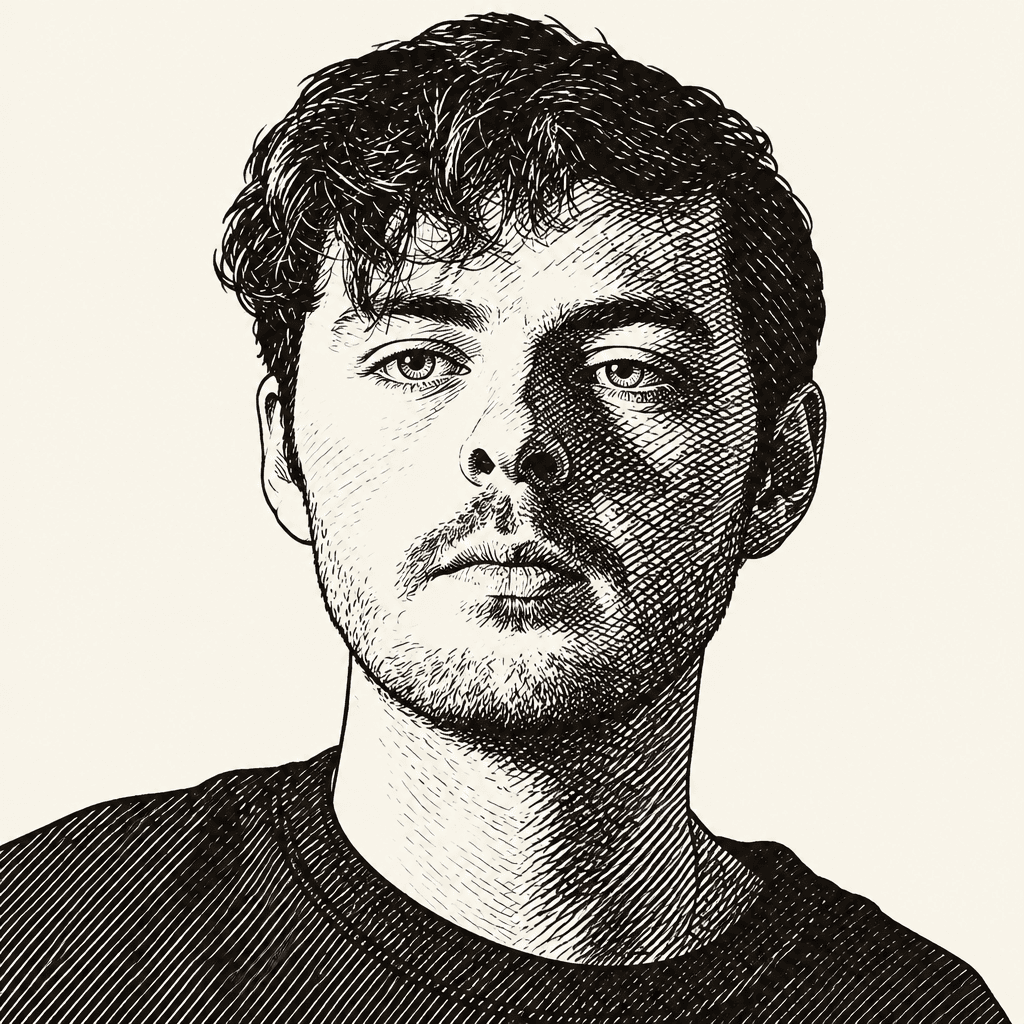
Alex O’Connor argues that consciousness poses a problem for materialism because it is not just another object for science to study: conscious experience is what makes observation and scientific inquiry possible. He says this limits what science can tell us about the underlying nature of reality, but does not by itself make atheism harder to defend. Rejecting materialism, O’Connor stresses, is not the same as believing in God.
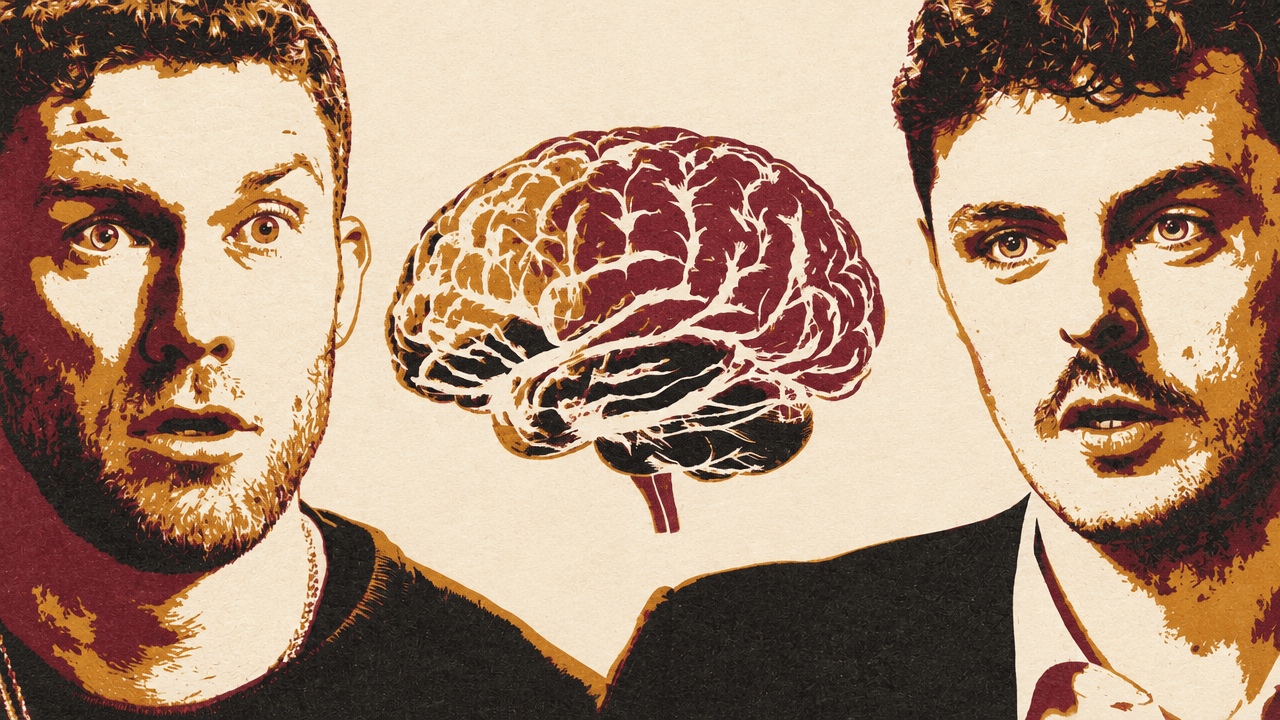
Consciousness is the condition for doing science
Alex O’Connor argues that consciousness is unlike an ordinary object in the universe. A table, a hand or an ear can be studied as things encountered in the world; consciousness is the means by which the world is encountered at all. Turn it off, he says, and there is no observing, experimenting, recording results or translating them into mathematics.
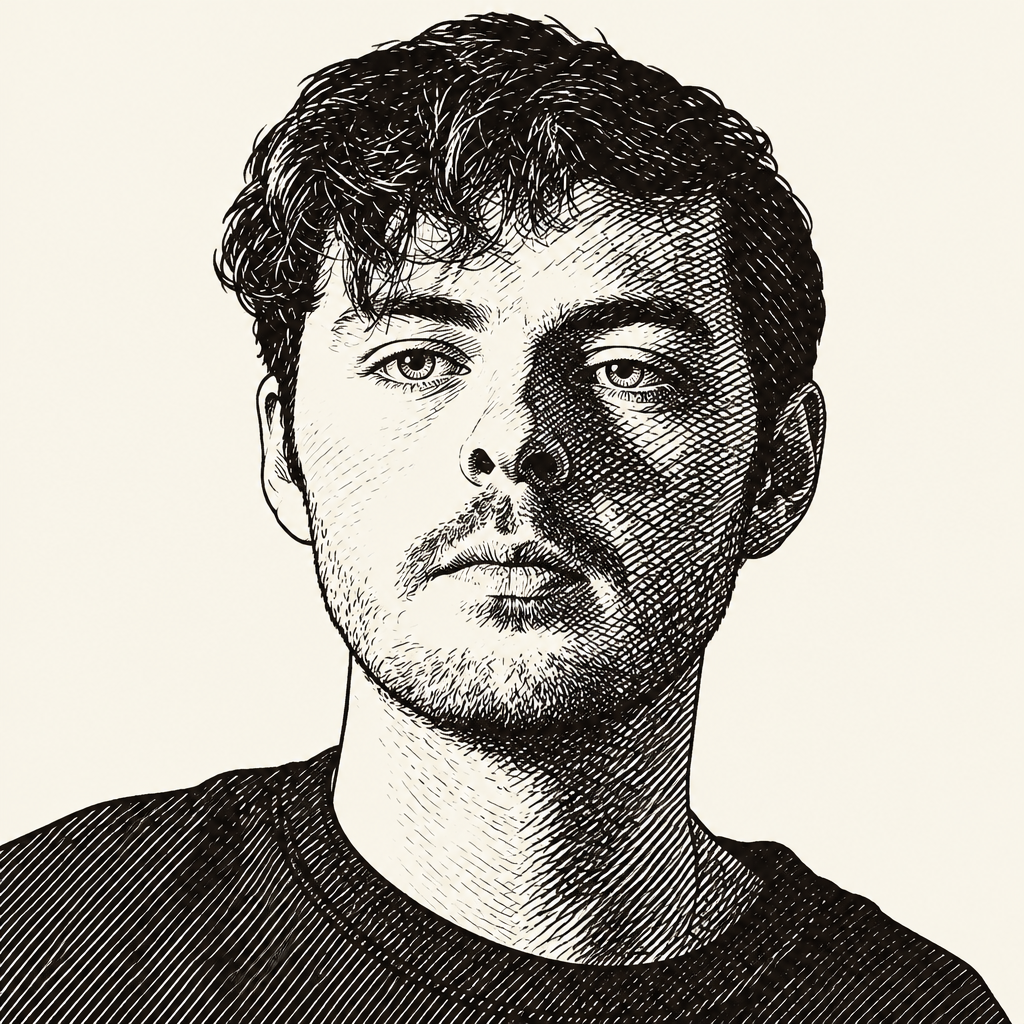
That makes consciousness a special problem for scientific explanation. O’Connor compares it to a tool used to investigate everything else: if the tool itself breaks, it cannot be repaired with itself. The point is not that consciousness must therefore be supernatural, or that science is generally inadequate. It is that inquiry depends on conscious experience, so science cannot simply treat experience as one more object observed from the outside.
The distinction matters because Chris Williamson asks whether studying consciousness makes atheism harder to defend. O’Connor’s answer is stronger about materialism: he calls it “pretty impossible to defend as a theory of the world.” But he explicitly separates that claim from atheism. Someone can reject materialism, or regard consciousness as fundamental, without believing in a deity. Atheism and materialism often travel together, he says, but they are not the same position.


Science describes what things do, not what they are
Alex O’Connor presses on what it means to call the universe material. If matter is made of atoms, and atoms of particles, what is an electron? Calling it a fundamental negatively charged particle describes a property and how it behaves—such as repelling another negative particle—but does not tell us what the electron is in itself. O’Connor invokes Bertrand Russell’s version of this question to challenge the idea that scientific description supplies an account of underlying substance.
His distinction is between describing behavior and explaining what bears that behavior. Science can establish regularities and tell us how things act; that does not necessarily settle what reality is made of. The analogy is a chess rulebook: it tells players how pieces move, but not what a piece is made from. Likewise, Newton’s laws describe how objects move; objects do not move because the laws themselves push them.
On this view, asking science to disclose the ultimate substance of reality may confuse two different tasks. O’Connor says some scientists effectively accept that only what can be described through behavior matters: “there only is what it does.” He finds that answer puzzling, because it seems to leave behavior without anything that behaves. Still, he does not claim that the answer must involve an unusual theory of consciousness. The more modest conclusion is that science may not tell us what reality fundamentally is. He says scientists broadly accept this boundary; his point is not an attack on science, but a claim about what its methods can answer.
Science will not tell you what the foundational nature, the substance of reality is.
Williamson objects that science has aspired to describe everything. O’Connor replies that no method can explain all of its own starting assumptions. Science cannot scientifically prove the foundational laws of logic, he says, or establish the existence of other minds and an external world without already relying on experience and observation. Experience comes first; scientific investigation proceeds through it.
Experience is the one reality we know directly
Alex O’Connor leaves open whether reality has an underlying substance at all. He points to the Madhyamaka school of Buddhism as an example of a tradition that treats reality as empty of substance, consisting instead of interactions. If there is something more fundamental—what he calls an irreducible “isness” or “thisness”—the question remains what it is and how anyone could know.
His answer is conscious experience: it is the one thing we have direct access to, even if we cannot fully explain it to someone else. That does not mean experience provides a complete theory of reality. It marks a contrast: much of what science studies is known through observation, while experience is what makes observation possible in the first place.
Chris Williamson asks whether a fundamentally experiential universe differs much from God. O’Connor says the answer depends on what “God” means. He distinguishes a personal creator who acts with agency from accounts of ultimate reality as a foundational consciousness. In some mystical traditions, religious experience is not described as a conversation with a separate being, but as a felt connection to divinity—as if the individual were an expression of it.
O’Connor uses Brahman, a term for ultimate reality in Indian traditions, to make the distinction concrete. He says it is sometimes treated as equivalent to God, though not quite: Brahman is not necessarily a being that creates the universe through agency, but more like an ocean in which beings exist. A self, on this analogy, is like a whirlpool: distinguishable, but not separable from the water. Idealists and panpsychists who regard the universe as fundamentally conscious may likewise understand everything that exists as a manifestation of consciousness.
That framework also gives a possible interpretation of experiences of unity, including the feeling some people report under psychedelics that they are one with nature. O’Connor says this need not mean that a person is literally identical to a particular tree. It could mean that both are expressions of the same underlying reality, as leaves are distinct parts of one organism.
He names Spinoza as a central Western reference point. The phrase Deus sive Natura means “God or nature.” O’Connor says Spinoza treats God or nature as the one ultimate substance in which everything exists, rather than simply dragging the idea of God down to ordinary nature. Whether that kind of foundational consciousness should be called God depends on how the term is defined; it does not, on its own, settle the question of a personal creator.