Modern Dating Has Turned Sex Differences Into Moral Conflict
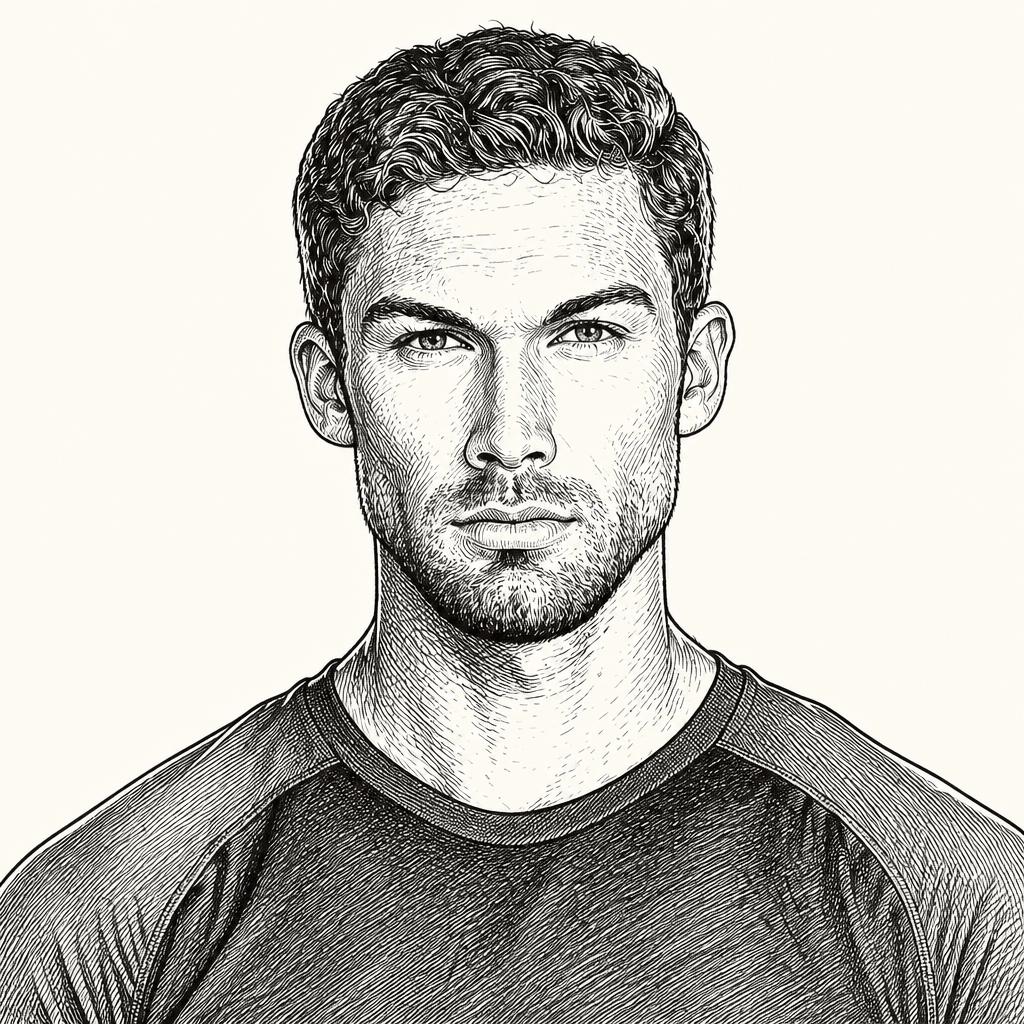 Chris Williamson
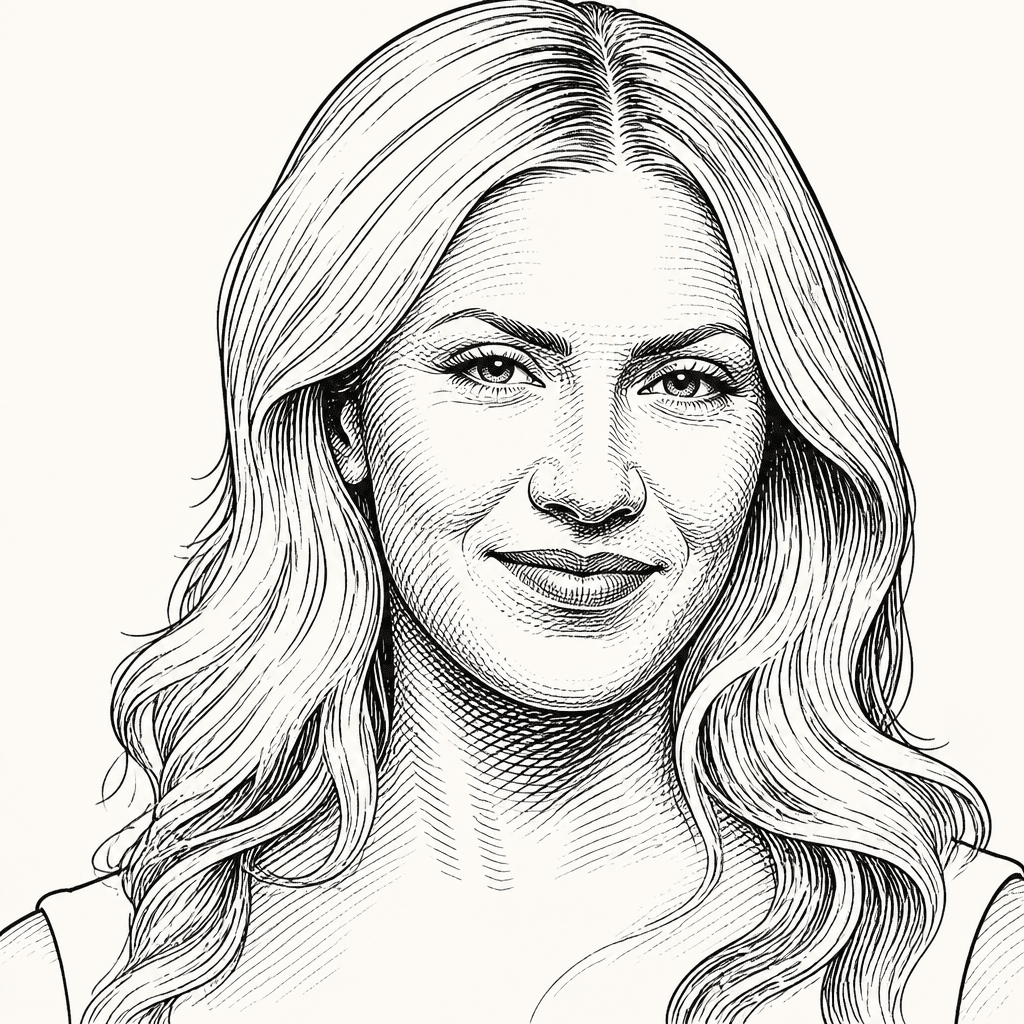 Freya India
 William Costello
 Tania ReynoldsChris WilliamsonThursday, May 7, 202630 min read
Chris Williamson’s debate with Freya India, William Costello and Tania Reynolds uses polling on young women’s negative views of men as the starting point for an evolutionary-psychology account of modern dating. The panel argues that older sex differences have not disappeared but have been pushed into online politics, group chats, beauty markets and relationship norms, where mate choice, vulnerability, in-group loyalty and public moral signaling make relations between young men and women more adversarial.

The empirical asymmetry that organized the debate was stark: in the New Statesman polling Chris Williamson read aloud, young women were substantially more negative about men than young men were about women. The panel treated that gap not as a standalone finding, but as the visible edge of several overlapping pressures: costly mate choice, women’s in-group loyalty, online co-rumination, political morality signaling, and a dating market in which men’s older forms of value are less decisive while women’s costs of choosing badly remain high.
The strongest explanations came from evolutionary psychology, but the analysis repeatedly returned to a cultural point: modern institutions and platforms have not erased sex differences. They have moved them into feeds, group chats, political litmus tests, therapy language, beauty markets, and moralized dating norms.
The risk calculus has changed for women
Tania Reynolds read young women’s bleakness, online rumination, and stronger dislike of men through an evolutionary frame. Her starting point was female vulnerability: across human history, she said, women were more frequent targets of sexual abuse, were smaller on average, were reproductively valuable, and needed help securing calories for themselves and their children. She also claimed that women’s foraging alone would not have been enough to sustain even themselves. In that environment, displays of need, sadness, and vulnerability could have helped elicit assistance.


Reynolds presented this as a broad pattern rather than a reaction to one contemporary article. She said women around the world perceive themselves as less happy and less healthy than men, both mentally and physically. She also described a social-contagion element: when women are sad, the people around them become more sad, and depression spreads through women’s networks in a way she said men’s depression does not.
A second mechanism, for Reynolds, was loyalty signaling among women. If women historically moved into patrilocal environments away from their own kin, one way to show other women “you can trust me” would be to demonstrate loyalty to women as a class. In the modern idiom, that can mean being a “girls’ girl.” Citing work by Hannah Bradshaw, Reynolds said women who are “guys’ girls” tend to be distrusted by other women, perceived as more provocative, and liked less than women with female friends. She was careful that Bradshaw had not tested this exact in-group-loyalty interpretation, but she thought the findings fit with her own work on asymmetries in concern for men and women.
William Costello accepted that account and added an error-management argument. Historically, women benefited from selecting men who could provision and protect. In modern life, he said, those benefits are less salient for many women, who earn their own money, build their own status, and live in comparatively safe environments, even if they do not always feel safe. The costs of selecting a bad mate, however, remain high. That changes the trade-off.


Basically the juice is not worth the squeeze for modern women.
Costello’s claim was not that women have stopped wanting relationships. It was that the route into a stable relationship now passes through a mating market full of ambiguity: dates, rejection, “fuckboys,” deceptive short-term mating strategies, and low accountability. He argued that large cities, anonymity, dating apps, and access to many potential mates allow deceptive men to pursue short-term strategies at unprecedented scale, without facing the ancestral costs of angering a woman’s kin or community. For women deciding whether to enter that market, singlehood can look safer than risking a costly partner.
That view also underpinned Costello’s response when Chris Williamson cited polling from the New Statesman showing that women feel much more negatively toward young men than young men feel toward women. Williamson read out figures from the article: 50% of women had a neutral or negative view of men; 72% of men had a positive view of women; 21% of women had an actively negative view of men, compared with 7% of men who felt the same toward women. Costello did not treat men’s more positive view as decisive moral evidence. His response was that women might believe both sides are responding rationally: men like women because women are “fulfilling their part of the bargain,” while women dislike men because men are not delivering comparable value.


Williamson pressed the distinction between having a negative view of relationships and having an actively negative view of men themselves. Freya India proposed that pornography may shape the generalization. Girls who grow up seeing violent, hypermasculine porn, she suggested, may develop a negative view of men from the most brutal depictions and then gravitate toward non-threatening, more feminine-looking partners. Reynolds returned to in-group signaling: dislike of men can also communicate, in effect, “I’m team women.”

Reynolds added that a student of hers is designing a scale of opposite-sex hatred because, in her view, no existing scale adequately measures sexism in both directions. Her claim was blunt: in the work she described, women hate men more than men hate women, consistent with the New Statesman figures Williamson read.
Political agreement has become a mate signal
Political disagreement is increasingly treated not as one incompatibility among many, but as evidence of moral character. Chris Williamson read the New Statesman figures: one in four young women considered a partner having different political views a red flag. Six in ten said they would find it difficult to date someone who disagreed with them on the Palestine-Israel conflict or did not share their views on Donald Trump. Seventy-four percent said it would be difficult to be in a relationship with someone who did not share their views on social justice. Young women were also more likely than young men to reject relationships over disagreement on immigration.
Freya India interpreted this as a symptom of a culture with weak shared moral foundations. In her account, her generation often locates morality in distant political conflicts and visible online positions rather than in day-to-day moral behavior. If a culture is less religious and more morally relativistic about intimate conduct, political stances become easy signifiers: did he post about Palestine, what does he think about immigration, what are his views on Trump?
Williamson called this “foam finger waving on social media”: moral signals that are easy to identify and advertise. William Costello noted that the activism spaces discussed in the New Statesman reporting still displayed what he regarded as male-typical status striving. Women in those spaces, he said, complained that men wanted to give speeches, run for leadership roles, and use activist causes as another status game. Williamson supplied the term “woke fishing” for men who adopt the right causes to attract women.
Tania Reynolds explained women’s leftward lean through the vulnerability model she had already laid out. If women evolved to evoke care and see themselves as vulnerable, then it makes sense, from what she called a niche-construction perspective, to prefer a social world that gives aid to the vulnerable. Progressive politics can be both materially useful and socially legible: it displays kindness. Reynolds emphasized that other women dislike signs of cruelty and competitiveness in women, so politics can become a competition to show other women, “I am so prosocial and kind.” A romantic partner’s politics then become part of the signal. Having a partner who shares those causes, or refusing to partner with men who do not, becomes a costly display of commitment.
Costello added that kindness has target specificity in mate choice. Women typically prefer a partner who is kind to them, but they care less about kindness to others unless that kindness carries status. In the political arena, he argued, kindness to distant others has become a high-status trait.
The emotional style attached to politics also mattered. Costello recalled women in activist circles being frustrated when men responded to distressing news by trying to organize logistics or protests. The women wanted an outpouring of emotion; they wanted to “sit in the emotion.” India linked that to online dynamics: anger plus a practical solution is less likely to spread online than co-rumination, mutual distress, and competition over who is most emotionally affected.
Williamson compared the dynamic to men escalating conspiracy theories: each person has to offer a more extreme hidden truth than the last. For women’s online politics, he called the equivalent “entropy toward empathy”: escalation toward the most intense display of being emotionally harmed by an issue. India added that intersectionality supplies further routes for escalation, because there is always another angle from which to make the issue more complex, more painful, and more morally demanding.
Looksmaxxing mistakes male approval for female desire
Male looksmaxxing was treated not as an isolated internet subculture but as a response to a more visual and short-term-oriented mating market. Tania Reynolds introduced the gender-equality paradox as she described it: as environments treat men and women more equally, the sexes often diverge more on some traits. She said that in more equal environments, men become more risk-taking, women more anxious and depressed, and even sex differences in height widen. She suggested that gender egalitarianism may function as a proxy for social competitiveness: as the world becomes more competitive, sex-specific adaptations are amplified.
For men, that includes appearance enhancement. William Costello argued that if relationships increasingly begin with a short-term, appearance-heavy first pass, physical attractiveness becomes more important for both men and women. Online dating and media-saturated life place looks at the first gate. If men cannot provide value through older domains of provisioning and protection as clearly as before, they optimize what remains visible.
He did not dismiss all looksmaxxing. “Microdosing” it, he said, is probably good: get in shape, get a good haircut, wear fitted clothes, keep some stubble. Chris Williamson compared that to the advice he remembered from Mark Manson’s Models and Geoffrey Miller and Tucker Max’s Mate: basic clothes, grooming, and fitness, which would once have counted as a major upgrade for many men.
The problem, Costello said, is that men tend to pursue sexually selected goals to extremes. They often overestimate the muscularity women want, although he noted that there is evidence women do like muscularity. From an error-management perspective, it may seem better for a man to overshoot than undershoot: better to have it and not need it than need it and not have it.
The more important failure, for the panel, was cross-sex mind reading. Costello described an X poll in which he compared Clavycular, a high-profile looksmaxxer, with a popular K-pop singer. Men judged Clavycular more handsome; women preferred the K-pop star. When Williamson raised the standard black-pill objection that women’s stated preferences cannot be trusted, Costello rejected it as cope from men who do not spend time with women. The K-pop star, he said, likely does fine with women.
Costello’s core point was that men overdo looksmaxxing and that too much visible effort sends bad signals: active in the mating market, self-obsessed, unlikely to relax with a partner. A man suddenly getting back in shape can even signal infidelity risk, because it suggests he is re-entering the mating market. Freya India added that intense male beauty routines are feminine-coded. They resemble, to her, a male version of social media addiction: the same neurotic self-editing, cosmetic intervention, and anti-aging obsession already visible among girls.
Williamson’s view was that many looksmaxxing men are optimizing for male respect and formidability, not female attraction. He cited evidence, as he summarized it, that women prefer a neutral or slightly feminized face with a masculinized body. Extreme jaw surgeries, hyper-masculinized faces, and “gigachad” features may win approval from other men while overshooting what many women find attractive.
India and Williamson also emphasized the role of women’s group scrutiny. If a woman goes on a date, her friends may ask for his Instagram. Group chats and apps such as “Are We Dating the Same Guy?” make men subject to pre-date reputation review. India described young men as marketing their whole lives for a future woman who will scroll through their profiles: holidays, social proof, morality, aesthetics, and memories are curated in advance.
A clip shown on screen sharpened the point about effortlessness. The Instagram post from manofmany showed Clavycular in an interview with an Australian interviewer; the visible caption described it as “the second time in two weeks we’ve seen a subculture figure wilt under mainstream scrutiny.” In the clip, Clavycular accused the interviewer of trying to make the exchange political, then offered to teach him looksmaxxing. Costello thought the public reaction to the interviewer’s attractiveness was revealing. If people mocked Clavycular by saying the interviewer “mogged” him by being more handsome, that inadvertently supported Clavycular’s premise that looks matter. India disagreed that it was only looks. The interviewer seemed more handsome, she said, because his demeanor was playful and relaxed, while Clavycular looked tense and neurotic. Costello accepted that effortlessness itself is attractive to women: for a man to be handsome, it often has to look as if he did not try.
Men’s mental health rhetoric collides with male status rules
Chris Williamson named a contradiction in male mental-health culture. Men are told to open up more, seek help, and take mental health seriously, he said, but nearly every social incentive pushes against it. Men often react with contempt when other men visibly struggle. A man crying on social media is likely to be called a simp, cuck, soy boy, or told to man up. Even among friends, especially in British male culture, sitting with a crying man can feel unnatural.
Williamson’s point was that public concern for male suicide and mental health coexists with male disgust toward male vulnerability. He claimed that 95% of men who took their own lives had sought mental-health advice from the services they were supposed to use beforehand; the point, in his framing, was that formal advice to seek help does not resolve what happens in ordinary male social life when a man posts something sad or breaks down at dinner. Men want their struggles acknowledged, but often do not acknowledge other men’s struggles.
William Costello argued that evolutionary psychology clarifies why generic “come cry on my shoulder” messaging may not work well for many men. Men have a deep history of coalitional value to one another: in male coalitions, expressing vulnerability can signal liability and risk to allies. A more effective message to struggling men, he suggested, is not unqualified emotional validation but usefulness and belonging.
We need you, actually, and you're valuable. You're useful, and we need you to be stronger.
Tania Reynolds agreed and broadened the point to male friendship. In the gym, she said, men give each other direct feedback to improve. Women, by contrast, are more likely to chit-chat and avoid correcting one another’s form. She linked male feedback to a “brother in arms” model: men want allies to be better because their competence matters to the coalition. She contrasted male-directed podcasts, focused on productivity and optimization, with female-directed ones that often say, in her words, “you’re a queen no matter what you do.”
Freya India described the female downside: women often do not call each other out. If a young woman posts about a bad experience with a man and is unfair to him, the comments will usually support her because she is upset on camera. That encourages co-rumination and confirms potentially neurotic interpretations. Costello offered an extreme counterexample of male “tough love”: a morbidly obese man whose friend texted him “you fat fucking pig” every day, which the man later described as life-saving because he interpreted it as care and pressure to improve.
The more precise claim was that emotional incentives differ by sex and peer group. Men can be cruel toward weakness, but they may respond to messages that frame recovery as value to others. Women may receive more comfort, but that comfort can become wallowing if it never includes correction.
Female-coded competition fits the modern workplace
Modern white-collar life may suppress some male-typical competitive tools while rewarding female-typical ones. Chris Williamson said he was surprised by how well women had adapted to the modern career world: fast-paced, capitalist, competitive, and increasingly credentialed. Tania Reynolds replied that the modern world may in many ways be more conducive to women’s traits than men’s. Overt aggression is not allowed at work. Physical fights cannot settle disputes. Subtler forms of aggression, including gossip, are more viable, and Reynolds described women as especially skilled at them.
She also argued that a prestige-based competition system, rather than a dominance-based one, fits many female-typical traits. The egalitarian boss who checks in on employees may be rewarded. At the same time, women still have to be agentic and assertive, and that creates a navigation problem. Reynolds cited data showing that more agentic women can be disliked by female colleagues, and suggested that egalitarian strategies allow women to compete while appearing kind.
William Costello put the same point more sharply: the modern workplace is, for good reason, designed to neuter men’s most aggressive tendencies, but it can reward forms of gossip and indirect aggression. Reynolds then described her “bless her heart” work. When women phrase negative gossip as concern, people may not register it as gossip and may even see the speaker as a good person. In another study, she said, when women complained or vented about a friend hurting their feelings, others cared more than when men did the same. Men making equivalent complaints were seen as whiny or non-agentic.
This led back to the agency-warmth trade-off. Reynolds later described it as a continuum. Women are expected to stay higher on warmth; if they move too far toward agency, they are seen as low-warmth, bitchy, or diva-like. Men are expected to stay higher on agency; if they show warmth by crying, they may be seen as less competent. Williamson added that too much warmth can also make women seem pliable or incompetent, while brusqueness is often associated with competence.
For Reynolds, one culturally sanctioned outlet for female agency is advocacy on behalf of vulnerable others. Studies on assertive women negotiating, she said, show backlash when women negotiate for themselves, but not when they negotiate on behalf of someone else. She speculated that moral advocacy may be the domain where women are allowed to be tough, hostile, and agentic without being punished for it, because the hostility is framed as protection of the vulnerable.
That frame also helped her explain why privileged women might report unusually pessimistic views. Williamson read polling suggesting that women in middle-class professions were less likely than working-class counterparts to feel valued by society or to believe hard work would bring success; young men were more likely than young women to be unemployed, yet young women were more financially cynical; young women were 21 points less likely than young men to believe they would ever outearn their parents; white women were more likely than non-white women in middle-class professions to feel the country is racist.
Reynolds connected this to the same agency-through-vulnerability pattern. The more successful a woman is, the more she may need to over-deliver on kindness and concern so as not to invite envy or resentment from other women. She cited Joyce Benenson’s work on “leveling,” where women are more likely to say everyone should be equal when someone surpasses them. Williamson called the resulting search for vulnerability credentials “victimhood points”; Reynolds accepted the framing.
India offered a less technical account: more time to introspect and fewer urgent practical problems can produce more rumination. Young women scrutinize partners for icks and scrutinize themselves for flaws, diagnoses, and pathologies. Without larger responsibilities, such as children, neuroticism turns inward or against a partner. Costello added that in higher-education ecosystems, where women dominate, status is awarded for espousing the ideology of high-status people in that world.
Protection is not the same as coercion
William Costello put Freya India through items from benevolent-sexism scales. He asked whether statements such as “women have a superior moral sensibility,” “women have a quality of purity few men possess,” and “women have a more refined sense of culture and taste” were sexist toward men or women. India answered each as sexist toward men. Then he asked whether it would be good or bad for men to agree with statements such as “a good woman should be set on a pedestal,” “women should be cherished and protected by men,” “men should sacrifice to provide for women,” “in a disaster, women need to be rescued first,” “every man ought to have a woman he adores,” and “men are incomplete without women.” India rated them good, except she viewed “people are often happy without romance” as bad.
Costello’s punchline was that India had endorsed many items from the benevolent-sexism scale. He said his own followers reacted similarly when polled: they tended to see the first set as sexist toward men and the second as good. For Costello, that raises a question about what the scale is actually measuring.
He and Tania Reynolds are working on what they call “the mismeasurement of men,” a deliberate inversion of Stephen J. Gould’s The Mismeasure of Man. Their claim is that some scales in psychology, including toxic masculinity, benevolent sexism, and male sexual entitlement measures, suffer from a lack of evolutionary insight and weak item design. Some items, Costello argued, measure awareness of facts rather than hostile attitudes. If a scale item says women are often attracted to muscularity and dominance, agreement is treated as evidence of toxic masculinity, even though, in his view, it can simply reflect knowledge of a real pattern.
The problem, he said, is that such scales require an extra inference. If someone agrees that women should be protected, the scale treats it as if they also believe women’s autonomy should be limited “for their own good.” But that second belief was not measured. Costello called them the “Cathy Newman of scales,” because they convert one statement into a more extreme implied position.
He did not deny that benevolent sexism could be real. Infantilizing women under the guise of protection is a coherent concept, and he acknowledged that abuse of women can occur under claims of acting for their own good. His objection was that the scale items often conflate protection and adoration with coercion. Women may be attracted to men who believe women should be protected, he argued, without being attracted to men who would restrict women’s rights or autonomy.
India linked this to criticism she receives. She said she has long argued that liberal women are unhappy because they have unmet needs: belonging, protection, safety, and stability. She described that as compassionate, not misogynistic. Yet when she says it, she is accused of internalized misogyny; when the New Statesman says liberal women are unhappy and draws different conclusions, it is treated differently. Chris Williamson joked that her “female privilege” had been revoked because she is white and right of center; India said she then does not get treated as a woman at all.
The clearest illustration of protection came from CCTV footage Williamson played. A man with a knife approached a woman on a sidewalk. She fought him off while the man accompanying her hid behind a pillar. Another man, carrying or wearing a scooter helmet, approached and intervened. The video shown on screen included a red arrow pointing to the man hiding behind the pillar. Williamson noted that public reaction had been nearly universal: the man hiding behind the pillar was condemned. The intervening man, jokingly framed by Costello as the “benevolently sexist man,” was admired for protecting her.
Costello said he had polled women on which would more strongly reduce attraction to a man: finding out he was unwilling to protect them or finding out he had cheated in a one-night stand. Women, he said, chose unwillingness to protect as the stronger effect. Reynolds saw that as evidence of how strong women’s preference for protection remains, and wondered whether one reason women are less interested in men now is that men have fewer opportunities to display protection, hunting, defense, or formidability.
The protector can also be the threat
The protection discussion exposed a central trade-off: the traits that make a man useful against outside threats can make him dangerous inside the relationship. Chris Williamson put it as women loving the idea of a man who can be aggressive but never toward them. The difficulty is that aggression is not always easy to switch on and off. Men who are capable and eager to confront an attacker may also be more likely to punch a wall.
William Costello said women’s choices vary predictably by ecology and individual differences. In more dangerous environments, especially among smaller women, preferences for strong, aggressive, formidable men increase. He gave rough urban areas as a contemporary analogue of dangerous ecology. Tania Reynolds described a study in which women read about a friend’s boyfriend either punching a wall during a fight or defending her against a robber. The researchers expected the “man as aggressor” condition to reduce preference for formidable men, but women showed the same normal preferences. In the protector condition, women liked all men more. Reynolds concluded that women may not explicitly register formidability as a cue of potential violence.
Williamson suggested that the same man may often be implicated in both scenarios: the man who is competent and willing to protect may also be the man who punches the wall. Reynolds agreed that women did not seem to infer that trade-off as strongly as the researchers expected.
The group then used the “soft boy” aesthetic among younger women to describe the opposite risk-management strategy: tousled hair, thin bodies, anime-like cuteness, and non-threatening presentation. Freya India thought part of the attraction was precisely that these men feel safer. Williamson described it as a post-Me Too preference for a man who “couldn’t even force himself on me if he wanted,” almost like a cuddly best friend. India cautioned that this may not be stable long-term. Invoking Jordan Peterson’s point, she said one does not want to dominate a partner; a partner who is not threatening at all, would never protect you, and can be controlled may eventually seem childlike.
Williamson connected this to dark romance and Fifty Shades of Grey. Catherine Salmon, he said, had discussed attempts to place softer “golden retriever” or “cinnamon roll” husbands into romance narratives after the genre’s rise. The politically inconvenient pattern, as Williamson described it, was that dominant, assertive, tall, strong, masculine, high-status men sold better as fantasy protagonists. Costello compared this to male porn preferences and later to sex dolls: fantasy does not necessarily map onto what someone wants in a marriage, but it reveals triggers of attraction.
That distinction between fantasy, short-term mating, and long-term partnership ran through the discussion. Men may optimize for “Chad” because short-term sexual desirability feels like the highest reward. Women may fantasize about dominance while wanting safety in domestic life. The problem is not that either side is incoherent, but that mating psychology contains trade-offs that online culture often strips of context.
Supernormal stimuli are not only a male problem
William Costello used sex-doll research as a deliberately extreme case of revealed male mate preferences. He described finding a public dataset of body specifications for sex dolls on the market. The original study, he said, was descriptive; he reanalyzed the data to interpret why the dimensions might look the way they do. Because sex dolls can be made into almost any form, and because the market evolves with consumer demand, he argued that they offer an “undiluted window” into male sexual preferences.
His claim was that sex dolls embody classically predicted male mate preferences in exaggerated, supernormal form. The point was not that every man wants such a partner, nor that sex dolls are high status. Costello called being a “sex doll haver” low status and embarrassing. Chris Williamson argued it is likely to remain low status because there is no selection value in obtaining something any man can buy, just as men cannot flex the number of OnlyFans subscriptions they have. If access costs “the price of a cheeseburger per month,” it signals desperation rather than status.
Costello nevertheless suggested that some men may eventually retreat into AI-enhanced sex dolls and video games, abandoning status competition in ordinary mating markets. Williamson called this “male sedation turned up to 11,” his phrase for extreme male withdrawal into substitutes.
Tania Reynolds supplied the analogy of beetles trying to mate with glass beer bottles: a classic supernormal-stimulus example. She tells students that anyone who watches porn is doing something similar. Williamson then proposed that romantasy is for women what porn is for men: an exaggerated supply of romance and attraction triggers, not a direct guide to what someone wants in a spouse.
The shared claim was mismatch. Humans are not direct “fitness optimizers,” Costello said; they are “adaptation executioners.” People evolved desires and cues that historically tended to produce reproduction—sexual desire, attraction, mate value, romance—but modern technologies can satisfy or exaggerate those desires without the same reproductive or relational outcomes. Contraception is central to that mismatch. Reynolds cited Joyce Benenson’s cross-cultural work suggesting young people place finding a romantic partner among their primary goals, while having children ranks much lower. Her interpretation was that humans may have evolved a desire to attract mates, not necessarily a direct desire to have children, because in ancestral environments sex reliably produced children.
That framework also shaped the group’s discussion of beauty and motherhood. Costello argued that attractiveness is an underacknowledged privilege. Pretty privilege brings benefits, though he noted costs too: attractive women may be seen by other women as more promiscuous. At the other end, unattractiveness brings substantial costs. He said new research suggests people are reluctant to recognize attractiveness as privilege, even while acknowledging other forms.
Costello also claimed women are, on average, more attractive than men, citing more than the well-known OkCupid pattern and unpublished lab data from his lab. Beauty, he said, functions as status for women: women defer to more beautiful women in the way men defer to more formidable men. That makes motherhood costly in an often-unspoken way. Pregnancy and children can impose a “beauty hit,” and if beauty can be translated into status and resources, women may be reluctant to sacrifice it.
Freya India tied this directly to social media. Platforms incentivize women to see themselves less as humans and more as products: optimized, marketed, and kept pristine. Having a child disrupts the product. At base level, she said, looking good should serve reproduction and children; Instagram can redirect the dopamine and status of attractiveness into display itself.
Sympathy and agency are not distributed evenly
Tania Reynolds described a cognitive heuristic in which men and women are sorted into perpetrator and victim roles. In studies she discussed, when men and women are involved in instances of harm, people are more likely to see women as victims, men as perpetrators, blame men, and feel sympathy for women. This may explain why male victimhood is often harder for people to see: cognitively, men do not fit the victim template as easily.
She stressed that this cuts against both sexes in different domains. Men are disadvantaged in contexts of harm because they are less likely to be seen as victims. Women are disadvantaged in domains where agency is desired, such as being selected as a CEO or president, because they may be seen as less agentic and capable. Chris Williamson summarized it as: one sex does not get sympathy, the other does not get belief.
William Costello argued that a broad protectiveness toward women often gets repackaged as oppression. He accepted that paternalistic protection can become controlling, and that real abuse can be justified “for their own good.” But he said the extent to which society is more protective of women than men is striking. Williamson pushed the “women are wonderful” effect in the same direction and said it requires contortions to interpret all preference for women as oppression of women.
Reynolds cited one hiring-discrimination study: discrimination against women had gone down, but people overestimate its continued presence. Her interpretation was that people are sensitized to detect discrimination against women even when the data do not show it as strongly. Costello added that when a discrepancy harms women, people become outraged, whereas discrepancies harming men often draw less concern.
The critique was not that women are never harmed or never disbelieved. It was that public moral cognition tends to slot women into vulnerability and men into agency. That produces benefits and costs in both directions. Sympathy, protection, and moral concern flow more readily to women; competence, agency, and suspicion flow more readily to men.
Relationships now answer to an audience
Modern relationships are increasingly evaluated before an audience of friends, followers, and algorithmic peers. Freya India described young women as increasingly deterred from commitment by both feminist and therapeutic messages. Feminist messaging warns women not to let a man obstruct their goals; therapeutic messaging warns them to watch for red flags, incompatibility, and signs of emotional danger. The result is a posture of constant vigilance. A woman may feel an “ick,” then be encouraged by social media to treat that feeling as highly diagnostic: if a partner triggers a negative emotion, something must be wrong.
Tania Reynolds said women appear, anecdotally, to get the ick more than men. She wondered whether it reflects a failure to meet some threshold of masculinity, or a violation of it. India’s account was more cultural: young women are trained to scan for problems. William Costello added that declaring an ick can also signal allegiance to the sisterhood and elevate one’s own mate value. If the available men all fail one’s refined standards, the speaker appears discerning.
Commitment itself can become suspect among women. India observed that when young men get engaged early, male friends often congratulate them for escaping the dating market. When young women commit early, other women may worry that they are giving up potential or closing down options. India attributed that to the belief that women had more to be liberated from, so any closure of options can be interpreted as regression.
Chris Williamson connected this to the idea that having a boyfriend has become “cringe” in some social contexts. If a woman’s single friends feel bad when she posts a relationship, their discomfort can create pressure not to display it. The dating market is difficult for women, he emphasized: uncertainty, fear, social anxiety, and worries about losing freedom are real, whether produced by modern culture or intrinsic to mating trade-offs.
At the same time, relationships can become content. India repeated a line from an earlier appearance: relationships are “brand partnerships now.” A partner is launched, soft-launched, hard-launched, displayed, and judged by other women. The traits selected for in a partner may therefore shift toward what will look good to the audience, not only what will work in private.
Friendship remains one of the more promising routes through that audience problem, but it is also shaped by sexual asymmetry. Williamson cited a statistic that 60% of romantic relationships begin as friendships, then asked whether this makes dating harder or easier. Costello thought cross-sex friendship should be celebrated because fewer such friendships exist and they are a real path into relationships. Attraction can grow over time through proximity and intimacy, and the qualities that make someone a good mate often overlap with those that make someone a good friend.
Costello said a new paper of his examines “courtship in cross-sex friendship,” including men provisioning financially for female friends in whom they have mating interest. He claimed 50% of people report romantic interest in a cross-sex friend, and a similar number have had sex with at least one, especially among young people. He also argued that cross-sex friendships improve “cross-sex mind reading”: it is harder to believe the cruder claims of red-pill and black-pill internet spaces when one has real female friends.
But the asymmetry remains. Williamson quoted Costello’s polling of 527 heterosexual and bisexual people: 81% of women said opposite-sex friendships can be truly platonic, compared with 58% of men. Women were three times more likely than men to say their friendship was purely platonic. Costello said women sometimes hear this and think male friends only want sex, which he thought was wrong. The more precise claim is that many male friends “would” have sex if the opportunity arose, not that sex is the only value they see in the friendship.
Williamson also described a study he said appeared in The Economist: in platonic friendships, men were more likely than women to find their friend sexy and more likely to think she found them attractive; a man’s estimate of how much his female friend fancied him matched how much he fancied her and was unrelated to how she really felt. Men, Williamson summarized, are prone to wishful thinking.
India introduced another obstacle: algorithmic sex segregation. Young women and young men may grow up in the same place but inhabit completely different online worlds. She mentioned Zoella, Facetune, and beauty-influencer culture as formative for many girls, while boys may have been shaped by entirely different platforms, games, and references. If algorithms intensify separate cultural childhoods, opposite-sex friendship becomes harder because men and women “already didn’t have that much in common and now you’ve got even less.”
Mate competition is being moralized
The “pick-me” insult, simp-shaming, slut-shaming, and OnlyFans were all treated as competitive policing in moral language. Freya India said the “pick-me” insult has been drilled into women of her generation. It does not only punish women for saying things men might like or dressing for male approval; it punishes anything masculine-coded, including her own interest in male-coded podcasts. The result is that women’s presentation, mannerisms, temperament, and personality can be shaped toward what other women expect, because they do not want to be seen as appealing too directly to men.
William Costello called this a clever form of intrasexual competition: do not be seen trying to appeal to men. Chris Williamson immediately compared it to male “simp” or “cuck” shaming. Men police other men who appeal too directly to women or give away resources without reciprocal sexual access.
Williamson laid out the game-theoretic version through slut-shaming, drawing on an argument he said he learned from Geoffrey Miller and Tucker Max’s Mate. As he described it, slut-shaming functions as a form of price enforcement: if some women give sex away with less commitment, other women who want more commitment are pressured to lower their expectations. It is in their interest to shame women who undercut the going rate. He then proposed the male equivalent: men shame other men who give resources away without sex. OnlyFans angers men in this frame because women are extracting resources from the male dating pool without entering reciprocal dating situations where those men might have a chance.
India noted that this explains why she is attacked from both sides. She is accused of internalized misogyny, then men who defend her are called simps. Williamson and Costello agreed that both mechanisms are operating at once.
The point was not that every insult is consciously strategic. Across the analysis, the recurring claim was that modern culture moralizes mating competition. Women’s suspicion of men becomes social justice, red flags, political standards, and girls’-girl loyalty. Men’s frustration becomes black-pill fatalism, simp-shaming, and claims that women lie about what they want. Beauty becomes self-actualization; protection becomes sexism; emotional support becomes either co-rumination or weakness; friendship becomes a blurred courtship channel. The same underlying trade-offs remain, but the language around them changes.