A Sold-Out Bali Show Became a Full-Circle Tour Milestone
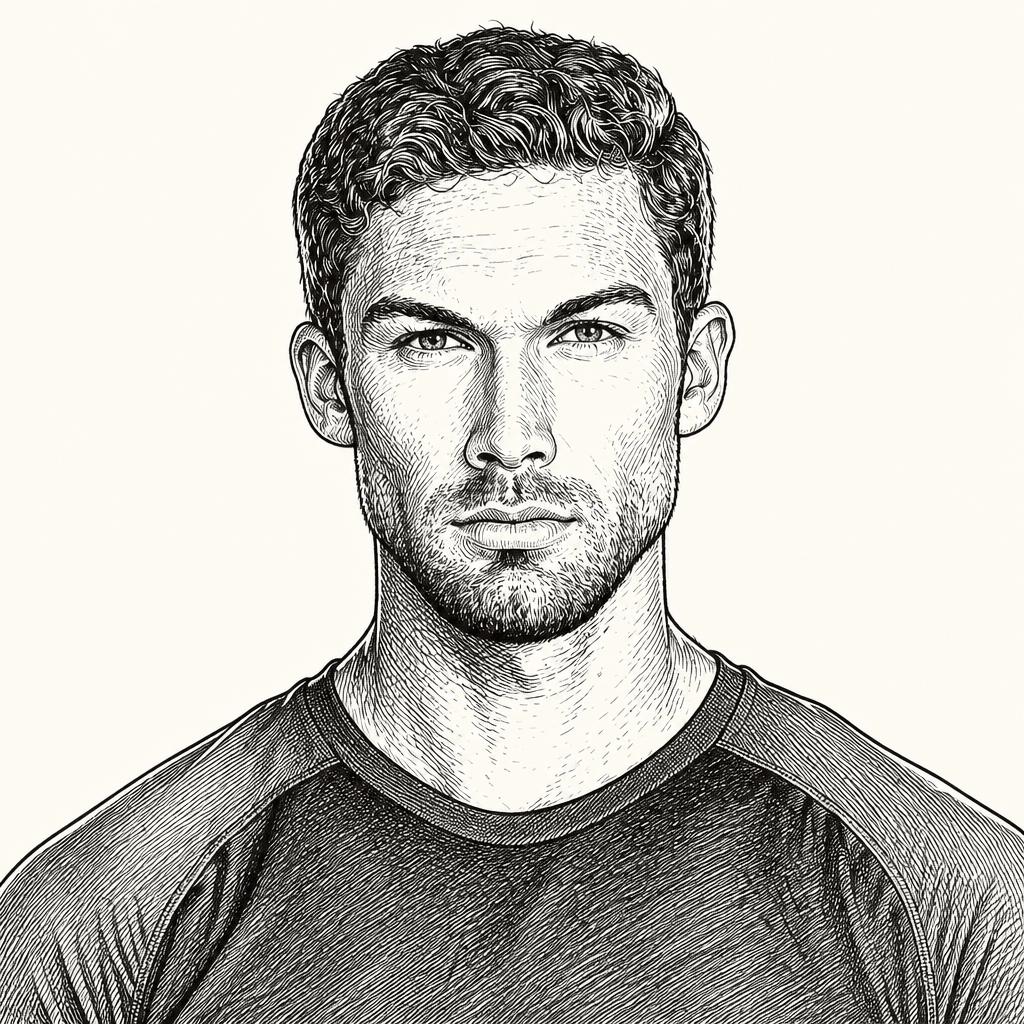

Chris Williamson’s Bali tour vlog presents the final leg of his Australia, New Zealand and Bali run as a full-circle career marker: a sold-out show at Atlas Super Club, a few hundred metres from where he says he sat alone a decade earlier wondering what to do with his life. The film argues less for the glamour of touring than for its contradictions — public intimacy, crude comedy, production stress, fatigue and friendship — as Williamson and his team try to turn a nightclub built for EDM into a venue for a spoken-word show.
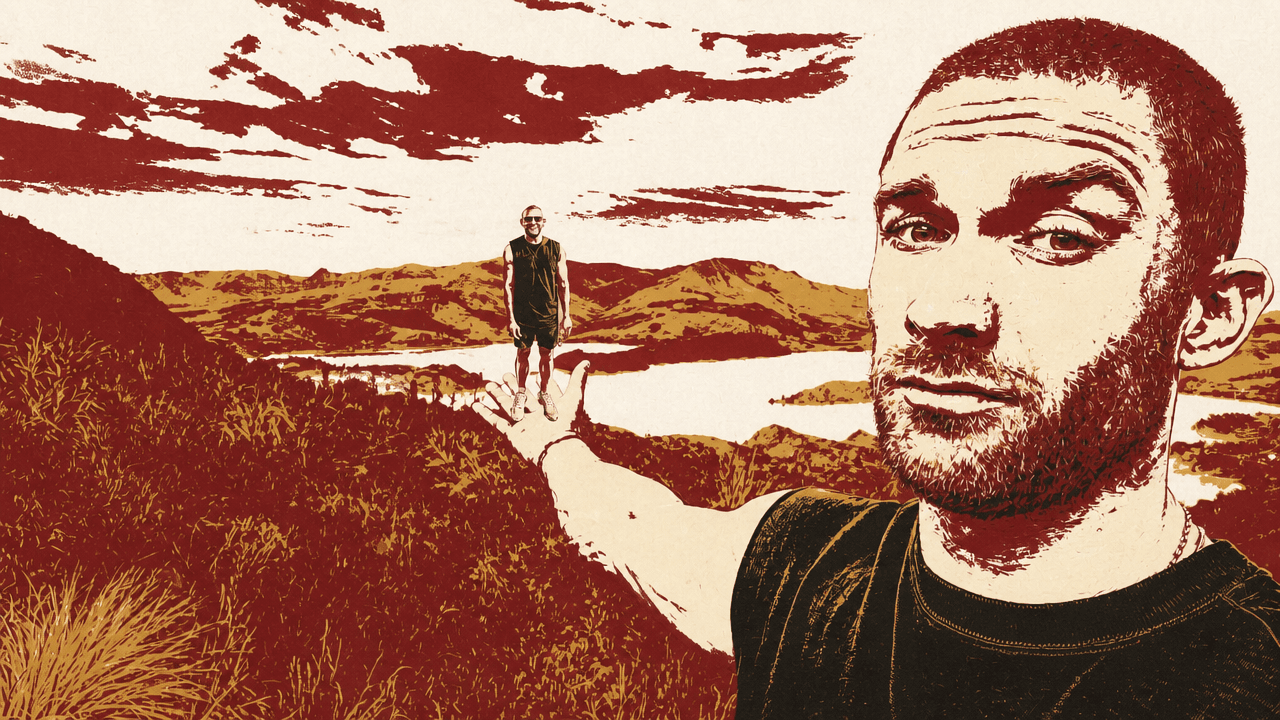
A sold-out Bali show turned old uncertainty into a visible milestone
Chris Williamson frames the Bali date as more than another stop on a speaking tour. Ten years earlier, he says, he had been in Bali alone, sitting by the rooftop pool at the Koa D Surfer Hotel with a book on meditation, trying and failing to meditate while asking larger questions about who he was, what he wanted to do, and what “bigger game” he should be playing. At that point, by his account, he had achieved “a lot of success,” but was unsure whether it was fulfilling him in the way it was supposed to.

The contrast he draws is deliberately stark: ten years later, after “a thousand podcast episodes,” he has sold out Atlas Super Club in Bali on a Wednesday night. The physical proof is all over the trip. Billboards in Bali advertise “Chris Williamson Live: Mostly Wise,” with James Smith listed as special guest and the venue named as Atlas Super Club. At the airport, a printed arrivals sign reads “Kevin Williamson Christopher” and “Smith Frederick James,” a small comic reminder that the event is still being assembled through the ordinary confusions of travel.


10 years ago I was on a rooftop just like this, trying to learn to meditate, trying to work out what I wanted to do with my life.
Williamson says the Bali show feels “way bigger” than the Apollo in London or Sydney because of its distance from home and its strangeness: “fucking Asia,” “middle of Asia,” “so far away from home.” The milestone lands because the place of earlier uncertainty becomes the place of a sold-out public event.
That full-circle reading returns at the end of the show. Williamson tells the Bali audience that the tour has covered Australia, New Zealand, and Bali, including Australian cities he jokes he did not know existed and both islands of New Zealand. The ending matters to him because it happens “no more than 500 meters” from the place where he had come alone when he was lost. He calls it “the sickest thing” and “a full circle moment,” then closes the run by saying simply: “Australia, New Zealand, Bali. Done.”
A spoken-word show had to survive an EDM infrastructure
The Bali show is the most technically difficult date of the run because it puts a talk-driven live event inside a venue built for something else. A visible subtitle near the opening says the team “saved the most challenging for last,” and a crew member later uses the same framing: they did the biggest show first and the most challenging show last.
Williamson explains the problem in practical production terms. Atlas Super Club is a nightclub, not a spoken-word venue. Its PA system is designed and tuned for nightclub music rather than speech. The team is also working with the equipment available locally and with venue staff who do not usually run this kind of show. Lighting cues, stage timing, and show flow have to be taught into an environment designed for EDM rather than for a person standing onstage talking.
Language adds another layer. Williamson says the local team does not speak English and his team does not speak Balinese, leaving them to figure out how to convey the production information needed for the show. He describes the situation as one in which they have to “pretty much teach them how to work in this environment.”
The timing is the uncomfortable part. By the final stop, energy is lowest; the show requires the most attention precisely when the team has the least spare capacity. Williamson says it is a show where they do not know how it will pan out: it could be smooth, or it could be clunky.
That uncertainty appears in the staging. The DJ booth can be reached in about three seconds; the stage takes closer to 20. Williamson considers jumping down, then is told the risk is not worth blowing an ankle and doing the rest of the show seated. He later jokes from the stage that he does not have “the insurance that Steve Aoki does,” so the crowd needs to give him about 10 seconds to get around properly.
The walkout itself is messy enough to become a recurring joke. A text overlay says the team “weren’t ready for walk out,” and later another says Williamson “missed the walk out again.” The Bali audience is later shown clapping under the caption “love you Bali xx,” and attendees describe taking away a lot from the show. But the milestone sits on top of the unglamorous operational friction that touring usually hides.
The tour’s public intimacy cuts both ways
Williamson repeatedly describes the strangeness of speaking to large audiences in distant places after starting by “talking to people on the internet.” In Christchurch, when asked what it is like coming to “far away colonies on the other side of the world” to speak, he says it is bizarre: he is “some bloke from the northeast of the UK that lives in America,” now speaking in front of a thousand strangers in New Zealand.
The same answer turns into a point about the vulnerability of his work. He distinguishes podcasting and live speaking from other performance forms by the lack of distance between the person and the product. In business, he says, he started young, so business itself was not the limiting factor. What changed with the podcast was that “so much of me is in the pod.” If he has a bad night onstage, the feeling is not merely that the performance was bad, but that he is a bad person.
If I don't have a good night tonight, it's not even that I had a bad performance, it's that I'm a bad person.
He contrasts that with a musician missing high notes: the audience might conclude the musician performed badly. But if he says something offensive, stupid, or poorly researched, he feels it lands closer to “the middle” of who he is. That is the cost of work built around one’s own thinking, taste, judgment, and speech.
Selected attendee comments show why that cost exists. In Auckland, one attendee tells him the podcast saved his life, got him through a hard time, and helped him feel emotion when he “literally never felt emotion” before listening. In Bali, viewers describe taking away more than they can process immediately, admiring the depth and conditionality of his thinking, and being grateful to experience the show with others after usually listening alone. Another attendee says the podcast has had a more profound impact than Williamson could have imagined.
The relationship, as shown through those comments, moves in both directions: private listening becomes public gathering, and Williamson receives both the warmth and the pressure that come with being treated as personally implicated in the work.
The live advice is less about certainty than regret, recovery, and belonging
The most substantive live material centers on decisions, productivity, and the experience of feeling outside the group.
In Auckland, Williamson gives a compact decision-making heuristic: in life, he says, “you have to choose your regrets.” Regrets are unavoidable because people do not get to run life back and see whether a different route would have worked. The question “what do you want?” can be too nebulous, “like trying to catch smoke.” His proposed alternative is regret minimization: do not ask only what decision you want to make; ask what regret you could not bear living with. He says that frame tends to clarify big, difficult choices.
In Bali, he answers a question about struggling to be present when productivity falls below expectation. He cites Oliver Burkeman’s term “productivity dysmorphia,” defining the feeling as waking up already behind and needing to dominate the whole day flawlessly just to return to “some minimum level of acceptable output” before going to bed without feeling like a loser.
His advice is not simply to work less. He says people talk about building a good work ethic but not a good “rest ethic.” Rest, in his framing, has to be treated as a pursuit. He compares recovery for an ambitious person to recovery for an athlete: it needs deliberate attention, perhaps even more than the visible performance work. His tactical recommendation is to force breaks, plan trips with friends, and treat rest as the challenge itself. To someone addicted to productivity, he says, the drug is productivity. The process will be imperfect; the person will open Slack on a Saturday and feel they have failed, but over time they can improve.
The Christchurch material is more personal. Asked whether his younger bullied self would be proud of who he is now, and what advice he would give him, Williamson says the younger version would probably not recognize him. He says he did not assume he would amount to anything particularly special, unless being outside was the “special part.” What he would tell that younger self is that he is not alone, that he is doing great, and that the feeling of being “one note that’s out” in a chord is not his fault.
That metaphor carries the emotional weight of the answer. Feeling out of tune does not mean a person does not matter or that nobody cares; it may mean they have to work harder to find their tribe. He says he would pick his younger self up, hug him, and tell him he is proud.
The comic surface keeps colliding with the serious material
Much of the tour is built on the collision between earnest reflection and absurd behavior. Williamson moves from meditating in New Zealand countryside to joking that he needs the nervous-system regulation because in two days he will be in Bali “sniffing vapes for a week.” He sees sheep, tries to charm them, and complains that his whimsy goes undetected. He jokes that a sheep trapped on the wrong side of a fence must feel “like a piece of shit” for being so close and yet so far.
The New Zealand shows build crowd interaction around local insults. In Christchurch he asks for a local swear word or slang term and is taught “Jafa,” explained by an audience member as “just another fucking Aucklander.” Williamson immediately notes the danger: he is going to Auckland the next day and could have been stitched up by being told it was a compliment. In Auckland he asks for an Auckland slur and receives “sheep shagger,” which he points out feels like a self-own given the number of sheep in New Zealand. An audience member insists they do not shag sheep “up in Auckland,” to which Williamson replies: “That’s exactly what you would say.”
The Auckland show includes a comic routine about break-ins near Williamson’s home. He says he bought a big black baseball bat for his bedroom and has been lying awake thinking, “tonight could be the night,” getting excited at the prospect. The imagined tactic escalates into hiding at the top of the stairs and greeting intruders with “hello boys” and “I’ve been waiting a long time for this boys.”
That material sits beside audience members telling him his podcast saved their life. The same performer is doing both things: crude comic escalation, self-serious reflection about meaning, and fast pivots between the two.
Fatigue is part of the work, not a break from it
The tour’s glamour is repeatedly undercut by sleep, delays, airports, and the dull logistics of movement. After Christchurch, Williamson describes the show as dialed and the venue as absurdly cool, but immediately notes that the next day is both a travel day and a show day, followed by a nine-hour flight. The next morning there are no flights going in or out of Auckland for a period, and an airport departure board shows a 09:50 flight marked “Cancelled.” A crew member calls this the reality of touring: when one show follows another in a different city or country, disruption becomes consequential.
Williamson says flights into Auckland are not being allowed to land or take off until midday. After hours of delay, he says they made it to Auckland after four hours waiting, then will go straight to the hotel and venue before flying nine hours to Bali the next day. Later he says he slept only four hours and was delayed longer than he slept.
By the time the group leaves New Zealand for Bali, his morale has “hit a little bit of a wall.” He yawns heavily, calls it a “multiple orgasm yawn,” and notes they are delayed again. He insists the extra hour or two does not matter because the flight to Bali is “only” nine hours, then immediately admits spirits are not high.
Bali initially functions as the reward. There are billboards, Bintang jokes, beach-club images, boxing, sunlight, and massages. Williamson says he has been in planes and hotels for so long that he needs sunlight and movement. After a boxing session, he says his main problems are fitness, strength, skill, speed, and endurance, but he loves boxing because it makes the whole world stop: in the middle of flow, he cannot think about anything else.
The final reflection after the show is not a grand theory of travel. Williamson says he has no deep philosophical insights; he just enjoyed time with friends. The shared mission is what makes it better. Being sleep deprived, tired, ill, or under pressure before soundcheck does not cancel the experience. It is part of what made it memorable.
Friendship is the thing that survives the schedule
The strongest closing claim is not about audience size or career status. It is about friendship under shared pressure. After several days in Bali following the final show, Williamson says he has a 30-hour commute back to Austin ahead of him, but has finally had time with no obligations. He describes the tour as three countries, many cities he had never visited, and a “shit-ton of experiences.”
His formulation is simple: hanging out with friends is one of the best things, and doing it on a shared mission is even better. The mission includes the unromantic parts — illness, tiredness, Bali belly, sleep deprivation, soundcheck deadlines — but he still calls the whole run fantastic.
That friendship shows up throughout in small scenes rather than formal statements. Crew members wake him up, tease him for being tired, troubleshoot flights, identify production problems, and joke about his entrances. James Smith gives him a framed tour poster near the end, marked “Chris Williamson Live Mostly Wise Australia, New Zealand & Bali.” Williamson reacts with real pleasure. The gift is not explained as a grand gesture; it appears as a keepsake from a shared run.
The tour also seems to create appetite rather than depletion. Williamson says he went three weeks without recording a podcast because he had done so much work before leaving, and he is looking forward to returning. He mentions a new studio, “huge guests” coming up, and more “hang-style episodes.” He stops short of calling himself revitalized, saying that word may be too gentle for what happened, but he says he feels good and has had adventures.
The closing promise is practical: there is another UK and Ireland tour in October, so “it won’t be long” before he is back on the road.