Zac Efron Says His ‘Iron Claw’ Transformation Was Too Costly to Repeat
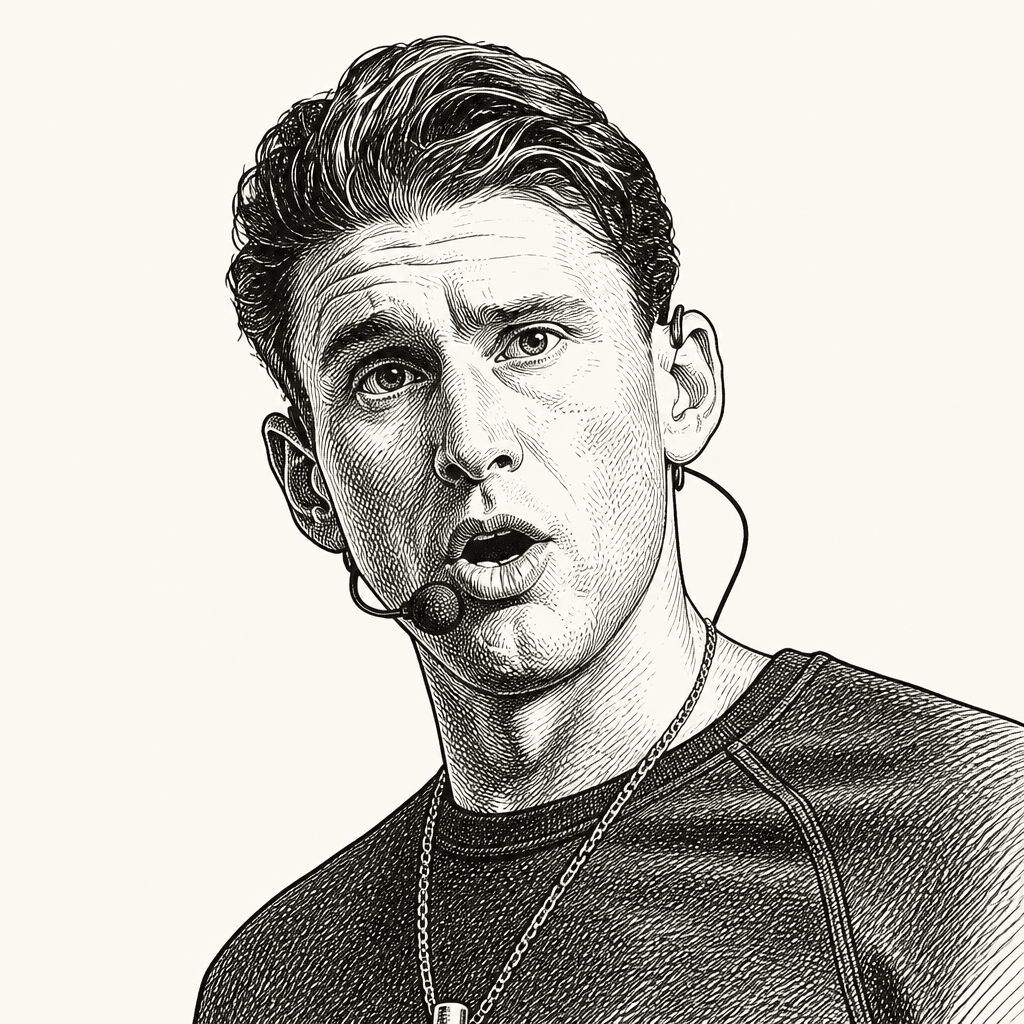
Zac Efron said preparing for *The Iron Claw* meant eating about 6,000 calories a day, training at high volume and wrestling until he reached roughly 205 pounds—a routine he described as painful and said he never wanted to repeat. But he does not want that transformation to become the expectation for every role: he said he prefers work that changes what acting asks of him, including trying different genres and playing real people. During a lighter workout with Chris Williamson and trainer Ben Greenfield, he asked to keep the pace easy enough to talk and hang out.
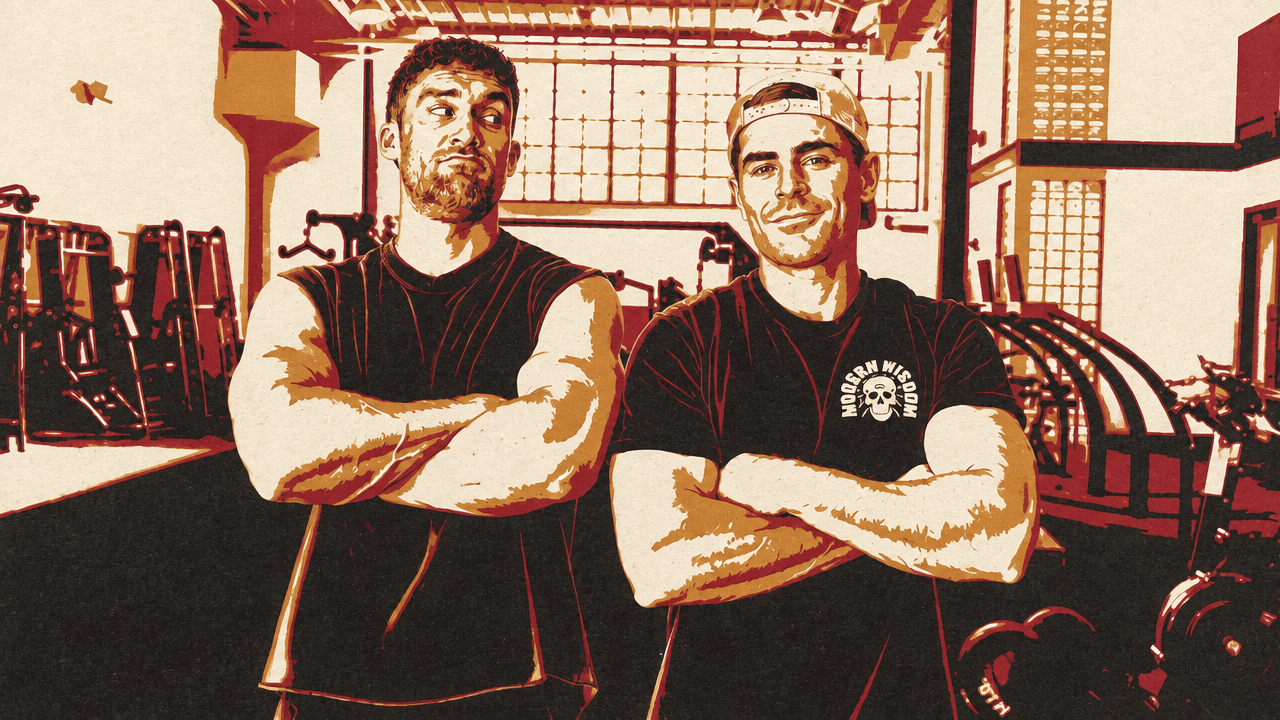
The role required a body Efron did not want to keep
For The Iron Claw, Zac Efron said he went from a 29-inch waist to a 34-inch waist in about four months. He ate roughly 6,000 calories a day, reached about 205 pounds at his heaviest, and weighs around 175 now. The preparation combined high-volume training, wrestling practice and the daily work of getting enough food into his schedule.
Ben Greenfield described the training as repeated shifts between hard conditioning and strength work: two minutes of all-out cardio, deadlifts paired with Nordic curls, more cardio, then pulldowns or pull-ups with a chest-press variation. Efron said he turned the program into two-a-days because there was too much volume to fit into one session. Wrestling added another substantial demand.


Getting the food down was difficult in its own right. Efron listed chicken, rice, sweet potatoes and, in retrospect, too much salmon. He said he got mercury poisoning from eating so much of it. When he lowered his calories, he said, the added weight came off quickly. Greenfield emphasized how much wrestling added to the workload; Chris Williamson speculated aloud about Efron’s energy expenditure.
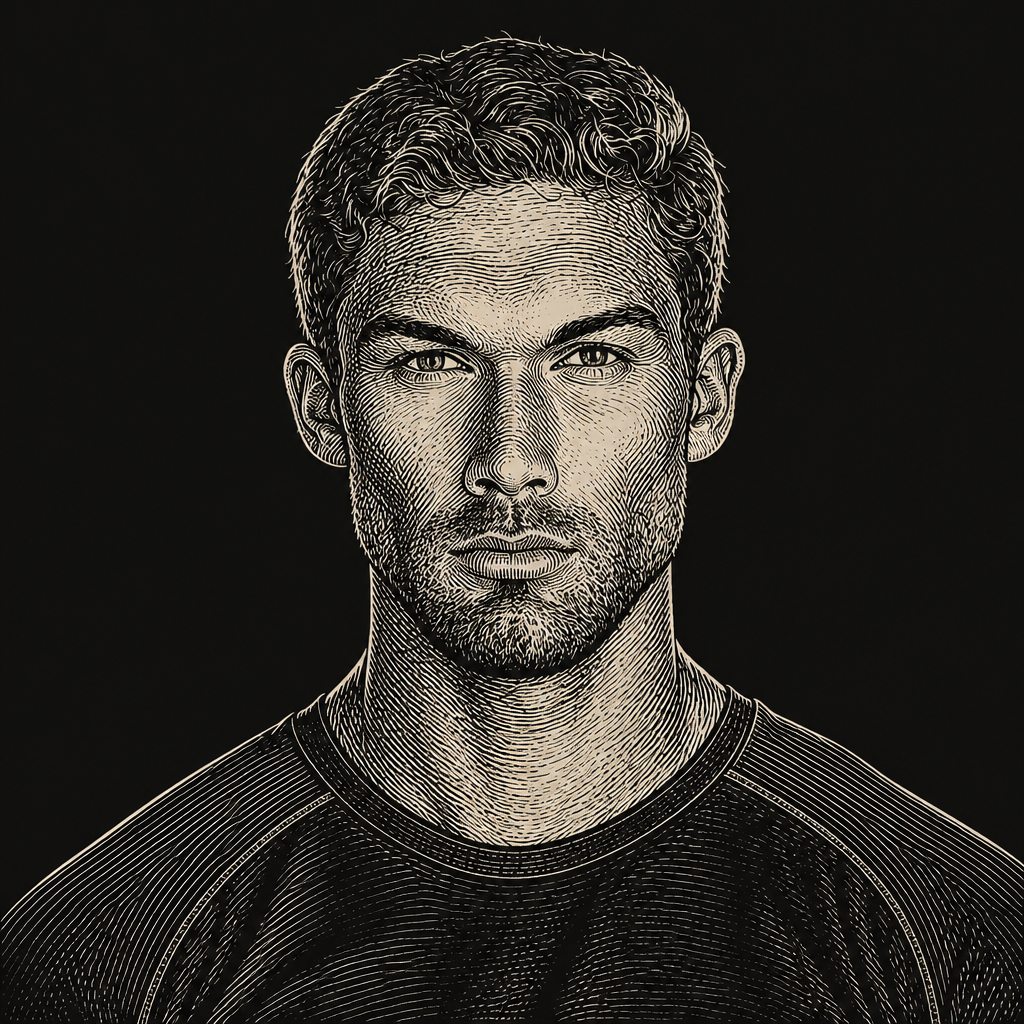
Efron described the routine less as a number on a scale than as a life organized around food, training and recovery. He said he was eating constantly, working to the point of pain and failure, sleeping, and then struggling with small tasks around the house. Picking up the cat could feel like an achievement. “It’s so fucking boring,” he said of the bodybuilding routine. “You’re either working your ass off to the point of extreme failure, pain, sleeping, or struggling to move around the house to accomplish very small things, like picking up the cat.” He added that he never wanted to do it again.
That cost helps distinguish The Iron Claw preparation from Baywatch. For the earlier film, Efron said, he built muscle before production began, then spent about three months preparing with more cardio and supersets. He said he took too many diuretics, calling the approach “really, really extra bad,” though he said his body recovered. He recalled waking up looking depleted, then having sugar and doing push-ups, elastic-band work and pull-ups to fill out for filming. He described it as a kind of mini bodybuilding preparation every day.
The two roles called for different physiques. Efron said he was leaner for Baywatch, with a heaviest weight around 175 pounds, but that his composition was different from his current one. “Kevin Von Erich was massive,” he said of the Iron Claw role. When Williamson asked about his body fat, Efron recalled being down to “two… two,” without clarifying the figure further. He described the look as “skin over fucking muscle” and “savage.”
The work for Baywatch also included an obstacle-course scene. Efron recalled the director telling him not to attempt the full course because he was so lean and might break. Efron decided to try it and completed the course, including the salmon ladder, on his first attempt. He said the stunt mats covered only the first section. On a later take, he fell from the final section, about 15 feet.
The day’s workout was a much lighter negotiation over what training was for. Efron arrived sore from four days of pickleball and padel and asked to keep the pace breathable enough to talk and hang out. Williamson wanted bodybuilding work; Greenfield kept steering toward supersets and fitness. Williamson called it a “war”: he wanted to get bigger, while Greenfield wanted them to get fitter. Efron’s approval of a pull-up-and-dip superset showed that he was not opposed to effort; he was less keen on making every set another test.
Their discussion of CrossFit brought out a related tension: hard training can be compelling, but complex lifts under fatigue make people wary. When Efron asked Williamson to name the most valuable movement he had learned, Williamson landed on the snatch. Efron said high-repetition snatches felt dangerous. Greenfield described the broader concern as metabolic conditioning under heavy load with complex lifts.
Williamson recalled injuries from his CrossFit years, including two bulging discs and a Schmorl’s node, which he explained as vertebral material pushing into a disc and producing swelling in the vertebra. Efron said he injured his back deadlifting at Chris Hemsworth’s house. He said injuries can leave you a year later wondering why you put yourself through them.
They also compared notes on active recovery. Williamson said that on an off day he would ride an assault bike and sometimes leave feeling less sore. Efron said he had noticed something similar: adding cardio, stretching or light muscular work around a hard workout could leave him with less soreness the next day. When asked whether he trained with a group, Efron said he usually trained alone, but had previously trained with Williamson and found it made a good difference. “Just being accountable to somebody,” he said.
Williamson brought up his use of TRT and described what he experienced as improved recovery, saying he could train hard and return to hard training the next day. He characterized the effect as muscular and musculoskeletal recovery rather than a drop in HRV, and said it also affected libido, motivation and his sense of mental drive. Efron asked whether he had generally found himself with more drive. Williamson said he had, calling testosterone “a molecule of forward motion.”
Fame can make ordinary encounters difficult to trust
When Williamson asked what he likes least about acting, Efron distinguished the work from the notoriety that comes with it. He likes people and said one of his favorite parts of being human is being around other humans. He also values the moments when a fan tells him that a film affected them in a meaningful way. Those can be “the best interaction ever,” he said.
But the encounter changes with repetition. If he has had the same kind of conversation for the 50th time in an hour and a half, he is tired. Williamson described it as the tank running empty. Efron’s point was not that fans are unwelcome: he said he likes making someone’s day and hearing how a film mattered to them. The accumulated demand of repeating these interactions wears him down.
Williamson offered a theory for why celebrity can make ordinary interactions feel strange. When a famous person enters a room, people may become self-conscious or performative because they are preoccupied with who the person is. He compared this with people’s behavior around someone exceptionally beautiful or a high-status political figure, calling the effect a “reality distortion field.” If the people around you repeatedly seem to behave unnaturally, it can become difficult to know what to trust. Williamson’s explanation was that many people may simply be trying, and failing, to act normal.
Efron agreed with the difficulty while holding onto the value of positive encounters. Recognition can create a barrier between him and the groups of people he likes being around; it can also connect him with someone who has a personal story about a film. The strain lies partly in having to receive both the meaningful and the repetitive interactions as they come.
Filming creates a different kind of depletion. Efron said that when he is the lead, he is usually first in and last out. Production days that are supposed to run 10 to 12 hours often go longer, he said, and the schedule can shift call times across the week in ways that make it difficult to maintain a regular sleep pattern.
He described starting work around 4 a.m. on a Monday, with filming beginning around 6 after travel and hair and makeup. By Wednesday, the call time might have shifted to noon, followed by a midnight finish. A short turnaround could then bring an early call on Thursday. Friday might start later, but the crew could work 16 or 17 hours before the weekend. Efron said that across a week like this, he might get about four hours of sleep a night, at a different time each night.
“It’s basically shift work,” he said. The irregular hours make it hard to sleep, and the strain accumulates over months. That, rather than simply waiting around, is the difficult part of filming for him. He said the work wears him thin.
Still, Efron spoke about production with affection. A film brings together people who are highly skilled in different areas—hair and makeup, special effects, sound, cinematography—and gives them a shared task. He compared the lead actor to a quarterback on an elite team. The schedule can be exhausting, but making something with people who are good at their work is part of what he loves. “I love making art,” he said.
That mix of commitment and fatigue informed his account of a set dispute involving Russell Crowe. Efron said Crowe believed the camera needed to be on the other side for two shots to make sense in the edit. The camera operator disagreed. Crowe checked with others over the microphone and held his position; they eventually confirmed that Crowe was right, moved the camera and filmed.
Efron saw the insistence as an effort to protect the scene and avoid wasting the production’s time, not as gratuitous hostility. He also understood how the same moment could give Crowe a reputation for being difficult. Someone watching only the confrontation might remember the forceful delivery, not the problem Crowe was trying to prevent.
Efron said he might have chosen not to push back, even if that meant filming the scene incorrectly and losing time. Williamson put the social cost plainly: the person who puts their foot down can sacrifice likability with the production to protect the work. Efron agreed. In this case, he said, Crowe was right about the camera.
Williamson connected the example to an on-set outburst by Christian Bale. He suggested that an observer might not see what preceded the outburst: hours spent preparing for a difficult scene, an effort to focus, and someone disrupting the actor behind the eyeline. A delay can affect the schedule and the people who have to stay late. Efron agreed that actors can be stretched thin, especially when they are tired and trying to inhabit a character.
He described the threshold between the actor’s real self and the person they are becoming as thin. That makes it harder to keep composure, he said, and he is impressed by professionals who manage to do so. His first experience working with Nicole Kidman was another example of how actors may understand the same interaction differently. On The Paperboy, Efron said, Kidman stayed in character and spoke with a Southern accent. Because their characters were in love, he initially thought she was flirting with him off camera.
The Crowe story also led to a broader question about reputation. Williamson argued that people may form a settled view of a famous person from only a handful of encounters. Efron said Crowe was “the coolest guy in the world” and urged against trusting what people say about others. He had seen Crowe insist on a production decision that Efron believed was right, even though the manner of insisting could make the actor unpopular with the crew. A person’s reputation, in that account, can preserve the visible confrontation while losing the context that made it useful.
He wants roles that keep changing what the work asks of him
Efron said he had never particularly wanted to make a superhero film. He joked that he might consider a commercial project for $20 million, but the character and the way the film is put together matter more to him than joining a popular category. He said he wants independent films to thrive and looks back to around 2007 and 2008 as a period when films such as There Will Be Blood and No Country for Old Men represented the kind of work he valued.
His preference is not a claim that superhero films cannot be good. Rather, he does not want every role to amount to playing someone heavily muscled. He has worked with enough trainers to know how to get big when a part requires it. What interests him is the chance to play real people and do something different.
Efron said that changing genres keeps him learning. He described acting as listening, and said that applying that across different kinds of roles makes the work continually interesting. Comedy would be challenging, he suggested, for the same reason: it would ask him to do something other than repeat an established formula. “When you’re constantly in a state of learning,” he said, “trying a new genre,” the work stays fun.
That preference puts the preparation for The Iron Claw in context. It was a major transformation for a specific character, not a body Efron wants to maintain for every part. His account of the preparation is emphatic about its cost; his account of acting is emphatic about variety. He wants the opportunity to change, rather than to have one demanding physical identity become the permanent expectation.
The preference for independent work also sat alongside the commercial realities Williamson raised about his podcast. Efron joked that he had mostly made independent films and still needed to “sell a few more toothpicks,” pushing back on Williamson’s assumption that his bank account must be much larger. Williamson described a tension in running a business built around long-form conversations: the show can become more commercially effective as he is more honest, open and sincere, but he still has to ask how much he should compromise what he wants to do to keep it running.
Efron told Williamson that the show’s authenticity gave him room to make commercial choices, provided he did not sell poor products. Williamson pointed to a product he used and liked, saying his recommendation came from his experience with it, not loyalty to the company. The exchange left the tension intact: trust can support a business, but deciding what to sell still raises the question of what the business is willing to compromise.
Recovery tools come with costs of access, time and risk
The training session also turned to recovery tools and health interventions the speakers had tried. When Williamson asked what Efron had been playing around with, Efron singled out hyperbaric treatment. He said he completed 18 consecutive days of sessions at Gary Brecka’s house, spending about two hours in the chamber each time and varying the depth. He said he felt better and noticed sustained energy. He also played Elden Ring inside the chamber, using an upright hard-shell unit with a PS5.
Efron’s qualification was practical: the treatment is difficult to discuss as if it were available to everyone. People may have to travel to a facility, spend a long time there and pay for it. Williamson called it a “fuck on”; Efron agreed that time and expense are real barriers, even as he described his own experience positively.
For travel, Efron recommended something simpler: light resistance bands, which he said he could use to get a workout almost anywhere. The conversation then turned to blood-flow-restriction training, or occlusion training. Williamson described the premise as restricting blood flow so the body perceives a greater level of stress than the exercise alone would suggest.
Greenfield described what he called an older studied protocol: sets of 30, 20 and 10 repetitions, with recovery between sets. He cautioned against applying full restriction to both arms and legs at once, citing the possibility of a cardiovascular incident if pressure is too high. He said some cuffs allow users to set pressure in millimeters of mercury. Greenfield also offered a practical check during the discussion: press a fingernail or toenail and see whether blood flow returns within three seconds. He said a longer delay could indicate that the bands are too tight. These were Greenfield’s cautions and description of the protocol, not a general recommendation from the group.
Efron also described a persistent jaw problem. He said he broke his jaw at 22 after slipping in socks and falling into a fountain. It remains uneven, making chewing difficult, and he said it aches when cold. The group discussed a practitioner working through the nose and a proposed relationship between that area and fascia. Efron said the hands-on work had released tension around an injury that had been hard to work on.
The exchange also included a comic detour into enemas. Efron recalled that his first time spending time with Greenfield included an ozone enema and a coffee enema. Asked about removing microplastics, Efron joked, “Coffee enemas.” The conversation did not establish these as a treatment or provide evidence for the claim; the moment was part of the group’s joking account of Greenfield’s interventions.