Sam Sulek’s Training Balances Hard Sets With Exercise-Specific Risk
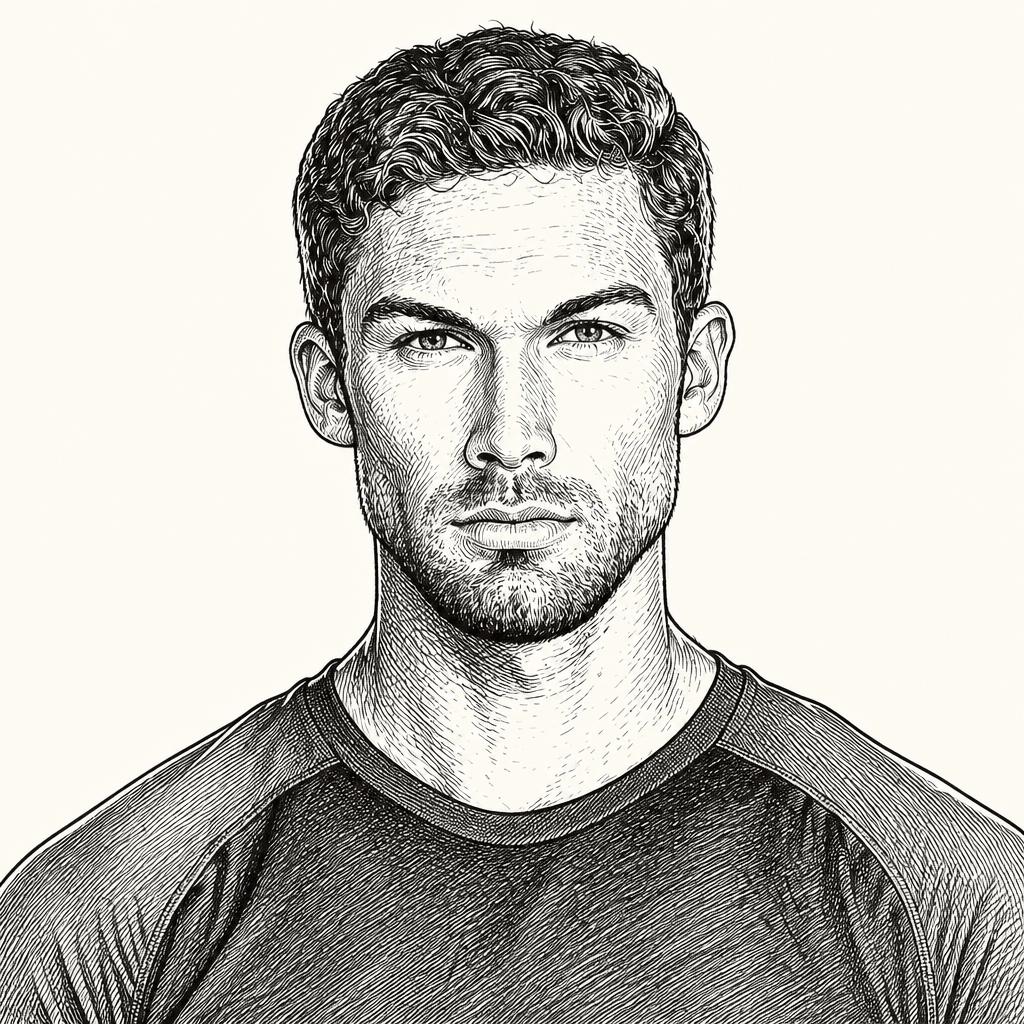
Bodybuilder Sam Sulek argues that hard training means pushing a set until it tests his effort, not making every repetition look perfect or taking every exercise to failure. In a workout with Chris Williamson, he distinguishes productive intensity from needless risk, and says exercise choice should reflect the goal—whether that is muscle growth, appearance or performance.
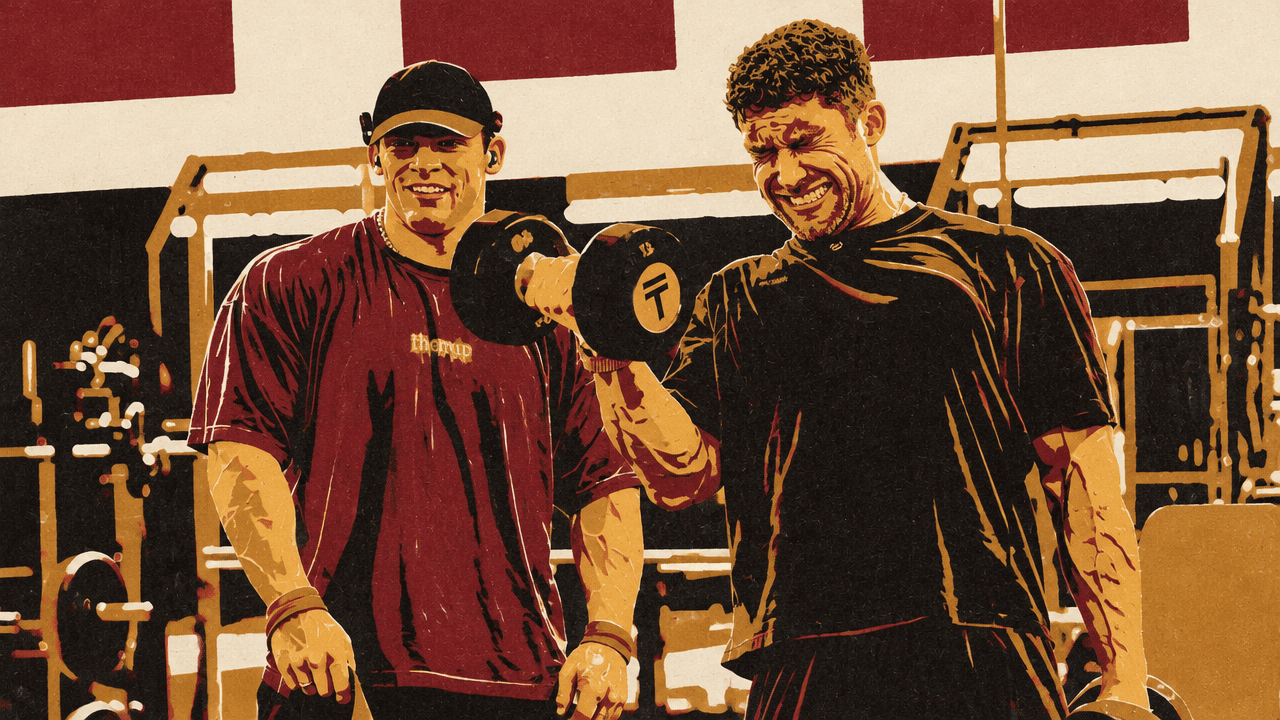
Hard training means reaching the point where the set changes
For Sam Sulek, a hard set is not defined by how tidy it looks. He wants to know he has given everything he can, while still distinguishing that effort from taking a needless risk. That tension ran through his training with Chris Williamson: push past the point where a set feels comfortable, but understand what the movement and the load will allow.
Sulek described imagining a squat set so demanding that he safely racks the bar and passes out afterward. It has never happened; he uses the image as motivation. When Williamson asked if that made him a masochist, Sulek clarified: “It’s not for the point of enduring the discomfort, it’s knowing that you gave 100%.” He wants the set to show that he brought it, not to get hurt.
That distinction shaped their exchange about form and training close to failure. Williamson said that if lifters hold themselves to too high a standard for what counts as a repetition, they may end up leaving more repetitions in reserve. Sulek agreed that there is an argument for keeping repetitions controlled, but objected to treating a polished-looking set as the only worthwhile one. “You can do a nasty set of curls, you can’t do a nasty squat,” he said. The movement matters: a fatigued, heavy incline barbell press without a spotter is not the same proposition as a hard set of curls.
Sulek’s concern was that “perfect reps” can become a reason to stop before the set is difficult. He recalled seeing Tom Platz scream through a set and thinking, “I don’t remember the last set I did like that. I gotta up my game.” The point was not that every lift should become chaotic. It was that the effort should be real, and that the end of a set may not look composed.
He uses the first set to test whether he is actually working at that level. If he racks a set of hamstring curls and realizes he could have done five more, he may treat it as another warm-up and start again. Williamson compared the first set to the opening day of a year-long routine: people can let a bad start become an excuse to abandon the plan. Sulek’s version is more immediate. A set that did not test him does not have to set the tone for the session; he can recognize it and make the next one count.
On rope extensions, Sulek described holding the contracted position for about two seconds, lowering, and repeating. As he tires, he shortens the holds and may keep trying when the rope barely moves. He said the movement makes it easy to tell when he has stalled because the hardest point is where his hands are farthest from his elbow. Especially at the start of a workout, he tries to distinguish having reached his limit from simply deciding to rack the weight.
But not every set has the same job. After hard rope extensions and dips, Sulek said he would treat the final triceps-and-curl pairing as a finisher: still challenging, but focused more on getting blood into the area than on taking every exercise to absolute failure. Earlier, after Williamson helped him complete another repetition on a single-leg machine, Sulek said there was “something to the assisted reps beyond failure,” though perhaps not on every set. The intensity can rise past a lifter’s unaided limit, but it need not be the rule for every exercise.
The same flexibility informs Sulek’s use of rest-pause work. Williamson said he liked myo-reps: brief rests of a few seconds, followed by more repetitions. Sulek described resting for about ten seconds and then doing as many more as he could. When travel makes it harder to fit in his usual volume, he may use these short rests to accumulate more work across the week. He said he did not know the science behind it; it felt useful to him.
Their discussion of training minimums was more speculative. Sulek wondered what he could get away with if he wanted to minimize volume, invoking a Mentzer-style approach, and said maintaining muscle seemed easier than growing it. Williamson asked whether two sessions a week might be enough and suggested an upper-lower split. Sulek thought the upper-body day would be punishing and wondered whether the plan would become strength-specific. He reasoned that maintaining strength might also provide enough mechanical tension to maintain his physique, but did not settle on a minimum or a schedule.
The exercise should fit the goal, not just the number on the weight
Sulek’s choices in the gym often turn on what he wants a movement to do. On dumbbell curls, he had noticed lifters placing their hands toward the top of the handle while using very heavy weights. He said this makes the weight easier to move. He now tries to put his hand in the middle, rather than letting the position make the curl easier.
He also described wanting less forearm involvement in the lift. In his own mental model, there is a limited amount of “bandwidth” available to make a muscle fire. If he feels he is spending 30% of it on his forearms, he wonders whether his biceps are getting less. He acknowledged that this might be overthinking, but said it was how he thought about the movement. His explanation was about where he wanted to direct his effort, not a claim that the setup works the same way for everyone.
Sulek applies a similar goal-based approach to ab training. When people ask what they should do for abs, he said, he often sees them doing heavy weighted side bends. For someone mainly interested in appearance, he prefers weighted crunches straight down the middle. Side work may make sense for sports stability, Williamson noted; Sulek agreed that the aim changes the choice. His objection was to people adding heavy side bends while pursuing a narrower-looking waist.
Appearance also shaped their conversation about arms and shoulders. Sulek said he had not done a “real” shoulder press in perhaps three or four years because his shoulders already looked larger to him than his biceps and triceps. He wanted his arms to catch up. Williamson offered a rule of thumb: big arms and small shoulders can make someone look like a heavier person, while small arms and big shoulders may look more like a football player. Sulek thought the latter could also look “funkyish.” Williamson’s response was that people chasing the look of a trained physique may want to build their shoulders before focusing on bigger arms.
The exchange was about proportion as much as exercise selection: a body part does not have to be the next training priority just because someone wants it to grow. Sulek’s shoulder development had changed what he chose to emphasize. He also said he wanted the areas above and below his midsection to grow, while calling the middle a “no man’s land” he did not particularly want to train for size. He made room for different aims, such as a powerlifter or athlete wanting a stronger posterior chain. Williamson brought up wrestlers’ developed lower backs; Sulek mentioned the backs and upright squats of Chinese Olympic weightlifters.
Their discussion of dips showed how a movement’s appeal can be weighed against its demands. Sulek said he would lean farther forward on bodyweight dips to make them more chest-focused, but felt too tight to go into a deep stretch comfortably. He was wary of pulling his chest just to try the movement. Williamson recalled hearing about several pectoral tears during dips at a CrossFit regional competition. The immediate point was Sulek’s own caution about forcing a range of motion that did not feel ready.
They also traded memories of lifts that went wrong. In high school, Sulek could throw a 100-pound dumbbell over his head while seated on a flat bench. He recalled falling backward and being lucky to throw the dumbbell to the side; it hit the ground while he ended up flipped over on his head. He did not think he repeated the movement. Williamson recalled an incline dumbbell press at university: one hand gave way, and a dumbbell came down onto his nose before he pushed it off. He said he still thinks of that incident when he picks up 25-kilogram dumbbells. The stories were reminders that a movement’s cost is part of how each lifter decides whether it belongs in the workout.
A good workout can be demanding without making every set a test
Sulek’s account of effort is not simply “take every set to failure.” The workout included hard rope extensions, dips, and assisted repetitions, but he described the final triceps-and-curl pairing differently: a finisher meant to get blood into the area, still worked hard without requiring an all-out effort on every exercise. He called that approach counterintuitive to what he normally says. The distinction is between making the session challenging and treating every movement as if it must prove the same thing.
Enjoyment is part of how he makes that distinction. After a particularly heavy curl, Sulek said the load was at the cusp of what was useful and might already be more than necessary. But the mental enjoyment of curling something most people would press made the exercise more fun for him. That is not a general prescription to chase the heaviest possible weight; it is his account of why a challenging set can be worth doing even when he sees no need to make it heavier.
The atmosphere of a gym mattered in a similar way. Sulek called the space they were training in unusually spacious, but not empty; its openness felt intentional. Williamson said he could make a case for very different kinds of gyms, from a windowless basement to an airy, newly built facility. For him, there are many ways to get a gym wrong, but no single feature—bright lighting, high ceilings, or a gritty feel—determines whether it works. Sulek agreed that there was no one rule a gym had to satisfy. He described a Michigan gym he liked: a commercial gym upstairs and a basement “dungeon,” with a squat rack and bench in a former bank vault.
That preference fits the rest of their discussion: the setup should serve the person using it, not an idealized checklist. Sulek did not name one required gym atmosphere or one required method for making a set productive. He talked instead about choosing the movement, effort, and environment that make him want to train while staying alert to what feels risky or unproductive.
Competition can shape the work without supplying its purpose
Sulek had no next competition scheduled. He said he wanted the next show to be one he genuinely wanted to do, rather than a contest that dictated the whole plan. His tentative idea was to gain weight slowly for four or six months while staying lean, then decide whether he wanted to remain big and strong or get lean again. If he chose to diet for himself and happened to be close to a show, he might enter on short notice.
That possibility appealed to him more than treating competition as the reason to train. Sulek said winning his first two shows had been satisfying proof that he was doing the work. But if he never competed again, he would still be himself. Without spending months dieting for a show, he thought he might be bigger, though less lean. Williamson summarized the trade as “fewer trophies, similarly proud”; Sulek said his pride would probably be the same.
Sulek described his motivation as mostly rooted in the activity itself: he likes getting bigger and stronger and likes what comes with that. He does not think other people seeing his size is the main reason he trains, but agreed that social validation helps. Williamson said not to underestimate that influence. Sulek called it “a good little performance booster,” even if it was not the priority.
His early experience with weights was informal. Sulek recalled having a 30-pound dumbbell set in his bedroom and doing 20 curls whenever he finished a game of Fortnite. He suggested that a parent could leave a teenager a pair of dumbbells and let them play, rather than trying to force them into the gym. For an eight-year-old, he said, a trampoline or room to play made more sense. Pressure could turn someone against the activity. In his own case, the weights were simply there, next to his desk, and he picked them up between games.
A show remains one possible way to direct his training, and social approval is part of the picture. Neither is the whole reason Sulek gives for doing it. He likes the work and the result; competition is optional.