Ambition Can Deliver Success Without Resolving What It Was For


Entrepreneur and investor Shaan Puri argues that people often mistake achievement for a measure of a good life, even when the pursuit leaves them unsure what comes next. In a conversation with Chris Williamson, he makes the case for acting despite fear, choosing environments that support the life you want, and following constructive interests—but also asking what ambition costs and whom it serves. Success, in Puri’s view, is not only reaching the summit; it is deciding whether the climb is worth the life it requires.
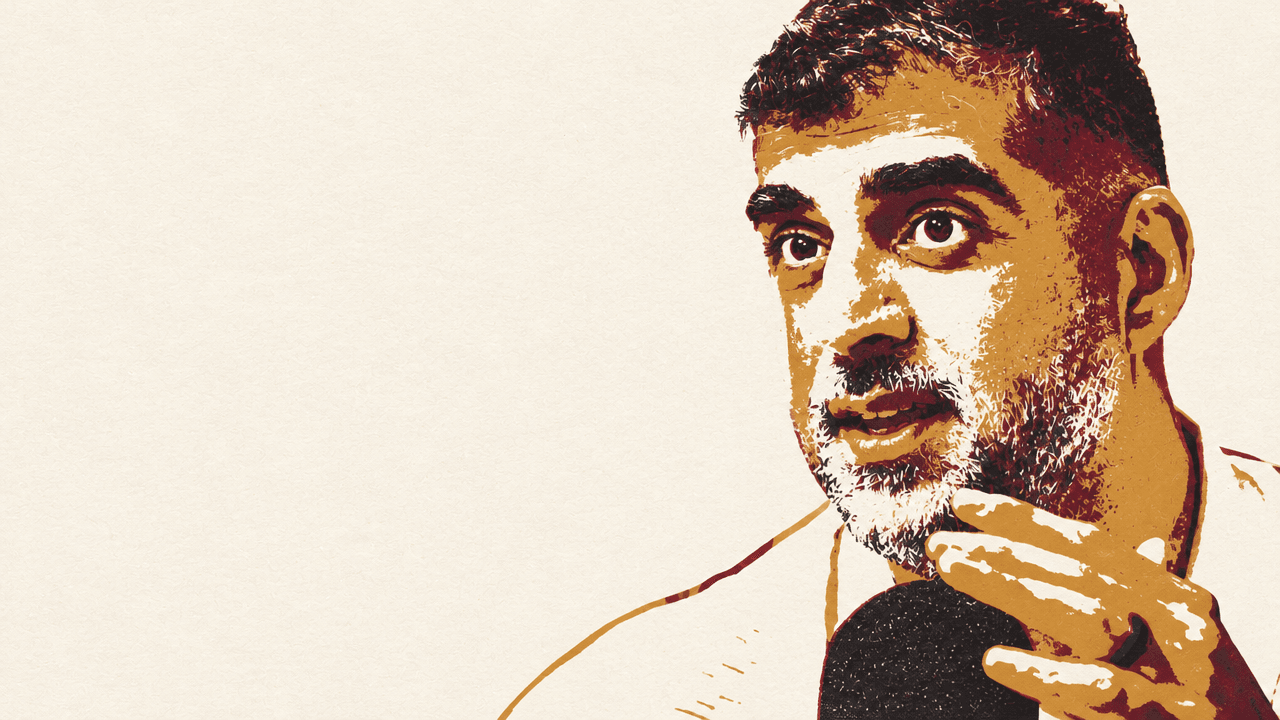
Marketing works by understanding what people already want
Shaan Puri opens with a blunt description of the economy: “smart people paying beautiful people to promote stuff to insecure people.” He does not mean that every seller is acting maliciously. A person may sincerely believe a product is useful. But the route from an idea to a customer often runs through an attractive promoter and a fear or desire the customer already feels.


Puri’s examples are familiar marketing appeals: a mother may be especially responsive to a promise of safety for her children; a woman may be sold beauty or youth; a man may be sold status. In a club, a bottle that costs $50 across the street can sell for $500 because the buyer is paying not just for the drink, but for the status and importance attached to the purchase.
Chris Williamson calls this a fear engine: identify a person’s vulnerability, then appeal to it. Puri’s response is that it is a mistake to understand the world only in terms of how it ought to work. To persuade people, a business has to understand what actually moves them. He invokes direct-mail marketer Gary Halbert’s warning that more money has been lost selling people what they should want than what they do want. The practical lesson is to meet people where they are and frame a product around benefits that matter to them.


That does not require choosing between manipulating people and pursuing a worthy cause that nobody wants. Puri calls that a false choice. A business can understand human psychology—people respond to stories, for example, and often connect more readily with the promised outcome than with the work required to achieve it—and use that understanding to help people find something genuinely useful. He calls this a third option: learn what resonates, then use that knowledge in service of a worthwhile purpose. Being good at reaching people without doing anything noble is a waste; having good intentions without knowing how to reach people is also a waste.
Reaching the goal can expose the life you built around it
After selling a company, Shaan Puri found himself asking what to do next. He had reached the goal he had been pursuing and had enough money for his family, but the chase had also given him an identity. Once the goal was gone, he wondered who he was without it. He compared the experience to a dog chasing a car, then catching it and discovering he had no idea why he had been barking.
That disorientation points to a problem with success as a life plan: achievement can supply direction without answering what the direction was for. Chris Williamson says people may hope that a sufficiently large achievement will settle their need for validation or resolve their sense of insufficiency. When it does not, they are left not only with the question of what comes next, but with the question of what they gave up to get there.
One response is to start the same race again. Puri recalls asking an Airbnb co-founder why he was building another company. The founder told him that part of him wanted to prove he had not just been lucky. Puri asked whom he needed to prove it to. He had heard what it took to build the first company and did not believe that other people were dismissing its success as luck. Still, the impulse to repeat a win can be powerful: the next achievement seems to promise certainty about the last one.
Williamson describes what can remain after a goal has been reached: old fears, habits of avoidance, and ways of relating to people that were built while pursuing it. Someone can try to outrun those questions by choosing another summit. Or they can examine what the first climb cost and decide whether the same fuel is still worth using.
The trait that helps someone succeed can also become a source of trouble. Puri and Williamson use storytelling as an example. Being good at making a persuasive case is useful in business and conversation, but it also makes it easier to persuade yourself of almost anything. Puri’s rule of thumb is that what serves you most can also be what screws you, if you are not careful.
What serves you most will also be what screws you, if you're not careful.
Williamson compares that double use to a sword: the skill that cuts outward can catch the person wielding it on the backswing. The task is not to discard the skill, but to learn how to handle it.
That distinction changes what counts as winning. Williamson says he is less impressed by success alone than by success achieved while remaining connected to family, community and one’s own emotional life. Building a successful business may have recognizable principles; there is no comparably simple formula for doing it while maintaining a good marriage, feeling pain rather than burying it, and not treating other people as instruments. That combination, he says, is closer to art than science.
Puri shares that definition, while allowing that it will not fit everyone. He looks at Elon Musk’s life and is glad someone is pursuing that scale of work, but also glad he is not the one doing it. Some people may be fulfilled by extraordinary intensity; others would hate living that way. The mistake is to confuse what is compelling to watch with what is desirable to become.
Puri describes an “internet greatness bubble”: extreme achievement is highly visible, and the people who pursue it make appealing subjects for books, films and podcasts. He enjoys hearing David Goggins describe punishing endurance feats, but says he wants to borrow that intensity for an hour of training, not make it the destination for his life. He also says he knows wealthy people who are stressed, treat others poorly and are not close to their children. By Puri’s definition, those people may be “bankrupt” despite their money. He offers them as examples of why wealth and achievement alone do not settle the question of whether someone is winning.
The question, then, is not whether ambition is good or bad. It is what kind of life a particular ambition requires, and whether that is a price worth paying. Williamson says the last stretch toward the very top can demand more than the earlier climb. Puri illustrates the point with Kevin Kelly. When asked what it cost to be Kevin Kelly, Kelly answered, “The cost was greatness.” Puri had expected him to describe hard work. Instead, Kelly said he had been happiest moving among interests and projects, rather than building the biggest magazine empire, becoming the richest or achieving maximum fame. He had to surrender the imagined version of himself who might have pursued more because he did not want the cost attached to that path.
Puri argues that people often misread the shape of progress. A person may make early gains, plateau, and then discover that moving from a strong result to the final stretch requires disproportionate sacrifice. He uses Michael Phelps as an example of the commitment associated with reaching the top of a sport: not missing a day of swimming for years. At that level, the competition has narrowed to people prepared to pay that price.
Williamson says that 25% of Olympians would trade a shorter life for a gold medal. He raises the figure to make the trade-off vivid, not to establish a general rule or recommend the choice. How much is the medal worth to you? For some, the answer may be enough to accept that cost. For others, no. Both answers are possible, although the person who stops short of the extreme may not get the public attention that rewards the person who continues.
Puri’s account of his own changing priorities makes the alternative concrete. He says he is no longer primarily excited by a podcast appearance because it might bring a bigger audience. He still enjoys a good conversation, but also asks whether it can help someone else. Repeating the familiar advice to grind harder would add little, he says, because that advice is already in abundant supply.
He suggests another meaning of greatness: not only accomplishing something exceptional, but being great in the ordinary encounter in front of you. He tells the story of Ramon, a single father from the Netherlands who wanted his son to become more social and athletic. When the boy wanted to play American football, Ramon knew little about the sport, so he started a team and bought 16 books to learn how to coach. After his son stopped playing, Ramon continued coaching the other boys because the team needed him.
Parents began telling Ramon that their sons had changed through the experience. When the school asked students to nominate a commencement speaker, they chose him. Ramon did not deliver a conventional address. He invited a shy boy onto the stage, spoke about how much the boy had opened up, and played “Gangnam Style,” a song the boy loved. The boy danced with his friends.
For Puri, that was greatness at the scale of the people involved: an act of attention that made a lasting moment for a group of children. It did not require a record, a fortune or a public career. Nor does he say everyday generosity should replace ambition. His point is that a life can be measured by how someone shows up in the situations already before them, not only by its most visible achievement.
The wild man is not the same as the great king
Puri’s uncertainty after selling his company led him to ask what his life should be for now. He hired Dr. Jack Skene, whom he describes as someone who helps people understand their gifts and what they are called to do. In one session, Skene told him the fable of Iron John.
In the story, a wild man lives at the bottom of a pond in a forest. People sent to investigate the forest disappear, until a boy drains the pond with his friends and finds Iron John. The wild man is locked in a cage and brought to the king’s palace. Later, the king’s son loses a golden ball—his favourite possession—inside the cage. Iron John offers to return it only if the boy lets him out. The boy says he cannot: he does not have the key. Iron John tells him the key is under his mother’s pillow. The boy takes it, releases Iron John and retrieves the ball.
The boy fears what will happen when people discover he has released a dangerous figure. Iron John refuses to return to his cage and tells the boy that, despite living in a palace, he is the one who is trapped. The boy goes with him into the forest. Puri says that Robert Bly, who retold the fable, interpreted Iron John as a wild masculine energy that many men have never met in themselves. In the story, Puri reads the golden ball as vitality: a part of the boy’s life that he risks losing if he remains obedient at any cost.
Skene’s framework divides men into good boys, wild men and great kings. A good boy seeks approval, follows expectations and does what he believes will please others. He may follow a familiar sequence—school, good grades, a good job, marriage, a house, children—without asking whether that is what he wanted. Puri says dissatisfaction can persist even when a person has all the things he thought he was supposed to want. In Skene’s telling, one explanation is that the person has never let the wild man out of the cage.
The wild man is not simply a bad man. Puri describes him as free, courageous, disciplined and willing to pursue what he wants. But the wild man serves his own needs. A great king is different: he can use the wild man’s force while caring about something beyond himself. The good boy, in this framework, does not become a great king by remaining obedient. The wild man can become one by expanding what he serves.
Puri initially did not know where he belonged. He did not think of himself as a good boy, but neither did he feel like a great king. Skene answered with a story from his own life. At 15, Skene had asked a girl out and borrowed his older brother’s car to take her to dinner and a movie. After dinner, the waitress handed the change to his brother, who pocketed it. Later, his brother began moving the car forward to make Skene chase it in front of the girl. Skene refused to chase. Instead, he reached out, pulled off the car’s antenna and demanded the change back.
Skene told Puri that this behaviour was unfamiliar; he had not decided in advance to act that way. The brothers fought at home. Skene was losing, but, unlike other times, he did not give up. He later understood that as his first encounter with the wild man, though he said it took another 15 years to let that part of himself out more fully.
Puri takes the story as a prompt to notice where a person is playing the good boy: pleasing, complying or suppressing what matters to them. He urges people to recognise moments when they act from a more forceful part of themselves, rather than automatically leaving it confined. The point is not to become more aggressive for its own sake. It is to have the courage to pursue what matters and then ask what that energy will serve.
Puri describes care as something that can expand over time. A baby is concerned with immediate needs; later, a person may care about appearance, grades, family or other people’s well-being. Each new concern asks the person to grow to meet it. When someone cares about something more than comfort or familiarity, Puri says, that can force change.
The “kingdom” a great king serves need not be a nation or a business. Puri lists a family, friends, neighbours, strangers online and a community as possible forms of it. A person might also choose to serve a group facing a rare disease. What matters is that the force of the wild man is directed toward something the person considers more meaningful than personal comfort or lifestyle.
That was the question Puri says he needed after success. Skene pointed out that he had a happy marriage, children, health, money, hobbies and a podcast, then asked why they were still talking. Puri’s answer was that he knew there was more, and that the “more” had to be beyond himself.
Courage is acting while fear is still present
The challenge of choosing a life beyond achievement is not solved by knowing what one ought to do. Shaan Puri argues that people often ask for advice when they are really seeking permission to act. They may consult several people, but often hope one will confirm the choice they already want to make: leave a job, end a relationship, take a risk or try something they fear. The request sounds like a search for information; underneath it may be a request for reassurance that acting will be all right.
Puri does not treat this as a character flaw. He says the obstacles in life are often not intelligence-gated; they are courage- and action-gated. People may know what direction they want to take but fear failing, looking inexperienced, being alone or making a fool of themselves. In that case, the useful question is not only “What advice do I need?” but “What permission am I seeking?” Once that is clear, a person may be able to grant themselves permission instead of waiting for someone else.
Encouragement from another person can still matter. Puri calls it a short-term loan on courage: someone believes in you before you believe in yourself, and you borrow that confidence long enough to start. He describes a piano teacher who asked whether he wanted to sing. Puri had wanted to sing for years but assumed he could not. He began by offering to prove how bad he was. The teacher told him he had helped people who started worse and could work with him.
The teacher’s own history made that encouragement more than a general reassurance. He had been afraid to sing in high school and was mocked for it. A choir teacher once heard him singing in a nearby room, asked whether it was him and challenged the idea that he could not sing. He later appeared on American Idol. Puri says the teacher described not singing as something that had been weighing on him, though he had mistaken it for simply how life was. Starting to sing lifted that weight.
Puri says that if he keeps asking why someone is afraid, he often reaches a fear of failure and then a fear of not being enough or not being loved. He also characterises stress, anxiety and procrastination as forms or “code words” for fear. This is his interpretation of what may sit beneath hesitation, not a clinical account of those experiences. The useful question in his argument is narrower: in this particular decision, what feared consequence is keeping me from acting?
Chris Williamson frames courage as feeling fear and acting anyway, rather than waiting for fear to disappear. Puri agrees and points out that the same outward act can be ordinary for one person and courageous for another, depending on what that person believes is at stake. Taking a sip is not usually courageous; taking the same sip might be if someone is genuinely afraid of it. The action alone does not tell you what it cost.
Puri learned to use that distinction as a parent. His son was afraid to enter activities such as jiu-jitsu, tennis or basketball, and Puri initially felt frustrated: he had driven him there, paid for the class and watched him hesitate. Then he realised those were his own concerns, not his son’s. Instead of insisting, he told his son that he felt fear too, and described fear and courage as opponents. Sometimes fear wins; that day, they could sit outside and try again next time.
Four weeks later, his son went into class and told him he had not wanted to let fear win that day. Puri says that lesson applies to adults as well. Courage does not require certainty or an absence of fear; the question is whether fear gets to make the decision. That reframing also changes what encouragement sounds like. Rather than treating fear as evidence that someone should stop, a parent, teacher or friend can acknowledge it and still leave open the possibility of trying.
Environment changes what feels possible
The other practical implication is that courage is shaped by where a person lives. Puri calls moving to San Francisco one of the most impactful decisions of his life. He wanted to be an entrepreneur and reasoned that if ambitious people were going there and companies were being built there, he should go and see what was in the water.
He compares a person to a flower and their surroundings to soil. People often credit success to individual qualities and decisions, he says, while underestimating the conditions around them. A familiar hometown, job or social circle can keep someone in place through inertia, even if it does not support the life they want. In business, he says, a strong founder in a bad market may lose to the market; in life, the equivalent is trying to grow in poor soil.
The value of moving is not only access to employers or customers. It can change what is considered normal and what earns status. On his first day in San Francisco, Puri sat in a coffee shop and overheard a founder pitching an idea about peptides for dogs to an investor. He thought the idea sounded ridiculous, but was struck by how ordinary it seemed to be discussing strange, ambitious business ideas there. At a startup event that evening, a man who worked at JPMorgan Chase introduced himself apologetically and quickly explained that he planned to leave for a startup. In that setting, Puri says, working at a large corporation could carry less status than pursuing an uncertain idea.
That inversion mattered because Puri had previously felt strange for being unemployed and trying to build a company. In the new environment, people treated that ambition as intelligible. The move changed not only what opportunities were nearby, but also what kind of life seemed normal.
Williamson describes a parallel experience in the northeast of England. He felt like a note out of tune in a chord: perhaps the problem was not that he was a bad note, but that there were other chords in which he would fit better. A person can have achievements, a good life and a handful of close friends, he says, and still feel out of place in the wider social environment. A few compatible people may not be enough if everyday encounters continue to reinforce the mismatch. The surrounding “soup” matters.
Puri adds that this is not necessarily a permanent prescription. Different seasons of life can bring different priorities. But if someone feels called toward a particular path, changing their surroundings can help them answer that call. For some, being near people with similar ambitions may do more than another book or podcast. The point is not that everyone should leave home; it is that familiarity alone is not proof that staying is right.
Environment and courage reinforce each other in this account. A person may have an interest but find it hard to take seriously if everyone nearby treats it as strange or foolish. Moving can put the person among people for whom the same ambition is ordinary, or at least understandable. That does not remove the risk of acting. It can change how much social friction accompanies it.
Obsession supplies fuel, but not every fuel is worth using
Courage can be supported by what already draws a person forward. Chris Williamson distinguishes discipline, motivation and obsession: discipline is making yourself do something, motivation is wanting to do it, and obsession is feeling unable not to do it. In his terms, discipline accepts friction, motivation reduces it, and obsession reverses it.
Williamson says his early interest in podcasting led him to take courses and make extensive notes on thumbnails, YouTube and audience retention. He did not yet have friends or advisers to teach him; he learned because he wanted to. His early interest in training and gaining weight had a similar intensity. The work that later looked like talent, momentum or discipline began as obsession.
Puri agrees that people draw effort from different sources, but cautions that fuels differ in their costs and sustainability. He compares them to calories: people need fuel, but not every source has the same consequences. Williamson likewise warns that some obsessions are destructive, naming politics, pornography and a toxic ex as examples. The case is for following positive obsessions, not for being swept along by every intense impulse.
The distinction matters because obsession is not a guarantee that the activity is good for someone, or that it should become their whole life. It is a source of energy. Williamson’s argument is that a positive obsession can provide motivation and discipline without having to manufacture them from scratch. If someone has a strong, constructive interest, ignoring it may mean choosing a harder route for no particular reason. But Puri’s fuel analogy also asks what the energy costs and whether the person can sustain it.
Positive interests can matter precisely because their destination is not obvious. Puri points to Steve Jobs’s account of taking a calligraphy class because he was interested in it, without knowing what practical use it would have. Later, Jobs said, what he learned informed the typography in the Macintosh. Puri’s lesson is that people cannot reliably connect the dots forward; they can make their interests vivid by pursuing them wholeheartedly, then understand the connections in retrospect.
That requires accepting doors as well as windows. A window lets you see the outcome before you enter; a door does not. Puri recalls a mentor telling a young venture capitalist that he wanted only open windows: he would act only if he already knew where the action would lead. But life includes knocking without knowing whether anyone will answer or what lies behind the door. Repeated attempts create more chances for luck to intervene.
The connection between obsession and courage is that strong interest can help someone tolerate uncertainty. Puri says analytical people often want to see the outcome before they act. A genuine interest may be enough reason to take a step without knowing where it leads. That does not make every risk sensible; it makes curiosity a possible basis for action when the future cannot be mapped in advance.
ABZ replaces the imagined route with the next action
For people who want a goal but find themselves planning every step in advance, Puri offers his ABZ method. A is an honest account of where you are now; Z is the outcome you want; B is the next action that moves you toward it. After taking B, reassess your position as A and choose the next B. The destination stays in view, but the route does not have to be known in full.
Puri says overthinking can multiply doubt. A person who wants to do something may tell themselves they need to know A, B, C, then D, E and F before beginning. By the time they imagine a long sequence, the uncertainty of each step has accumulated. They can end up exhausted by a route they have not even started. ABZ is meant to interrupt that pattern: be truthful about the present, identify the destination, and ask what the next incremental action is.
His example is getting in shape. Z might mean feeling confident with his shirt off and being able to run a race with friends without holding them back. A is the actual starting point: current fitness, skills, time and effort. B is the next action that makes sense from there. If he has completed B, his position has changed; the new A is the basis for choosing another B. The process does not require pretending that he is already closer to the goal than he is.
For his podcast, Puri’s Z might be a larger audience, a studio he wants and guests he hopes to reach. A is the show and his skill level now; B might be sending 20 outreach messages that week or studying how another host opens an interview. These are concrete actions he can take without knowing all the steps between the current show and the hoped-for outcome.
Puri says the method is meant to move attention from self-reproach toward controllable progress. He argues that happiness is closely tied to a sense of progress, not simply to how good someone’s life looks from the outside. Williamson adds that changes in pace are especially noticeable: the start of a project can feel good partly because momentum builds quickly. Puri agrees that early progress can bring a burst of acceleration, while later stages may be slower.
The trainer’s corner-store analogy illustrates the scale at which Puri wants people to think. If you want ice cream and the store is nearby, you know where you are and where you want to go. You start walking, take the next turn and continue, without needing to worry about every detail of the journey while standing at home. Puri’s point is not that a difficult ambition is as easy as a walk to a store. It is that worrying about steps you cannot take yet may not help with the step available now.
ABZ also makes room for a distinction between progress and arrival. Puri says he experiences progress as a source of happiness, even when other people might look at his life and think he has little reason to be dissatisfied. On this view, a goal does not guarantee lasting contentment: reaching Z may lead to a new goal, and the person may need a new A and B. That is not a flaw in the framework; it is why it focuses on continuing movement rather than treating one outcome as the permanent answer.
The method still depends on being honest about A and choosing a B that genuinely moves toward Z. It does not tell someone which goal they should want, whether a goal is worth its cost, or whether a particular next step will work. Puri’s preceding arguments supply those questions: examine what permission you are seeking, consider the environment you are trying to grow in, and distinguish a positive obsession from an impulse that may harm you. ABZ is a way to act once the direction is worth pursuing, not a substitute for deciding what matters.
Conflict tests whether a relationship can repair itself
Williamson offers a shorthand for relationship health: whether a cut heals to 99% or 101%. Puri connects the idea to John Gottman’s work with couples. As Puri recounts it, Gottman could observe a couple briefly and predict whether they would stay together with what Puri describes as 90% accuracy. The conversation does not establish the details or scope of that result, so the figure belongs to Puri’s account of Gottman’s research, not to an independently verified finding here.
The point Puri draws from the research is not whether partners have matching hobbies or shared interests, but how they behave when they disagree. A conflict can leave a relationship slightly more damaged than before, or it can be repaired in a way that leaves the partners slightly closer. The numerical difference is small; repeated over time, Puri argues, its direction matters. During an argument, people tend to focus on the injury: who started it, who was more wrong, and whether the latest hurt was justified by an earlier one. Asking instead how to get the relationship to 101 rather than 99 shifts attention from winning the dispute to repairing the bond.
Williamson adds that difficult periods may be a better predictor of a relationship’s durability than happy ones. Few relationships end because they had too few peak experiences, he says; more end because they accumulate too many bad ones. Some couples are in relationships where conflict is so frequent that neutrality would feel like relief. What happens in low moments, then, is central rather than incidental.
Puri’s practical prompt is: “What are we trying to do here?” It is not a question about the immediate subject of the dispute, such as where to eat, but about the purpose of the relationship. Do both people want a good life together? Are they on the same team? Remembering that can take some of the edge off the disagreement and bring attention back to what each person wants over the long term.
He also distinguishes reaction from response. A reaction is the immediate impulse; a response makes room to notice what is happening, what the other person might be thinking and what one actually wants. If he dislikes his own reaction, he says, he can acknowledge it and try again. At home, he sometimes makes a rewind sound effect, turning the attempt to repair into something slightly playful rather than letting embarrassment harden into defensiveness.
The same principle appeared in an improv class Puri took. The instructor told students they would all say something awkward or foolish; the lesson was not how to avoid failure but how to recover from it. When someone thought they had made a bad move, they could say “whoop,” and the group would echo it, as if shaking an Etch A Sketch clean. That small ritual gave everyone permission to reset and continue.
Puri sees playfulness as another tool for conflict. Serious reflection can be valuable, but not every repair has to be solemn. A joke, a silly interruption or a deliberately changed frame can help people escape the loop of accusation. Williamson describes naming the pressure in a meeting or reminding a partner that they are on the same team. Puri says a playful version can work even over the phone: interrupting one’s own argument with a mock call from a calmer, less hostile self.
The aim is not to make conflict trivial or avoid hard feelings. It is to find a way out of reflexive escalation and back into the relationship the two people are trying to protect. People may imagine there are only two modes—avoid the issue or enter a heavy conversation—but Puri argues that humour and play can create another route. Whether a particular tactic works will depend on the people and the moment; the underlying move is to stop treating the dispute as the only thing that matters and remember what the relationship is for.
A next project can be a new reason to begin
Puri says he is looking for projects that will bring him back to the bottom of a mountain: work that lets him reinvent himself. He is making a movie and building what he calls a “crazy magic thing” in New York. After reflecting on what he wants, he keeps returning to a simple preference: doing projects with people he loves spending time with.
He wants the projects to bring out something new in the people involved and to mean something beyond the work itself—perhaps creating joy, perhaps helping people become more than they would otherwise be. He says people often aim too low, and that he would be happy if he could help someone aim higher in whatever way fits them.
That is not a return to achievement for its own sake. It is a search for work that offers direction without making the finish line the whole point: projects with friendship, creative effort and some service beyond Puri himself. After questioning what success had been for, he is not rejecting ambition. He is trying to choose a new mountain whose pursuit can involve other people and produce something he considers worthwhile.