Self-Improvement Fatigue Is Pushing Serious Podcasts Toward Looser Formats
Chris Williamson uses a 4.2mn-subscriber Q&A to explain why Modern Wisdom is loosening its format without abandoning its core seriousness. He argues that audiences are saturated with self-improvement advice and adversarial culture-war content, so the show needs more group conversations, humor and variety alongside its usual expert interviews. The through-line, from dating advice to alcohol, ads and criticism from both political directions, is Williamson’s attempt to keep ambition and seriousness from becoming grind.
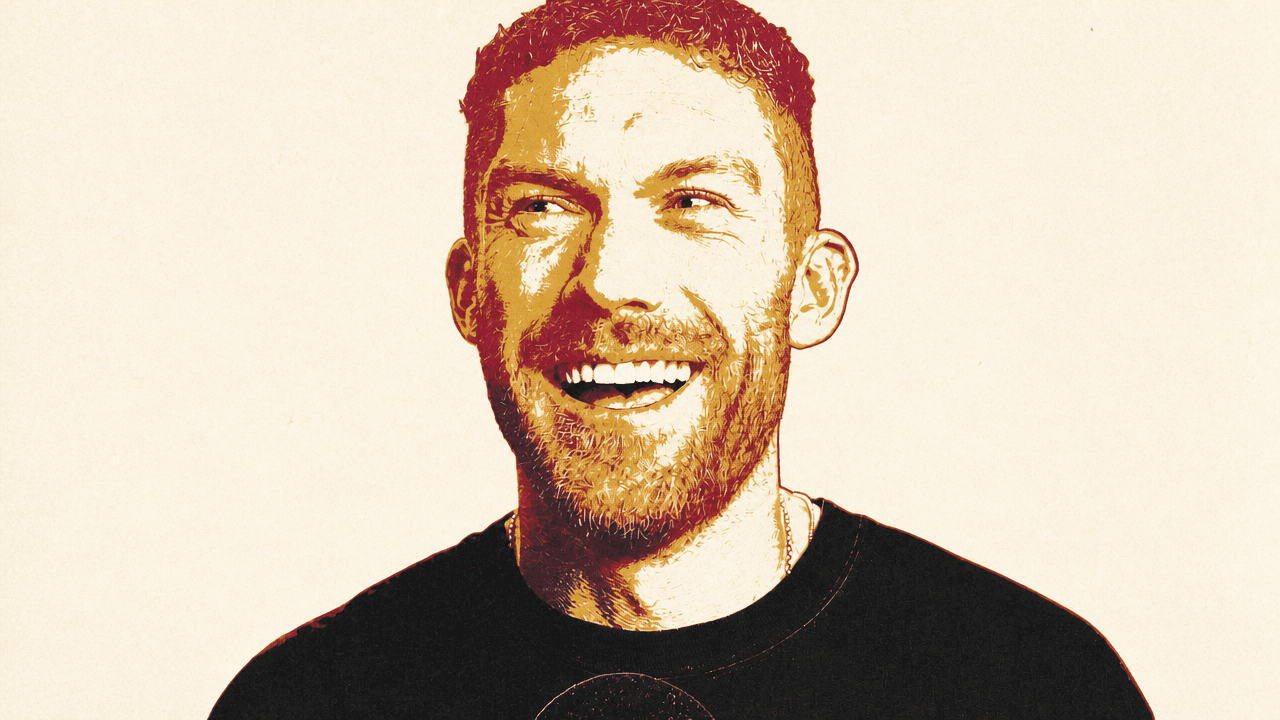
Williamson is trying to escape self-improvement saturation without abandoning seriousness
Chris Williamson framed the recent run of group episodes as both a creative experiment and a deliberate break from the show’s long-standing default: one-on-one, serious conversations with experts. After more than 1,100 episodes in that mode, he still values “the wisdom core” of Modern Wisdom, but the constant seriousness can begin to feel like homework.
The new studio has made that shift easier. Its launch was “unceremonious” because he never properly explained the buildout or the plan, but the room has allowed him to invite multiple guests into a looser, more conversational format. The episode with Huberman, McCusker, and Segura was, for him, “one of the most fun conversations” he has had. The recurring conversations with George and Shaan have given him a similar sense that the format can work as something lighter without becoming empty.
My master plan is to have fun, and to try and do stuff that's different.
The distinction he drew was not between seriousness and unseriousness so much as between adversarial performance and productive difference. Most internet debates, in his view, become “verbal blood sport,” with participants trying to defeat each other rather than arrive anywhere useful. Nobody is incentivized to concede an interesting point because they understand themselves to be in opposition. By contrast, the roundtables he wants to build would place people with “slightly differing perspectives on the same topic” in the same room so they can develop one another’s views rather than simply tear them down.
That preference is partly aesthetic and partly dispositional. Williamson repeatedly returned to the idea that loud, combative formats do not suit his nervous system. He wants disagreement that builds, not a “Beyblade” where everyone spins into one another until “everybody got destroyed.”
He also connected the shift to a broader fatigue with the online personal-development economy. He described the “grind slop era” as a mode that pushes people to focus constantly on self-improvement at the expense of everything else. He still sees value in an episode with someone like Hormozi where the message is to “lock in,” but he wants the show to have a starter, main course, and dessert. The group episodes, in his metaphor, are the dessert: not necessarily note-taking material, but something that lets listeners relax.
You may not learn anything from the Huberman, Segura, McCusker episode, right? Like you genuinely may not learn anything from it, but you'll have a good time.
AI has changed the surrounding context, in his view. People are already “drowning in a lot of information,” and large language models are increasingly used for coaching and advice. In that environment, he asked whether audiences need even more advice content, or whether there is value in a “safe space” where they can listen without extracting lessons. The Huberman-Segura-McCusker episode, he said, may teach a listener nothing, but “you’ll have a good time,” and he thinks that is worth a great deal.
He acknowledged the risk. Some listeners only want the “dark furrowed brow serious thing,” and some will dislike the experiments. But he has always tried to follow his instincts. If he is enjoying a direction and it feels alive to him, he assumes or hopes it will resonate with enough of the audience.
The planned combinations make clear how much of the experiment is built around contrast: Neil deGrasse Tyson with Mark Normand, Eric Weinstein with Rick Glassman, Bert Kreischer with Brian Johnson. Williamson described the approach as pulling pins on grenades and throwing them into the middle of the table.
He is also still trying to name the format. “Open Tabs” is one candidate, along with abandoned or uncertain options including “Uncommon Conversations,” “Smoke Break,” “Hot Mic,” “Good Dudes,” “Rabbit Hole,” and “Blunt Rotation.” The problem is not only taste but legal exposure: at the show’s scale, every name has to be checked for intellectual-property risk.
The 80/20 of self-help may already be known, but implementation is still missing
The sharpest version of the format problem came in a question about whether the self-help space has already covered the “80/20 of what really matters.” The concern was that further searching can become productive procrastination: a hunt for some hidden insight that does not exist, circling back to Williamson’s own mantra, “just do the thing.”
Williamson treated the question as touching the same tension behind his current experimentation. The internet, in his view, is showing “grind slop exhaustion.” He has already had foundational productivity and learning guests on the show, including David Allen on Getting Things Done and Peter C. Brown on memory, the Ebbinghaus forgetting curve, spaced repetition, and flashcards. Much of that “low-hanging fruit” appeared in the first few hundred episodes, before the show had anything like its current audience.
That creates a genuine editorial problem. Repeating the basics can feel unsexy and risks complaints that listeners have heard it before. But familiarity is not the same as implementation. If someone has heard all the advice about sleep and their sleep still “sucks,” the problem may be repetition, accountability, or execution rather than novelty.
He is trying to avoid two traps at once. One is repeating himself so often that the work becomes stale. The other is hunting for novelty purely because it sounds new: the next “strategy you don’t understand,” whether or not it matters. Sleep advice was his example of a topic where the core guidance has been said many times: cold, dark, quiet bedroom; avoid caffeine late in the day. There are only so many times the same ground can be covered as if it were a fresh discovery.
His current answer is variety. Some episodes should still deliver practical improvement. Others can be about history, science, emotions, or entertainment without a direct takeaway. A two-hour episode on Julius Caesar was the example: there was no morning routine to extract. The value was learning and enjoyment.
That does not mean he thinks self-improvement is over. He remains interested in emotional development, self-understanding, and “tapping in.” But he is wary of contributing to a culture where people feel they are never enough unless they are optimizing every area of life. He wants, as he put it, to give people “a varied diet.”
The boring answer may still be the right one. Maybe he does need to revisit earlier foundational material because many people listening now were not there when it first ran. He floated bringing back someone like Matt Walker for the “greatest hits” if his own sleep started to slip. But he does not want novelty for its own sake, and he does not want a permanent diet of optimization. His instincts, he said, are telling him to have fun, avoid politics slop and adversarial reaction content, and return to basics only when the basics genuinely need to be drilled again.
Each side of the culture war keeps mistaking him for the other side
Williamson described the reaction to his Louis Theroux “manosphere” conversation as a case study in how he is interpreted from opposing directions. He said he managed to unite feminists and the manosphere in the view that the worst part of Theroux’s documentary was Theroux appearing on his podcast. The day after the documentary came out, he said, many of the people involved were not talking primarily about the documentary but about his conversation with Theroux.
The broader pattern, as he described it, is ideological whiplash. After appearing on Tucker Carlson’s show in November, a prominent writer accused him of being “riddled with blue-pilled thinking” and “infected with feminist lies.” In January, after he and Steven Bartlett discussed birth-rate decline, he said he was labeled misogynist, manosphere, red pill, right-wing, and “looks maxxer,” which he joked almost felt like a compliment. Then the Theroux conversation made him, in some critics’ eyes, a feminist again.
Another viewer accused Williamson and his guests of endlessly pandering to “feminist bullshit” while pretending they are not part of the problems they discuss. Williamson treated that as almost useful counter-PR: if one side calls him manosphere-adjacent while the other says he panders to feminism, he sees that as evidence that many online categories are too blunt to capture what he is trying to do.
He does not claim to agree with everything his guests say. He enjoyed the Theroux conversation while disagreeing with some of Theroux’s framing and believing that the documentary missed important material. He also cited his conversation with Bernie Sanders on birth-rate decline, noting that Sanders called it “a big problem.” For Williamson, the point is to continue speaking with people he finds interesting and acting in good faith, without treating each appearance as an endorsement.
His patience for explaining himself to hostile interpreters appears limited. The audience that listens deeply, he thinks, understands what he is trying to do. If someone sees a clip and, because of his appearance, accent, or “forearm tumors,” assumes he has sided with one camp, he is not going to spend his time trying to persuade them otherwise.
The same anti-adversarial preference shaped his praise for Alex O’Connor. Williamson said O’Connor has become an important voice in conversations around religion because he understands theology, respects believers, and does not simply attack belief as irrational from the outside. He described O’Connor’s move from atheism to agnosticism as useful because it makes the conversation less adversarial. People are tired, Williamson suggested, of combative exchanges built around catching someone in a contradiction from a tweet years earlier. He wants conversations where people can search for truth, agreement, and understanding without leaving “injected with a ton of adrenaline.”
For emotionally developed women, the “tall girl problem” may be more than money
One of the most substantial relationship questions extended the “tall girl problem” beyond income and education. The viewer’s prompt described a woman with high income, high emotional intelligence from therapy, and wisdom from intense life experience as becoming “taller” in ways she cannot unlearn. The question was whether the resulting asymmetric growth is caused by poor incentives for men to do internal work, by a lack of therapy or growth models tailored to men, or both.
Williamson treated the premise seriously. He defined the conventional “tall girl problem” as the difficulty some socioeconomically successful women face in finding men who are at least as educated or financially successful as they are, given what he described as women’s typical preference to date men who are as educated and financially successful as they are, or more. The question added a third dimension: emotional development.
He suggested that this third dimension could be more destructive to long-term relationships than education or income gaps. At the start of dating, education and earning power are more visible. Emotional intelligence is harder to assess early on, because the relationship has not yet produced the moments where emotional regulation, self-knowledge, and pattern recognition become essential. But deeper into a relationship, a large gap in emotional development can create friction and loneliness more than a degree mismatch would.
He did not claim certainty about the population-level pattern. Williamson asserted that women now out-earn men up to roughly age 32 or 33, after previously saying the figure had been 29, but treated the emotional-development asymmetry more cautiously: he said he did not know whether women, on average, are doing more emotional work in the same way he spoke about women’s higher levels of degree accomplishment and early-career earning patterns. It may be true on average, or it may be true for the listener and other women in the Modern Wisdom audience.
His proposed answer was incentive alignment rather than scolding. Men, he argued, are more likely to adopt forms of emotional development when they can see outcomes they actually want. Trying to whip, guilt, or shame men into therapy is less effective than creating models that feel obviously beneficial. Growth models tailored to men could borrow from coaching and men’s work, making internal work feel more directed and outcome-oriented.
That comes from his own experience with therapy. Williamson has worked with five or six therapists, two for longer periods, and has sometimes become frustrated when therapy felt like reflection without action. He responded better when there was a plan: an exercise to do in the real world, a conversation to have, a pattern to note when it arises. The “linear trajectory” mattered to him.
The dating implication was blunt. Emotional development can be harder to reverse than professional success. Someone can scale back work or pivot a career, but it is difficult to forget inner work once it has changed how one sees relationships. Williamson compared it to developing a refined palate: the more sensitive one becomes, the fewer places feel satisfying to eat. He still thinks the development is worth it, but it may require more effort to find a compatible person.
That led to a half-serious idea he has clearly considered before: some kind of dating organization or mixer for Modern Wisdom listeners. The audience already seems to function as a shared “nutrient” for couples who listen separately and then discuss episodes together at night. He imagined live-show lobbies as informal places where listeners might meet, but also worried about the reputational and logistical risks of formal mixers, especially at a 3,500-capacity London Apollo show.
His dating advice is moral but not puritanical
Consent was Williamson’s starting point on whether a man should stop sleeping with an ex who contacts him for sex but feels guilty the next day. If both are consenting adults, he said, the man has “no obligation” not to do it. But the fact that the question was asked suggests the situation is not psychologically costless.
His advice was to stop. Not because the act is categorically wrong, but because continuing may create later guilt about her guilt, and because she may need the space to move on. Williamson offered a “golden rule of dating”: treat every woman you are with as you would want your future partner to have been treated by someone else. If a man discovered that his next partner’s ex had kept sleeping with her during a painful breakup period, he would likely feel bad about that.
On settling down, he resisted prescription. If being single is still fun and someone only feels obliged to settle because they think they should, trying to force the move may lead to resentment. He extended the dating line “you can’t negotiate desire” inward: a person cannot simply command himself to want a life stage he does not want. A partner may be right on paper while the spark is absent; similarly, settling down may be right in theory while the desire is not there.
That does not mean every reluctance should be taken at face value. Williamson suggested self-inquiry if settling down feels threatening: fear of intimacy, childhood associations with constraint, dissatisfaction at work, or other unresolved issues might be involved. But his central answer was simple: settle when you feel like it, not because you are trying to negotiate yourself into desire.
He applied a similar balance to a younger listener’s question about whether to pursue a lonely chapter until financial freedom or allow a “semi-lonely” chapter with drinking and a girlfriend in order to enjoy youth. The answer depended on age. If someone is 19, he does not think aggressive lock-in is necessarily wise. Up to roughly 24 or 25, the divergence between someone and his friends based on work intensity may not be large, but the difference in remembered fun could be.
His more contrarian prescription was that the harder grind may fit better from the mid-to-late 20s into the early 30s. By then, a man has more respect, more experience, and more momentum. Williamson does think a period of “monk mode” or truly professional-level focus is necessary if someone wants escape velocity in success or financial freedom. “Semi-pro” forever is not enough if competitors are willing to go pro. But he would choose the timing carefully rather than sacrificing all of youth by default.
Young men cannot fully hack respect, but they can force competence to be seen
A young man trying to gain the world’s respect may partly have to wait. Williamson called that an unsatisfying answer, but he grounded it in his own early experience starting the events business Voodoo with his former business partner Darren at 18 and sitting across from leisure-company and nightclub operators in their 50s and 60s. Even when he knew he had something valuable to offer, he felt pandered to and patronized.
The young person’s problem, as he described it, is that competence can be discounted because of age. A listener of a show like Modern Wisdom may be doing serious self-improvement, thinking carefully, and building skill, only to have all of that flattened by the fact that he is 19 or 22.
Williamson offered one practical move: name the dynamic early and respectfully. In meetings, he would say, in effect, that he knew his company was young but their results spoke for themselves; he respected the older operator’s achievements and expected the same respect in return. He believes that kind of statement calls out the elephant in the room and can make the other person take the young person more seriously.
The deeper answer remains competence. He cited Cal Newport’s So Good They Can’t Ignore You and adapted the principle: be so good they cannot disrespect you. But he also put rough ages on the social shift. Around 24 or 25, he thinks the first change occurs. Around 30, another change happens. For a 19-year-old man, the tide is hard to fight; after 30, he suggested, much of the age-based discounting levels out.
He is not anti-alcohol; he is anti-dependence and anti-resetting progress
Williamson’s current view of alcohol is an attempt to hold two positions together: he has strongly advocated the benefits of not drinking, and alcohol has appeared in his life again. He confirmed both sides. He has done a thousand days sober and several six-month sober periods, beginning about a decade ago. At the time, doing that as a nightclub promoter in Newcastle in his 20s was, in his description, highly unusual.
The benefits were real. Not drinking helped him make progress, and he made a video about what he learned from a thousand days without alcohol. But he rejected a totalizing claim that alcohol cannot improve a night out. “Anybody who says that alcohol can’t make a night out better hasn’t had a good enough night out,” he said. A beer after a show on tour, or in Nashville on the Fourth of July with Broadway closed, fireworks, drones, and an orchestral band, can be part of celebration.
The problem, in his view, is needing alcohol in order to have a good night, or being at the mercy of it. He connected this to his 500 days without caffeine: he disliked the thought that he lacked control over his energy levels without external stimulation.
His practical objection to alcohol was about lost momentum. Drinking heavily every couple of weeks would reset his diet, interrupt training for several days, make the first return session poor, and disrupt journaling, meditation, or other routines just as they were returning to baseline. He summarized it as: “the progress that you’re looking for is at the bottom of the glass that you’re drinking.”
At the same time, he said alcohol is not truly “a part” of his life in a large way. He estimated drinking 10 or 20 times last year, and about 20 times so far this year halfway through, usually two beers. He remains an advocate for the benefits of not drinking, but not an absolutist.
The ads stay because the production ambition is expensive
Williamson addressed criticism that there are too many ad reads by acknowledging the irritation but rejecting the premise that the exchange is unreasonable. He understands that an ad interrupting a conversation can be annoying. But he pointed to a three-hour group episode with “three of the biggest podcasters in the world” and roughly four minutes of ads in 180 minutes of free content.
His argument was not abstract. The more ambitious productions lose money, at least initially. For episode 1000 with Matthew McConaughey, the team rebuilt the house from Interstellar in Unreal Engine 5, used a huge video wall, built practical sets, brought in an Airstream, secured McConaughey, and then handled the edit. Williamson said he lost a large amount of money on that production and did not make it back on that episode or the immediately following ones.
That is the context in which he hears complaints about skippable ads: as entitlement from a parasocial audience that sometimes demands more than real-life friends would. None of his friends, he said, has ever complained to him that his ad reads are “getting to me.”
He also defended the effort put into the ads. He tries to make them interesting, writes new scripts, adds jokes, and says he works only with partners whose products he uses or cares about. But the bottom line was firm: the ads are not going away. The studio was expensive, the work is trying to become more ambitious, and the lights need to stay on.
His obsessiveness is a constraint as much as an advantage
Williamson’s answer about his COMT met/met status gave a genetic shorthand for a trait that recurred throughout the Q&A: obsessiveness, overthinking, and a need to adapt his environment to his nervous system. In his explanation, COMT is a polymorphism related to slower clearing of catecholamines and adrenaline and a higher dopamine baseline. He described the met/met variant as associated with slower recovery from stress and stronger performance in predictable, routinized, peaceful environments.
He associated it with the “insecure overachiever overthinker archetype.” It may help with detail and thoughtfulness, but he rejected the idea that it is simply beneficial. “It just is,” he said. It requires lifestyle adaptation. He does not think he is built for constant internet beef, or for the high-conflict style of Ben Shapiro or Piers Morgan. That links back to his preference for debate formats where people build rather than shout.
The same trait appeared in his discussion of merchandise. The delay is not neglect but perfectionism. Merch is a direct touchpoint between the Modern Wisdom brand and the audience; if a shirt falls apart, has poor print quality, a bad fit, or a weak design, he feels it damages the relationship. He is changing blanks from Comfort Colors CC 1717s to AS Colour Stencil minus twos because he wants a deeper black, a slightly more flattering fit, and designs that pop more. He described multiple rounds of amendments and said the next two drops are already designed once the current production details are locked.
It also appeared in his comments on Neutonic Focus Pouches. The product took nearly 18 months to develop, and the fresh mint version sold out in about 40 hours in the UK, according to Williamson. Additional flavors have been commissioned, including coffee, citrus, spearmint, peppermint, and a mixed fruit option. He wants a variety-pack “set of pucks” and said the pouches are expected to appear in GNC and Vitamin Shoppe near the counter. Retailers, he said, are interested partly because the delivery mechanism resembles a pouch but does not contain nicotine.
His dog answers were comic, but the same care logic was present. Williamson wants a Golden Retriever and says Austin feels like the “supermassive black hole” of Golden Retrievers. But he is hesitating because his parents gave their dogs a high standard of care: regular walks, attention, and not being left alone too long. He does not want to get a dog selfishly and then fail to meet that standard. He wants, specifically, a fluffy show Golden rather than a working Golden, and expects that once he gets one, listeners will become exhausted by how much he talks about it.
The studio is becoming a platform for larger swings
The new studio is not just a backdrop; Williamson described it as part of a larger move toward more ambitious, higher-variance work. An in-depth tour will come once the final touches are complete. A custom tree from Singapore had to arrive; more light tubes and other details are still being adjusted. The delay is partly perfectionism and partly the difficulty of producing the show while coordinating multi-guest episodes. Calendar “Tetris” is hard enough with one in-demand guest; multiplying that across several guests makes the new format harder to execute than it may look.
On Elon Musk, Williamson said he had been put in a Signal group chat with Musk after Musk posted the David Friedberg episode on X. In Williamson’s account, he asked Musk to come on the podcast, and Musk replied “maybe after the SpaceX IPO.” Williamson described the exchange as a possibility, not a booking. If it happens, he wants to do something special, in the spirit of the McConaughey episode. Whatever one thinks of Musk, Williamson argued, he is one of the most influential people on the planet and may end up being one of the most influential people in history.
On astronomy and physics, he wants to do more. He is trying to arrange a Neil deGrasse Tyson roundtable and has spoken recently with David Kipping. He has had Sabine Hossenfelder on twice and Michio Kaku once, though he said he was not particularly impressed with the Kaku episode. He asked for suggestions for strong current science communicators in physics and astronomy.
On regular Q&As, he admitted the subscriber-milestone schedule is unpredictable. The Q&As began every 10,000 subscribers, then every 50,000, then every 100,000. A regular two- or three-month cadence might make sense, and he wants to do more solo material in the new studio.
On fame going to his head, he pushed back. A longtime subscriber complained that he no longer responds to comments and no longer has good guests. Williamson said the scale has changed: there were once 100 followers, and now there are 4.2 million subscribers. He still responds, but the responses are spread across more people. He apologized for the listener’s disappointment and asked for guest suggestions, while rejecting the claim that fame had changed him in the way alleged. He joked that his type of Britishness has “anti-ego.”
The lighter answers still reveal the loosened contract
The lighter answers were not pretending to carry the same weight as the format, business, or relationship discussions. They were part of the looser contract Williamson is trying to establish: some answers are serious, some are operational, and some are just the point of having fun in the room.
He predicted that Mustang is marked for death in Pierce Brown’s Red God because the most brutally unromantic ending would be Darrow winning while losing his wife again. He said Pierce Brown had described the difficulty of deciding who to kill because, in the final book, whoever dies cannot be brought back without cheapening the story. Darrow dying would feel cliché to Williamson; Sevro dying would hurt, but not with the same “gut punch.”
On Harambe, he joked that the gorilla should be the first animal brought back by the kind of bioengineering work associated with de-extinction projects, ahead of the woolly mammoth, saber-tooth tiger, or dodo. In Williamson’s bit, Harambe could fix the Middle East but probably not Russia, and would make a suitable UN ambassador and “voice of a generation.”
He gave his buzzcut numbers as two on the sides and two and a half on top, with a moderate fade, while warning that the look needs maintenance every two and a half to three weeks because his hair grows outward rather than longer. He also defended himself in advance against future accusations of a perm, saying his hair naturally expands when he leaves it uncut.
For books, he pointed to his two free lists of 100 books each, at chriswillx.com/books and chriswillx.com/morebooks, noting that he promotes them constantly and still somehow gets asked where to find them. For the Australia, New Zealand, and Bali tour, he singled out Perth, Brisbane, and the sold-out Darling Harbour Theatre show in Sydney, while admitting the routing across Australia and back in 48 hours was “stupid.” For Fin and Horatio, he said he hopes to bring them back when he is in the UK around the October tour, and praised Fin vs History as one of the best podcasts on the internet.
The jokes were throwaways, but they sat inside the same larger posture: take the work seriously, keep the room loose, and leave space for answers that are not pretending to be more consequential than they are.