Xi’s Taiwan Warning Leaves U.S.-China Positions Unchanged but Raises Tech Stakes

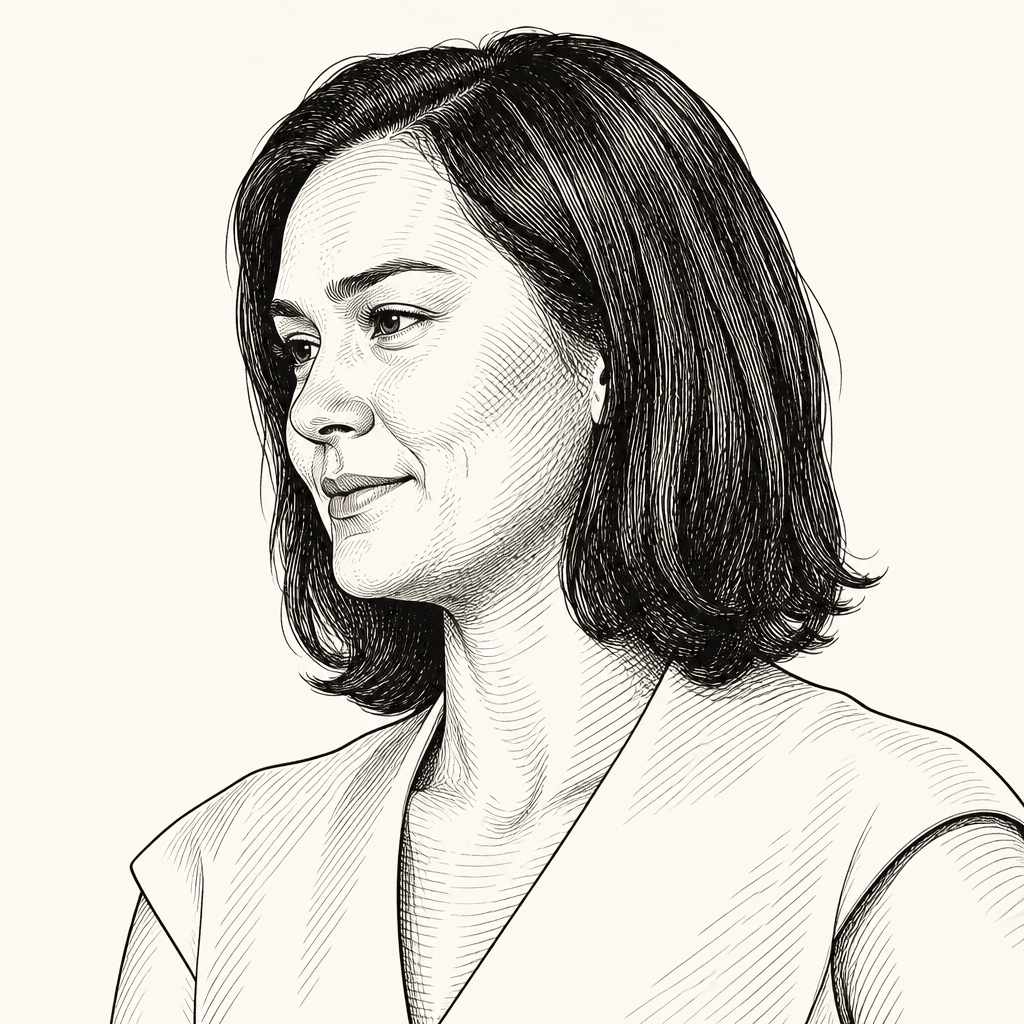
Michelle Giuda, chief executive of Purdue’s Krach Institute for Tech Diplomacy, told Bloomberg Technology that Xi Jinping’s warning to Donald Trump over Taiwan was serious but did not mark a new position from Beijing or Washington. She argued that Taiwan remains the central pressure point in U.S.-China relations because of both security commitments and semiconductor dependence, while Iran and an unusual tech CEO delegation showed the summit’s mix of incremental diplomacy and improvisation.

Xi’s Taiwan warning raised the stakes without changing the stated positions
Michelle Giuda treated Xi Jinping’s warning to Donald Trump over Taiwan as serious but not new. Bloomberg’s on-screen summary said Xi warned that Taiwan could lead to “clashes” between the United States and China and called it a “highly dangerous situation.” Giuda’s view was that the language fit a long-standing Chinese position: Beijing has for some time treated Taiwan as central to U.S.-China relations, and Xi has already been pressing Trump over U.S. arms sales to Taiwan.
Nothing's new here.
That judgment also applied to Washington. Giuda pointed to Secretary Rubio’s statement that there had been “no change” in the U.S. position on Taiwan and said the United States remained committed to maintaining the status quo. The significance of Xi’s statement, as she described it, was therefore not a new policy line from either side, but the persistence of a pressure point that could still define the relationship between the world’s two largest economies.
Ed Ludlow framed Taiwan through the technology dependency that makes the issue especially consequential for Bloomberg Technology’s audience: America’s reliance on Taiwan for semiconductor supply, with TSMC at the center of that discussion. Giuda agreed that the U.S.-Taiwan relationship runs deep and that semiconductors are a critical piece of it. She also noted continuing collaboration around TSMC’s buildout in the United States, with that collaboration increasing over time.


The point is not that the status quo is free of danger. It is that, in Giuda’s reading, the stated positions have not changed even as Xi’s warning underscored how much remains at stake. Taiwan remains central to semiconductor supply, U.S.-Taiwan ties remain strong, China continues to press its position, and Washington says its policy has not changed. Xi’s warning sits inside that existing structure: familiar enough not to constitute a rupture, consequential enough to keep Taiwan at the center of the U.S.-China technology and economic relationship.
Iran became a test of incremental movement
Iran surfaced as another major summit pressure after Trump said Xi had offered help and pledged not to send weapons to Tehran. Ludlow said the claim came from a Fox News interview clip reviewed by Bloomberg and had crossed the Bloomberg terminal shortly before air. Trump had previously said Iran would not be an important topic of conversation, but Ludlow noted that markets and social media were treating it as important, especially because of possible implications for the Strait of Hormuz.
Michelle Giuda said it was not surprising that Iran came up. Iran had been “looming over” the entire 36-hour summit and was one of several key issues on the table. She characterized the reported commitment from Xi to stop supporting the Iranian regime as a positive step and one the United States would welcome.
Her larger frame was not a single breakthrough but a series of “micro movements” inside a longer U.S.-China competition. The United States, in her phrasing, is pursuing Trump’s goal of a “golden age of America” and continued global leadership. China is pursuing its own path of “national rejuvenation.”
The big question is who gets there first?
In that frame, the reported Iran pledge mattered as a possible incremental advantage, not as proof that the summit had transformed the relationship. Giuda’s test was whether the 36 hours helped the United States move even slightly faster toward its own strategic vision.
The tech delegation mixed preparation with improvisation
The technology delegation made the summit unusual. The group described on air included Elon Musk and Jensen Huang, with executives picked up during an Alaska refueling stop on Air Force One before traveling to China for the Trump-Xi meeting. The visual shown during the segment reinforced the scale and setting: a large group in business attire posed on outdoor steps in Beijing, alongside the text, “Trump invites Xi to visit White House in September.”
Michelle Giuda said meetings of this kind historically require extensive preparation: deciding what the meetings are meant to be about and what the readouts should say afterward. But she called this particular delegation “unprecedented.” Her explanation rested on both the administration’s style and the character of the executives involved.
Trump, she said, has been agile and nontraditional in how he works. The technology CEOs, in her description, are similarly fast-moving and disruptive. In that context, she said, “it’s easy to hop on a plane in Alaska and go to China.”
That was not an argument that the summit lacked planning. It was an argument that planning coexisted with improvisation. With this administration and this kind of technology leadership, Giuda said, there was “a lot of room for ad-libbing and improvisation.”
The significance of the technology delegation, as Giuda described it, was its unprecedented and improvisational character. She did not claim the delegation settled the Taiwan, semiconductor, or Iran questions. Her point was narrower: a high-stakes Trump-Xi meeting included some of the world’s most important technology CEOs, and the way they were folded into the trip reflected both preparation and the administration’s more flexible, nontraditional style.