Starship V3 Is Framed as Payload Capacity After Launch Scrub


Laura Crabtree, Epsilon3’s chief executive and a former SpaceX engineer, told Bloomberg Technology that SpaceX’s delayed 12th Starship test flight should be read less as an unusual failure than as evidence of the system’s complexity. A launch-tower pin that failed to retract was enough to halt the countdown, but Crabtree argued that Starship’s importance lies in whether SpaceX can turn the vehicle into bookable capacity for larger payloads, lunar transport and, eventually, human missions beyond Earth.
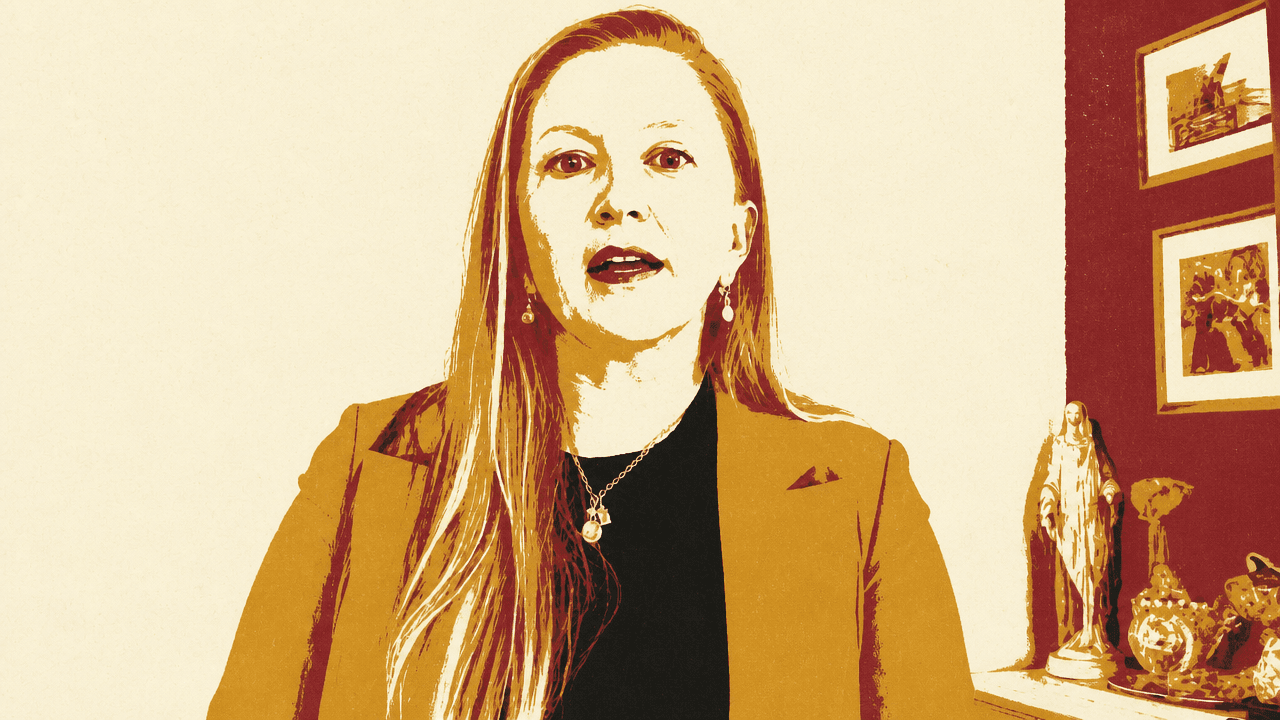
A small launch-tower failure exposed the scale of the next Starship step
SpaceX delayed the 12th Starship test flight after a pin tied to the launch tower mechanism failed to retract during the final countdown. Laura Crabtree, CEO of Epsilon3 and a former SpaceX engineer, treated that kind of scrub as consistent with the scale of the system SpaceX is trying to operate: there are “millions of decisions” to make and “millions of technical things” that have to go right.


In that context, Crabtree said, having one small issue such as a pin — and perhaps a couple of “out of family” temperatures — is “actually miraculous.” Scrubs and some failures should be expected. The operational question is whether enough small things have been tested before the final launch attempt to create confidence in the mission.
That is also how Crabtree connected the problem to Epsilon3’s work: building infrastructure for high-stakes operational testing and manufacturing procedures so teams can test enough small items before the mission reaches its critical point. The delayed launch, in her telling, was not evidence that the effort is unusual because it encountered a small blocking issue. It was an example of how many dependencies exist in a launch system where a mechanism, a temperature reading, or a procedural detail can stop the countdown.
Starship V3 is framed as bookable capacity, not just another rocket test
Ed Ludlow asked why Starship V3 matters, and Crabtree pointed to what the space industry has been waiting to do with it: book launches on a vehicle capable of carrying larger payloads, lowering the cost and difficulty of access to space, and expanding what can be transported beyond Earth orbit.


Crabtree described Starship as the next operational layer in a broader industry shift. The vehicle matters, she said, because it could carry more people, lunar rovers, and other equipment more quickly. The immediate significance is not only that SpaceX wants another test flight; it is that potential users have been waiting for this iteration to become operational enough to plan around.
Ludlow connected that point to a SpaceX S-1 that he said had gone public, describing a main focus as a larger future payload: orbital data centers. Crabtree did not treat that as separate from the company’s founding ambition. She described data centers, Starlink, and other infrastructure as “building blocks” toward SpaceX’s stated mission of making humans a multi-planetary species.
On-screen SpaceX footage made that ambition literal: Starship stood on the pad with steam venting at the base, near a structure painted “GATEWAY TO MARS.” Crabtree said Elon Musk had often spoken, both in company all-hands and publicly, about making life interplanetary. Starship is meant to enable that future, but only as one piece in a sequence of technical and operational pieces SpaceX still has to assemble.
The crewed Starship design remains less visible than the cargo case
The human version of Starship is less clearly exposed than the payload ambition. SpaceX’s human spaceflight record so far has centered on Falcon 9 launching a Dragon capsule, the system Crabtree worked on as a senior mission operations engineer training crews and running Dragon spacecraft missions. Starship is a different architecture, which led Ludlow to the practical question: where do the astronauts go?
Crabtree answered with caution. There have been many design iterations, and she said she was not entirely sure where the current version stands. From the last version she had seen, Starship would carry humans to the moon with the payload configured entirely around people. That would mean human-oriented systems inside the vehicle: toilets, living pods, and the internal accommodations needed for transport.
The exact design, she said, is unlikely to be known publicly until Starship is operational and has flown many times. SpaceX, she suggested, is probably waiting to unveil those details in future versions.
I don't think we will know exactly the designs and I believe SpaceX is probably waiting to unveil that in future versions.
Hardware, tower mechanisms, engines, fins, and boosters are visible in the launch-test campaign. Habitability, crew layout, and mission-specific human systems remain less exposed. The crewed-Starship concept Crabtree described is a vehicle configured as human transport to the moon, with details still dependent on further test progress and future disclosure.
SpaceX’s iteration model depends on hard problems and delegated decisions
Inside SpaceX, Laura Crabtree described an operating model built around difficult assignments, individual responsibility, testing, and revision. When leaders decide to rework an architecture and get it back to the pad, her description was not of a slow handoff through bureaucracy. Engineers are given problems that can feel insurmountable, expected to solve them to the best of their ability, then bring the work together, test it, and iterate.
She used the aerospace phrase “challenge coin” as a metaphor: a token associated with hard work on a difficult objective. At SpaceX, she said, it can feel as though there is a challenge coin “on the line all the time.”
You're given a somewhat insurmountable problem and you have to go and solve it.
Crabtree contrasted that model with traditional large aerospace companies. SpaceX, and many newer aerospace startups, give individuals more responsibility to make decisions, she said. That delegated responsibility is central to her explanation for the pace of Starship iteration.
The engineering emphasis was reinforced by the images on screen: upright Starship hardware on the pad, a view into the base of a rocket as multiple engines ignited, and SpaceX-sourced launch-pad footage. Crabtree’s explanation for the speed of iteration was that engineers are being pushed to think outside the box because “you can't design something like Starship with the things that have been done in the past.”