Varda Plans Orbital Drugmaking Flights for United Therapeutics Within a Year



Varda Space Industries CEO Will Bruey argues that the company’s deal with United Therapeutics is an early test of whether microgravity can become a practical input in pharmaceutical formulation rather than a space-research novelty. Speaking to Bloomberg Technology, Bruey said Varda is already working with United on the ground and plans to send drugs into orbit in the next year, using low Earth orbit as a manufacturing step that could improve dosage form, stability or bioavailability before returning the material to Earth.
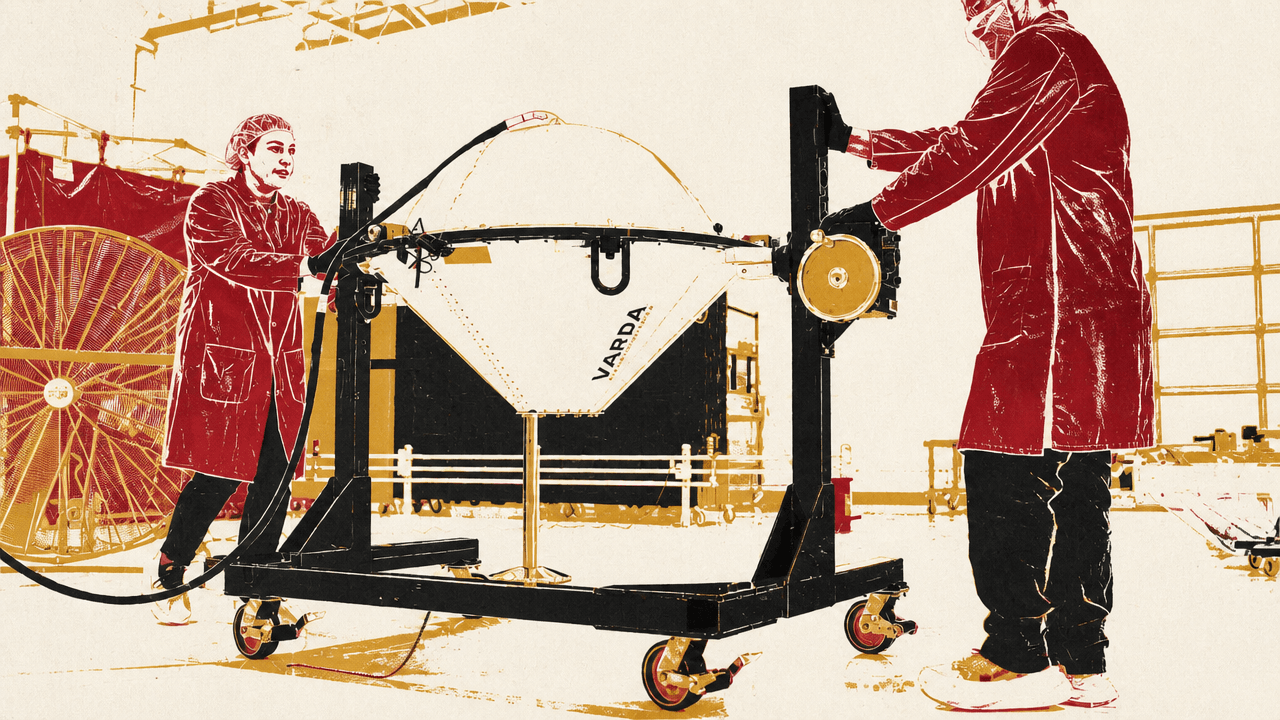
Varda is trying to make microgravity part of drug formulation, not a space novelty
Will Bruey framed Varda Space Industries’ deal with United Therapeutics as a shift from decades of research into commercial work: the company is already working with United in the lab, and Bruey said the plan is to put drugs into space “in the next year.”


The premise is not that space itself is the product. Bruey said “the most confusing thing about Varda is the space part,” and compared Varda’s approach to an “anti-gravity technology” that could manipulate chemical systems in ways otherwise impossible on Earth. Orbital manufacturing matters, in that framing, because it gives drugmakers another controllable condition during formulation: gravity can effectively be removed from part of the process.
The most confusing thing about Varda is the space part.
That formulation work is about the practical form a medicine takes and how usable it is for patients. Bruey gave examples such as moving from an IV bag to a shot, or improving bioavailability. His claim was that, as shipping to space becomes more like shipping, microgravity can be treated less like an exotic research environment and more like a manufacturing input.
When Caroline Hyde asked what “microgravity enabled formulations” look like, Bruey put the idea in ordinary pharmaceutical-process terms: temperature profile, concentration, and other formulation parameters still matter, but now the process also has “the option of turning off gravity.” The intended result, he said, is “a new outcome for patients.”


The manufacturing sequence starts on Earth and uses orbit as one process step
Will Bruey emphasized that Varda’s work with a customer begins before launch. The company and United first develop the formulation on the ground, in Varda’s lab. Only once those formulations are ready for flight are they loaded into Varda’s spacecraft.
The launch provider is SpaceX. Varda puts its spacecraft on a Falcon 9 and uses rideshare rather than a dedicated launch, which Bruey said gives the company access to “good costs” and frequent availability. To SpaceX, the spacecraft looks like a satellite; Bruey added that 20 of them can fit on a single rocket.
Once separated from the rocket in low Earth orbit, the spacecraft performs the manufacturing process. Bruey’s specific example was crystal formation: in orbit, gravity is not affecting “the sedimentation of the crystals.” After the relevant properties are locked in, the spacecraft returns itself to Earth and lands in Australia.
We do the manufacturing process where there isn't gravity affecting the sedimentation of the crystals, and then once those properties are locked in, our spacecraft flies itself back to Earth, lands in Australia, and now we have the drug for patients.
The spacecraft, in this explanation, is therefore not just a capsule and not just a satellite. It is closer to a small orbital factory that must launch, manufacture under microgravity, preserve the desired material properties, and return its payload intact.
The patient argument is about access, stability, and dosage form
Will Bruey described microgravity as broad because gravity is a fundamental force of physics. The applications he named included bioavailability and shelf stability, but the most concrete example was changing the delivery format of a medicine.
He pointed to a “classic example” flown on the International Space Station: moving a drug from an IV bag to a shot. The patient value is practical. A person in rural America without access to a clinic might still receive a drug if that drug can be reformulated into an injectable shot rather than requiring an IV administered in a clinical setting. In that scenario, “the shot can come to you instead of you having to go to the clinic.”
That example carried the larger argument: microgravity-enabled manufacturing is valuable if it changes how medicines are delivered, stored, or absorbed, not simply because it demonstrates that materials can be processed in space. The United work is still at the lab-and-planned-flight stage: Varda is working with United now and expects to put drugs into space in the next year.
Commercial manufacturing depends on repeatable return, not just launch access
Varda showed return footage attributed to Varda Space Industries: a spacecraft-window view of Earth, a bright red-orange atmospheric reentry sequence, and sky footage labeled “Stockton Flyby.” The business model depends not only on getting pharmaceutical materials into orbit, but on bringing the processed payload back.
Ed Ludlow pressed on the practical problem of landing in Australia, joking that aiming for a whole continent might sound easy but is not. Will Bruey answered that Varda has done this “four or five times,” clarifying that one landing was in Utah and the rest were in Australia. He called the Utah landing the company’s first mission success.


Australia is useful because it is a commercial range, Bruey said. That allows Varda to land without interfering with military operations at test ranges, making the process easier and better suited to commercial return missions.
This return capability is tied to the broader market claim. Hyde asked what the United Therapeutics deal proves for others, and Bruey called the partnership “the tip of the iceberg.” He described United as being “in the future” and said Varda was fortunate to work with its team, but his larger claim was that the same microgravity lever can apply across a wide variety of pharmaceuticals and patients.
The boundaries of that claim are still early commercial execution. Bruey said the research has been done for decades and that Varda has been flying for years, but the United work was described as moving into the commercial phase, with drugs expected to go to space in the next year. The commercial thesis depends on turning orbit into a repeatable manufacturing condition: accessible enough to use through rideshare, controlled enough to produce useful formulations, and reliable enough to bring the finished material back.