Trump-Xi Summit Produced Favorable Optics but Little Visible Progress


Julian Gewirtz, a former senior director for China and Taiwan Affairs at the White House, says Donald Trump’s meeting with Xi Jinping achieved its apparent aim of projecting a positive relationship but produced little visible progress on the disputes dividing the United States and China. He argues that trade, Iran, Russia and Taiwan remain unresolved, while competition over AI and access to advanced chips adds to the stakes.
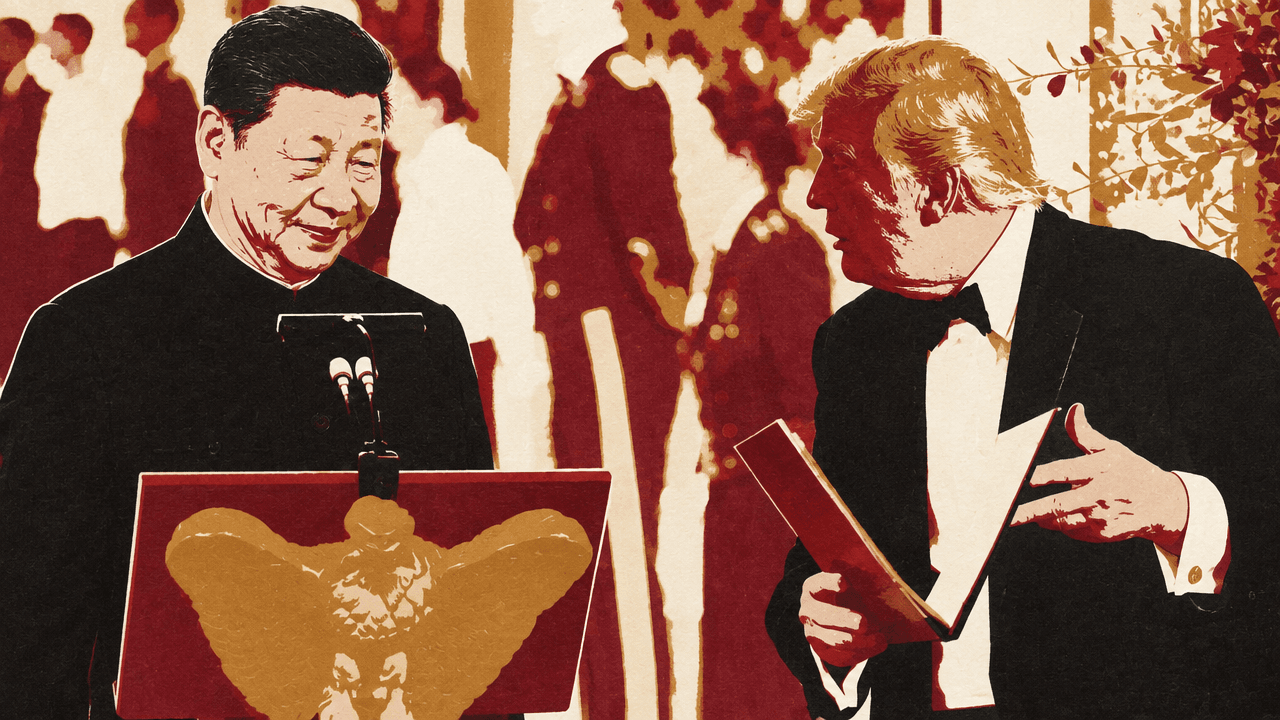
The summit delivered a favorable image, not visible progress
Julian Gewirtz’s assessment of Donald Trump’s meeting with Xi Jinping turns on a distinction between diplomatic optics and substantive outcomes. Julian Gewirtz says Trump came to the visit without a long list of deliverables he hoped to secure. The priority, as Gewirtz sees it, was to project a positive relationship with Xi—and by that measure, Trump succeeded.


But a favorable image does not resolve the issues that divide Washington and Beijing. Gewirtz points to trade, technology and Taiwan as challenges requiring sustained work, and says the summit schedule left little time for that. The leaders instead toured the White House and National Archives and showed off the helipad. Gewirtz’s concern is that the United States is giving Beijing “these tremendous optics” without a clear return in substance for core US interests.
The list of issues extends beyond trade and technology. An on-screen graphic listed Iran, Taiwan, the South China Sea and Venezuela as geopolitical issues between the United States and China. Gewirtz agrees that Iran belongs on the list. Before the meeting, he says, the Treasury Department and other parts of the US government had been looking for ways to increase pressure on Beijing over its close relationship with Iran without imposing sanctions or taking steps that might disrupt the trade truce.
Publicly, however, it did not appear that Trump made Iran a priority during the visit. Gewirtz finds that surprising. He gets the sense that Trump does not want to do anything that could “kill the vibe” between himself and Xi. The underlying issues remain, even as the visit’s emphasis on pageantry left limited room to work through them.
On Russia’s invasion of Ukraine, Gewirtz says he has seen little interest from Beijing in doing more to help bring the conflict to an end, and little sign that Trump wants to pressure Xi. He also raises a possible cost of avoiding pressure. Gewirtz says there have been reports that, if Trump returns to China later in the year for a multilateral meeting in Shenzhen, Xi might offer a trilateral meeting with Vladimir Putin. Gewirtz calls that prospect an “extraordinary misstep,” while suggesting it fits Trump’s apparent inclination to treat Xi and Putin as peers on the world stage.
China’s compute needs give Washington chip leverage
Advanced chips are a major US point of leverage in the AI competition, Gewirtz says, because they are essential to training the world’s best models and China cannot produce enough of them domestically to meet its demand for compute. Beijing is trying to build that capability at home, but Gewirtz describes its progress as slow.
He characterizes the broader US-China AI contest as intense. The United States has the world’s leading frontier labs, while China is working to catch up both in the spread of AI across its economy and at the frontier. In Gewirtz’s account, China’s reliance on chips it cannot yet produce in sufficient quantity makes its position difficult. Reduced tensions between the United States and China would benefit the growth of China’s AI sector.
A second on-screen graphic grouped the AI race and safety with disputes over Chinese electric vehicles, chips and critical minerals. Gewirtz’s remarks focus on AI and domestic chip capacity, while the graphic places those issues alongside a wider set of technology concerns between the countries.
The state dinner brought together people with different interests in the competition, Gewirtz says. He points to Nvidia’s Jensen Huang, who hopes to sell more chips to China, alongside people from leading American technology companies and frontier labs who hope to stay ahead of Chinese competitors. Their interests sit alongside Beijing’s need for compute and Washington’s leverage over access to advanced chips.