AI Power Demand Is Bringing Three Mile Island Back Online


Bloomberg’s Will Wade reports that Three Mile Island, the site of the 1979 accident he calls the worst nuclear accident in US history, is being prepared to return to service as soon as mid-2027 to supply electricity for AI applications. Wade argues the restart reflects a shift in the nuclear debate: technology companies once emphasized clean power, but the stronger force now is the immediate electricity demand and money behind artificial intelligence. The result, he says, is renewed reliance on decades-old nuclear infrastructure while waste storage and new reactor timelines remain unresolved.
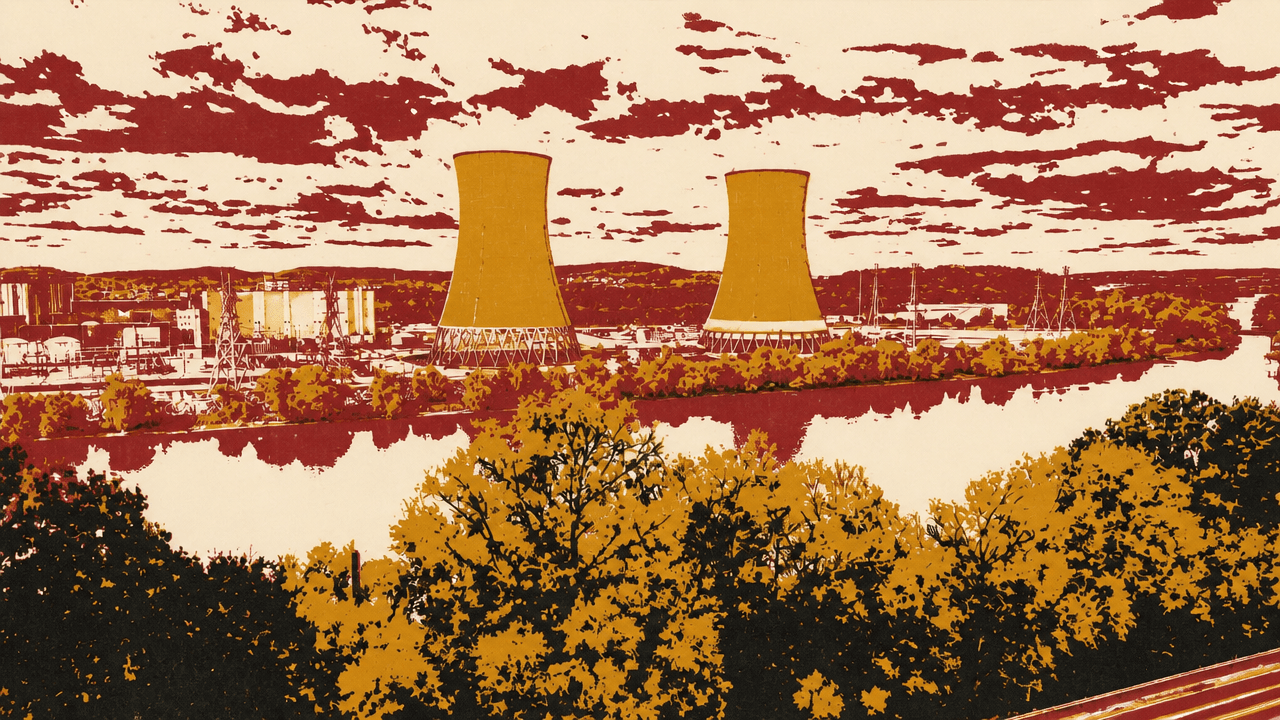
AI demand is pulling old nuclear assets back into the energy market
For many Americans, Three Mile Island still means the 1979 accident that Will Wade described as “the worst nuclear accident in US history.” Wade’s point was not only historical. The site’s meaning is changing because the power market around it has changed. What had been a story about nuclear closures has become a story about reopenings, with Three Mile Island rebranded as the Crane Clean Energy Center and, according to Bloomberg’s description, coming back online as soon as mid-2027 to supply electricity for chatbots and other artificial intelligence applications.
Wade emphasized the generational split in how the site registers. Three Mile Island carries heavy symbolic weight for people who remember the accident or the political era around it. For younger people, he said, the name may mean little or nothing. He illustrated that with a conversation at home: when he told his son he had a major story coming out on Three Mile Island, the response was, “What’s that?”
The restart is not a story of new nuclear technology replacing old infrastructure. Wade said photographs of the site make it look old because it is old: designed and built in the 1960s and 1970s, like much of the US nuclear fleet. The United States has not built many new nuclear plants, so renewed interest in nuclear power is landing first on existing assets.
From the day we shut down, there was always rumor of restart.
That line appeared on screen from Craig Smith, identified as Three Mile Island nuclear plant senior manager, and captured how long the idea of a restart had hovered over the site.
The motive has shifted from climate ambition to AI electricity demand
Will Wade distinguished between the earlier clean-energy case for nuclear power and the current commercial force behind the restart. A while ago, he said, technology companies wanted nuclear power because it was clean and could help address climate change. That was “a little bit of a motivation,” in his telling. It is not the central driver now.
The new driver is electricity demand from large technology companies building and running AI systems. Wade described the demand as “insatiable” and said plainly that “it’s all for AI.” He connected that demand to money: the motivation is coming from technology companies, from AI, and from the financial stakes involved.
But really the motivation now, it's from tech, it's from AI, it's 'cause there's money involved.
Caroline Hyde put a number on the broader capital flow, saying that $30 billion had been invested in nuclear since 2020. Hyde used it to frame the scale of renewed interest in the sector.


That creates the irony Hyde pressed: the “very edge of innovation” is being fueled by infrastructure that does not appear to be innovating much at all. AI sits at the frontier of software and computing, but the electricity solution under discussion is a decades-old nuclear facility associated with the most famous US nuclear accident. Wade’s answer was that the existing fleet is old because the country has built few replacements, and the immediate energy need is arriving before newer nuclear designs are ready.
The waste problem has not been solved
Caroline Hyde’s most direct challenge concerned nuclear waste. If Three Mile Island returns as part of a new nuclear push, she asked, what has changed since 1979 about what to do with the waste?
Will Wade’s answer was blunt: “That hasn’t changed at all.” Operators will do what they have long done. At nuclear plants, he said, waste is stored in large casks on site. Those casks have “always been there.” The long-discussed alternative — a central US repository — remains stalled for political reasons.
That point limits how much of the nuclear revival can be understood as a reset. The branding may be new, and the customer demand may be new. But on spent fuel, Wade described continuity rather than innovation: waste remains stored at plant sites, while a national political solution has not arrived.
Hyde’s questioning kept the restart from becoming a simple clean-energy story. Nuclear power may appeal to technology companies because it can deliver large quantities of electricity and because companies have described it as clean, but Wade did not describe waste storage as a solved issue. He described an old constraint being carried into a new phase of demand.
New reactors are coming, but not soon enough for this demand cycle
The old-plant problem does not mean Will Wade sees no innovation in nuclear power. He said there is “a lot of innovation in the nuclear space,” including companies developing new reactor designs: large reactors, small reactors, and very small reactors that could fit in shipping-container-like formats and be delivered to remote military bases.
Caroline Hyde specifically asked about SMRs, or small modular reactors, as a possible new nuclear offering. Wade’s answer was cautiously optimistic but time-bound. He said he does think new designs are coming because there is so much motivation to make them happen. But he did not expect them to matter over the next several years. In his estimate, some could arrive around 2030 or the mid-2030s.
That timing is central to the Three Mile Island story. If AI-related electricity demand is rising now, and if newer nuclear designs are still several years away, then the near-term option under discussion is returning to existing nuclear infrastructure.
The only thing that may be more complex than building a nuclear plant, is redesigning and permitting one.
That quote appeared on screen from Darryl Willis, identified as Microsoft corporate vice president for energy and resources. Its wording put the challenge not only in building nuclear plants, but in redesigning and permitting them. Wade’s broader account was that the economic pull from AI is now strong enough to make old nuclear assets relevant again, even at a site whose public meaning was long defined by disaster.