Space Economy’s Bottleneck Shifts From Capital to Launch and Reentry

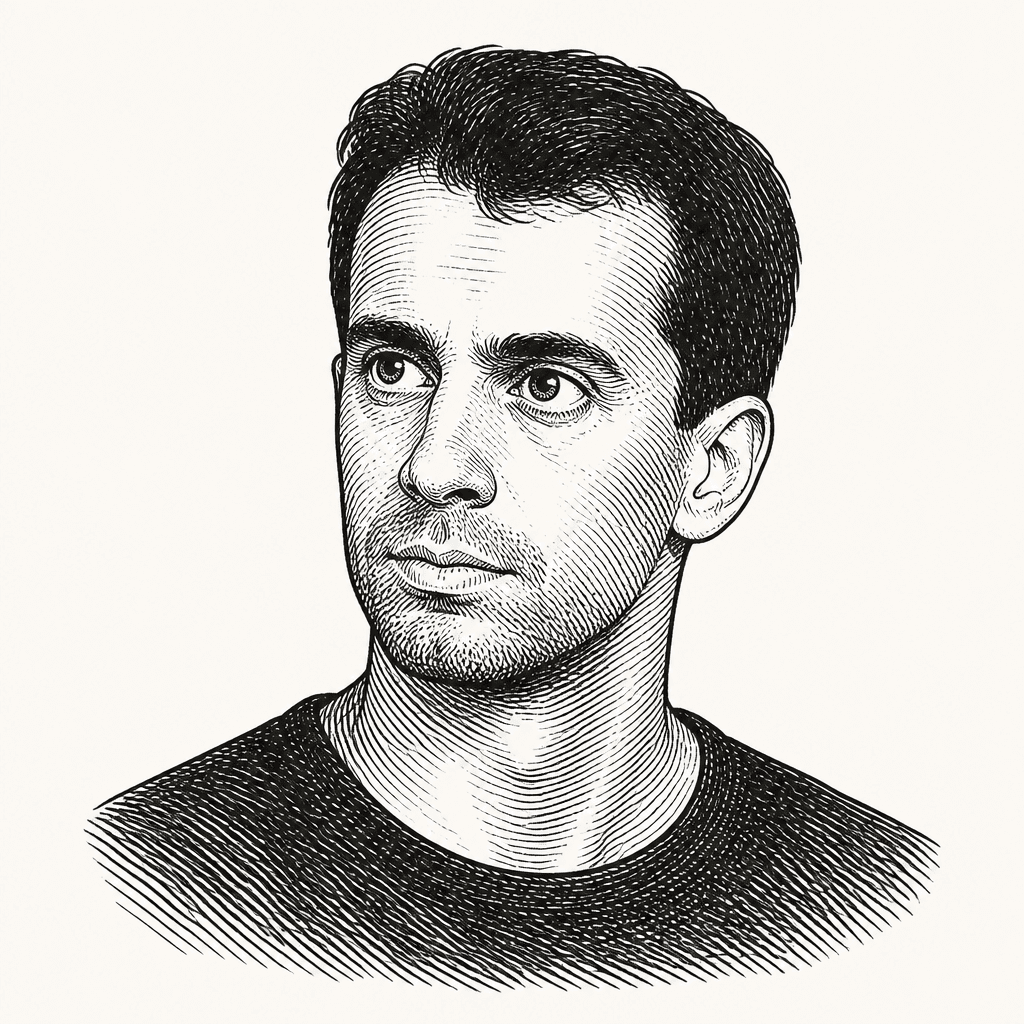
Founders Fund partner and Varda Space chairman Delian Asparouhov argues that the space economy’s near-term constraint is not capital but transportation: dependable launch capacity to orbit and, increasingly, reliable reentry capacity to bring commercial payloads back to Earth. In a Bloomberg Technology interview with Ed Ludlow, he says Varda’s bet is that the next phase of the industry will come from products made or improved in microgravity, such as pharmaceuticals, that return through a still-underbuilt “railroad” back down.

The bottleneck is the transportation system, not the money
The space economy Delian Asparouhov described is running ahead of its physical infrastructure. Capital is available: Ed Ludlow framed the market around Bloomberg’s report that Blue Origin was seeking outside capital for the first time at a roughly $130 billion valuation, weeks after what he described as SpaceX’s record IPO, with venture investors pouring billions into companies built around the orbital economy. But the constraint Ludlow put on the table was access: launch capacity is limited, costs are rising, and reaching orbit remains difficult.


Delian Asparouhov widened that bottleneck. For him, the important infrastructure is not only the route up to space, but the route back down. SpaceX’s reusable rockets, he said, created the first “railroad to space” and enabled what he called the first generation of the space economy: telecommunications and Earth observation. Starlink, in his description, has effectively become one of the most dominant telecommunications companies on the planet.
The next generation, he argued, is less about activity that stays in orbit and more about value created in orbit that is returned to Earth. That requires “two ways of a railroad”: launch capacity to get up, and reentry capacity to bring payloads back. Varda Space Industries, where Asparouhov is chairman, is built around the second half of that system.
You need the railroad that takes you up to space with the rockets, but you do also need to start to build the railroads that take you back down to earth.
The reentry point is not abstract for Varda. Bloomberg showed Varda footage of Earth from a capsule in orbit, followed by the view outside the window glowing bright red during atmospheric reentry. The visual reinforced the commercial problem Asparouhov was describing: not merely reaching space, but returning useful payloads from it.
That framing also explains why Asparouhov does not treat the space economy as a single bet on rockets. He pointed to the surrounding industrial base: EnduroSat in Bulgaria, which he said builds satellite components such as GPS chips, solar panels, and other subsystems for major U.S. companies; Hadrian, which he described as operating automated factory facilities that produce parts for SpaceX rockets, Anduril drones, and Varda capsules; and companies such as Rocket Lab and Impulse Space. SpaceX remains the leading company in the category, but the investment thesis extends into the supply chain that makes launch, satellites, vehicles, and reentry possible.
Varda wants the patient not to know the product involved space
The most concrete example of Asparouhov’s “value brought back to Earth” thesis was Varda’s announced partnership with United Therapeutics. He described United Therapeutics as a $25 billion publicly traded company that makes compounds used to treat rare pulmonary disorders. Under the partnership, Varda and United Therapeutics will work on 10 different drug products, taking them to space, studying or improving how they can be administered to patients, and returning them to Earth.
The claimed product logic is not that patients will buy something branded as a space drug. Asparouhov gave the example of a therapy that used to be taken as an oral tablet and could instead become inhalable after processing in microgravity. In that example, the intended result is a more efficacious drug and a simpler patient experience.
The important supply-chain point is that space is meant to disappear from the user’s perception. The patient, in Asparouhov’s phrasing, would pick up the product at a pharmacy; “one step in the supply chain happened to be in space.”
That is also why he resisted reducing Varda’s business to the capsule. A reentry vehicle is necessary, but his description of Varda’s value proposition included the pharmaceutical platform around it: understanding how microgravity affects a specific drug, working through regulatory approval and FDA acceptance, and building the processing equipment that can transform a product in microgravity into the desired formulation.
Starship turns a possible rival into validation and supply
SpaceX’s Starship raises an obvious market question for Varda: if SpaceX is demonstrating similar reentry capability and, according to Asparouhov, has identified orbital pharmaceutical manufacturing as a use case in its S-1, does that threaten Varda’s position? Delian Asparouhov said people often ask whether SpaceX’s move is “hugely disruptive,” but he mostly sees it as a tailwind.
His reasoning had three parts. First, SpaceX listed orbital manufacturing of pharmaceuticals as a use case it wanted to pursue. Second, SpaceX entering the market validates the value of the reentry “railroad.” Third, it could give Varda alternative supply if its own internal reentry capacity is insufficient.
The time horizon matters. Asparouhov gave 2029 as an example: if Varda is running a large manufacturing campaign for a pharmaceutical trial and its own reentry vehicles do not provide enough capacity, SpaceX could become another route home. In that version of the market, SpaceX is not only a competitor; it is potential infrastructure.
He also separated the reentry platform from the full pharmaceutical offering. SpaceX may build the capsule that brings materials down, but Asparouhov argued that United Therapeutics is working with Varda because Varda provides the whole pharmaceutical system around the trip: microgravity process knowledge, regulatory work, and drug-processing hardware.
The presence of SpaceX in the category, he said, has validated Varda’s business with customers and investors and created momentum for the company. His conclusion was blunt: “God bless Elon Musk and God bless Starship.”
Booked launches protect Varda, but the market remains narrow
Varda’s near-term position is stronger than the broader launch market. Ed Ludlow described Falcon 9 rideshare capacity as tightening while the market faces a transition toward Starship. Varda has depended on SpaceX to reach orbit, but Asparouhov said the company has already booked launches for all internal capacity needs through Q1 or Q2 of 2029.
That booking position solves a company-specific timing problem, not the industry bottleneck Ludlow raised. Over that period, Asparouhov said, Varda is working with SpaceX to understand what the transition to Starship might look like and what later Falcon 9 rideshare opportunities will become.
His assessment of the current launch market was still narrow: SpaceX is the only provider he characterized as reliable, low-cost, and operating at consistent cadence. Other players have had setbacks. But by 2029, he expects more options may be credible. He pointed to Rocket Lab, which he described as a $70 billion company under pressure from investors to deliver Neutron; Blue Origin, which he said Bezos is clearly taking seriously despite setbacks with New Glenn; and Stoke Space, along with “a handful of others” behind them.
On Blue Origin, Asparouhov added that, in his view, the company has shown the ability to land and reuse a stage one. He described Blue Origin as the only company other than SpaceX to have shown that capability.
Reentry still lacks a permanent U.S. operating model
The return leg has its own bottleneck: regulatory geography. Ludlow asked about U.S. consideration of offshore reentry sites and how Varda is managing reentry approvals. Asparouhov said Varda is currently landing its capsules in Australia and still plans to do so for now.
The reason is practical. The West Australian desert, he said, is “super empty” and well suited to reentering vehicles. But it is not the long-term operating model he wants. If the reentry railroad is to become consistent, he argued, the United States will need an area designated by the FAA as a reentry landing zone.
That makes the constraint broader than vehicle hardware. Varda can book launch capacity and build reentry capsules, but a repeatable commercial system also needs approved places to land. Asparouhov said Varda is working with regulators and partners in the United States to find a path back. His preferred end state is simple: U.S. companies should launch from the United States and land in the United States.