At Least 11 NSA and Cyber Command Workers Died by Suicide in a Year


At least 11 National Security Agency and US Cyber Command workers died by suicide over roughly the past year, according to US officials and public records, prompting concern among senior officials in Congress and the White House. Bloomberg reporter Jake Bleiberg says personnel have faced an extended surge in workload amid global conflicts, while doing secretive work that can carry emotional strain even when they are far from the front. The response under discussion is more mental health care staff and funding.
An extended surge is putting sustained pressure on cyber personnel
At least 11 people working for the National Security Agency and US Cyber Command died by suicide over roughly the past year, according to US officials and public records. Five deaths occurred over about a month in June and July. The cluster has drawn attention from senior military leaders, Congress and the White House to the well-being of personnel whose work supports US operations abroad.
The concern is not new. Jake Bleiberg said the mental health of people at the NSA and Cyber Command had been a concern for some time. But personnel described a sharp increase in work tempo over roughly the past year: an “extended surge” in which they often work very long hours. Bleiberg said the pace has taken a strain.


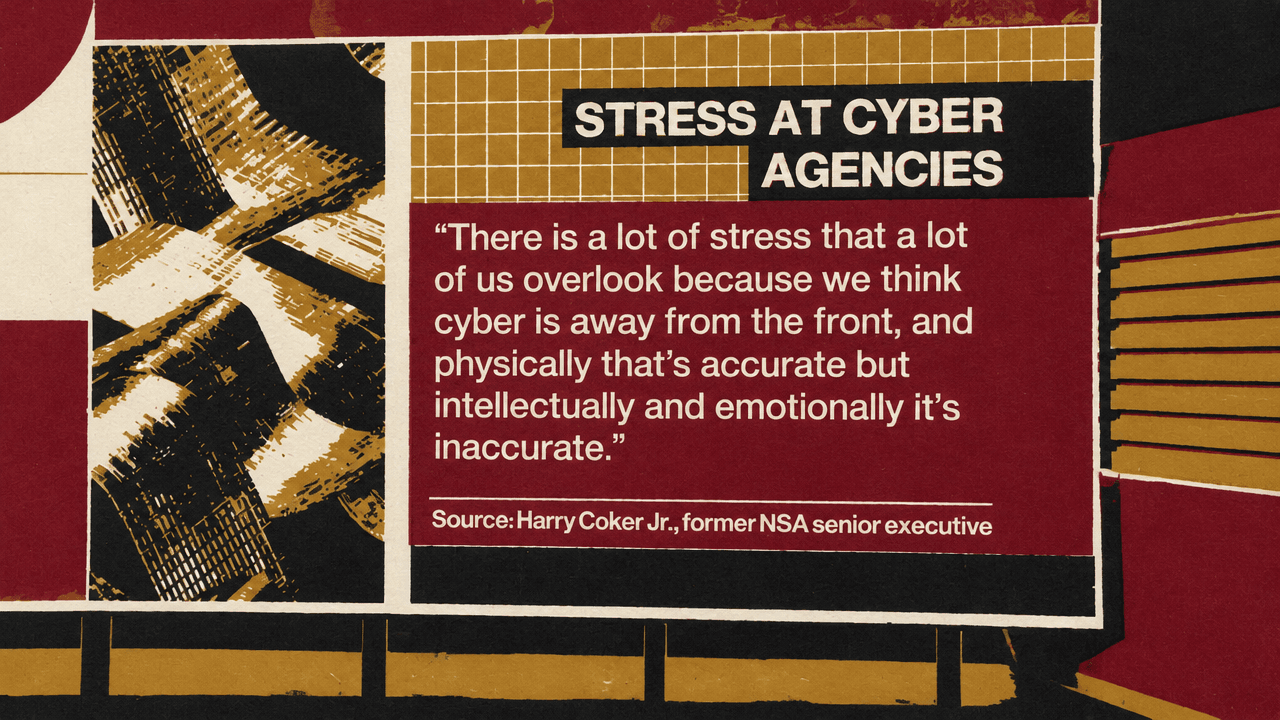
That workload is one part of the pressure. The work itself can involve dealing with the substance of American conflicts abroad, even though cyber personnel may not be physically near the front. Former NSA senior executive Harry Coker Jr. described the distinction: “There is a lot of stress that a lot of us overlook because we think cyber is away from the front, and physically that's accurate but intellectually and emotionally it's inaccurate.”
The point is not that cyber work puts personnel in the same physical circumstances as those at the front. Coker’s distinction is that distance from physical combat does not mean distance from the conflicts’ intellectual and emotional demands.
The transition from classified work to home life is part of the strain
Bleiberg said people working in these spaces described a difficult transition at the end of the workday. They may spend the day doing secretive military work on a base, dealing with the substance of conflicts abroad, and then drive home to pick up children from daycare or go to the grocery store. He characterized that shift as harsh.
The two pressures Bleiberg described are distinct but connected: a surge in hours and tempo within the commands, and the abrupt move from secretive work tied to overseas conflicts into ordinary responsibilities at home. The latter does not end when a shift does; personnel still have to make that transition after a long day.
Coker’s comment gives context to why the work may carry emotional weight despite being physically removed from the front. Personnel accounts to Bleiberg add the day-to-day shape of that burden: sustained hours, classified work, and a return to family or errands without an equivalent boundary between the two settings.
The response is aimed at care and funding, not a stated change in workload
Following the five deaths over about a month in June and July, military leadership began pushing to accelerate the placement of more mental health care workers in the commands. Members of Congress pressed for more funding for mental health support at the agencies, which Bleiberg said their leaders had been asking for. The reported response is focused on increasing support; Bleiberg did not describe a change to the extended-surge workload.
Spokespeople for the NSA and US Cyber Command said the agencies take a “comprehensive, integrated approach to suicide prevention” in close coordination with the armed services. That statement describes the agencies’ approach to prevention. It is separate from Bleiberg’s reporting on the specific actions being pushed after the deaths: more mental health care workers and additional funding.
Asked whether mental health strain could become a national security issue, Bleiberg said the health of personnel is being treated as a matter of great concern. In many instances, he said, these workers are “America’s war fighters” or intelligence officials relied on to protect operations abroad. That makes their well-being consequential not only for the people doing the work, but also for the operations that depend on them.