SpaceX Plans Record $75 Billion IPO at Fixed $135 Price
 Caroline Hyde
 Ed Ludlow
 Katherine Doherty
 Brody Ford
 Lisa Abramowicz
 Jensen Huang
 Dina Bass
 Steve Tananbaum
 Lynn Doan
 Eliyahu Kamisher
 Jay Parikh
 Matt MurphyRebecca WalserBloomberg TechnologyWednesday, June 3, 202617 min read
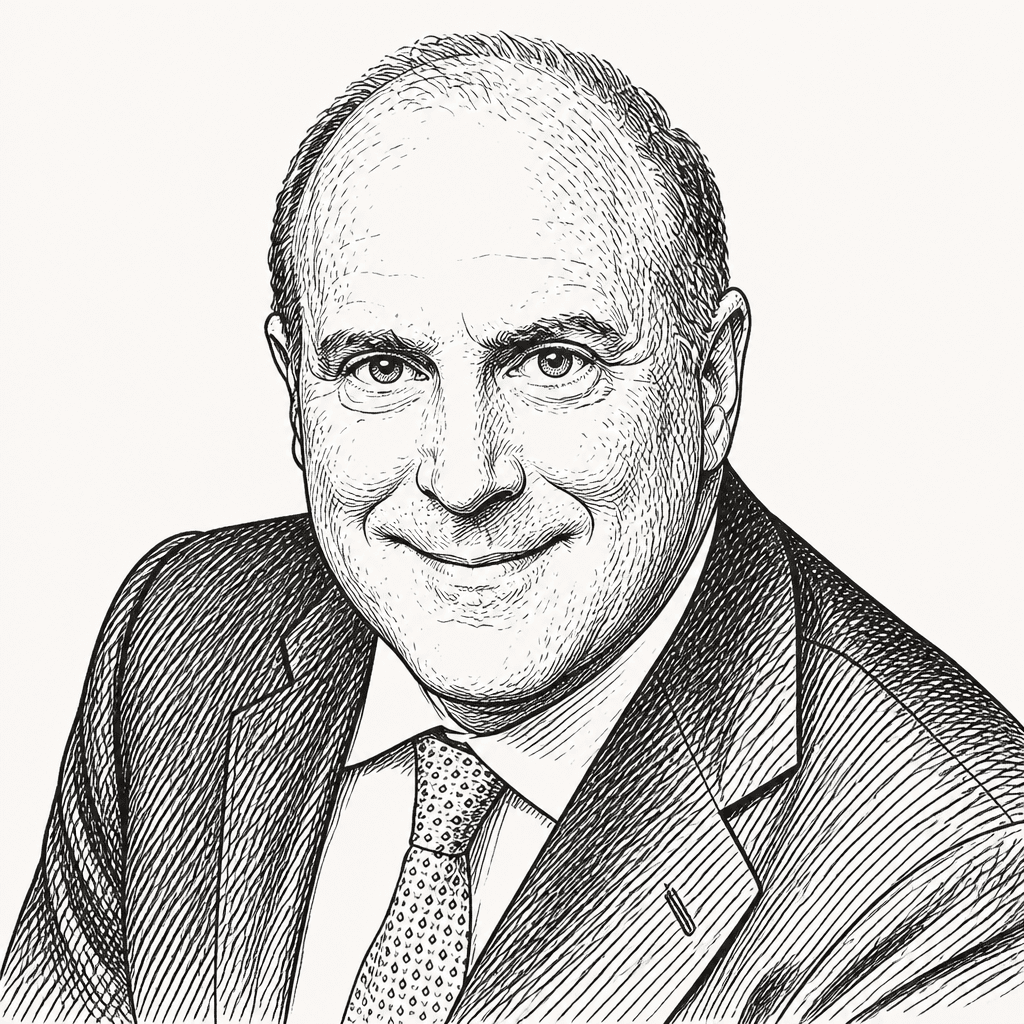
AI demand is driving unusually large financings and sharper questions about dilution, pricing and overinvestment across the technology market. Bloomberg reported that SpaceX is planning a record $75 billion IPO at $135 a share while setting the price before the usual marketing phase, making it the clearest example of companies testing Wall Street conventions as capital needs rise. Alphabet’s upsized AI infrastructure raise and heavy hyperscaler bond issuance put the same pressure in broader context: Rebecca Walser argued monetization is still early, while Steve Tananbaum warned the buildout may become an infrastructure arms race with overinvestment risk.

AI is becoming a financing story, not just an equity story
The AI buildout is pulling companies, investors, and credit markets into a capital-raising cycle large enough to affect how deals are structured and how risk is being priced.
Alphabet was the clearest balance-sheet signal. The company upsized an equity capital raise to $84.75 billion from a previously announced $80 billion, with proceeds intended to fund AI infrastructure expansion. Ed Ludlow said the stock was roughly flat even though dilution was an obvious talking point, because parts of the offering were “really oversubscribed.” He described the raise as evidence of a broader “scramble for capital in the AI era.”

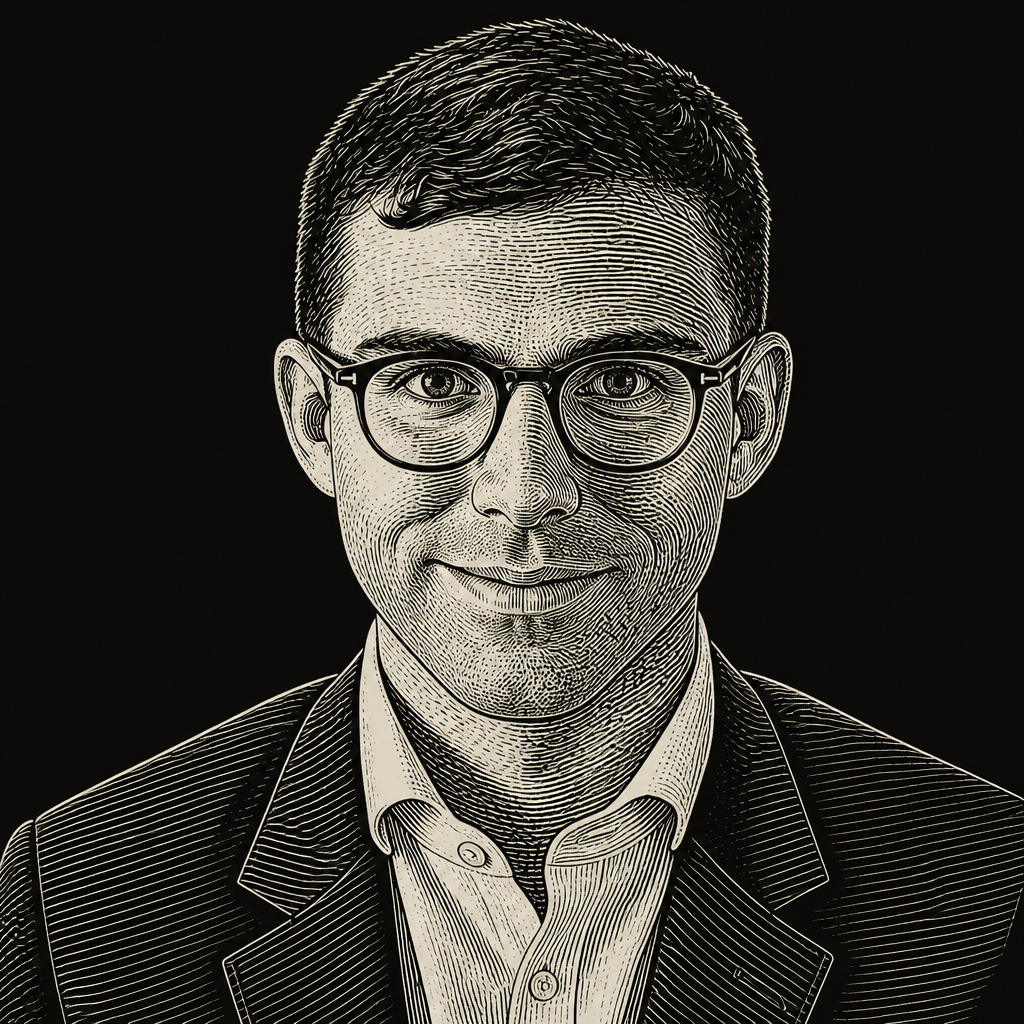
Rebecca Walser rejected the idea that $5 trillion companies and an almost $85 billion Alphabet raise mean the AI trade is near its end. She called the current period “the very, very beginning stages of monetization.” The large AI-oriented companies, in her account, cannot get enough capital for the capital expenditures they want to make. Hyperscalers, she said, usually issue a little under $30 billion of bonds a year; in 2025, they issued $121 billion.
Walser connected Alphabet’s financing to a broader queue of large AI and technology offerings. She said Google was trying to “get ahead” of three huge IPOs or expected listings: SpaceX, OpenAI, and Anthropic. Her conclusion was direct: if companies can secure the capex they want, she expects the market to keep rising.
The investment problem, in Walser’s view, is that the winners are hard to identify early. Asked whether investors should pick a horse in the AI race or seek broad exposure, she said it is too difficult to know which technologies or methodologies will win at the beginning of monetization. Her answer was to “sprinkle some capital” across the field, keep exposure broad, and be prepared for volatility.
She invoked the 1990s Nasdaq monetization period as a warning against confusing secular opportunity with a straight-line trade. She said that period produced roughly 30% to 33% overall gains but included 15 pullbacks. She also warned that many IPOs decline in their first 12 months and suggested investors might wait until insider lockups expire after six months before entering more strategically.
Her view was risk-on, but not frictionless. Investors who “participate in the emotion” of the AI wave, she said, should expect to feel pressure during pullbacks. Responding to Jensen Huang’s public insistence that AI returns are already visible, Walser called AI “the largest technological change in the history of human time” and “the largest opportunity for wealth creation” for ordinary people, while adding that she was speaking about the financial side, not “all the other bad side of AI.”
Walser also treated payments policy as part of the same monetization cycle. She said the US should remain central to digital payment systems and stablecoin development. If the banking lobby succeeds in weakening US stablecoin legislation, she argued, activity could route elsewhere. In her framing, digital payment systems are part of AI monetization, and legacy systems are “on their out,” even if the transition takes time.
That bullish equity view sat beside a more cautious credit-market view from Steve Tananbaum. Walser saw the capital-raising wave as confirmation that monetization is early. Tananbaum saw the same wave as an arms race that can be profitable for a time and still end in overinvestment.
SpaceX is said to be fixing the IPO price before the roadshow
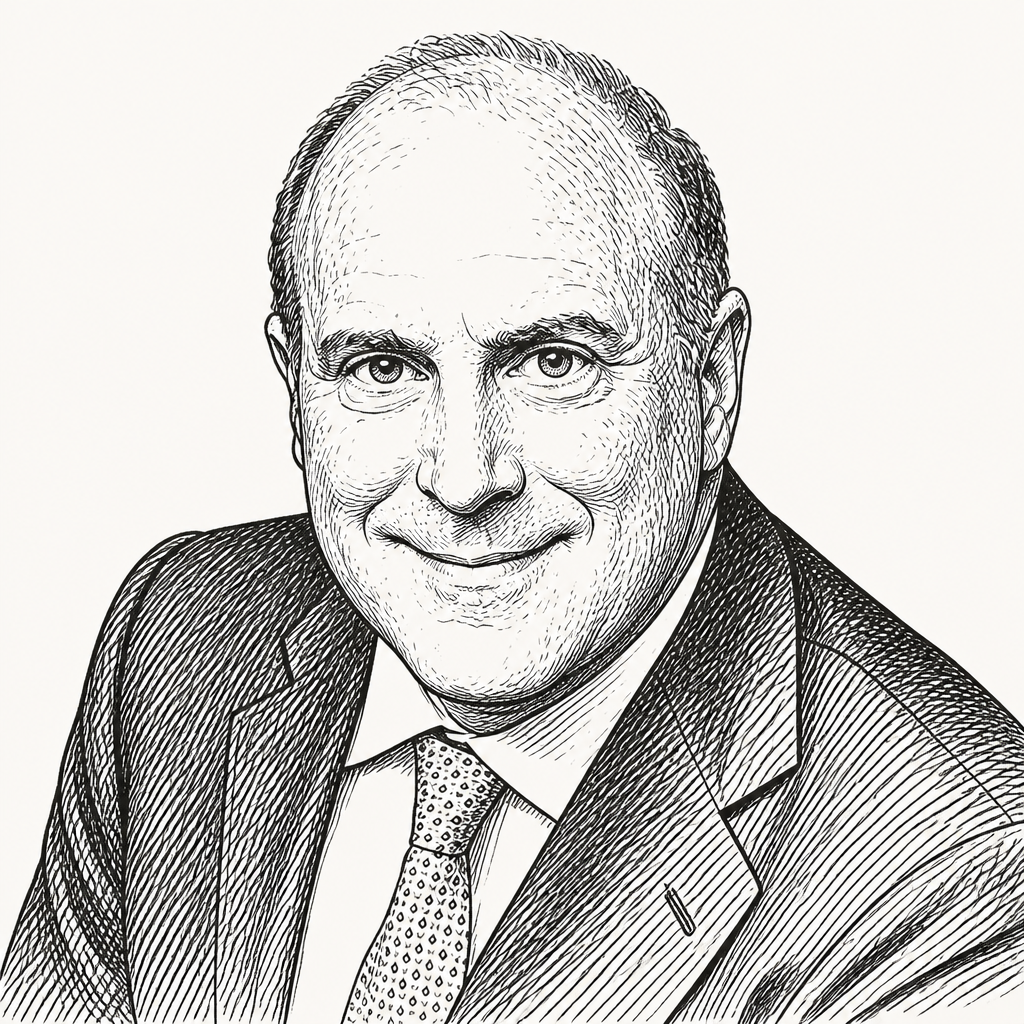
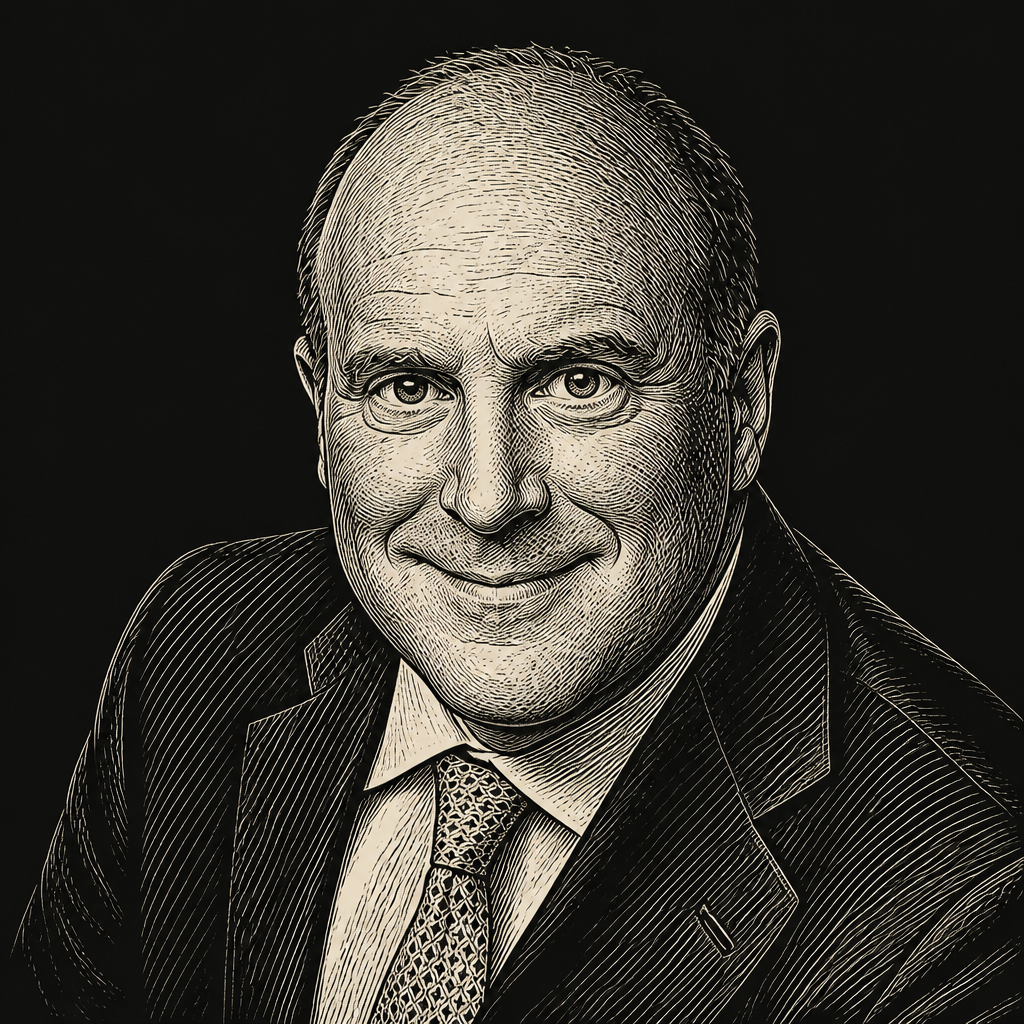
SpaceX is planning a $75 billion IPO at $135 a share, according to sources cited by Ed Ludlow. The reported deal would include 556.5 million shares. The unusual feature is not the arithmetic but the sequencing: SpaceX is said to have set a fixed share price before the traditional marketing phase, rather than beginning with a range and using investor feedback to determine final pricing.
Katherine Doherty said that is not how a typical US listing proceeds. Companies normally enter the marketing process with a price range because “there’s a lot of things that could change” in the days before shares come to market. Fixing $135 in advance, in her telling, gives the market a signal and some certainty, but also underscores how SpaceX and Elon Musk’s team are taking a different route from the standard IPO playbook.


An on-screen Bloomberg graphic framed the potential listing as record-setting. It said SpaceX aims to raise a record $75 billion, targets a valuation of at least $1.8 trillion, would be the largest IPO of all time, and that the filing reveals Musk’s voting control at 85%.
Doherty said there is precedent for smaller companies using a firmer-price approach, but not at this scale. The distinction matters because the larger the listing, the more the conventional marketing period is meant to test demand, price sensitivity, and allocation. SpaceX’s reported approach leaves the usual IPO process in place, according to Ludlow — the roadshow, allocation, and pricing mechanics remain — while still putting a specific number in front of the market early.
Caroline Hyde pressed on what the price point means for existing holders, employees, friends and family, and others likely to receive allocations. Ludlow said the $135 share price is a 28% premium to where SpaceX reset its private shares after a May 15 stock split. He described the prior private-market shares as above $500 before a five-for-one split took them to $105 at a $1.25 trillion valuation. The $135 price, he said, does not rise in line with the jump in valuation, implying dilution even as the headline price is higher.


| Measure | Reported figure |
|---|---|
| Share price | $135 |
| Shares | 556.5 million |
| Target raise | $75 billion |
| Target valuation | At least $1.8 trillion |
| Musk voting control | 85% |
| Premium to post-split price | 28% |
The SpaceX report sat inside the same market as Alphabet’s equity raise: huge demand for capital, but with unusually prominent dilution, allocation, and control questions. Alphabet was raising money to fund AI infrastructure; SpaceX was reported to be seeking a record listing while signaling a price before the marketing process had done its normal work. Both stories treated scale itself as a market event.
Another Musk-related item pointed to a different constraint. xAI, according to sources cited by Ludlow, paused hiring for professionals who train the Grok chatbot on specialized skills. The stated reason was at least partly operational: concern that the HR department was overwhelmed and often unable to process new candidates. The contrast was sharp. SpaceX was described as planning a record-breaking, convention-bending public listing; xAI was described as a fast-scaling AI company running into internal capacity limits.
Credit investors see the AI buildout as an arms race with overinvestment risk
From the credit side, the AI infrastructure cycle looks less like a simple growth trade and more like a question of whether today’s financing terms compensate investors for tomorrow’s capacity risk. Speaking with Lisa Abramowicz at the Bloomberg Global Credit Forum, Steve Tananbaum said credit has been frustrating for managers because equities are participating significantly while credit is producing low-single-digit returns. Current yields are still attractive, and defaults do not invalidate the case for credit, but the asset class is priced in a way that leaves less upside when things go right and meaningful penalty when earnings disappoint.


Tananbaum said he had argued in January that the setup was poor for credit and good for equities. In his framework, stretched valuations in a midcycle economy expected to grow at 2% or better tend to produce credit returns below coupon, while equities do better. He said that is what has happened so far. Credit could improve in the second half, and there are pockets of opportunity, but historically this is “a tough time to be in credit” at this point in the cycle.
His account of credit investing was built around behavior as much as valuation. He described investments as “short movies”: the investor’s job is to understand how the movie ends, who will buy the security later, and why. Liquidity matters because in stressed markets investors sell what they can sell fastest. He recalled that in mutual-fund redemptions, managers often sold the most liquid assets first; his own instinct was to sell semi-liquid positions early because they might become impossible to sell later if conditions worsened.
On AI infrastructure, Tananbaum said the details of financing terms matter, but the backstops appear to be “good credits.” The issue is time horizon. Over two to three years, he said, investors may be overcompensated for risk. Over five to ten years, the risk is whether the infrastructure investment is justified. He explicitly compared the AI buildout to undersea cable: useful “until it wasn’t.”
There is an arms race going on and the issue is: will the infrastructure investment be justified or will this be more like underwater cable?
Tananbaum said history has a poor record when industries with very high payouts overinvest, citing riverboat gambling and undersea cable as examples. His response was not to avoid the sector outright, but to be deliberate and seek additional assurances that users are committed to the projects being financed.
He expects, at some stage, investors may be able to get high-yield-type spreads in the investment-grade market. In prior stretched or overfinanced industries, he said, there has eventually been an opportunity to obtain strong protection with below-investment-grade pricing. The unresolved question is what to do before that dislocation arrives. Tananbaum resisted Abramowicz’s suggestion that the answer is simply to wait for the sector to “fall out of bed,” because if the process takes two or three years, that is a lot of return to give up. His position was conditional: be deliberate, keep reassessing evidence, and accept that his view could change in a month or two.
A poll at the forum asked how participants were positioned in credit for the rest of 2026. The result was 42% neutral, 31% defensive, and 27% risk-on. Tananbaum interpreted that as roughly 73% of respondents saying, in effect, “yeah” — neither embracing risk fully nor exiting the asset class. He said opportunistic credit has attracted inflows because investors want managers with a long playbook, able to move across distressed, private credit, and other opportunities.
| Positioning | Share of respondents |
|---|---|
| Neutral | 42% |
| Defensive | 31% |
| Risk on | 27% |
His current opportunity set was eclectic. Expected distress exists in software, where business models are being questioned. Telecom is another area where the business model is under pressure, with public equities such as Comcast, Charter, and Cable One weak while some of the debt has not reflected the same pressure. Healthcare, he said, has seemed like a funding source for technology stocks, creating value in certain names. He mentioned Tenet as a company with credible valuation, volume issues, and a top-notch management team, saying the credit markets could finance the entire market cap.
On private markets, Tananbaum said asset-backed assets offer the best value among asset classes he is seeing, and private credit now looks better than it has in the last 24 to 36 months because some anxious open-ended private-credit funds have stepped back. Asked whether investors are being paid for illiquidity, he said that is always an after-the-fact judgment, but the compensation appears better — above average, perhaps six or six and a half out of ten.
Inflation, in his view, is the largest market risk and has affected credit through rates more than it has affected equities. He said equities outperformed credit in the 1970s, offering at least one example of a bad environment in which equities still did better. Oil was part of that uncertainty: prices had been calmer than many expected, but he said market behavior suggested investors were cynical about how long higher oil prices would last. In oil services and mid-cap energy, he saw pricing more consistent with $70 to $75 oil, which could create opportunity if oil is higher for longer.
For AI’s effect on software and other industries, Tananbaum used legacy media as a template rather than a direct forecast. Television moved from nominal growth to less-than-nominal but still positive growth. Cable programmers kept above-nominal growth for about 15 years. Radio became marginal by 2008 or 2009 and more troubled by the late 2010s. Newspapers began serious disintermediation after the mid-2000s. The question for today’s industries, he said, is where current software and communications businesses fall on that spectrum.
Palo Alto beat estimates and still sold off because expectations had already moved
Palo Alto Networks showed how a company can deliver strong results and still be punished if the market has already priced in more. Caroline Hyde said shares were having their worst day in a couple of months, down about 5%, even after the cybersecurity company reported strong revenue growth fueled by AI spending in the fiscal third quarter. The setup was demanding: the stock had risen sharply into the release, up 53% year to date and about 60% before the earnings.
Lynn Doan called the reaction baffling at first, because Palo Alto “beat on every single key metric” — revenue, earnings, and outlook were solid. She labeled it the “Nvidia effect”: a company can beat across the board and still see its stock fall if the run-up has been large, analysts have not fully disclosed what they really needed to see, and the broader macro backdrop is weak. US-Iran news and a softer market did not help.


The stock story was tied to a governance story. Ludlow described a “recurring beef” shareholders have with Palo Alto’s CEO and senior-leader pay packages. Doan said Bloomberg analyzed proxy data available on the Bloomberg terminal going back to 2015 and found that Palo Alto Networks has had more rejections of Say on Pay votes than any other company in the S&P 500. Since 2015, investors have rejected seven such votes; no other company in the index comes close, she said.
The tension is that performance has been strong. Hyde noted that more than half of shareholders pushed back at the December vote on a package potentially worth nearly $100 million for CEO Nikesh Arora, while the company had added roughly $100 billion in market capitalization. Doan said this makes Palo Alto and Arora an anomaly. Investors often support high CEO compensation when their returns are strong, and Palo Alto’s stock has soared over the past year and since Arora took over. Yet shareholders have repeatedly voted against pay.
The proxy-advisory view, according to Doan, is that Arora’s compensation is not aligned with peers. ISS and Glass Lewis would say he is consistently paid well above other cybersecurity executives. Arora’s own argument, as quoted by Doan from Bloomberg’s story, is that he has delivered outsized returns. Doan noted that Palo Alto’s stock has outperformed rallies in other major US cybersecurity stocks this year.
The Palo Alto example carried two separate investor messages. Strong execution can still disappoint if expectations get too stretched. Strong shareholder returns do not necessarily resolve disputes over executive compensation, especially when pay is far above sector peers.
Software incumbents are being judged by their exposure to AI-native alternatives
Adobe’s succession process is being read against a more basic question: whether generative AI can erode software franchises built around expensive, complex professional tools. Brody Ford said Adobe has become one of the clearest examples of what he called the “SaaS-pocalypse,” with investors questioning whether AI will disrupt software companies that spent decades enjoying strong growth rates and margins.


Adobe announced in March that it would conduct a CEO search. Ford reported that the company has narrowed in on two internal leaders while also hiring a prominent tech executive-search firm to look externally for candidates with more cutting-edge AI experience. The most obvious internal candidate, he said, is David Wadhwani, the longtime deputy overseeing the largest part of Adobe’s business. The other is Anil Chakravarthy, who runs Adobe’s marketing and analytics software business — not the consumer-facing Photoshop side, but still a large and growing money maker.
Ed Ludlow compared the process to other succession races in which a board may favor an internal candidate while still creating pressure through an outside search. Ford said headhunters are looking widely. He cited Microsoft’s Charles Lamanna as an example of the type of executive Adobe has considered: someone viewed as able to develop and monetize AI at the scale Adobe requires. Lamanna held talks with Adobe but ultimately backed out, Ford said.
The product concern is straightforward. Adobe is known for tools such as Photoshop, PDF, and video-editing software. Ludlow said some of that functionality can now be found for free through generative AI platforms. Ford sharpened the point: Adobe’s software is expensive and complicated. Professionals who need “all the knobs” are not the users most likely to leave, in his framing. The more exposed use case is casual: someone who once might have bought Photoshop to make a meme or alter an image for a friend probably will not buy it today.
GitHub showed the other side of the same transition: software infrastructure being stressed by AI-era growth while agents begin to enter workflows. Jay Parikh said GitHub is receiving significant help from the rest of Microsoft as it tries to scale, improve reliability, strengthen security, and build enterprise features. The context was a period of outages, security issues, and leadership change at GitHub.
The scale shift he described was large. In all of 2025, GitHub processed about one billion commits. Now, according to Parikh, it processes about 300 million commits each week. That traffic growth is forcing GitHub to bring in more Microsoft engineers, attract new talent, add capacity, and re-architect systems.
Asked how much real work is being done by AI agents, Parikh said the market is still early but moving quickly. He described internal use cases in which teams build agents that keep running when engineers are asleep or away on weekends. Those agents analyze telemetry, identify possible improvements, and make suggestions to engineers and product teams when they return.
Parikh did not present the agentic future as fully autonomous. He emphasized observability and “human in the loop” oversight to ensure agents remain on track, do what users expect, and prioritize correctly. The technology works today, he said, but it requires supervision.
Together, Adobe and GitHub placed software in two AI categories. Some incumbents are being tested by cheaper or easier AI-native alternatives. Others are becoming the infrastructure on which AI-assisted work runs, with the scaling and reliability costs that follow.
Silicon Valley money did not translate cleanly into California votes
California’s primary results showed that donor concentration is not the same as voter power. Eliyahu Kamisher said frustration among a small group of tech elites did not translate into a broad voter base. Several tech-favored candidates underperformed despite financial backing and visible enthusiasm from Silicon Valley billionaires, founders, and venture capitalists.


The clearest example was Matt Mahan, the moderate San Jose mayor. Kamisher said a lot of money and enthusiasm flowed to Mahan, including support from figures such as Mike Moritz and Sergey Brin. Mahan’s platform was more favorable to tech: opposition to a billionaire tax, a “back to basics” approach, smaller government, lower taxation, less regulation, and a friendlier posture toward the technology industry.
But Kamisher said California voters also show frustration with Silicon Valley. Tech leaders, he said, are making a lot of money in the tech boom and feeling confident, but that confidence is “not translating to the ballot box right now.”
Ed Ludlow clarified for non-California viewers that the race under discussion was the gubernatorial primary. Kamisher said three candidates were at the top: Javier Becerra, Joe Biden’s former health secretary; Steve Hilton, a Republican former Fox News commentator; and Tom Steyer, a liberal former hedge-fund billionaire. At the time of the discussion, Becerra and Hilton looked likely to advance to the runoff, though ballots were still being counted and Steyer could still make a late run.
The tech angle was shifting rather than disappearing. Kamisher said Becerra had begun to consolidate establishment Democratic interests and some tech money. As he surged late, Meta and Airbnb came in behind him, apparently recognizing him as the likely frontrunner and trying to pick a winning horse. The result was not a rejection of all tech political influence, but a reminder that concentrated donor enthusiasm and social-media energy are not the same as a statewide voter coalition.
Broadcom is the test case for custom AI chips beyond Nvidia
The chip discussion turned on whether AI infrastructure spending remains concentrated in Nvidia GPUs or broadens meaningfully into custom accelerators. Nvidia CEO Jensen Huang appeared in a Computex Taipei clip beside Marvell CEO Matt Murphy and called Marvell “the next trillion dollar company.” Murphy responded, “That would be exciting. Let’s do it together.” Marvell shares had risen more than 48% over three trading days, according to the chart shown.



Dina Bass said Huang is not objective in anointing Marvell. In Bass’s analysis, Marvell is the horse Nvidia has backed in the custom AI accelerator space, including through investment, and Huang has an interest in making it a stronger competitor to Broadcom. Broadcom, meanwhile, has positioned itself as the alternative to Nvidia for customers that do not want to rely solely on Nvidia GPUs.


Broadcom was the more immediate earnings test. Ludlow noted it had become a $2.3 trillion company, and Bass explained why the print mattered. The vast majority of AI chips in use are still Nvidia GPUs, but alternatives are increasingly coming from hyperscalers and frontier labs building custom chips. Broadcom has several of the largest customers in that segment, Bass said. Google’s TPU is made with Broadcom; Anthropic is buying many of those chips and paying Broadcom for them; Meta also works with Broadcom.
A Bloomberg-sourced chart showed Broadcom Semiconductor Solutions AI revenue expected to more than double, from $4.4 billion in the second quarter of 2025 to an estimated $10.7 billion in the second quarter of 2026.
| Period | Broadcom Semiconductor Solutions AI revenue |
|---|---|
| Q2 2025 | $4.4B |
| Q2 2026 estimate | $10.7B |
Bass said Google, Anthropic, and Meta have signed extended long-term deals with Broadcom in recent months, expanding existing relationships. For investors, the issue has been visibility: the long-term pipeline, when contracts come online, whether they are multi-year, and how much revenue Broadcom can recognize by quarter. According to Bloomberg Intelligence analysts as described by Bass, visibility into that pipeline has improved.
This made Broadcom part of the article’s broader financing thread, not just a semiconductor earnings story. Alphabet is raising equity to fund infrastructure. Hyperscalers and frontier labs are committing to custom-chip relationships. Credit investors are asking whether the infrastructure buildout is justified over five to ten years. Broadcom’s earnings were framed as the next check on whether custom silicon is becoming a contracted, visible revenue lane beside Nvidia’s dominant GPU business.