SpaceX Seeks $75 Billion IPO to Fund AI Infrastructure in Space
 Ed Ludlow
 Jared Isaacman
 Laura Crabtree
 Peter DiamandisBloomberg TechnologyMonday, June 8, 20264 min read
Bloomberg Technology’s Ed Ludlow frames SpaceX’s planned IPO as a public-market bid to finance Elon Musk’s expanded vision of space infrastructure, now including AI models, computing capacity and possible orbital data centers alongside rockets and Starlink. The proposed roughly $75 billion raise could be the largest IPO on record, but Ludlow says it would also ask investors to absorb xAI’s heavy losses and accept SpaceX as a Musk-centered industrial platform rather than a pure space company.
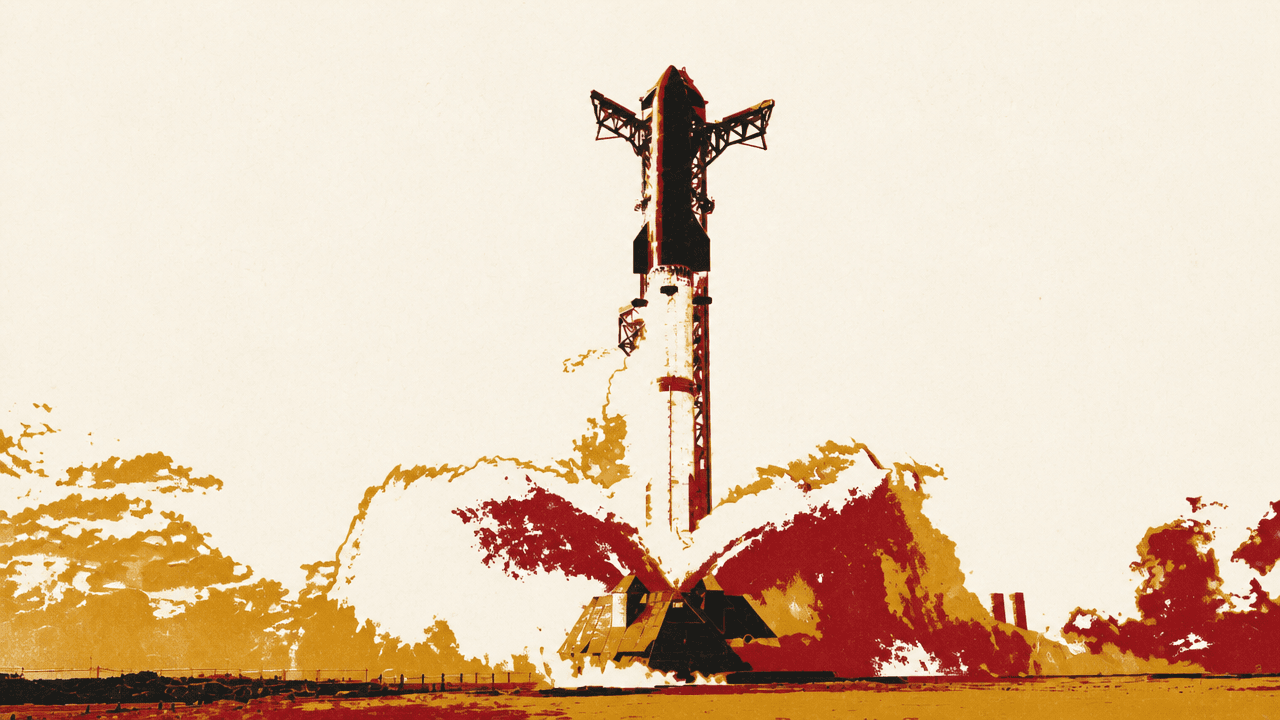
The IPO pitch now includes AI infrastructure
Ed Ludlow describes SpaceX’s planned offering as a request for public-market capital to build “the infrastructure for AI in space.” The company wants to raise around $75 billion in what Ludlow says could become the largest IPO in history. The offering would combine rockets, satellites, and AI under a single public-market story.


The raise is not only about financing launch operations or Starlink. Ludlow says Elon Musk folded xAI into SpaceX earlier this year, meaning investors in the proposed offering would also be buying exposure to Grok AI models and Musk’s plan for large-scale computing infrastructure.
xAI’s Grok page described Grok 3 as “our most advanced model yet, blending superior reasoning with extensive pretraining knowledge.” That product language matters because it puts AI capability and compute demand inside the same investment case as launch cadence, satellite broadband, and Musk’s older Mars ambition.
Jared Isaacman gives the simpler version of the space case: SpaceX is “probably our greatest commercial space company, hands down.” Laura Crabtree describes the company’s role in industry terms, saying it “will enable the next iteration of what we want to see as the space industry continues to grow.” Those comments support the premise that SpaceX already functions as enabling infrastructure for commercial space. The proposed IPO asks investors to accept a wider definition of that infrastructure, one that now includes AI models and computing capacity.




The AI expansion adds a large loss line
The AI ambitions broaden the offering, but they also add the most explicit financial strain in the source. New filings, Ludlow says, show SpaceX’s AI business — xAI — lost nearly $6 billion last year and lost billions more at the start of this year. He attributes that spending to computing power and infrastructure as Musk’s AI effort tries to compete with OpenAI and Anthropic.
That loss figure sits beside a much larger capital plan. The source description says the prospective IPO would fund “everything from its Starship rocket to AI computing power and future data centers in orbit.” In Ludlow’s spoken account, the emphasis is on AI infrastructure, Grok models, Starlink, launch contracts, and the question of whether investors will finance a company that now stretches beyond the original space mission.
The offsetting strength is that SpaceX already has cash-generating businesses. Starlink, Ludlow says, has become a powerful cash generator through satellite internet, while the company’s launch operations continue to secure billions in government and private contracts. Starlink’s own ordering page describes “high-speed, low-latency broadband internet across the globe,” placing a live broadband business next to launch operations and the newer AI effort.
The investment question is how public-market buyers interpret the AI losses. They can be understood as spending required to build Musk’s broader compute infrastructure, or as a risk that complicates a company already defined by expensive engineering programs.
Scale is the argument for tolerating complexity
Peter Diamandis argues that SpaceX is not merely leading the launch industry by a modest margin. “What people need to realize about this company,” he says, is that it is not “just a little bit ahead of the entire launch industry on planet Earth,” but “orders of magnitude ahead.”


That view supplies the strongest rationale for accepting the company’s complexity. If SpaceX’s launch position is as far ahead as Diamandis suggests, then rockets, Starlink, Grok, and compute infrastructure can be treated as connected parts of one industrial strategy rather than as unrelated businesses bundled around Musk.
The offering has already drawn major banks. Goldman Sachs, Morgan Stanley, and J.P. Morgan are leading more than 20 banks working on the IPO, and Musk has negotiated record-low fees, according to Ludlow. Wall Street wants access. The unresolved question is whether investors are comfortable betting not only on Musk’s original goal of making humanity multiplanetary and reaching Mars, but also on a future that combines rockets, AI, and social media into what Ludlow calls “one sprawling empire.”
A graphic connected SpaceX, xAI Grok, and X with arrows pointing to a portrait of Musk. The image condensed the concern: the public-market vehicle would not be a pure-play rocket company, a satellite broadband company, or an AI company. It would be a Musk-centered structure tying those ambitions together.
Diamandis embraces that scale rather than treating it as a warning. He says investors would be buying “the next” phase of the economy — “the global economy 2.0 and 3.0” — by buying into SpaceX.
What we’re buying is the next, you know, the global economy 2.0 and 3.0 as we look at buying into SpaceX.
Ludlow’s closing formulation is conditional: if the strategy works, SpaceX could redefine what the modern public company looks like “on Earth and in space.” The claim is not that the risks disappear. It is that the IPO would test whether public investors are willing to finance a company whose frontier now includes Mars, satellite broadband, AI models, compute infrastructure, and, according to the source description, future data centers in orbit.