Crew-13 Launch Continues SpaceX’s Role in Keeping the ISS Staffed
SpaceX launched four astronauts aboard Dragon Grace to the International Space Station, continuing the series of crew-rotation flights NASA uses to keep the station staffed. The crew is expected to live and work there for six months, making the launch part of the recurring transport operation that supports the station’s continuous staffing.
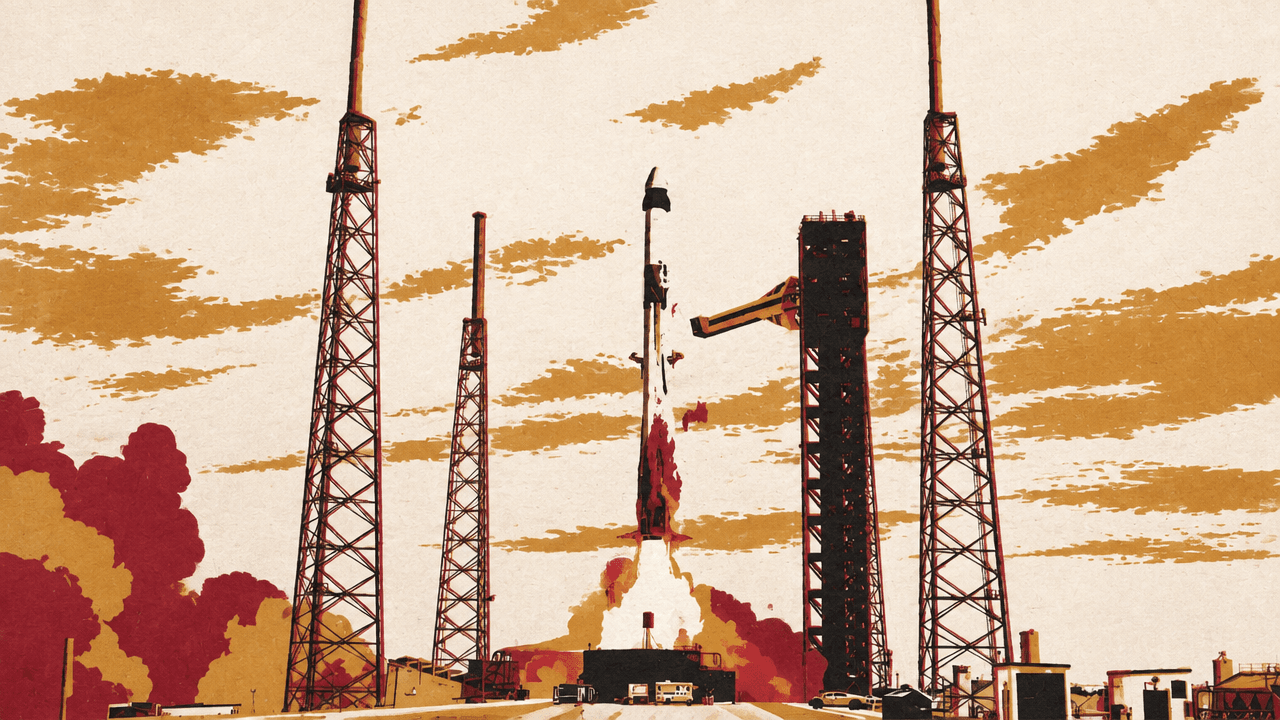
The launch is one link in NASA’s continuous station-crew rotation
Crew-13’s launch was both a rocket ascent and a crew-rotation mission. SpaceX sent four astronauts aboard Dragon Grace to the International Space Station, where they are expected to live and work for six months. The flight belongs to a series of SpaceX missions that NASA uses to keep the station staffed at all times. That operational role gives the launch a significance beyond getting one crew into orbit: it is part of the recurring transport pattern on which continued staffing depends.
The rocket’s first stage supplied the thrust for the early climb. Launch commentary reported that all nine of its Merlin engines were operating at a maximum thrust of 1.7 million pounds. As the vehicle rose, it began pitching downrange—turning slightly toward horizontal flight to build speed. The flight therefore shifted from a largely vertical departure into an ascent shaped to gain horizontal velocity as well.
Early telemetry illustrated that acceleration. Shortly after liftoff, the display showed 529 kilometers per hour at 1.7 kilometers altitude; by the approach to Max Q, it showed 947 kilometers per hour at 8.9 kilometers. These are snapshots rather than a full flight profile, but they show the vehicle gaining speed and altitude during the first part of the climb.
The first stage throttled down in preparation for Max Q, which the commentary described as the largest structural load the vehicle experiences during ascent. After the call marking Max Q, the launch team said the rocket and crew had passed through it. The vehicle was then reported supersonic. In this part of the flight, throttling down was not a sign of trouble: it was a planned adjustment before the vehicle continued accelerating.
Stage separation changes which hardware is carrying the crew
The handoff between stages is the key change in the launch’s powered climb. Before cutoff, the nine first-stage engines were carrying Dragon upward. The commentary identified “one Bravo” as entry into the first stage’s second and final abort mode, while also reporting that performance remained good and the crew was experiencing more than two Gs. As the vehicle continued, the first-stage engines throttled down again ahead of main engine cutoff, or MECO.
The events that followed were closely connected: the first-stage engines cut off, the stages separated, and the second-stage Merlin Vacuum engine ignited. That single engine then continued carrying Dragon toward orbit. The first stage, no longer powering the crew’s ascent, began its return toward Earth; the commentary described a boost-back burn as part of that return.
A later telemetry reading placed the vehicle at 6,003 kilometers per hour, 62.8 kilometers altitude, and 3.4 G before first-stage cutoff. The commentary’s separate statement that the crew was pulling over two Gs describes the experience during the ascent, while this display records a particular point in the climb.
The stage separation was shown in a split-screen view, with the first-stage booster moving away from the second stage above Earth. The accompanying telemetry placed the first stage at 6,185 kilometers per hour and 75.3 kilometers altitude, and the second stage at 6,162 kilometers per hour and 75.6 kilometers. The close readings belong to the moments just after separation; they do not change the central distinction between the stages’ roles. The first stage had completed its part of carrying the crew upward, while the second stage was now providing the continuing thrust.
The launch commentary confirmed the second-stage engine’s ignition verbally and visually. In the subsequent view, the first stage floated away while the second stage’s engine continued firing. For a mission intended to deliver four people to a station that NASA seeks to keep staffed continuously, that transition is the critical division of labor: one stage completes its ascent task and turns back toward Earth, while the other continues carrying the crew toward orbit and the International Space Station.