SpaceX IPO Pitch Seeks $2 Trillion Valuation on AI and Mars
 Ed Ludlow
 Lauren Webster
 Anthony Wang
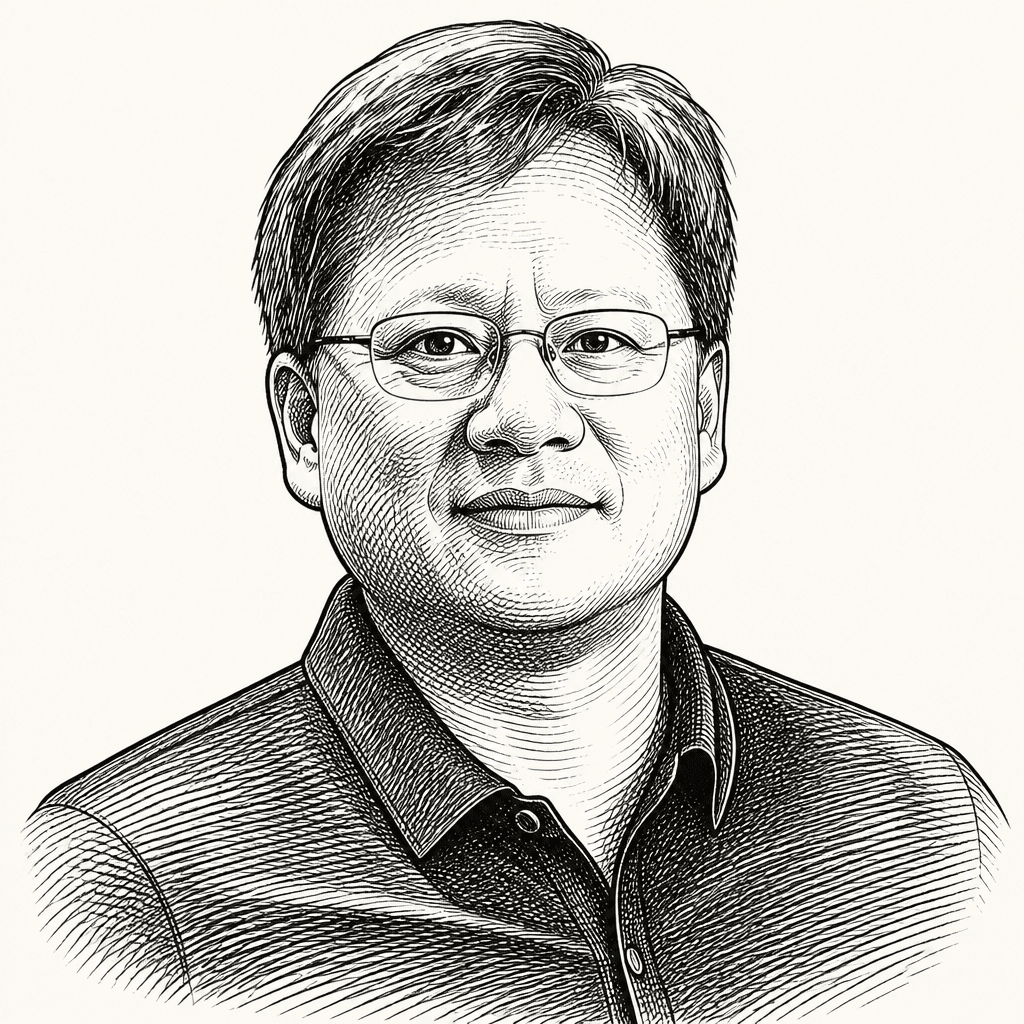 Jensen Huang
 Brian Chesky
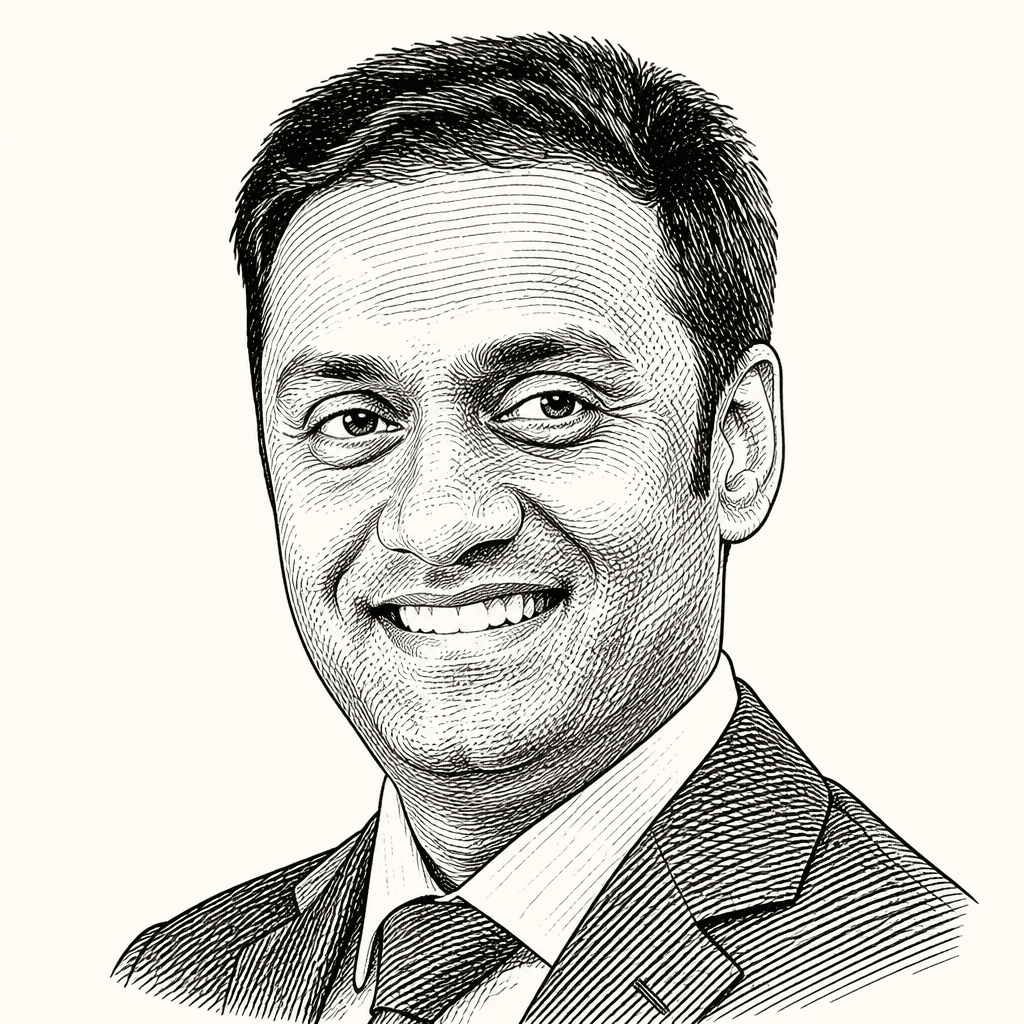 Kunjan Sobhani
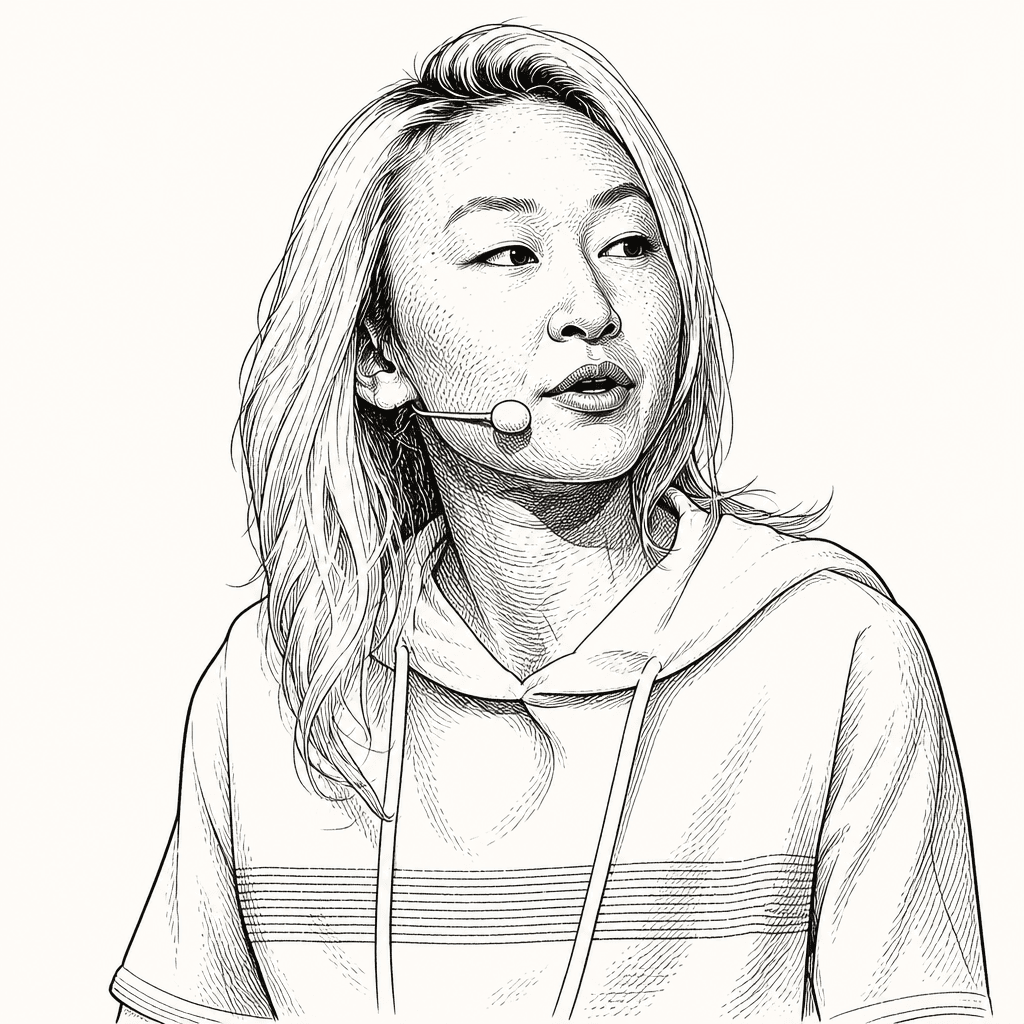 Sarah Guo
 Sana PashankarBenedikt Kammel
 Shirin Ghaffary
 Anna Rathbun
 Ryan GouldBloomberg TechnologyThursday, May 21, 202615 min read
Bloomberg Technology’s Ed Ludlow framed SpaceX’s Nasdaq IPO filing as a test of whether public investors will underwrite Elon Musk’s farthest-reaching claims: a company seeking a valuation above $2 trillion, as much as $75 billion in proceeds and a $28.5 trillion addressable market built largely on AI, Starlink and Mars. Bloomberg reporters and guests said the filing asks investors to look past large losses, debt and Musk’s continuing control, while treating Starship and space-based infrastructure as central to the valuation case rather than speculative side projects. The program placed that pitch alongside Nvidia’s effort to prove AI demand is broadening beyond hyperscalers and possible OpenAI and Anthropic filings that could bring similar public-market scrutiny to frontier AI.

SpaceX is asking public investors to price a business far beyond launch
SpaceX's IPO filing puts a public-market document around an unusually expansive promise: a company with large losses and debt is seeking a valuation above $2 trillion while telling investors its addressable market is $28.5 trillion. The proposed Nasdaq ticker is SPCX. Bloomberg's on-screen summary said SpaceX is seeking to raise as much as $75 billion, a scale that would make it the largest IPO of all time.
Ed Ludlow framed the prospectus as asking investors to believe in three things: AI in space, a million people on Mars, and Elon Musk's ability to make those ambitions happen. That, he noted, is also what IPO storytelling is designed to do: persuade investors to buy into a future that is not yet fully built.


The filing disclosed a $4.28 billion loss, and Ludlow cited a $29 billion debt pile. Benedikt Kammel said the most striking contrast was between the ambition of the market claim and the current financial base. SpaceX reported quarterly sales of just under $5 billion, with a loss “not that dissimilar,” he said. For a company with those numbers to pursue a $2 trillion valuation, Kammel called the ask “obviously pretty steep.”
The control disclosures and commentary were not presented with a single clean figure. Bloomberg's filing graphic said Musk's voting control was 85%, and Ludlow later asked Lauren Webster about Musk having 85.1% voting power prior to the offering based on the share structure. Kammel separately said Musk would retain “absolute control” and referred to control “about 41%” and “just north of 40%.” The common point across those references was that public investors would be buying into a company in which Musk remains the dominant decision-maker.
Kammel said the filing's incentive structure could make the economic stakes even larger. If Musk succeeds in reaching specified milestones, including putting people on Mars and building a Mars colony, Kammel said he could gain another one billion bonus shares. In that scenario, SpaceX could create “lots of billionaires” and potentially “the first trillionaire,” if the pricing and subsequent valuation path unfold as hoped.
The underwriting roster carries its own signal. Ryan Gould said Goldman Sachs occupies the “plum left position” in the S-1, with Morgan Stanley, Bank of America, Citigroup and JPMorgan to its right. He described Goldman's position as a marketing win: the bank can tell shareholders it is leading the biggest IPO of all time. Morgan Stanley, however, has the stabilization agent role, which Gould said is not a detail to pass over because the stabilization agent can be central to first-day trading flow, potentially handling 20% to 30% of day-one flow in some cases. Gould said the economics were understood to be roughly equal, but the public optics and operational roles differ.

Bloomberg's comparison placed a possible $2 trillion SpaceX valuation among the largest public companies by market capitalization, below Amazon at $2.79 trillion and above Broadcom at $1.95 trillion, based on Bloomberg data as of the May 19 market close.
| Company | Market cap shown |
|---|---|
| Nvidia | $5.34T |
| Alphabet | $4.68T |
| Apple | $4.39T |
| Microsoft | $3.10T |
| Amazon | $2.79T |
| SpaceX potential valuation | $2.00T |
| Broadcom | $1.95T |
| Tesla | $1.52T |
Another Bloomberg graphic showed that no initial listing had ever topped $30 billion. The largest listed examples were Saudi Aramco at $29.4 billion in December 2019, Alibaba at $25.0 billion in September 2014, SoftBank at $21.1 billion in December 2018, AIA at $20.4 billion in October 2010 and Visa at $19.7 billion in March 2008. Against that history, a $75 billion raise would not merely set a record; it would more than double the prior benchmark shown in the source.
| IPO | Amount | Timing shown |
|---|---|---|
| Saudi Aramco | $29.4B | Dec. 2019 |
| Alibaba | $25.0B | Sept. 2014 |
| SoftBank | $21.1B | Dec. 2018 |
| AIA | $20.4B | Oct. 2010 |
| Visa | $19.7B | March 2008 |
The AI portion of the SpaceX pitch carries most of the TAM
The $28.5 trillion addressable-market claim is not primarily a space-launch number. Ludlow said $26.5 trillion of it is AI. He described SpaceX's argument as running through xAI and said the company was presenting itself as competing with OpenAI, Anthropic and Google in agentic AI and in the transformation of white-collar work.
Lauren Webster said the TAM was “aspirational” and “visionary,” but not abnormal in form. Every prospectus, in her view, contains a lofty total-addressable-market estimate, and every company going public wants to tell investors it has multiple ways to win. SpaceX's filing is doing that in unusually large numbers, but the underlying move is familiar: the company is telling investors it has multiple paths to meet the growth expectations embedded in the IPO.


Webster was skeptical of prospectus TAMs as a category. She said she does not know whether she has “fully, truly believed any TAM put in a prospectus,” and that she has always been able to poke holes in them. The part of SpaceX's TAM that required the most unpacking for her was the enterprise-application wedge.
For Webster, the investable story has three core pieces: the core space business, autonomy and connectivity through Starlink, and AI. The core space business remains SpaceX's foundation, particularly launch and rockets, where she said the company has a large competitive lead and has “bent the cost curve” for the future space economy. The second leg is Starlink as an edge-connectivity layer for autonomous vehicles, robots and other systems. The third is AI, including the xAI element Ludlow had raised.
Webster pointed to the xAI piece, Colossus data centers and Anthropic as examples of areas where she said SpaceX was already delivering. Later, Ludlow said the S-1 stated Anthropic would pay SpaceX $1.25 billion per month through 2029 for compute. For Webster, large AI TAM numbers will be a recurring feature of the market this year, especially if OpenAI also proceeds toward an IPO, because AI touches the enterprise ecosystem and consumer daily life.
The prospectus matters, Webster argued, because it is where SpaceX has to assemble the story, the numbers and the risks. The purpose is not only legal disclosure but investor persuasion: what exactly investors are buying, why the growth paths are multiple, and what risks come with the ambition.
Musk's voting control, in her view, is not surprising in technology IPOs. Dual-class and super-voting share structures are common among founder-led technology companies. For Musk specifically, Webster said investors have given him a “very long leash” for capital-intensive projects, partly because of what he delivered at Tesla and what SpaceX has already done in the space economy. The control may invite caution, but she said it was not unexpected.
Starship's planned launch on the same day as the filing added a live test to the story, but Webster said the launch was not binary for investor enthusiasm. SpaceX and Musk have conditioned investors to understand that failure is part of attempting difficult engineering. If Starship succeeded that evening, she said, it would create “even greater enthusiasm” and a crescendo around the IPO opportunity; if it failed, she did not think investor enthusiasm would simply disappear.
Starship is not a side project in the SpaceX IPO
Starship sits at the center of the valuation argument because it is the vehicle SpaceX needs for the largest parts of its stated future. Sana Pashankar said the planned test was the twelfth major Starship flight and a crucial milestone for both Musk's SpaceX ambitions and the company's coming IPO valuation.

The launch was scheduled from Starbase, Texas, around 6:30 p.m. Eastern time. Pashankar said the upgraded Version 3 vehicle would ignite its Raptor engines, lift off into space, lap around the globe and splash down in the Indian Ocean. The upgraded version was described as having improved engines, power and capability.
The reason Starship matters to the IPO story is payload. Ludlow connected the rocket to Starlink, space-based data centers and humans reaching Mars. Pashankar said Starship's payload capacity would make possible orbital data centers involving as many as one million spacecraft orbiting Earth, an ambition she attributed to SpaceX. Falcon rockets, SpaceX's current workhorse vehicles, cannot build that kind of system at the same scale or pace, she said. SpaceX needs a much larger vehicle that can carry 60 satellites to space if it wants to build orbital data centers on a timeline that could lead to profit.
Starship is also tied to lunar and Mars ambitions. Pashankar described it as advertised as the most powerful rocket ever built, with the thrust and capacity needed to carry humans to the Moon and Mars. Its importance is not only commercial: she noted that SpaceX has a NASA contract for Starship to land humans on the Moon. That makes the program central not only to SpaceX's future pitch but also to U.S. space ambitions as presented in the source.
Nvidia beat expectations, but investors wanted a harder answer on durability
Nvidia's earnings did not produce the market reaction a strong forecast might once have guaranteed. Shares were down about 2% after choppy premarket trading, despite what Ludlow described as a strong forecast and Jensen Huang's message that Nvidia is diversifying beyond data-center giants.
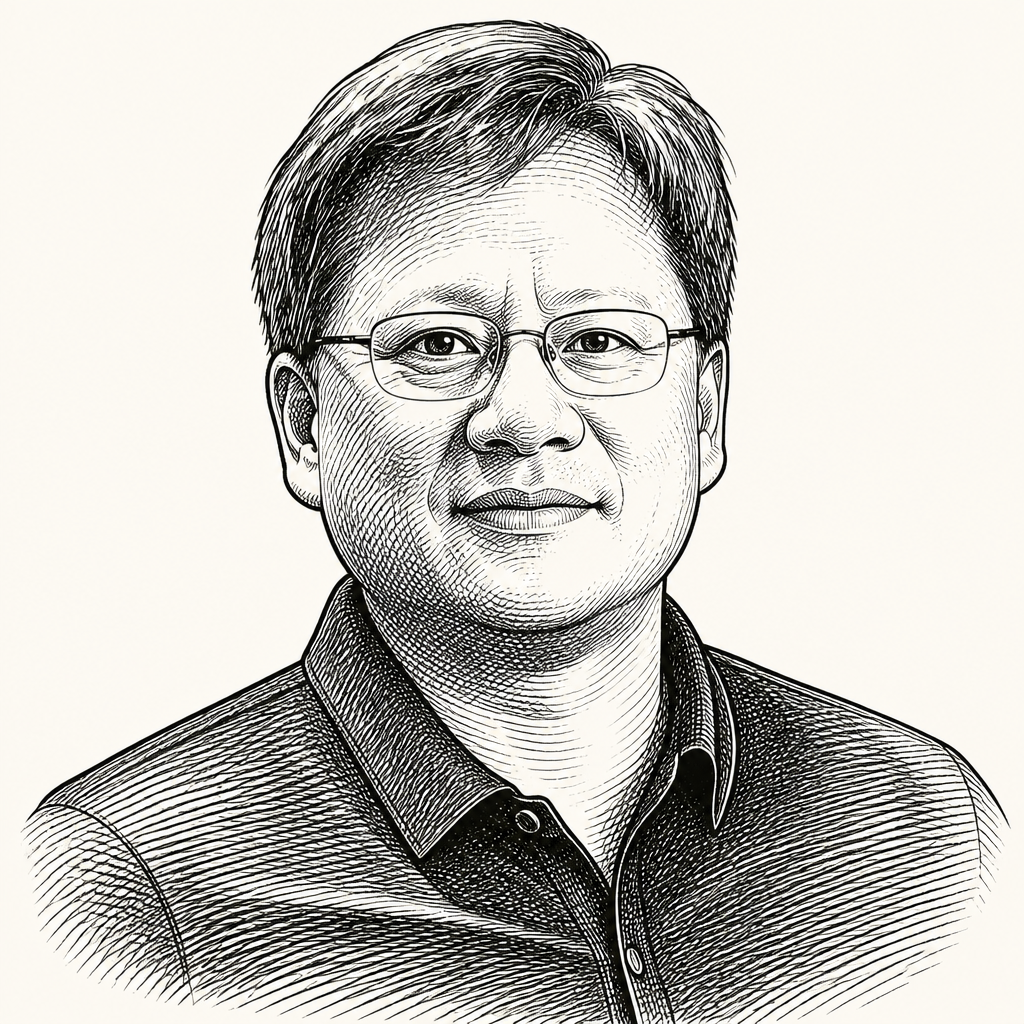
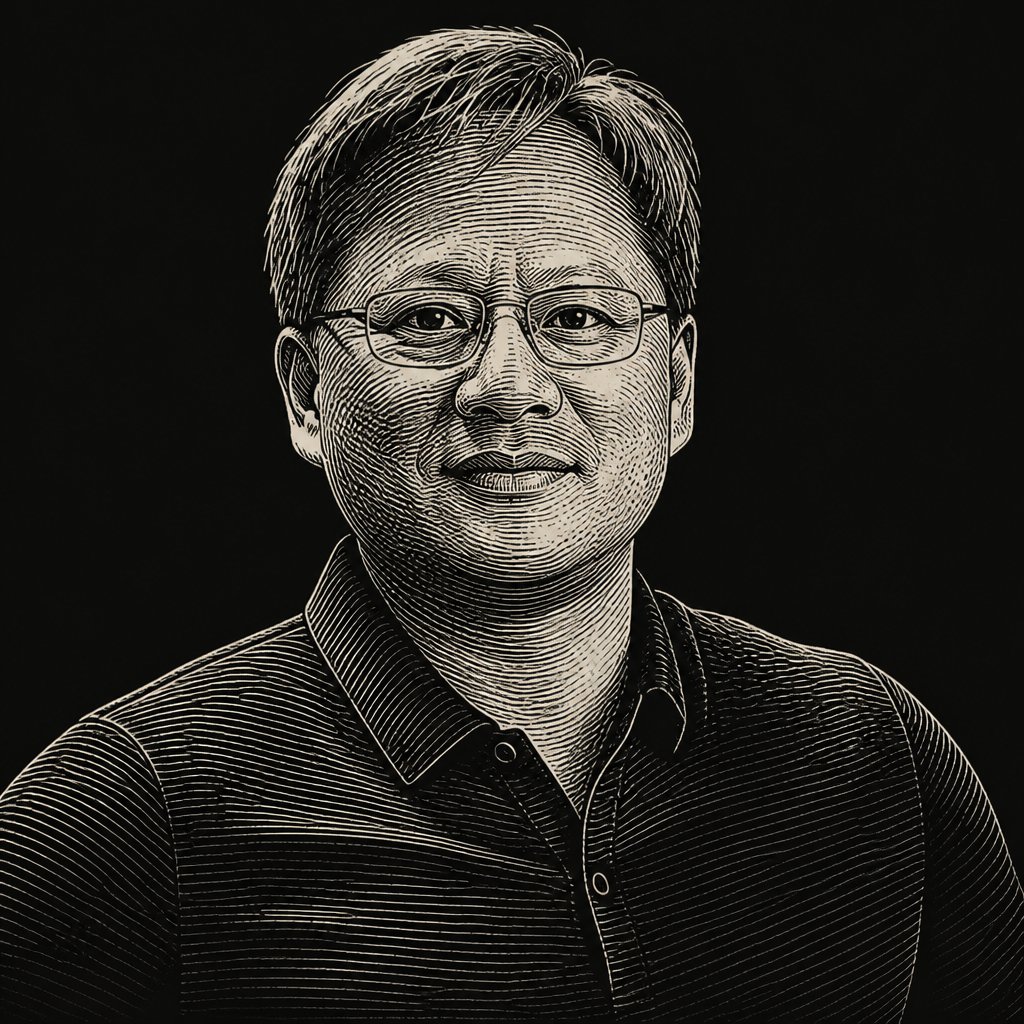
Huang said on the earnings call that “the world is rebuilding computing for agentic AI and robotic physical AI” and that Nvidia sits at the center of those transitions. In a separate exchange with Ludlow before earnings, Huang said Nvidia's supply-chain partners had secured supply and that the silicon photonics and other pieces were lined up, but demand remained “much greater than the overall capacity of the world.”
Anthony Wang argued that the market's hesitation reflects an old semiconductor-investor playbook applied to a new kind of growth curve. Traditional semi investors, he said, are conditioned to sell this type of growth because they assume it is unsustainable and that margins have peaked. Wang's view was that the underlying demand drivers are more durable than that framework allows.

He pointed to agentic AI as the key shift. Instead of a model performing a one-shot task or working for a few minutes, Wang expects agents to work across much longer time horizons, potentially months of persistent task execution. That requires substantially more compute. He also argued that scaling laws continue to hold: frontier models improve as more compute is applied, and being on the frontier can save money because better models avoid unproductive paths while completing tasks.
Nvidia's own framing included a $1 trillion figure tied to Blackwell and Rubin systems over calendar years 2025 to 2027. Ludlow characterized it as “basically a backlog” while asking whether Nvidia's growth was running ahead of hyperscaler capex growth. Wang said one encouraging aspect of the quarter was Nvidia's breakout of hyperscale versus enterprise and sovereign demand. The bear case, as he put it, is that Nvidia cannot outgrow hyperscale capex. The bull case is that new TAMs are emerging outside hyperscale: enterprise AI adoption, financial-services demand, sovereign AI and eventually robotics.
| Segment | Fiscal 1Q 2027 revenue | Actual vs. estimate |
|---|---|---|
| Compute | $60.4B | -1.1% |
| Networking | $14.8B | +16.1% |
| Edge computing | $6.4B | +13.1% |
| Total | $81.6B | +11.4% |
Wang said Nvidia's multiple looked attractive if growth remains durable. Ludlow noted Nvidia was trading at roughly 22 times forward 12-month earnings versus a historical level nearer 34 times. Wang compared Nvidia's capital-return program to Apple's earlier buyback story: it did not re-rate the stock immediately, but over time consistent capital return at an attractive valuation expanded the multiple. He also defended Nvidia's investments across the ecosystem, saying that when a company is at the technology frontier it must build the ecosystem, support the supply chain and help partners advance the frontier.
On the customer-revenue question — whether Nvidia's customers can generate enough revenue from all the compute they are buying — Wang said yes. He cited cloud demand, GPU pricing that remains strong even for older chips, enterprise demand, and AI solutions inside T. Rowe Price itself that are consuming many tokens. Even older A100 GPUs, he said, continue to be used, and demand has allowed more value to come out of older GPUs than bears expected.
The strongest Nvidia thesis is now outside the hyperscalers
Bloomberg Intelligence's Kunjan Sobhani argued that Nvidia's most important signal was not the familiar beat-and-raise pattern but evidence that growth is broadening beyond hyperscalers. He described the non-hyperscaler segment as fragmented and easy to miss because it includes sovereign AI, AI neo-clouds, AI labs, enterprise and industrial deployments, on-prem AI, and data-center operators becoming GPU-heavy AI cloud renters.
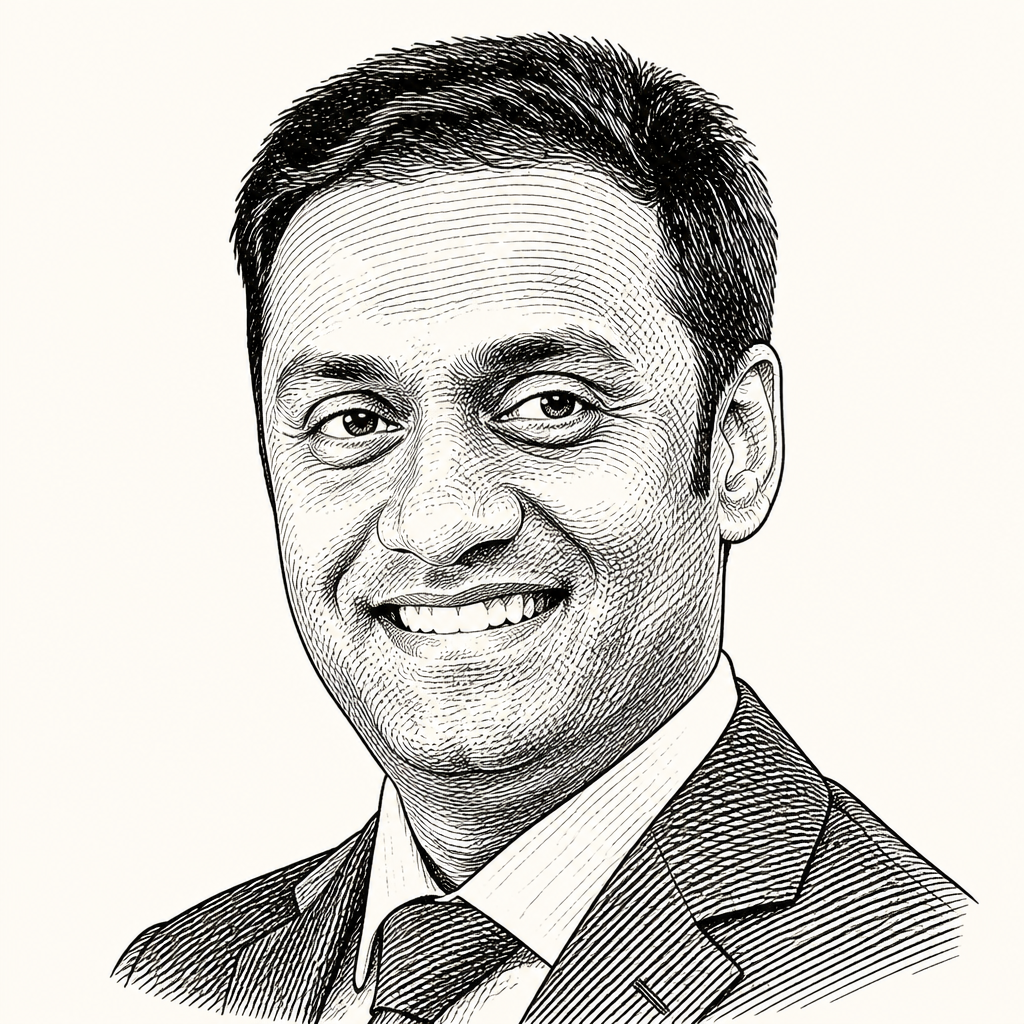
Sobhani said this “second segment” is becoming more significant and is expected to grow faster than the top hyperscaler segment. For Nvidia, he argued, it is especially attractive because competition is weaker there. ASICs, TPUs and Trainium do not compete in the same way in that segment, he said, leaving Nvidia with what he called a “purely monopolistic” position. The company also gets a higher stack attach rate, meaning it can sell more networking and other components with the GPUs, and earn better margins.
That view helps explain why the $1 trillion systems figure was treated as potentially understated. Sobhani said the figure includes Blackwell and Vera Rubin full-stack systems beginning to ramp in the third quarter. But he said it excludes several additional revenue categories: a $20 billion standalone CPU opportunity for 2026 and 2027, Grace-based LPX servers, newly launched storage-based CPX servers and other networking components. Based on Bloomberg Intelligence estimates, he said the $1 trillion number is rising, with upside beyond $1 trillion plus the excluded items.
Anna Rathbun took a more cautious market-structure view. Nvidia, she said, is now “lonely at the top.” As the largest company in the world, there may be little it can do to surprise investors to the upside. In her reading, Nvidia delivered almost everything investors had asked for: revenue, earnings, networking growth and diversification of the customer base. But the harder question is whether growth is slowing relative to what investors have expected over the past two or three years.


The dividend increase mattered to Rathbun because dividends create a multi-year commitment. Buybacks alone did not concern her as much; she said $80 billion is not enormous for a multi-trillion-dollar company. A dividend, however, can signal that a growth company is finding fewer places to reinvest and is instead returning cash. She still expects Nvidia to grow because of the ecosystem it sits at the center of, but she treated the dividend as a small but real signal.
Rathbun also separated the day's Nvidia reaction from the broader AI trade. She said the reaction was about Nvidia itself, not necessarily the AI industry. China, however, remained a concern. She described China as an unreliable market for Nvidia, especially after reports that China banned gaming chips while Huang was there. In her view, China should be treated as upside optionality, not a dependable base case, making it sensible for Huang to focus on sovereign AI and other opportunities outside China.
Startups feel the compute shortage directly
For AI startups, Nvidia's demand story is not abstract. Sarah Guo said Conviction bought compute for its portfolio companies early in the fund's life because it expected all of them to need it and because a venture fund could absorb timing risk. At the time, that meant buying H100 nodes in the cloud.
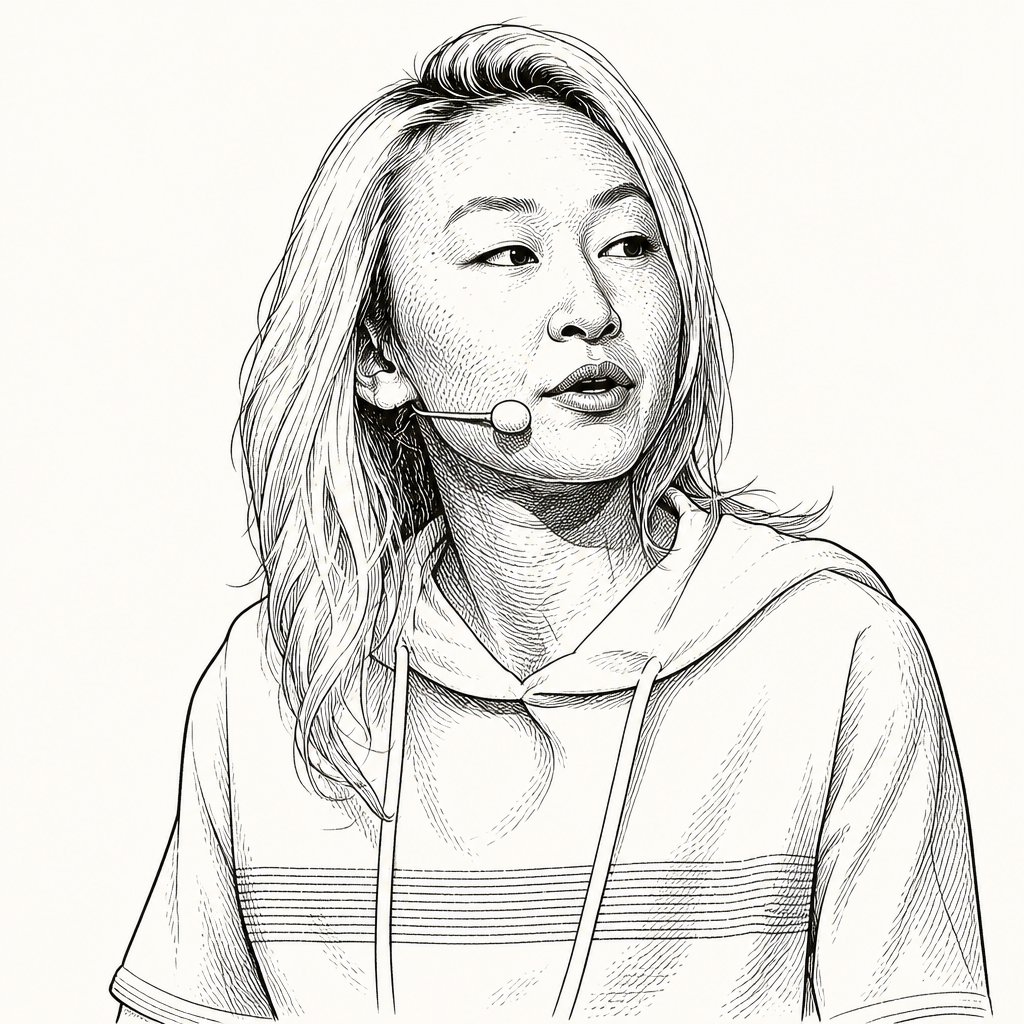
Guo said compute needs vary by company layer — infrastructure, model or application — but nearly all companies want to start experimentation with frontier performance, which today means Nvidia chips. As companies mature, they may post-train smaller models, optimize costs and use more tokens per task to change the user experience. But at the frontier stage, she said, “everybody wants to start with current generation chips.”
The shortage, in her experience, has intensified. Guo described roughly two quarters of increasing stress in the ecosystem around access to supply at different scales. She said she has spent time with leaders of cloud companies that serve Nvidia chips trying to buy $100 million of compute at a time, with multi-year commitments, and still facing difficulty. She described that as a scenario she had not been in before: trying very hard to pay someone a large amount of money and still not being able to secure what startups need.
Guo said small-scale on-demand compute is especially hard to get, which matters because many startups begin there. She also said she believes Huang's demand-side statements. In her view, the rapid revenue growth in products such as cloud coding reflects long-horizon agents becoming useful in one specific use case. Code is not the only knowledge-work function, she argued. If long-horizon agents can generate meaningful revenue in one domain within months, the same pattern can spread across many knowledge-economy functions.
That view also shaped her reaction to SpaceX's AI TAM. Guo called the number and the diagram “funny” because it placed Starlink alongside enterprise AI, but she did not dismiss the size of the opportunity. She cited Andrej Karpathy's framing that the simplest way to think about AI is automation of tasks people already do. If models are given the tools and harnesses to perform those tasks, they can take over work. On that basis, she said the opportunity is as large as Musk says.
The open question, for Guo, is not whether the infrastructure side can make money. She said the infrastructure and the capability to build more are extraordinarily valuable, and that Musk will make money from that no matter what. The question is whether SpaceX also needs to own the model layer and the application layer. The S-1, she said, is a choice: Musk could have focused elsewhere, but by highlighting enterprise AI he is committing SpaceX to make its offerings relevant there.
AI adoption is also becoming a data-control question
Congressional scrutiny of Airbnb's use of Chinese AI models exposed a narrower issue within corporate AI adoption: when companies use outside models, where does customer data go? A Bloomberg graphic quoted the House Select Committee on China and the House Committee on Homeland Security as saying they had “serious concerns about the national security and data-security implications” of Airbnb's approach for American customers and for the integrity of its systems.
Brian Chesky said Airbnb is not a customer of the companies in question and is instead using a variety of open-source models. He emphasized that data and privacy are most important to Airbnb and said, “All of our data is vaulted. No company has access to our data, it is vaulted in Airbnb.” Chesky said the congressional committee had contacted Airbnb with questions and that Airbnb was in direct contact and cooperation with the committee.


OpenAI and Anthropic may face the same public-market test
SpaceX may not be the only large technology IPO in view. Shirin Ghaffary said OpenAI could make a confidential IPO filing as soon as Friday or in the coming weeks. That would place it in close competition with Anthropic, which she said is also expected to potentially file in the fall, as well as with SpaceX's already public S-1 process.


The valuations involved are already approaching the scale of the public-market debut being discussed. Ghaffary said OpenAI was last valued at more than $850 billion earlier in the spring, while Anthropic was in talks to raise at a valuation of up to $900 billion, according to Bloomberg reporting cited in the source. If either company goes public months from now, she said, the expectation would likely be for a valuation further north, closer to the trillion-dollar mark.
The rationale for going public is not simply that OpenAI and Anthropic need money in the old IPO sense. Ghaffary noted that these companies can already command massive private financing rounds at unprecedented levels. Public markets, however, offer access to large pools of capital with more ease and frequency, without the repeated private-funding “song and dance.” They also allow everyday investors to participate in the AI boom — or, as she cautioned, the AI bust if the cycle turns.