AI Ambitions Push South Park Commons Toward Larger, Longer Investments

South Park Commons co-founder Aditya Agarwal says AI is prompting founders to pursue more capital-intensive ideas, from grid infrastructure to nuclear-powered cargo ships, rather than the narrower software businesses common a few years ago. The firm’s $575 million fourth fund is designed to match that shift: South Park Commons plans to keep working with entrepreneurs before their companies are fully formed, then write larger checks and stay involved through later financings once it has conviction.
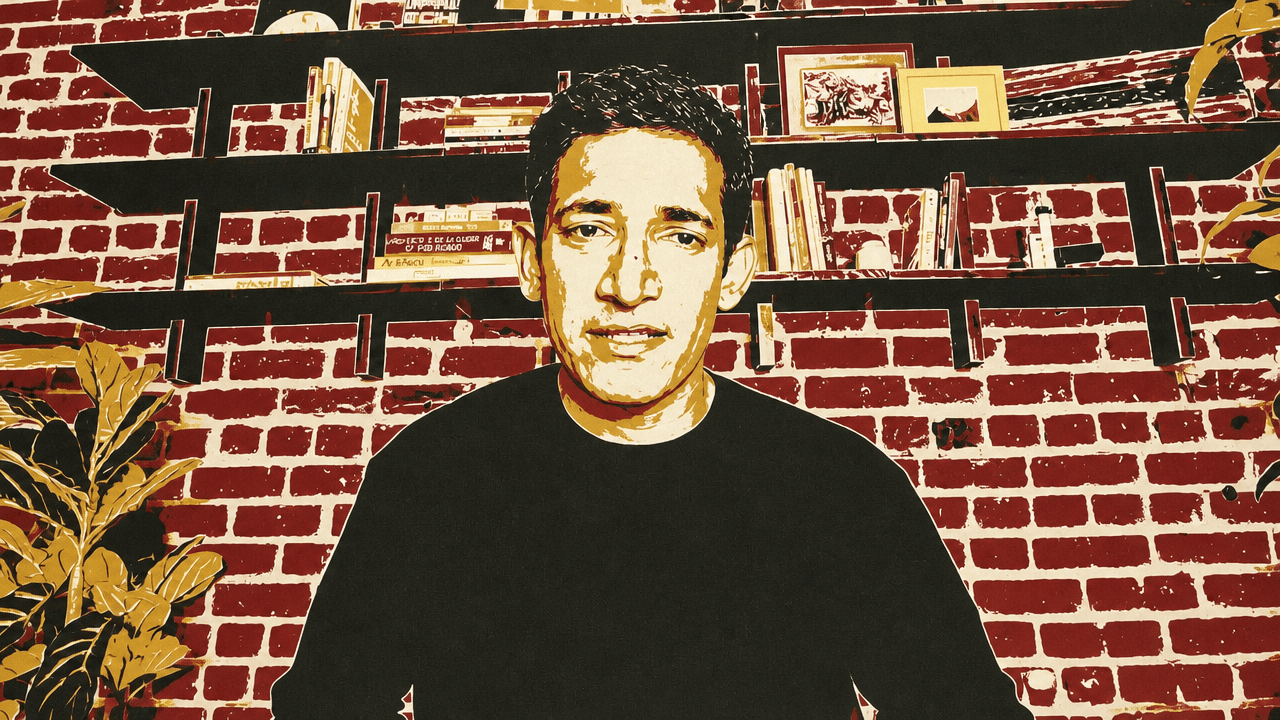
Fund IV is designed to match founders’ larger ambitions
? aditya-agarwal says South Park Commons’ $575 million fourth fund is meant to give the firm a larger role in the companies it encounters at the earliest stage: writing bigger initial checks and continuing as a high-conviction investor further down the capital stack.
The reason, in his account, is a change in the scale of ideas founders are bringing to the community. South Park Commons began in 2016 with the aim of working with early-stage founders and encouraging them not to settle too quickly on the first viable idea. Its premise was that people should spend time finding the biggest and most ambitious version of what they might build.
Agarwal says AI has materially widened that range. Five years ago, he characterizes many prospective companies as vertical SaaS businesses or otherwise more limited ideas. Now, he says, founders are considering nuclear-powered cargo ships, alternative ways of launching things into space, and efforts to transform American grid infrastructure.
Whereas, you know, five years ago a lot of folks were thinking about vertical SaaS startups or somewhat more limited, I would say, ideas, today, people are coming to us with ideas for building nuclear-powered essentially cargo ships.
The new fund is South Park Commons’ attempt to make its own capacity commensurate with those plans. Agarwal does not present the change as a move away from early-stage investing; rather, he describes a desire to remain a committed partner after an early relationship has turned into a company requiring subsequent financing.
Bloomberg’s on-screen fund graphic described South Park Commons as historically targeting pre-seed startups and said its first three funds ranked in the top 10% of their respective vintages. The firm’s portfolio graphic placed Cognition alongside Baseten, Luma AI, Replit, Goodfire, and Profound, situating the coding-agent company within the set of investments Bloomberg highlighted.
Ed Ludlow frames the strategic change as continuity with a different financial capacity: South Park Commons still wants to meet founders at the earliest opportunity, but it now intends to have more capital available as the ambitions of selected companies grow.


The work begins while an idea is still taking shape
South Park Commons calls its approach “minus one to zero.” The phrase describes the period before a founder has committed to a particular company or settled on the idea they will pursue. Rather than treating that interval as dead time, Agarwal describes it as a gestation phase: a chance to explore, tinker, and let an idea develop before acting on it.
? aditya-agarwal frames the model partly as a response to the ready-made paths available to people leaving major technology companies or academia. He draws on his own experience after leaving Dropbox, where he had been CTO. At that point, he says, he had several attractive options: join a blue-chip venture firm, become an executive, or start another company. Silicon Valley, in his telling, is very good at offering a pattern match—if someone has done X, they should do Y.
That clarity can also make it easy to pursue the first idea that comes to mind. South Park Commons’ advice is to pause instead: identify what a founder is genuinely passionate about and find the largest form of the idea before committing to building a company around it.
Agarwal says the process can take three, six, or nine months. During that time, ideas are allowed to crystallize through exploration rather than being treated as finished at the moment a person leaves a job or academic setting.
The firm did not use the “minus one to zero” language at its founding, Agarwal says. It became a label for the model South Park Commons developed: “minus one” is the open-ended period in which a person is still exploring, and “zero” is the point at which an idea has become clear enough to pursue.
The claim is not that every founder should defer starting a company. It is that founders with many obvious options may benefit from time to find a more consequential version of an idea than the one that first appears available.
Cognition is the case for conviction built early
Ed Ludlow tested the new strategy against Cognition and its CEO, Scott Wu, whom Ludlow described as having substantial growth and momentum. For ? aditya-agarwal, Wu illustrates what South Park Commons can do differently when it has known a founder well before the defining company takes shape.
Wu was one of South Park Commons’ first members, around 2017 or 2018, Agarwal says. His first company, Lunch Club, came out of the community. Several years later, when Wu began working on what Agarwal describes as a modern coding stack and early forms of Devin, South Park Commons already had a long relationship with him.
That history informs how Agarwal says he would use the new fund in a comparable case. The change is not merely that South Park Commons could make an early investment; it is that it could make a much larger one from the outset and continue participating in later rounds.
I would just back up the truck with the first check.
Agarwal also rejects a simple zero-sum view of Silicon Valley financing. In his view, investors supporting a company from its earliest stages still need to work with the wider funding ecosystem as the company develops. He referred to “folks downstream of us” and said that achieving what he called a company’s “asymptotic success” requires collaboration rather than treating later investors as rivals.
Fund IV, then, is meant to join two parts of South Park Commons’ model: proximity to founders while they are still working through what to build, and more financial capacity once the firm has conviction. The Cognition example is Agarwal’s illustration of that sequence—a relationship established through the community, followed by a willingness to invest more heavily and remain involved through later financing.