Recursive Emerges From Stealth at $4.65 Billion Valuation

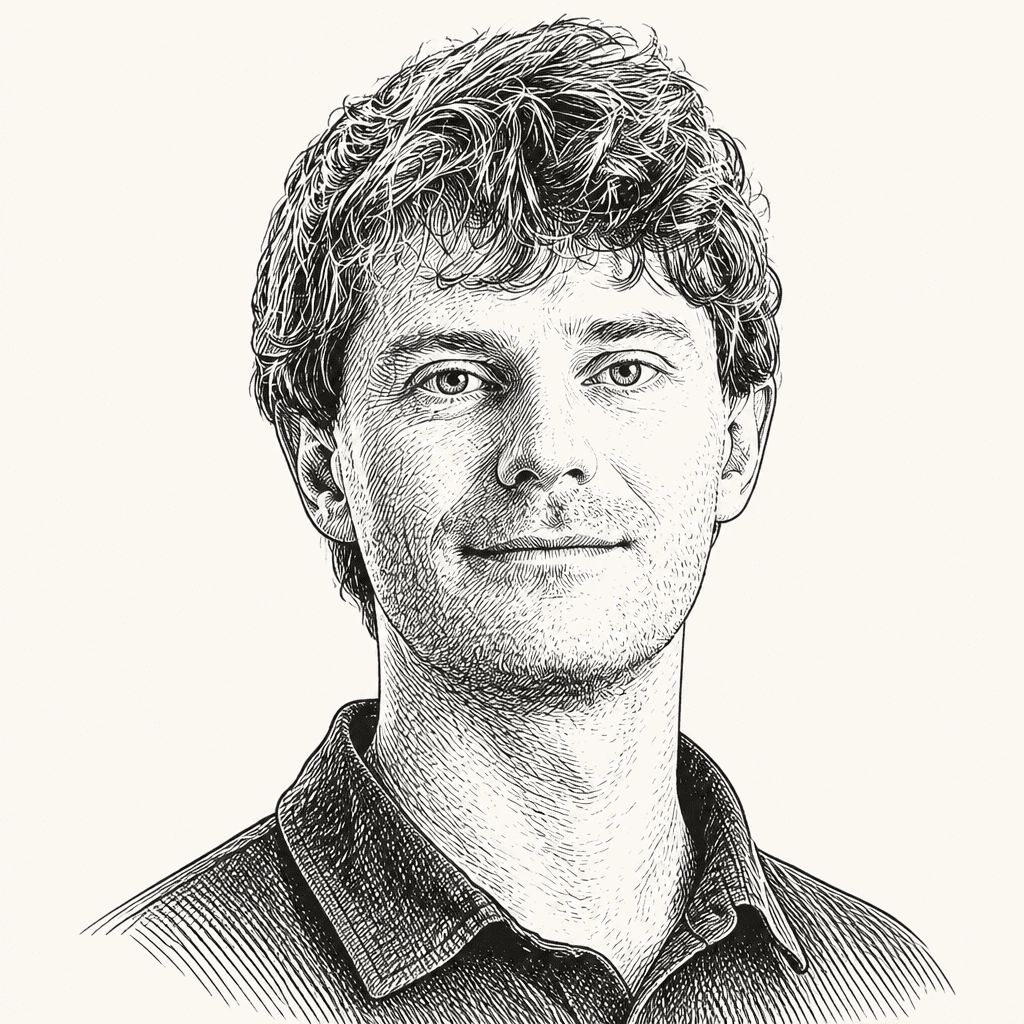
Recursive CEO Richard Socher told Bloomberg that the newly disclosed startup is trying to build AI systems that can automate the research loop: proposing ideas, implementing them, testing them, and using the results to improve AI itself. The company emerged from stealth with more than $650 million raised, a $4.65 billion valuation, and backers including GV, Greycroft, Nvidia, and AMD. Socher argued Recursive’s edge is an organization built around open-ended AI experimentation, while Bloomberg’s Caroline Hyde pressed him on compute costs, safety, hiring, and why the work belongs in a separate lab.

Recursive is entering the race with capital, chip backers, and a self-improvement thesis
Recursive emerged from stealth with more than $650 million raised and a $4.65 billion valuation, according to Bloomberg’s on-screen graphic. The round was shown as co-led by GV and Greycroft, with GV, Greycroft, AMD, and Nvidia listed as backers.
Richard Socher described the company’s goal in maximal terms: “recursive self-improving superintelligence” that can automate knowledge discovery. His premise is that AI is now both code and a system capable of writing code, which makes it possible to build a loop in which AI proposes ideas, implements them, validates them, and then applies the results to improving AI itself.
Socher said Recursive is trying to replace parts of the human research cycle: the ingenuity involved in coming up with ideas, the engineering required to implement them, and the validation work needed to test whether they are useful. The company’s thesis is that those steps can be pushed into an AI-driven experimentation system.
Caroline Hyde pressed the central competitive question: why should a new company have an edge when many ambitious AI labs are already pursuing superintelligence? Her challenge was not whether Recursive’s target was ambitious, but why Socher should build a separate lab rather than help an existing one do the same work.


Socher’s claimed edge is a company built for open-ended AI experimentation
Richard Socher answered the competitive challenge by pointing first to the team. Recursive, he said, has assembled co-founders from Google, DeepMind, OpenAI, Salesforce Research, Meta, and other labs. But the larger distinction, he argued, is that Recursive was built from the beginning around open-ended AI experimentation.
The company’s focus, Socher said, is to allow AI to build “the next better version of AI.” He contrasted that with older labs, which he said were largely created before the current infrastructure for AI-driven experimentation was possible.
His technical claim rests on a pattern he sees in AI research: when manual systems are replaced by learned systems, performance improves substantially. Recursive is trying to apply that pattern to AI development itself, replacing more of the human-led process of designing, testing, and refining research directions with learned systems that can generate and evaluate improvements.
Whenever in AI research we replace manual systems with learned systems, we see a massive improvement.
The phrase he used for the company’s focus was “open-endedness.” He described an organization built around systems that can keep generating and testing improvements rather than being confined to a narrow, pre-specified task.
The compute bet is that more GPUs can mean more inventions
Compute is not just an operating expense in Socher’s account. It is part of Recursive’s core research bet. Asked about the cost of taking on larger incumbents and the demand for GPUs, Richard Socher said compute is one of the company’s largest costs and framed it as central to what Recursive is trying to prove.
The proposed “big new scaling law,” as Socher put it, is that more compute results in more inventions and more improvements. That is the capital-intensive version of the self-improvement claim. Recursive is not only betting that more compute will improve model performance. Socher described a broader bet that compute can be converted into a higher rate of AI-generated discovery, through systems that experiment on AI itself.
The participation of Nvidia and AMD fits that claim. Socher tied their involvement in the round to the compute demands of the business, saying Recursive was excited to have both companies involved because compute is such a large cost.
Safety is treated as another domain for AI-driven improvement
The safety concern follows directly from Recursive’s premise. Caroline Hyde asked about the risks and limits of open-ended, self-improving AI if it is not done safely.
Richard Socher called safety “a huge concern.” His concrete answer was that some Recursive co-founders have worked on “rainbow teaming,” which he described as work where AI improves the safety of large language models. He named Tim Rocktäschel and collaborators in that context.
Socher’s answer put safety inside the company’s broader belief that AI can be used to improve AI systems. He said Recursive takes safety very seriously and suggested that AI-driven improvement can apply to safety as well as capability.
He also stated the upside in expansive terms. Recursive’s target, he said, is ultimately a “Eureka machine”: a system that helps invent “everything else thereafter.” He linked that to the claim that superintelligence would allow humanity to flourish “much, much more.”
The operating model depends on people, agents, equity, and constant work
The practical constraint is not only compute. Caroline Hyde also challenged Richard Socher on bandwidth: he is already CEO of You.com and involved with AIX, a venture firm Hyde noted had just lost its co-founder. Asked how he divides his time, Socher’s answer was brief: “I work all the time,” with “incredible teams” around him.
Those teams include AI agents, Socher said after Hyde asked, but also “some really incredible humans.” That moved the discussion from CEO bandwidth to hiring economics. Hyde noted that “incredible humans” also cost a lot of money and asked whether Recursive would use equity, the ambition of the task, or other incentives to recruit further talent as people become a significant expense line alongside GPUs.
Socher’s answer was ownership. Founders, he said, need to think less about the size of their personal slice and more about the overall potential of the company being built. Recursive shares equity with employees and others involved, and Socher argued that ownership changes how people relate to AI work: the more ownership people have over what they are creating, the more they can care about the outputs and become enthusiastic about the technology.