Samsung Reaches $1 Trillion Valuation on AI Chip Demand


Bloomberg’s Sangmi Cha argues Samsung’s move past a $1tn market value is more than a symbolic milestone: traders are reading it as a direct expression of the AI infrastructure trade, driven by tight memory-chip supply and helped by news of an Apple partnership. Cha says the rally still has room in investors’ eyes because Samsung trades at about 5.3 times forward earnings, while the company’s surge is also feeding a broader foreign-led rally in Korean equities.
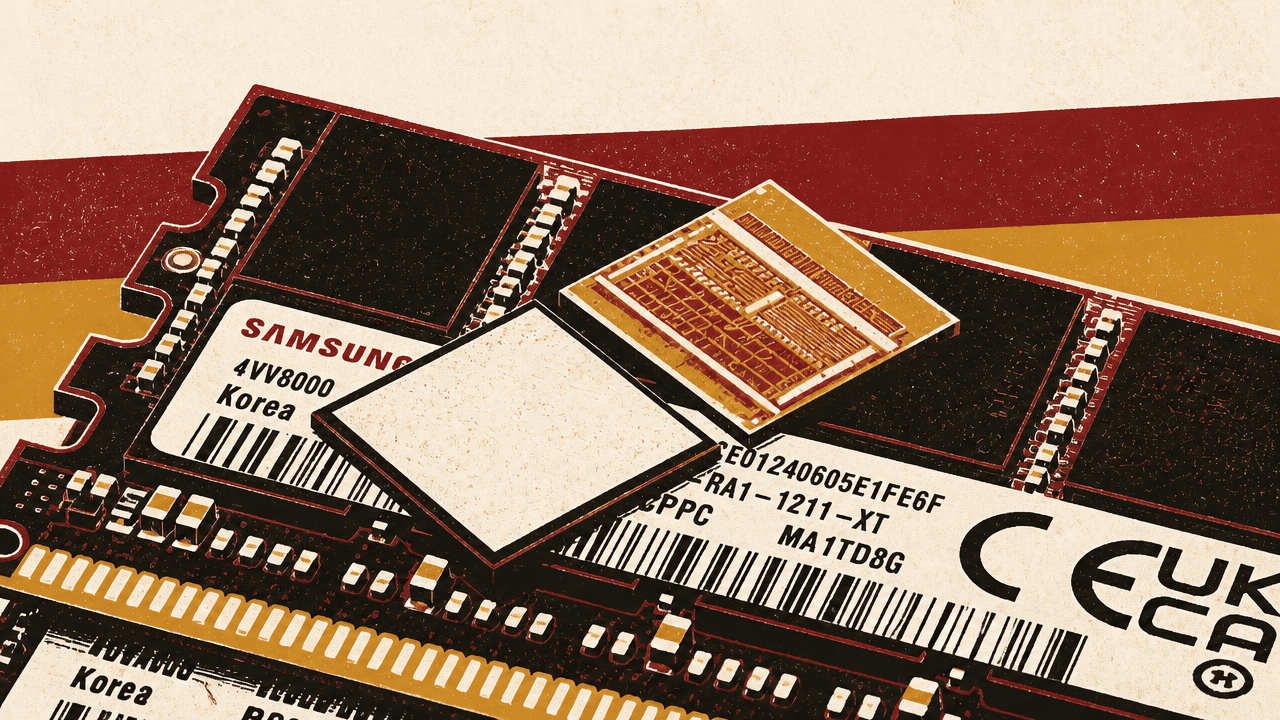
Samsung’s trillion-dollar valuation is being read through AI infrastructure, not prestige alone
Samsung has crossed $1 trillion in market value after booming demand for chips used in artificial intelligence, a move Shery Ahn described as “quite the feat” because the company is only the second Asian company after TSMC to reach that level. The world’s largest memory maker has more than quadrupled over the past year.

Bloomberg’s market-cap chart presented the move plainly: “Samsung Becomes Trillion-Dollar Company” and “Market cap tops milestone,” over a steep multi-year upward line. The point was not only the threshold itself, but the scale of the rerating behind it.
For Sangmi Cha, traders are treating the milestone as “beyond just symbolic” because activity in AI infrastructure is showing up directly in Samsung. The immediate share move was large even on a short horizon: Bloomberg’s five-day Samsung Electronics chart showed the stock at 257,500, up 32,500, or 14.22%; an updated version showed it at 258,500, up 33,500, or 15.11%.


Cha attributed the rally to tightness in memory chips. She also pointed to news of an Apple partnership as a fresh boost for Samsung shares. Her point was not that the partnership had already changed Samsung’s business mix, but that an Apple tie-up would be read as an endorsement from a company that also competes with Samsung in smartphones, and could support the foundry business Samsung has been pushing.
The striking number is not just $1 trillion — it is 5.3 times forward earnings
Samsung’s rise has been dramatic, but Sangmi Cha emphasized that the stock still trades at around 5.3 times forward earnings. She described that as significantly below both Samsung’s five-year average and many other technology stocks.
That valuation is central to why some traders do not see the rally as exhausted. Even after the stock more than quadrupled over the past year, Cha said many traders are saying “it’s not too late” to join the rally and “get on this bandwagon.”
It’s traded at around just 5.3 times forward earnings — significantly lower than its five-year average or even compared to many other tech stocks.
That combination — a sharp rally and a still-low multiple — is why Cha said traders see room for the move to continue.
The KOSPI has moved from 3,000 to above 7,000 in a year
The Samsung move is also bound up with a broader South Korean equity rally. Shery Ahn put the question directly: “As Samsung goes, the KOSPI goes as well.” Sangmi Cha said the KOSPI was up more than 5% on the day, bringing year-to-date gains to more than 70%. She also called attention to the index moving above 7,000, a “significant psychological level,” after being at 3,000 just a year earlier.
Bloomberg’s intraday market check showed the breadth of the move:
| Market | Level | Change | Percent change |
|---|---|---|---|
| KOSPI | 7,279.74 | 342.75 | 4.94% |
| USD-KRW | 1,460.80 | 6.44 | 0.44% |
| Samsung Electronics | 259,500.00 | 27,000.00 | 11.61% |
| SK Hynix | 1,567,000.00 | 120,000.00 | 8.29% |
The displayed panel put Samsung up 11.61% intraday and SK Hynix up 8.29%, while the KOSPI itself was higher by 4.94%. Cha’s explanation for the broader Korean move included investor attention to a market-access development: Samsung Securities partnering with Interactive Brokers in the United States.
She said much of the buying is foreign-led, and that the partnership would allow foreign investors to buy Korean stocks directly through IBKR. Previously, in her description, those investors had to create brokerage accounts with Korean brokerages, which involved “a lot of hurdles.” Cha said the change could add to the momentum already visible in Korean stocks.