Oracle Trucks Natural Gas to Keep Data Center Builds on Schedule


Oracle is trucking natural gas to data centers near Salt Lake City and is considering the same approach for a New Mexico site where a needed pipeline is delayed. Bloomberg’s Brody Ford described trucked gas as a stopgap, not a preferred long-term power source: the workaround reflects pressure to bring data centers online quickly after Oracle has borrowed heavily to build them.
Trucking gas is a stopgap between the grid and a delayed pipeline
Oracle is already sending about 30 trucks a day to data centers outside Salt Lake City, according to Brody Ford. Separately, the company is considering trucking natural gas to a build in New Mexico, where a pipeline needed to help power a key data center is delayed. The Utah deliveries show the approach in use; the New Mexico project is a possible response to a specific infrastructure delay.
Ford described three different power arrangements. In the ideal case, a data center connects to the electrical grid. If that is not available, an onsite power plant can be supplied by a pipeline. Trucking gas is a further step away from that setup: a temporary way to get fuel to a site when the planned infrastructure cannot meet the schedule.
Ford said large-scale gas deliveries by truck are more familiar in remote mining or temporary industrial operations. Applying them to data centers is a sign that the usual arrangements are not ready in time, rather than a preferred long-term model. He connected that urgency to the cost and timing of the buildout: Oracle has borrowed heavily to construct the data centers, he said, and its business depends on getting them online quickly.
If a pipeline is delayed six months out, then you start saying, wow, we've borrowed a lot of money to build these data centers. Our entire business is premised on getting them online quickly. We need to find a stopgap.


That contrast helps explain why the Utah and New Mexico details matter in different ways. The Salt Lake City deliveries indicate that trucking is already being used at data center sites. In New Mexico, the question is whether the same workaround can help keep a project moving while a required pipeline is delayed. Ford said the approach allows Oracle to keep the sites moving, but described the company as being under pressure to do so.
The report put schedule risk in the market’s view
Brody Ford said investors may have read the report as a sign that delays were more significant than expected. In his view, trucking large volumes of gas is the kind of measure a company takes when it is “really under the gun.” Oracle was finding a way to make the sites work, he said, but its schedule was under pressure.
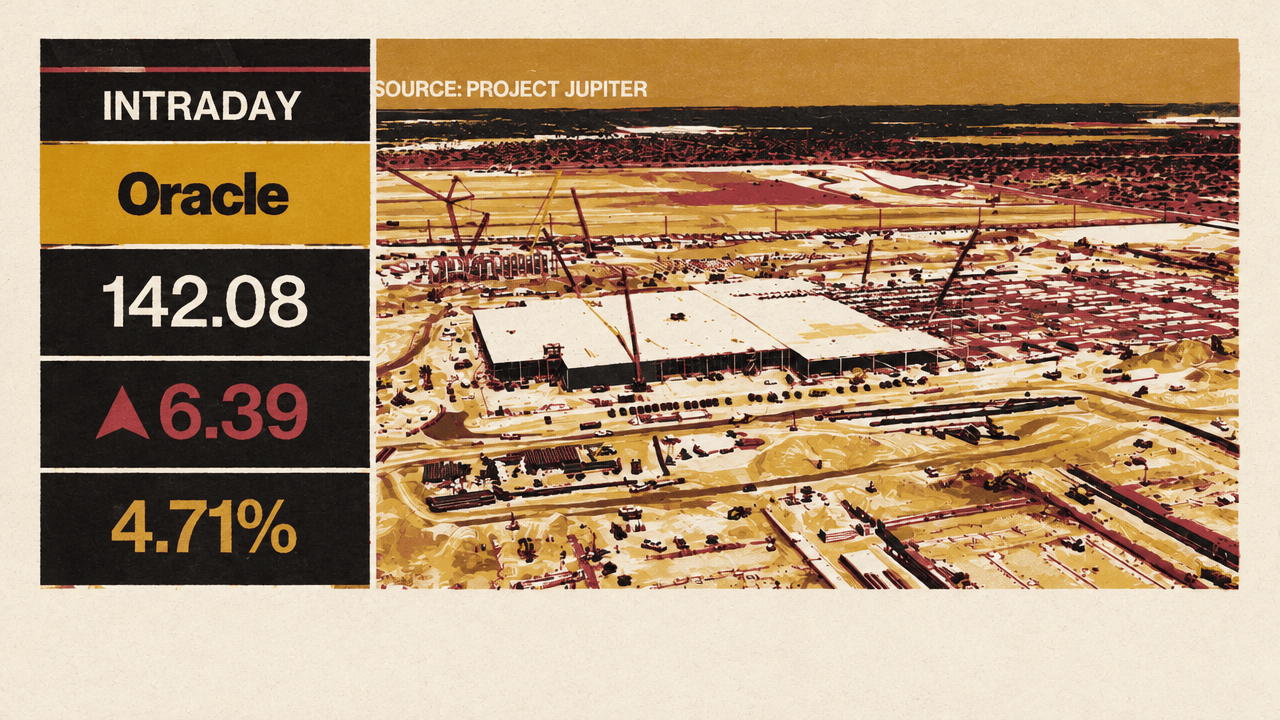
Ed Ludlow placed the stock discussion alongside other factors affecting Oracle shares. He said the stock had been under pressure in part because of confusion around OpenAI’s annual recurring revenue figure, and that after the report broke it continued to slide. The intraday panel shown during the discussion displayed Oracle at 142.10, up 6.41, or 4.72%. That displayed snapshot is distinct from Ludlow’s account of the earlier pressure and decline; the figures do not, by themselves, establish the stock’s movement across that whole period. A separate one-year panel displayed Oracle at 142.11, alongside a downward figure of 154.86 and 52.15%.


Ford’s interpretation was that the report sharpened concern about delays: the need to truck gas suggested that the expected power arrangements were not arriving on schedule. Ludlow and Ford also said Oracle had not responded to Bloomberg’s request for comment. Ford said Oracle had posted on social media expressing support for the partner helping it carry out the work.