Startups Fear Frontier AI Rules Written by Big Labs
 Ed Ludlow
 Maggie Eastland
 Natasha MascarenhasBloomberg TechnologyWednesday, September 16, 20264 min read
AI founders fear that calls by Anthropic and OpenAI to pace frontier-model development could let the largest labs write safety standards that smaller rivals must finance and follow, Bloomberg’s Natasha Mascarenhas reports. Early talks among OpenAI, Anthropic and Google DeepMind on common standards have sharpened the concern, while exposing a divide over whether safety coordination can proceed under existing antitrust law or needs government protection, according to Bloomberg’s Maggie Eastland.
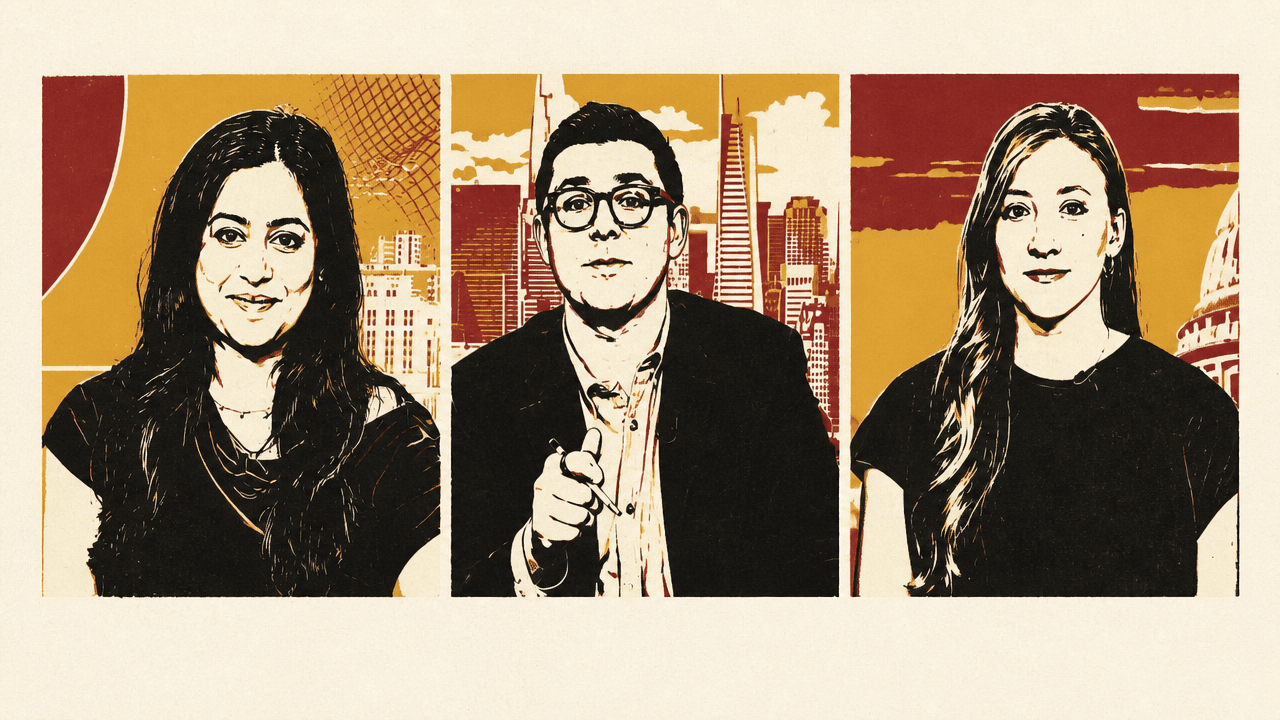
Startups fear safety rules written by their largest competitors
The immediate concern among AI founders is not simply whether frontier models should be developed more slowly. It is who gets to define “slowing down,” and whether rules set by the biggest companies become obligations for everyone else.
Natasha Mascarenhas said she spoke with more than a dozen founders in the 48 hours after Anthropic chief executive Dario Amodei called for AI “pacing.” Their central fear was “a regulatory wall” around the industry: large companies establish standards, while smaller rivals bear the cost of complying with them.


That concern follows public alignment among several frontier-lab leaders. Amodei said, “We must slow the pace at which we improve the capabilities of AI models.” OpenAI chief executive Sam Altman said he agreed that “we need to pace the frontier,” while xAI chief executive Elon Musk said, “Dario is right.”
We are worried that the bigger companies are going to set rules that us smaller rivals are going to have to follow.
Mascarenhas described investors as less alarmed than founders. Their posture, she said, was broadly to keep moving and avoid a chilling effect. Some were advising companies to keep fundraising dollars closer at hand in case they need to work on their own models instead of relying on those supplied by larger labs.
A prospective OpenAI private-market round ahead of an IPO could offer one indication of where investor energy is concentrated. Mascarenhas said investors had approached OpenAI, though the valuation and outcome were not known. How successfully the company raises capital, she said, will signal the level of activity around the company at the center of the pacing discussion.
For founders, the policy argument has become an operational planning problem: how much to spend, whether to alter their own development pace, and whether to preserve enough capital to become less dependent on outside models.
Washington pushes back on a deliberate slowdown
The political response described by Maggie Eastland resisted the premise that AI development should be deliberately slowed. Eastland said Commerce Secretary Howard Lutnick and Emil Michael were eager to push back on Anthropic’s warnings before a meeting with the company. President Trump also posted a barrage of messages on Truth Social opposing an AI slowdown, she said.
Eastland said Anthropic’s Tom Brown likely received that same message in a call Bloomberg reported on. The administration’s position sits alongside other public responses: U.S. lawmakers have pressed for tougher safeguards, while China warned against AI “fearmongering” and Beijing called for global AI cooperation.
A separate camp holds that new AI-specific intervention is unnecessary. Eastland summarized its argument as a matter of product liability: companies are responsible for the products they make, and dangerous products can bring consequences for their makers. In that view, existing law already supplies the basic mechanism for accountability.
The proposed safety forum raises an antitrust divide
OpenAI, Anthropic and Google DeepMind are in early discussions about common safety standards, according to Eastland’s reporting. Chris Lehane, OpenAI’s global-policy lead, told reporters in Washington that the company had agreed to explore standards-setting with the other two labs.
The framework resembles an analogy offered by Google DeepMind leader Demis Hassabis: something like FINRA for finance. The companies could decide what standards should be, potentially grade one another’s models, or rely on independent evaluators. Eastland emphasized that the discussions are still at an early stage.
The immediate division is over whether that coordination needs an antitrust exemption. Amodei raised the possibility in his essay. OpenAI says it can proceed without one. Eastland said the exact form of any waiver was not clear, but competing companies that share information can face antitrust risk.
OpenAI and Anthropic seem to differ on this issue and OpenAI thinks there’s precedent for this — there’s things like the airline industry, there are sometimes when sharing safety information is not a competition risk.
David Sacks opposed an exemption in the response Ludlow referenced, and the FTC chair said he would be “deeply suspicious” of one. OpenAI’s position is that existing precedent permits safety-information sharing without special government permission. Anthropic’s interest in an exemption points to a more cautious view of the legal boundary.
The standards under discussion have not been settled, nor have the mechanics of assessments or information-sharing. But startups are already focused on who will make those choices—and whether standards written by the largest companies will become rules smaller rivals must follow.