Nvidia Says Rubin Systems Are Shipping to Major AI Customers


Nvidia is responding to questions about its Vera Rubin rollout by arguing that the systems have moved beyond design and into deployment: major AI customers have received them, and at least one rack is running. Ian King reports that the company is also pitching robotic assembly and a claimed installation time of tens of minutes from a data-center loading dock to operation as evidence that its advantage lies in how quickly hardware becomes usable capacity.
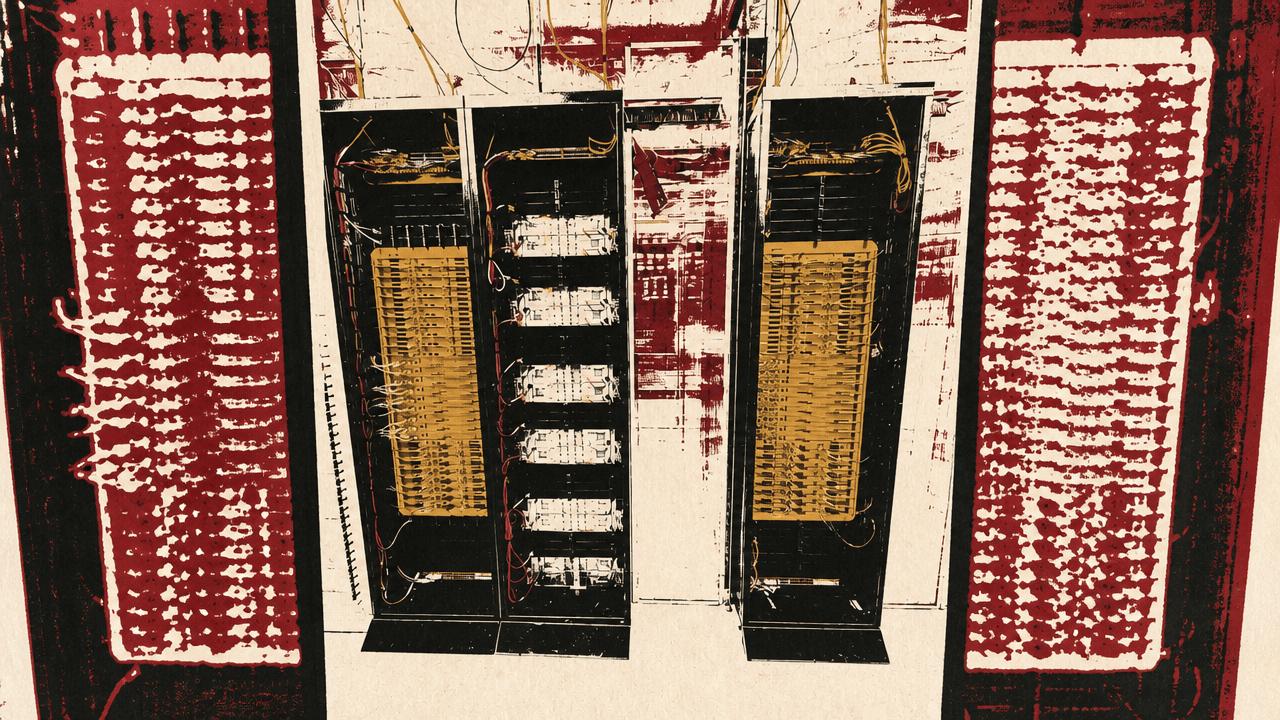
Nvidia’s answer to Rubin schedule questions is a deployment chain
Nvidia is responding to scrutiny over the Vera Rubin rollout with a specific set of operational claims: accelerated-computing systems have been delivered to major AI companies, those customers are about to begin running workloads, and at least one rack is already assembled and operating.
The point is not merely that Rubin hardware exists. Nvidia sought to show that it can move through the stages that turn a new AI platform into usable customer capacity: assemble the rack, deliver it to a data center, install it, and bring it online. Ian King said Nvidia used a visit to its Santa Clara headquarters to counter what he called a lingering view that the rollout had encountered a problem.
Ian Buck, whom King identified as the head of Nvidia’s data-center business, brought reporters through Jensen Huang’s office for a walkthrough of the company’s position. Nvidia then took the group to a location King described as secret, where it showed a server rack already in use and running. That demonstration was intended as a direct response to reports that materials problems could keep the equipment from being ready.
Ed Ludlow described the displayed rack as a representation of an NV72 system, a rack-scale configuration with 72 Rubin GPUs. He said the real version was in full production—a claim aimed at questions Huang had faced about whether the platform was actually ready to ship at scale.
Nvidia’s argument therefore rests on evidence at several points in the deployment process. Deliveries to major AI companies suggest the systems have moved beyond Nvidia’s own facilities. A running rack is meant to establish that the equipment is operational rather than only designed or announced. And the company’s manufacturing and installation claims address whether those systems can be repeated and put to work quickly enough for customers.
The claimed advantage is speed after the hardware leaves the factory
King said Nvidia emphasized changes to how the racks are built. What previously took hours of manual assembly, with room for human mistakes, has been redesigned so that a robot can put the system together, according to Nvidia’s account.
That is an important part of the company’s response because a rack-scale AI system is not useful to a customer simply because its components have been manufactured. It must be assembled into a working unit, transported to the customer’s data center, and made operational after it arrives. Nvidia presented robotic assembly as a way to reduce a slow and error-prone step before shipment.
The company also claimed it had shortened the final stage. King said Nvidia told reporters that, once one of these systems is dropped at a data-center loading dock, it can go from the dock to running in “tens of minutes.” He contrasted that with the longer process Nvidia said had previously been required to get a delivered system up and running.
The source does not provide a prior benchmark or a technical breakdown of the commissioning process. But the direction of Nvidia’s message is clear: the relevant measure is not just chip availability, but the elapsed time between production and productive AI workloads. Automated construction addresses the factory-side handoff; faster commissioning addresses the customer-site handoff.
We're going faster. Try and catch us.


That competitive challenge is how King characterized Nvidia’s pitch. Rather than rebutting rollout doubts with a future delivery date, Nvidia pointed reporters to hardware it said had already been delivered, a rack it said was already running, and a process it said could make installed capacity available more rapidly.
Intel’s data-center unit is still being made leaner
The same market discussion included a different operational message from Intel. Ludlow noted that Intel shares were having a strong day amid a rebound in chip stocks, while Intel was also dealing with another effort to streamline one of its divisions.
An Intel spokesperson said its Data Center Group, or DCG, was aligning its organization as part of a broader strategy to become “a more focused and efficient company.” The statement said the goal was to ensure the business had the right roles and skills for long-term success.
King said Intel had already eliminated “multiple tens of thousands” of employees and reduced its cost base appreciably. He said further redundancies were coming in the data-center group as the company seeks what it considers a leaner position.
The contrast in the reporting is limited but consequential. Nvidia was using a physical demonstration to emphasize production, delivery and activation of a new AI-computing system. Intel’s data-center news was about organizational cost reduction. Neither point alone resolves the competitive position of either company, but they describe different immediate operating priorities: Nvidia was defending the pace of a product rollout, while Intel was continuing to reshape the organization behind its data-center business.