Nvidia’s $20 Trillion-by-2030 Case Depends on AI Demand and Software

I/O Fund CEO and tech analyst Beth Kindig says her forecast that Nvidia could reach a $20 trillion market value by 2030 does not depend on Jensen Huang remaining CEO. She bases the case on AI compute demand continuing to outstrip supply and on Nvidia eventually building recurring software revenue in areas such as autonomous vehicles and robotics. Kindig also points to the stock’s lowest valuation multiple in years, while acknowledging that AMD is emerging as a stronger competitor in rack-scale AI systems.
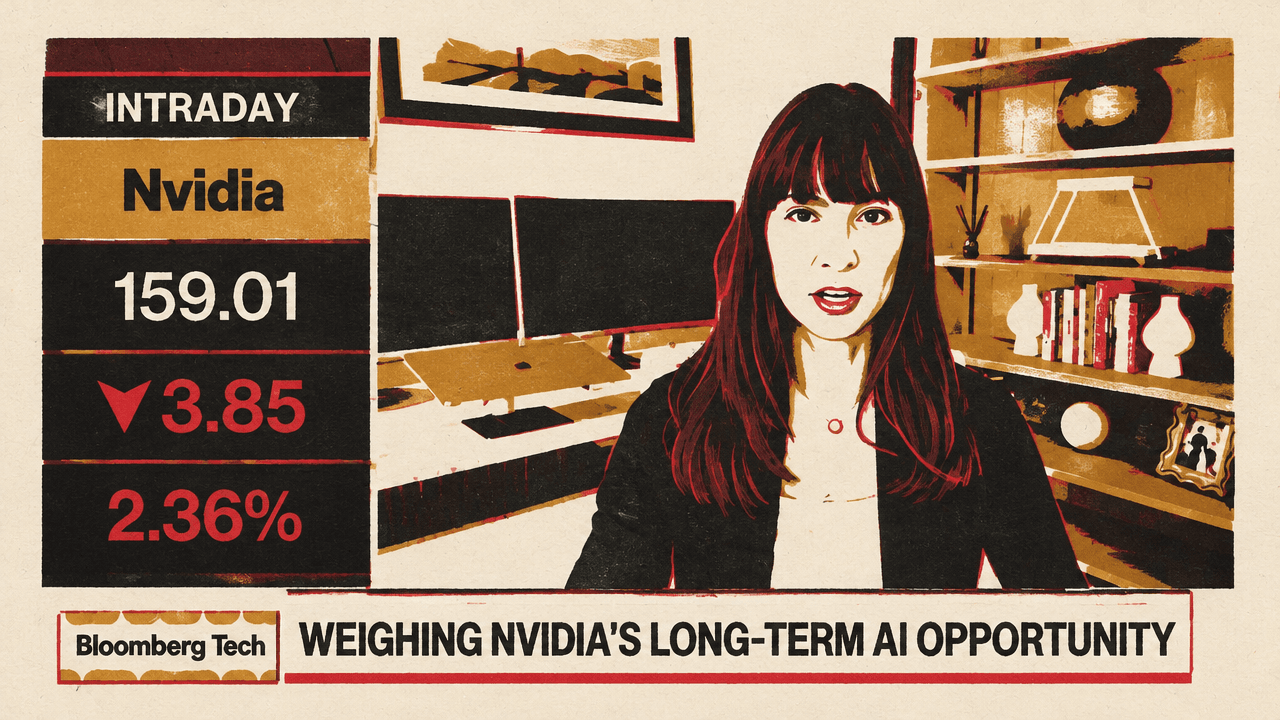
The $20 trillion forecast depends on two conditions, not on one CEO
? beth-kindig says her forecast that Nvidia could reach a $20 trillion market value by 2030 does not depend on Jensen Huang remaining CEO. She bases it instead on two conditions: demand for AI compute continuing to exceed supply, and Nvidia developing recurring software revenue in markets such as autonomous vehicles and robotics.
For the supply case, Kindig points to memory companies’ visibility into demand. She says they are effectively sold out through the end of the decade, which she takes as evidence that demand is greatly exceeding supply. She treats the software opportunity as a later, separate part of the thesis: toward the end of the decade, she expects autonomous vehicles and robotics to become a more prominent part of Nvidia’s story. Those markets, she says, could provide a massive expansion of the company’s addressable market, though they are not the current narrative.
That distinction matters to the forecast. Kindig’s case combines a present supply-demand imbalance with a future opportunity to earn recurring software revenue. She says Nvidia is positioned to capture that opportunity, but does not describe it as an established source of revenue today.
Near-term estimates have held while the stock multiple has fallen
Ed Ludlow notes that analysts’ earnings estimates have not changed despite recent headlines and asks whether Huang’s departure has altered the growth trajectory reflected in their models. A Bloomberg terminal graphic shown during the exchange says earnings projections are unchanged while analysts have reduced share-price targets; it compares projected earnings per share for the next 12 months with the 12-month price target.


Kindig characterizes the market response as a “sentiment flush,” with uncertainty heavily priced in. She says there is no evidence of a product-roadmap disruption, specifically that Rubin is on time, and that Nvidia is talking about 70% growth next year. She describes the pressure as a minor bump in the road. These are the near-term supports she cites: estimates have not moved, and she sees no disruption to the product schedule.
Her valuation argument links that near-term picture to the longer-term thesis. Kindig says the current price-to-earnings ratio is the lowest she has seen in eight years of covering Nvidia. She interprets the multiple as the market pricing out the AI growth story, even as she sees demand exceeding supply and new markets on the horizon.
Kindig says she is asking investors to look toward the end of the decade because the valuation has not been this low in nearly a decade. She considers it reasonable to assume the multiple may not return to this level over the next five years. That is her investment logic, rather than a claim that the future software opportunity has already arrived: the low valuation, in her view, sits against a continuing AI growth case and a potential later expansion into recurring revenue.
AMD’s competitive opening is tied to rack-scale systems and memory
Kindig calls AMD’s position “extraordinary” and says two catalysts are coming, but she elaborates on only one in the exchange: competition in merchant GPU rack-scale systems. She says Nvidia will face that competition next quarter for the first time. When Ludlow names MI300s, Kindig agrees.
She also says high-bandwidth memory is greatly constrained and that AMD has a workaround for what she calls the biggest constraint in the AI market. The discussion does not explain what the workaround is or identify the second catalyst. Kindig presents the memory constraint and AMD’s response as relevant to its position in rack-scale systems, but the exchange leaves the technical details open.
Export restrictions do not change Kindig’s supply argument
Asked whether tighter Commerce Department action on chip exports changes the opportunity for Nvidia or AMD, Kindig says it does not. She argues that if China or other parts of the world do not take the supply, other buyers will step up to take it.
Ludlow closes by describing demand, workloads, training runs and inference as continuing to run ahead of compute supply. Kindig’s response on export restrictions is consistent with her broader thesis: she sees constrained supply as the central support for the opportunity, while also identifying future software markets for Nvidia and a new rack-scale competitor in AMD.