Physical AI Could Multiply Global GDP, but Depends on Rebuilding Manufacturing
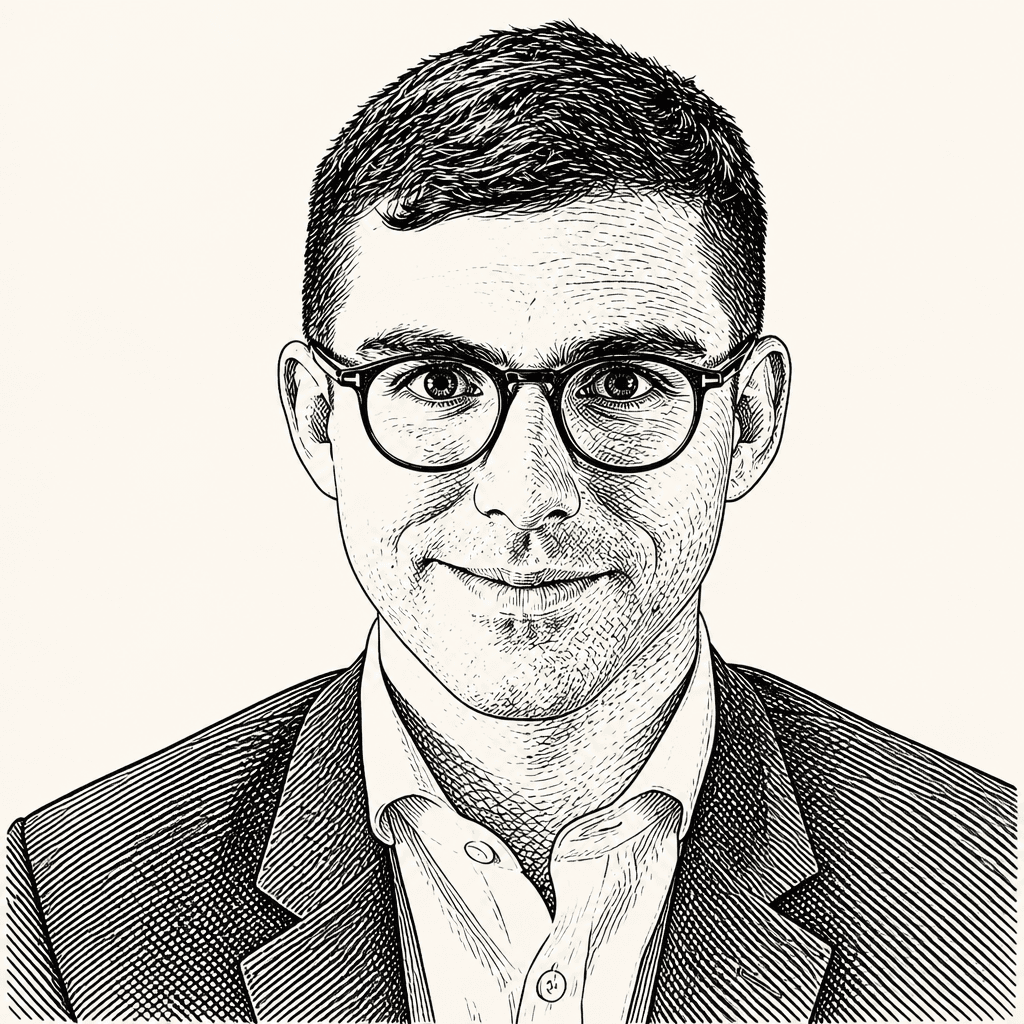
Morgan Stanley analyst Adam Jonas argues that combining AI with machines operating in the physical world could multiply global GDP by eight to ten times, but says that prospect depends on rebuilding manufacturing capacity. He sees China’s strength across key supply chains as a constraint on US efforts to onshore production, and expects physical AI to develop through networks of connected machines rather than humanoid robots alone.
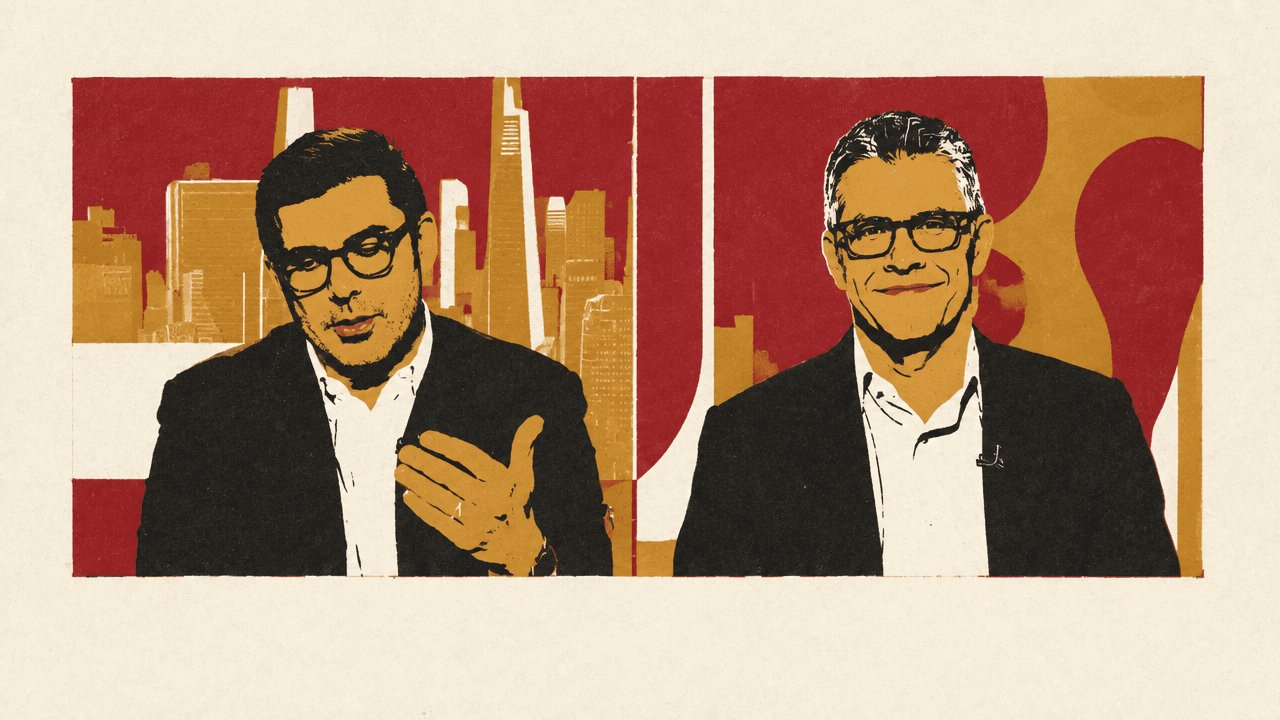
The GDP thesis depends on rebuilding the industrial base
? adam-jonas of Morgan Stanley argues that combining AI with machines acting in the physical world could multiply global GDP by eight to ten times before he retires. He calls the shift “militarily deterministic” and potentially socially destabilizing: “we have to get this right.”
The economic case, in Jonas’s account, is inseparable from manufacturing. Making robots at scale means rebuilding US manufacturing resilience for the first time in many decades. That process would require people as well as machines. He expects millions of jobs, including vocational and mid- and high-skilled work in the United States and its economic partners. “To make this artificial life,” he says, “we need a lot of vocational and even mid and high skilled labor.”
That ambition runs into an industrial dependency: China’s strength across manufacturing and the supply chain, including critical minerals, materials and rare earths. Jonas says robots, data centers and other sophisticated electronics cannot be made without China’s deep involvement in the ecosystem, and that this will not change overnight.
The resulting tension is central to his onshoring argument. The United States may seek to diversify its supply chains, but Jonas says his team’s simulations do not show a credible way to wall China off from the US ecosystem. Attempting that, he warns, would worsen inflation. He sees physical AI and onshoring instead producing a re-architected, still sensitive but potentially prosperous entanglement between the two countries.
A robot economy would be a connected system, not a humanoid workforce
Jonas expects automation to spread across many kinds of machines: “any machine that can be automated will be,” and any machine that can carry an AI inference computer will, in his view. Machines without that capability may face a faster obsolescence curve or have little useful life.
Humanoid robots matter in some of Morgan Stanley’s scenarios, which reach billions by 2050, but Jonas does not treat them as the whole industry. He describes the humanoid form factor as partly a recruiting and capital-raising tool, and places it among thousands of robot categories, including low-altitude and terrestrial robots, autonomous vehicles, mobile robots and industrial machines.
The larger question for Jonas is how machines connect and share computation. He invokes Elon Musk’s description of a distributed inference cloud linked to a distributed orbital cloud of space-based AI infrastructure. Data centers will remain, he says, but more inference should happen at the edge. He compares using a data center or GPU for an inference task to “using a Ferrari to pick up the milk,” arguing that computation can be distributed across machines rather than routing every simple query to a distant facility. He says connected robots could form a “swarming intelligence” capable of doing much of the world’s inference work.
We need to start to activate more inference at the edge, kind of like neurons in your brain, so we can do the compute vastly more efficiently.
Tesla and SpaceX could cooperate without merging
Ed Ludlow asks whether Morgan Stanley’s scenarios assume a merger between Tesla and SpaceX. Jonas declines to give a probability for a transaction between two public companies, but says their relationship “seems deterministic.” His case rests on complementary capabilities, not a stated assumption that the companies will combine.
He describes Tesla as the manufacturing and data-collection layer: it makes robots and can scale intelligence into the physical world. SpaceX supplies connectivity and an AI layer, while also having manufacturing capabilities. Regardless of a strategic transaction, Jonas says investors should expect continued cooperation. He frames the shared objective as converting energy into intelligence at scale—seeking more intelligence per watt, per dollar and per second, while bringing power online quickly.
Ludlow asks whether Optimus can work in industrial or home settings without Starlink connectivity or inference at the edge powered by orbital data centers, and how much one is a precursor to the other. Jonas responds by describing a broader system of connected robots and distributed inference, while saying conventional data centers will remain in use for the foreseeable future. He does not specify whether Optimus depends on Starlink or orbital data centers to operate in those settings.
Regulation may shape adoption without stopping it
Jonas treats regulation of physical AI as certain. The open questions, he says, are how rules are phased in and sequenced, and whether they are shaped by industry experts, elected officials or both. He expects regulation to respond to developments that may unfold unpredictably.
The concern is not only safety. Jonas says a robot with an AI “brain” acting independently has potential dual uses, including military ones. He points to campaigns in Ukraine and Russia and to the Straits of Hormuz, and says defense systems are being re-architected for a physical-AI world. In his view, competition with China and concerns about military readiness create urgency even as governments regulate.
His forecast is that regulation will change the form and cadence of adoption, not its destination: he expects tens of billions of robots in daily life within one to two decades.
Autonomous driving is the precedent Jonas thinks could unlock wider adoption
Jonas sees Tesla, alongside SpaceX, as among the Western industry’s best chances to keep up with—and eventually surpass—geopolitical rivals in robotics and physical AI. He grounds part of that view in autonomous driving. Recalling a recent drive from Westchester to Midtown Manhattan in his Tesla without touching the wheel, he says Morgan Stanley considers autonomous cars solved. He dates that milestone to 2023, when Waymo removed the driver in Phoenix.
That “solved” assessment does not mean the safety question is settled. Jonas says autonomous driving still needs to reach the level of safety he wants, with enough “nines.” If that progress continues and insurers begin discounting policies for people who let their cars drive, he expects wider acceptance to open the way for other robotic forms to follow.