Microsoft Offers Buyouts to 60,000 Workers as AI Spending Rises


Microsoft is offering buyouts to 60,000 workers, though the figure counts offers, not departures. Bloomberg reporter Brody Ford places the move amid heavy AI spending and technology companies’ efforts to do more with fewer employees; he reads the offer as a signal about the focus expected of those who stay.
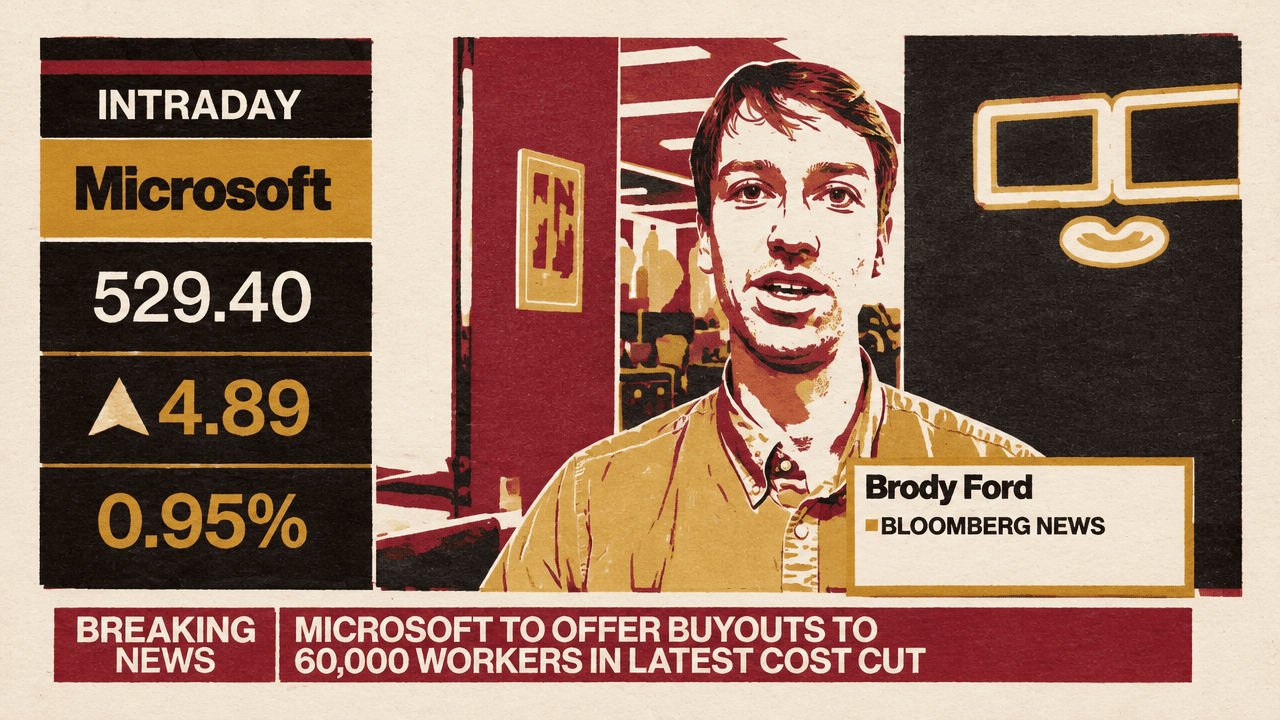
The 60,000 figure measures offers, not departures
Microsoft is offering buyouts to 60,000 workers, a number Ed Ludlow set against the company’s 223,000 employees as of June 30. The offer is substantial relative to that headcount, but it is not a count of jobs already eliminated: it gives workers an option to leave, and the number who accept will determine its effect on staffing.
Bloomberg’s description says some personnel in the US, Canada, India and the UK are eligible. The report identifies the scale of the offer, but does not detail which roles qualify or how eligibility is determined.
Brody Ford placed the offer in the context of two pressures facing large technology companies. Meta, Google and Microsoft, he said, are betting they can do more with fewer people as AI changes how companies work. At the same time, he said, cash flow is strained by spending on AI. He described Microsoft’s buyouts as its latest strategy for taking costs off its books.


The combination Ford described is a workforce-cost decision alongside substantial AI spending: companies are trying to operate with fewer people while investing in AI. He did not say that the positions covered by this offer have been replaced by AI. His account linked the buyout to a wider effort to reduce costs amid that investment.
The market graphic shown during the report displayed Microsoft at 528.57, up 4.06, or 0.77%, intraday, alongside a “latest cost cut” label. The figures record the stock’s movement during the broadcast; the graphic does not explain what drove it.
A rare buyout carries a message about who should stay
Microsoft has limited precedent for large-scale buyouts, Ford said. Earlier that year, it offered a retirement buyout, which he described as the first large-scale example he had seen at the company. He presented the new offer as a notable step, rather than a familiar tool Microsoft had used repeatedly.
Ford compared its tone with the buyout Elon Musk offered Twitter employees after acquiring the company. As Ford recalled it, Musk told employees that staying would mean things were going to get tougher, while leaving with a buyout was an option. Ford called Microsoft’s approach a “friendlier version” of that model.
The comparison was Ford’s interpretation of the signal employees might hear, not a claim that the two offers were identical. He said Microsoft was emphasizing focus on its mission, and suggested that people already thinking about leaving might take the offer as a reason to do so. In that reading, a buyout can serve both as a way to reduce costs and as a message about the commitment expected of those who remain.
They're saying we need to be focused on this mission and, you know, if you're thinking about not being here, maybe you shouldn't be.
The offer’s scale and its tone are distinct parts of the story. The 60,000 figure describes how many workers are being offered a way out; Ford’s comparison helps explain how he reads the company’s message to employees. Its eventual effect on headcount will depend on who accepts.