Lyft Bets Robotaxis Will Expand, Not Replace, Ride-Hailing


Lyft CEO David Risher argues that autonomous vehicles can expand ride-hailing demand rather than simply replace human-driven trips, as riders choose between services for different needs. He is also positioning Lyft’s acquisition of Free Now and its taxi relationships as the basis for international growth, particularly in regulated European markets. Risher said the company is still deciding how to differentiate its European offering from Uber, Bolt and other established rivals.
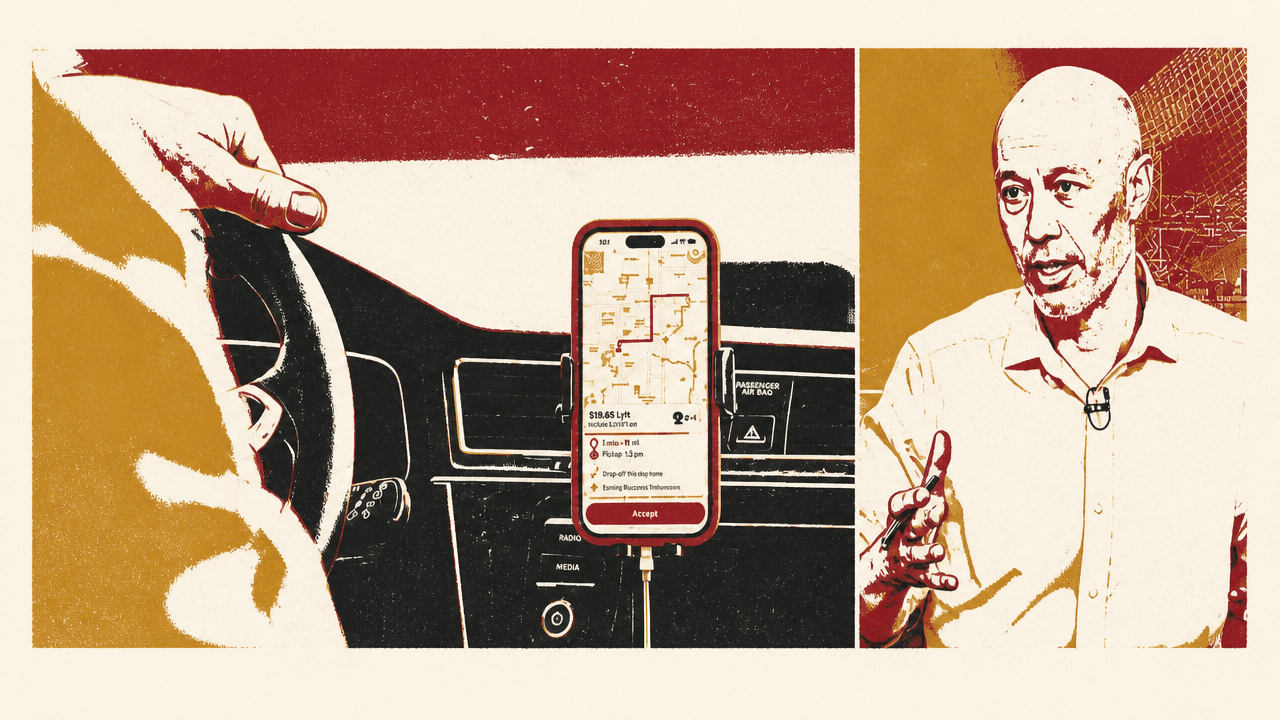
Robotaxis may expand ride-hailing before they replace it
David Risher sees autonomous vehicles as an addition to the ride-hailing market, not simply a substitute for human drivers. In San Francisco—where both Lyft and Waymo operate—Lyft grew 20% year over year, he said. That could reflect Lyft taking share from Waymo, riders turning to Lyft when a Waymo is unavailable, or a larger overall pool of people taking rides. Risher’s answer was that it was “probably both,” though he expects market expansion to matter more over time.
The case rests on the distinct uses of the two services. Risher described self-driving cars as reliable and private: riders can make a private call or occupy their own space. But those benefits do not eliminate reasons to choose a human driver, including help with luggage or conversation. A network combining autonomous vehicles with human-driven cars, he argued, can serve more use cases than either mode alone.
Anytime you see a transformation like this, one of two things can happen. You can either see sort of a substitution or you can see a market expansion. And in this case we're seeing a market expansion.
Risher framed the opportunity against the far larger number of trips still made in private cars. He said Americans take roughly 160 billion rides a year in their own vehicles, while Lyft delivers about one billion and its major competitor about two billion. His point was that ride-hailing represents a small portion of trips that could shift to an on-demand network if the service becomes suitable for more people.
Autonomy could also appeal to riders who do not want to share a car with a driver. Risher described an acquaintance’s son, who is in rehabilitation after a severe physical accident. For that passenger, a self-driving vehicle with wide-opening doors and no driver in the cabin could offer more physical and personal space. The distinction, Risher said, is not just an engineering story but a design story: the configuration of a vehicle and service can make a ride workable for people who may not find the current product suitable.
He also cited Lyft’s fleet-management and supply-demand matching capabilities as reasons for optimism about a hybrid network. Still, Risher acknowledged that the eventual balance between substitution and market expansion remains unresolved.
| Second-quarter measure | Reported result |
|---|---|
| Gross bookings | $5.50B, up 23% year over year |
| Net income | $50.3M, up 25% year over year |
| Active riders | 30.5M, up 17% year over year |
International growth depends on fitting into taxi markets
David Risher said Lyft was primarily a domestic company until roughly a year to 18 months ago. Since then, it has expanded in Canada and acquired Free Now, alongside smaller overseas businesses. The company is now building what Risher called the internal foundation of a “truly global company,” including multicurrency operations and GDPR compliance.
The customer-facing aim is to let travelers use the Lyft app to access local transport supply rather than download and learn a separate service. Risher described using a beta version of the Lyft app in Barcelona to hail local taxis four times. It worked flawlessly, he said, while allowing him to keep using an interface he already knew. He also said Free Now has been growing through technology and innovation Lyft has added to its stack.
Europe is not simply an American ride-hailing market in a different geography. Taxi service plays a much more significant role in many European cities, Risher said, particularly in Spain and London. In Spain, he described taxi driving as potentially a long-term career and sometimes a family trade. London taxis have their own established professional tradition, including the Knowledge.
That embedded taxi infrastructure matters to Lyft because Free Now is strong in taxis, which tend to be heavily regulated. Risher said Free Now’s taxi relationships could provide both local supply and stronger government relationships. As autonomous vehicles arrive in markets where officials may regard the technology as unfamiliar or intimidating, he argued, those relationships could help Lyft navigate the transition.
Lyft has not settled its European differentiation
Asked how Lyft will distinguish itself from Uber, Bolt, and other established international competitors, David Risher did not offer a finished European product strategy. He called the question a “very, very live conversation” internally. Lyft is connecting its app with Free Now’s local taxi supply while considering which Lyft-specific services can travel effectively across markets.
Risher pointed to recent U.S. products as the company’s product playbook. Women+ Connect, he said, has facilitated more than 175 million rides between women riders and women drivers in the United States over the last couple of years. Lyft Teens and Lyft Silver were part of the same set of offerings he presented as meaningful service innovation.
Lyft hopes to bring some of that innovation to Europe. Risher also suggested that sentiment toward established rivals may offer an opening: in some European markets, he said, people do not necessarily love those companies. Lyft hopes to bring, in his phrase, “some joy to the conversation.”
Operational reliability underpins the bet on new riders
David Risher described marketplace execution as a central technology priority. Lyft now picks riders up at the same speed or faster than its larger competitor 75% of the time, on average, he said. He treated that as consequential precisely because Lyft has less market share: matching or beating a larger rival’s pickup time requires reliably balancing supply and demand around the clock.
Lyft Teens illustrates the longer-term demand opportunity Risher sees in that operational foundation. The service gives parents continuing messages intended to show that their teen is safe during a ride. Risher also placed it in a broader generational context, arguing that Lyft can be a better answer for people facing the cost of a new car. He and Ludlow referred to roughly $800 a month on a lease basis and a $50,000 vehicle.
Risher expects teen-focused innovation to help change transportation choices over the next two to five years, making a reliable network with products designed for families a more credible alternative to ownership for some riders.