K2 Raises $500 Million to Industrialize High-Power Satellite Production


K2 Space has raised $500 million to expand production of high-power satellites, arguing that spacecraft once built as multiyear, billion-dollar projects can be manufactured at far lower cost and on more reliable schedules. CEO Karan Kunjur says the company’s first 20-kilowatt satellite, now operating in orbit, has supplied the data for its Block Two design and helped drive more than $1 billion in signed contracts. The company’s next test is turning that first flight into repeatable delivery, while developing a larger platform intended to support compute-intensive infrastructure in space.
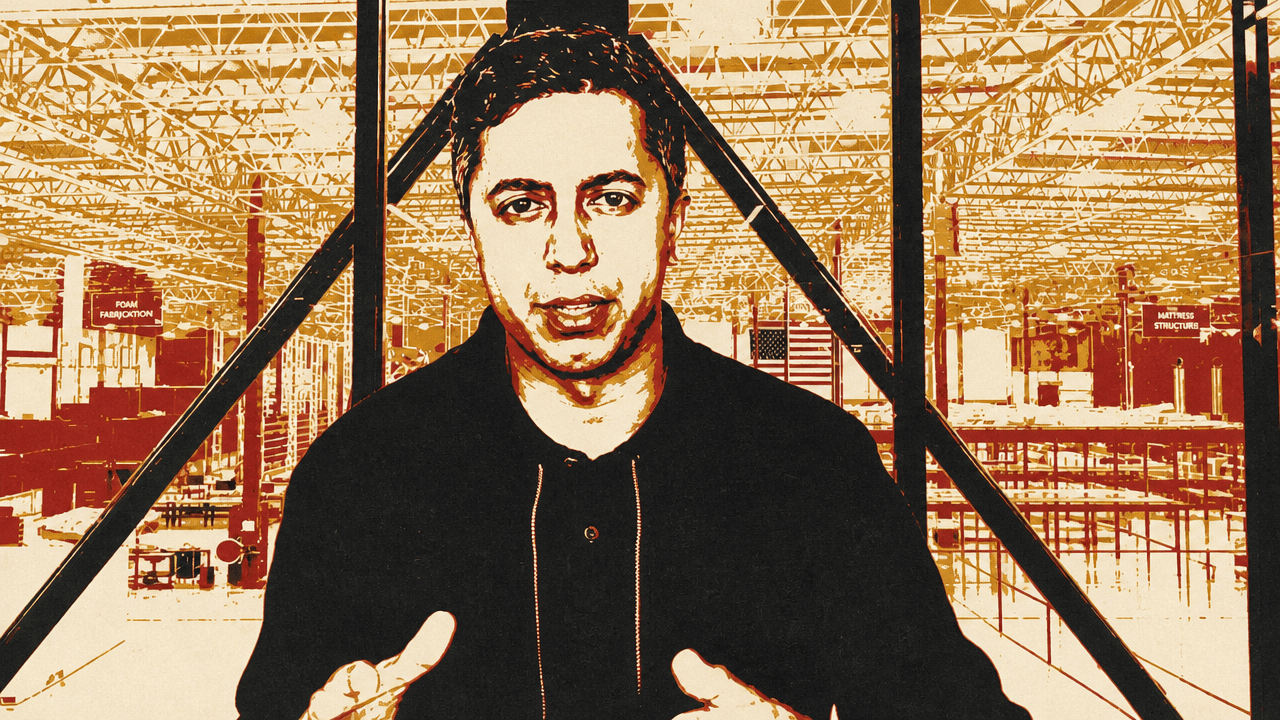
K2 must turn a first mission into repeatable satellite delivery
Karan Kunjur says K2 Space is pursuing a different model for high-capability satellites: not a bespoke spacecraft built over most of a decade, but an industrial product that can support communications, defense and eventually compute infrastructure in space.


Ed Ludlow described K2’s target cost as $15 million per satellite. Kunjur said comparable capability had historically been delivered by a major prime contractor’s satellite costing about $1 billion and taking seven to 10 years to produce. K2’s operational challenge is to convert that contrast in cost and production time into dependable delivery beyond its first mission.


K2 says it has crossed $1 billion in signed contracts, including work connected to Golden Dome, and Kunjur said much of that demand followed its successful first mission. The company’s first 20-kilowatt satellite has now been operating for roughly 120 days. Kunjur described the flight as a major derisking moment: K2 is using data from the spacecraft to inform its next design while taking on contractual delivery obligations.
The financing is meant to address the gap between demand and delivery. Kunjur identified schedule, supply chain, subsystem reliability, mass production and manufacturing footprint as the areas the company intends to strengthen. For national-security customers in particular, he said, meeting schedule is “incredibly important.”
How do we figure out how to take on all of these hard engineering challenges, turn it from something that used to be a science project to something that's mass-producible?
Kunjur’s answer begins with components that were previously unavailable at the needed capability: large solar arrays, batteries and reaction wheels. About 85% of the first satellite was built in-house, he said, because K2 had to design subsystems that did not exist in the form it required. The manufacturing claim is therefore not merely that K2 can assemble satellites more cheaply. It is that it can industrialize the systems that make a high-power spacecraft possible.
Block Two is the near-term bridge from flight data to production
Karan Kunjur described the first mission as a major derisking event, not the completion of the engineering program. The 20-kilowatt satellite has generated data across thermal conditions, power conditions and different payloads, he said. K2 has fed those results into its Block Two design, which it plans to launch on two missions next year.
| Platform | Power | Role in K2's plan | Launch requirement |
|---|---|---|---|
| First satellite | 20 kW | Flown platform; about 85% was built in-house, and its flight data is informing Block Two | Any five-meter-class fairing; first launch flew on Falcon 9 |
| Block Two | Not specified | Near-term design iteration incorporating first-flight data; planned for two launches next year | Not specified |
| Planned larger vehicle | More than 100 kW | Longer-term platform for substantially greater onboard compute | Super-heavy vehicles such as New Glenn and Starship |
The 20-kilowatt platform is designed for any five-meter-fairing-class launch vehicle. Kunjur said K2 launched the first spacecraft on Falcon 9 and expects to use SpaceX for future launches, while also considering other providers in that class.
Block Two is the immediate production iteration: a design shaped by operating data from the first spacecraft and intended for two launches next year. The more-than-100-kilowatt vehicle is a separate, larger proposition. Kunjur said it will be designed for super-heavy launch systems, including New Glenn and Starship, rather than the five-meter-fairing vehicles that can carry the 20-kilowatt platform.
High power is K2's route into orbital compute
Karan Kunjur said interest in K2 has increased as people have seen its 20-kilowatt satellite in orbit and heard about the planned vehicle in the more-than-100-kilowatt range. While SpaceX is not the party approaching K2, he said, “almost everybody else” has reached out about working with the company on high-power capability.
Kunjur’s argument is that electrical power sets the amount of compute a spacecraft can carry. More power allows more compute to be placed in orbit, he said, and could alter the economics and scalability of computing capacity at a time when compute supply chains are constrained. He described the larger platform as one of the largest and highest-power satellites to have existed, and said it makes orbital data centers possible.
Going high power allows you to put up a lot of compute. Being able to put a lot of compute on orbit fundamentally changes the economics, the scalability of compute.
Kunjur said K2 will work with a number of different players as it rolls out that capability. The company is positioning the larger high-power platform as potential infrastructure for compute-intensive applications in space, alongside communications and national-security missions.