Fuse Raises $100 Million to Commercialize Fusion Radiation Testing


Fuse CEO JC Btaiche says the company’s $100 million financing will fund faster, cheaper production of fusion generators while supporting a radiation-testing service already operating for customers. He argues that commercialization will depend less on scientific milestones than on repeatedly building and operating hardware, with private companies playing a central role in helping the US counter China’s investment and construction pace in fusion.
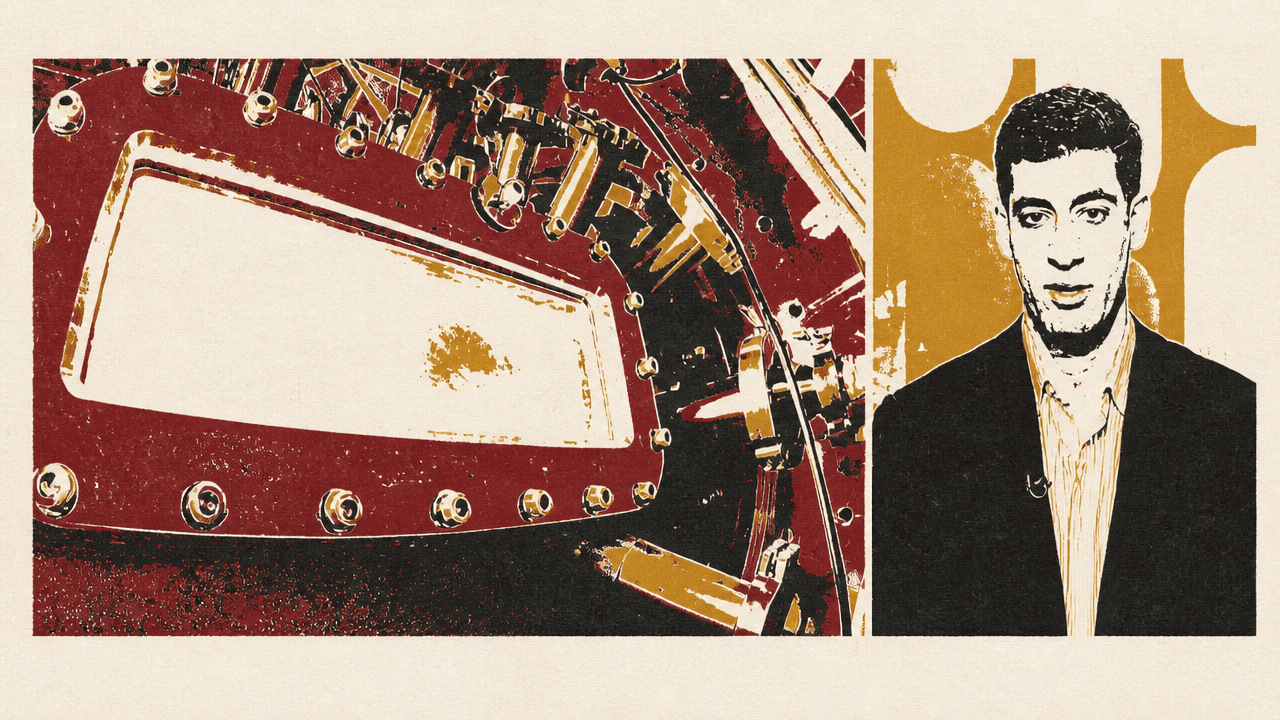
Fuse is using $100 million to expand a radiation-testing business it says is operating now
JC Btaiche says Fuse will use its new $100 million financing to build fusion generators more quickly and cheaply while commercializing machines it has already built. The immediate use case is radiation testing: customers use fusion-generated radiation to assess how electronics and other materials perform under conditions that can arise naturally in space or through human-made radiation events.


Fuse’s claim is not that it must first solve future grid-scale fusion before it can serve customers. Btaiche says the company already has generators operating and servicing customers. Its facilities are intended to give customers access to systems including Faeton X, where they can expose electronics and materials to radiation and evaluate their resilience.
A newly licensed generator in Albuquerque, New Mexico is the next concrete step in that rollout. Btaiche said Fuse had received the license the previous day and was preparing to host customers at the new facility as soon as the following month.
The financing graphic named Abstract Ventures, Buckley Ventures, Tamarack Global, and Mantis among the investors.
Btaiche describes neutron yield as a useful byproduct of a fusion generator and says Fuse recently set a commercial-fusion record on that measure. The company’s stated mission combines accelerating the transition to fusion energy with safeguarding humankind; radiation generation is the capability it presents as commercially useful today.
The near-term service is testing; the larger bet is repeatable generator production
Fuse distinguishes between a customer-facing radiation service available now and a longer-term effort to make increasingly capable fusion generators. Ed Ludlow described the company’s portfolio as including Titan, a one-terawatt fusion driver, and Faeton, which he called its most efficient pulsed neutron source. Btaiche’s emphasis, however, was not on a single machine or technical milestone. It was on building many generators, operating them, and making subsequent systems less expensive and more energy-efficient.


Fuse is commercializing technology that Btaiche says received decades of investment and billions of dollars from US national laboratories and the national-security community. In his account, the task now is to turn that accumulated technical base into hardware that can be repeatedly built and deployed.
When you think about fusion there’s been a lot of scientific progress, but now it’s a race to commercialization. And the way you commercialize something like fusion technologies, you have to build a lot of generators.
The Albuquerque facility and Faeton X sit at the junction of those two ambitions. They give Fuse a place to host customers using radiation-generating equipment now, while the company uses the new capital to increase its rate of development and build more generators faster. Btaiche says the goal is not simply to construct additional machines, but to improve their cost effectiveness and energy efficiency as the company continues to build.
He contrasted that approach with companies that, in his telling, may have substantial funding and ambitious plans without operating generators.
This industry needs more like power generators, more than PowerPoints.
Btaiche treats private deployment as the US response to China’s buildout
JC Btaiche places Fuse’s commercialization strategy in a broader competition with China. He says the US built significant fusion infrastructure in the late 1990s and early 2000s, around the end of the Cold War, but has not built new large-scale facilities at the same pace in the decades since.
Btaiche says China is investing nearly two-to-one relative to the US after accounting for purchasing-power differences. He also says China is graduating STEM PhDs in far larger numbers and has built many facilities. Those assertions are central to his argument that fusion competition will be decided by the speed of building and operating hardware, not by scientific progress alone.
His proposed answer is commercial companies that combine what he calls Silicon Valley speed and culture with close ties to national-security institutions and their technical expertise. Fuse, he says, aims to become to the National Nuclear Security Administration what SpaceX has become to NASA: a commercial provider of critical technology.
Btaiche started Fuse about seven years ago instead of attending college and says he had worked in fusion research from a young age. He describes a team drawn from SpaceX, Palantir, Tesla, national laboratories, the Department of War, and other national-security organizations. The point of that mix, he says, is to recruit people who have built and shipped technologies that had previously been regarded as exceptionally difficult.