Impulse’s Series D Reaches $808 Million for Spacecraft Development


Impulse Space has raised a $308 million Series D extension to develop spacecraft that maneuver payloads after launch, bringing the round’s total to $808 million. Founder and chief executive Tom Mueller says the company is building demand across commercial, NASA and government customers for its Mira and Helios systems, while its near-term flight schedule is increasingly weighted toward government work.
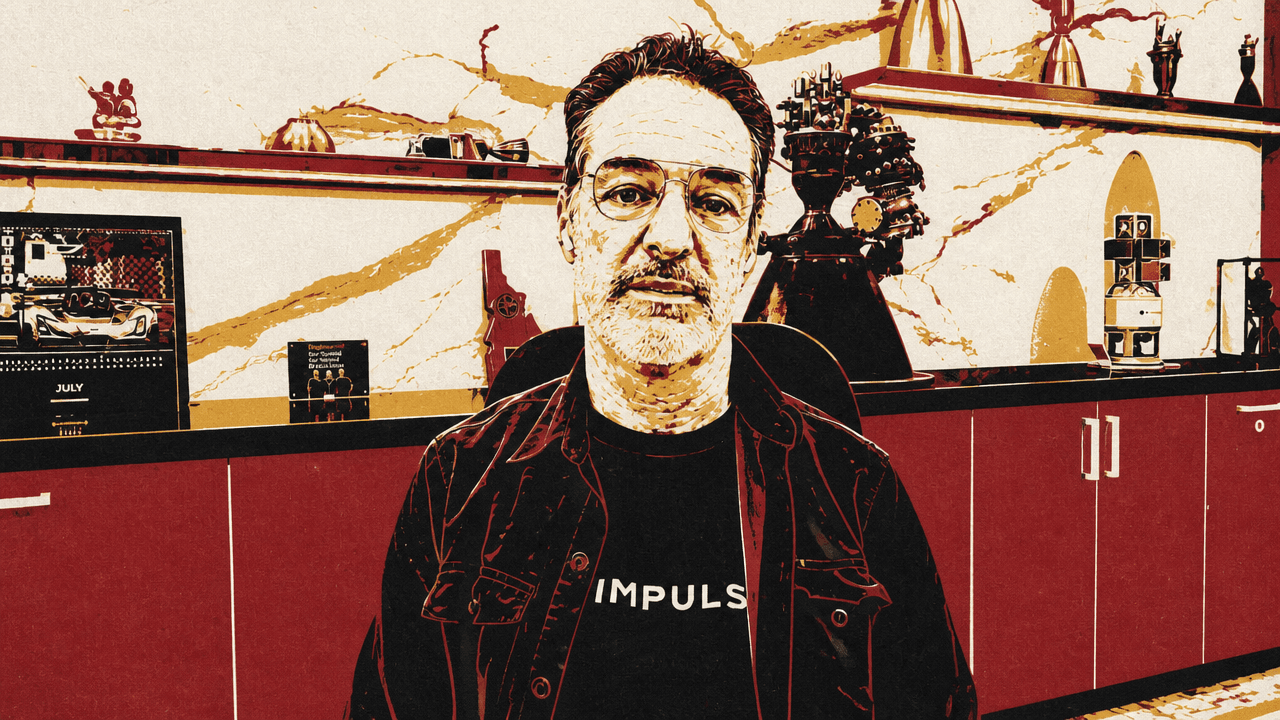
The new capital is aimed at moving payloads after launch
Tom Mueller says Impulse Space needed its $308 million Series D extension to continue developing its spacecraft products. The financing brings total Series D funding to $808 million, according to an on-screen Bloomberg graphic, and is intended to support product development and team growth. The company has also appointed Adam Townsend as its first CFO.


Impulse’s focus is in-space mobility: spacecraft that move payloads precisely after a launch vehicle has delivered them to space. Mueller says the company is seeing demand from commercial customers, NASA, and government users.
The company’s named systems are Mira and Helios. In the animation shown during the interview, Helios carries a rideshare payload toward geosynchronous orbit; Mira spacecraft then detach and maneuver toward their own orbits. Mueller also points to broader investor interest in space, which he links to the growing intersection of AI, data centers, and space. But the demand he describes for Impulse is specifically for propulsion and maneuvering once a payload is already in space.
Mira is built around propulsion and orbital maneuvering
Tom Mueller describes Mira as a satellite with power systems and payload capacity whose distinguishing capability is propulsion. It carries propellant and thrusters that allow it to move precisely within an orbit or change orbits.
What makes it a space tug is it has a very powerful propulsion system on it. So a lot of propellant and a lot of thrusters. So it can move around very precisely in space.
The Space Force has been Mira’s principal customer so far, Mueller says. Impulse has three Mira spacecraft flying, and it recently conducted a flyby between its LEO 2 and LEO 3 missions, bringing the two spacecraft within roughly 200 meters of one another. Previous flights were mainly commercial and demonstration missions, he says, while the upcoming schedule is mostly government work.
- RecentlyImpulse says its LEO 2 and LEO 3 Mira missions conducted a flyby, coming within about 200 meters of one another.
- Later this yearThe company expects to launch LEO 4, another commercial mission.
- Next yearHelios is scheduled for its first flight, with Impulse’s first GEO Mira going to geosynchronous orbit.
Mueller describes the customer mix as both government and commercial, even as the forward manifest shifts toward government flights. The planned LEO 4 mission remains commercial; the first Helios flight is expected to take a GEO Mira to geosynchronous orbit.
Booked Falcon 9 capacity gives Impulse time to execute
Nearly all of Impulse’s near-term booked flights are on SpaceX Falcon 9, Tom Mueller says. The company expects to fly on other launch systems in the future, but Falcon 9 supports most missions currently scheduled to fly soon.
Ed Ludlow raised reports that SpaceX has stopped taking Falcon 9 orders beyond 2029 as it transitions toward Starship. Mueller said Impulse is already booked on Falcon 9 through that period. Many of its government customers, he added, are already booked through block buys, leaving the company “mostly covered” for the next few years.


Mueller sees any eventual reduction in Falcon 9 availability as an opportunity for other launch providers. Several new launch vehicles have made their first flights in the past couple of years, he says, and several more are expected to fly for the first time in the coming year. His expectation is that substantial demand will be met by additional supply.
The first CFO follows a larger customer and capital base
Tom Mueller says the decision to hire a CFO reflects the amount of customer activity and capital now being managed, rather than an announced IPO process. He had been functioning substantially as CTO alongside his CEO responsibilities, while Eric Romo had helped with financial work. With more customers and more capital, Mueller says, Impulse needed a C-level finance officer.
Asked whether Impulse could one day become a public company, Mueller did not rule it out. But he said that is not the present priority.
Right now, we’re just addressing the market and trying to build up our capabilities.
Mueller places that work in Southern California’s concentration of aerospace and hardware talent. He says many founders of newer companies were previously at SpaceX, as were key employees who have joined those ventures. His comparison is that Silicon Valley works in software and “bits,” while the Los Angeles area is making physical systems—including spacecraft, drones, and nuclear reactors—near Impulse’s Redondo Beach base.