Nvidia Board Pursues Outside CEO Candidates Despite Huang’s Offer to Return


Jensen Huang says he is willing to return as Nvidia’s chief executive if the board decides that doing so serves the interests of the company and its stakeholders. Bloomberg reporter Mike Shepard said the board is pursuing external candidates and has told Bloomberg it is not looking to reinstate Huang, leaving directors to weigh his offer against their existing search and an inquiry into issues surrounding his departure.
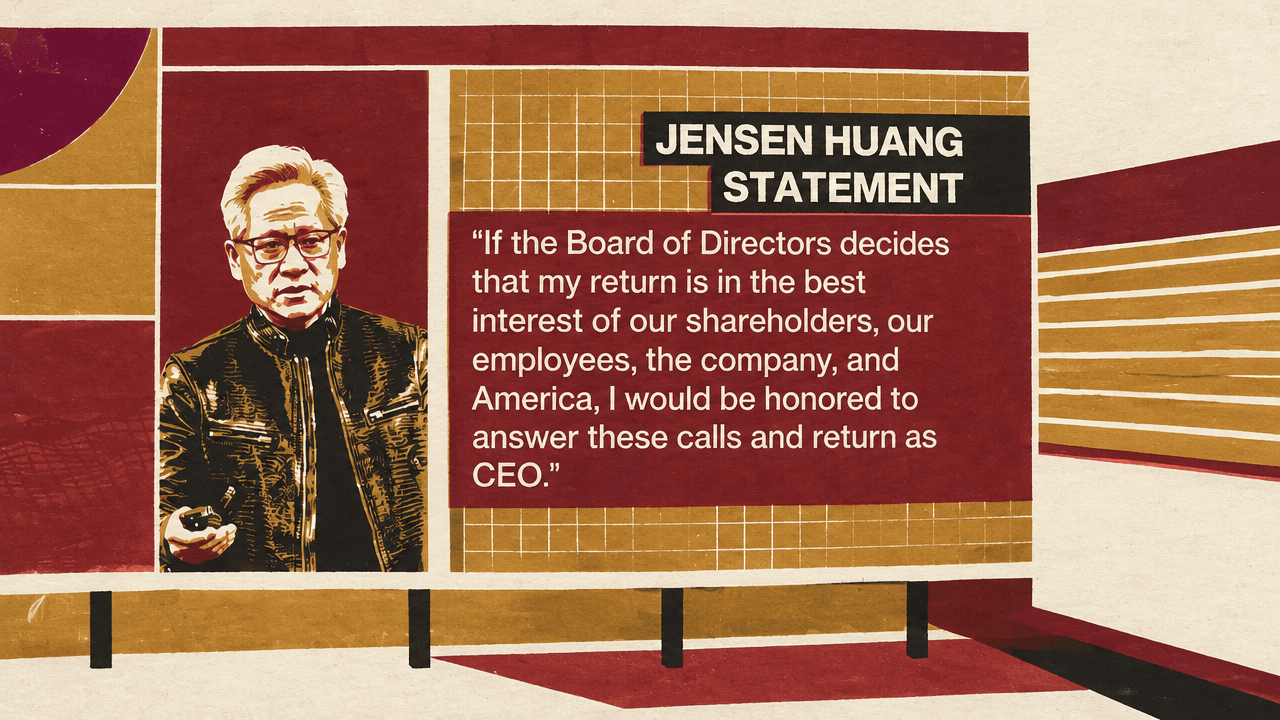
Huang’s offer puts pressure on a board pursuing outside candidates
Jensen Huang says he would return as Nvidia’s chief executive if the board decides that his return is in the best interests of shareholders, employees, the company and America. The condition leaves the decision with directors; Huang has not said he is resuming the role. His statement, as Ed Ludlow reported, followed weeks of discussion about whether he might come back and came after President Donald Trump had been asked about the idea.


Huang said he had seen an outpouring of calls from Nvidia employees, investors, business partners and customers asking him to return. He also said he regretted his actions, would cooperate with the board’s inquiry and would take whatever steps might come next. The statement was the first time, according to Bloomberg reporter Michael Shepard, Huang had spoken about the push to reinstate him.

Shepard said the board had told Bloomberg it was not looking to bring Huang back and was proceeding with a search for external candidates. The company had reiterated that position to Bloomberg after Trump endorsed the idea of Huang returning. That reported stance makes the statement a direct challenge to the board’s existing course: Huang is willing to return, but only if directors decide that doing so serves the interests he named.
The offer also brings shareholders into the pressure surrounding that decision. Shepard described Huang as effectively telling shareholders that if they want him back, they can press the board.
He is essentially putting it also to shareholders too to say, look, if you think I should come back, the board could be your next call.
Public support for a return is not unanimous. Trump had endorsed it, Shepard said, while Treasury Secretary Scott Bessent argued over the weekend that bringing Huang back would be a bad idea. In an interview on Fox News, Bessent said Nvidia needed a culture change and a “dramatic shakeup,” and should look outside the company for leadership. Shepard said some employees might welcome Huang back because they have looked to him as a leader and had become wealthy through Nvidia’s advance in AI. The split puts the board between public calls for Huang’s return and an argument that a new leader should bring a change in culture.
The board’s inquiry is part of the leadership decision
The board’s search is unfolding alongside an inquiry into issues surrounding Huang’s departure. Shepard said directors are investigating security protocols and grappling with governance questions. He also said Huang is scheduled to appear before Congress on December 1, where he will face questions about his affair with Alice Wang, a Mega Speed executive, and about security protocols. Shepard described the affair as having led to Huang’s downfall as Nvidia’s CEO.
Huang’s willingness to cooperate with the board’s inquiry does not settle those questions. He said he would cooperate and take whatever steps might come next; Shepard said the directors were still trying to digest the issues. The inquiry therefore bears on the same decision Huang has put before them: whether his return would serve the company while the board examines the matters connected to his departure, or whether its search for an outside replacement should continue.
The timing adds another consideration without resolving the choice. Nvidia’s DC edition of its GTC conference was due to run from November 30 to December 3, and Huang officially parted ways with the company on November 12. Ludlow said reporting had indicated that the board’s position was firm: it was proceeding with external candidates and, at that stage, had no interest in considering Huang’s return. Shepard’s account of the company’s response after Trump’s endorsement reinforced that reported position. Huang’s statement now puts his willingness on the record while directors are pursuing a different course.
Shares recovered some ground but remained down
When Huang’s statement became public, the Nasdaq 100 pared some of its declines, Ludlow said. Nvidia had been one of the index’s biggest point drags. Bloomberg’s on-screen market panel showed the Nasdaq 100 down 1.20% and Nvidia down 0.96% shortly after the announcement. The figures show a partial easing in the market decline, not a change in the board’s stated search or a decision on Huang’s return.
Ludlow said the Wall Street Journal first reported the statement and Bloomberg then verified it. The immediate market response accompanied a leadership announcement that left the central question with Nvidia’s directors: whether to continue seeking an external candidate or decide that Huang should return.